Finding the right intermediate oboe for orchestra materials can make the jump from student playing to confident ensemble performance much smoother.
Below, we focus on books and repertoire that support tone, technique, sight-reading, and musical style without overwhelming developing players.
Best 10 Intermediate Oboe for Orchestra Picks for 2026
Repertoire Study Pick
Oboe Classics for the Intermediate Player

- Music from Telemann to Hindemith
- Annotated solo part with suggestions
- Online audio with practice accompaniments
Best For: Intermediate players building repertoire with audio-guided practice
Concerto Reduction
Concerto in C for Oboe and Orchestra

- Piano reduction of the concerto
- Original is for oboe and orchestra
- Orchestral material is on hire
Best For: Players who need a concerto reduction for rehearsal
Repertoire Anthology
Oboe Solos: Everybodys Favourite Series Vol 99
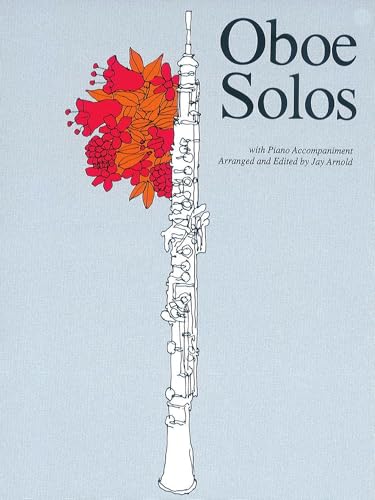
- Important works in oboe literature
- Separate pull-out oboe part
- Suited to recital and study use
Best For: Intermediate to advanced players wanting a broad anthology
Scale Warm-Up Tool
Treasury of Scales for Band and Orchestra Oboe

- All major and minor scales included
- Harmonized SATB format for ensemble skills
- Built for daily warm-up use
Best For: Teachers and players building orchestral fundamentals
Method Study
Rubank Intermediate Method for Oboe

- Scales, arpeggios, and technical studies
- Musicianship, articulation, solos, and duets
- Widely used individual or class method
Best For: Players who want a broad intermediate method for daily study
Curriculum Method
Tradition of Excellence Book 2 Oboe

- Comprehensive curriculum with smooth pacing
- Interactive Practice Studio included
- Built-in review supports steady progress
Best For: Students who want a modern, guided intermediate method
Ensemble Supplement
Sound Innovations Intermediate Concert Band Oboe

- 412 exercises across intermediate levels
- More than 70 chorales included
- Useful after any band method or as a supplement
Best For: Players who want ensemble exercises and chorales for broader preparation
Core Studies
48 Famous Studies, (1st and 3rd Part): Oboe

- 48 famous Ferling studies for oboe practice
- Includes duos and a trio for ensemble reading
- Best for technical development and study work
Best For: Intermediate players building technique for orchestra
Classical Repertoire Builder
Fifty Famous Classical Themes for Oboe

- 50 famous classical themes in solo form
- Easy and intermediate arrangements for advancing players
- Chord changes support teacher accompaniment
Best For: Students who want recognizable classical melodies for study
Orchestral Play-Along Favorites
Disney Solos for Oboe Sheet Music Book with Online Audio

- 12 Disney solos arranged for oboe
- Includes symphony orchestra backing tracks
- Strong fit for lessons, concerts, and practice
Best For: Intermediate players wanting orchestral play-along repertoire
Repertoire Study Pick – Oboe Classics for the Intermediate Player
If you’re looking for intermediate oboe for orchestra study material that also builds solo confidence, this collection offers a practical mix of repertoire from Telemann to Hindemith. It includes a complete solo part with performance suggestions plus online audio, so you can hear the works performed and then practice with recorded piano accompaniments.
Best For: Intermediate oboists who want guided repertoire study with audio support for lesson prep and practice.
Pros:
- Contains music from multiple periods, from Telemann to Hindemith.
- Includes a complete solo part with annotated performance suggestions.
- Online audio provides full performances and minus-the-soloist accompaniments.
- PLAYBACK+ tools let you slow audio, loop sections, change keys, and pan.
Cons:
- Primarily a study and practice resource rather than a full orchestral part set.
- Requires online access using the unique code inside the book.
This is a strong choice if you want structured repertoire that rewards careful practice and supports musical growth. The combination of notation, editorial guidance, and playable audio makes it especially useful for intermediate-level preparation.
Concerto Reduction – Concerto in C for Oboe and Orchestra
This reduction is a straightforward option for intermediate oboe for orchestra preparation when you need to rehearse the solo line with piano. It presents the concerto in a piano reduction from the original oboe and orchestra version, while the orchestral material is listed as hire-only.
Best For: Oboists preparing a concerto with piano reduction for study or rehearsal.
Pros:
- Piano reduction is provided from the original oboe and orchestra score.
- Useful for solo practice and rehearsal preparation.
- Published by Oxford University Press Music.
Cons:
- Orchestral material is not included and must be hired separately.
- Best suited to users who specifically need a reduction format.
For players focused on getting the concerto under their fingers before working with an orchestra, this edition keeps the material practical and direct. It is a functional study tool rather than a full performance package.
Repertoire Anthology – Oboe Solos: Everybodys Favourite Series Vol 99
For intermediate oboe for orchestra players who want a broad repertoire book, this collection gathers important works in oboe literature in one place. It includes performance parts with a separate pull-out oboe part and is described as well suited to recital and study use, with some transcriptions from other instruments included.
Best For: Intermediate to advanced players looking for a substantial repertoire anthology for study and recital work.
Pros:
- Includes important compositions in oboe literature.
- Separate pull-out oboe part makes it practical for performance use.
- Well suited to recital and study purposes.
- Includes familiar pieces such as Handel, Dvorak, and Grieg selections.
Cons:
- Some pieces are transcriptions rather than original oboe works.
- May be more than a casual method book for newer players.
This anthology makes sense if you want a fuller library of standard and transcribed pieces rather than a single-work edition. Its scope and editing make it a solid long-term resource for advancing players.
Scale Warm-Up Tool – Treasury of Scales for Band and Orchestra Oboe
If your goal is reliable daily fundamentals for intermediate oboe for orchestra playing, this scale book is built for exactly that use. It covers all major and minor scales in harmonized SATB form and is described as a permanent part of the repertoire for warm-up work.
Best For: Players and teachers who want a daily scale warm-up resource for ensemble fundamentals.
Pros:
- Includes all major and minor scales in harmonized form.
- SATB formatting supports tone, balance, and intonation work.
- Designed for daily warm-up use.
Cons:
- Very short at 8 pages, so it is not a full repertoire book.
- Focuses on fundamentals rather than solo literature.
This is the most practical pick if you need a simple, repeatable warm-up tool for orchestra preparation. It won’t replace repertoire, but it can support the technical consistency that ensemble playing demands.
Method Study – Rubank Intermediate Method for Oboe
For an intermediate oboe for orchestra player, Rubank Intermediate Method – Oboe offers a broad, structured way to build technique and musicianship. Its mix of scales, arpeggios, technical studies, articulation work, solos, duets, and instrument-specific material makes it a practical choice for steady daily practice and lesson use.
Best For: Players who want a wide-ranging intermediate method with core technical and musical studies.
Pros:
- Covers scales, arpeggios, and technical studies in one method.
- Includes musicianship, articulation, solos, and duets.
- Part of a widely used instruction series for individual or class study.
Cons:
- At 48 pages, it is a compact method rather than a large reference book.
- Focused on study material, not orchestral excerpts or repertoire.
This is a straightforward choice if you need a dependable intermediate method that balances technical work with musical development. It is best viewed as a foundation book for regular practice rather than a specialized orchestral training text.
Curriculum Method – Tradition of Excellence Book 2 Oboe
For an intermediate oboe for orchestra student, W62OB – Tradition of Excellence Book 2 – Oboe brings a modern band-method approach with careful pacing and built-in practice support. Its comprehensive curriculum, review structure, and interactive Practice Studio make it useful for players who want guided progression through intermediate material.
Best For: Students who prefer a paced, modern method with practice tools and review built in.
Pros:
- Comprehensive and innovative curriculum design.
- Careful pacing with smooth review for steady progress.
- Includes INTERACTIVE Practice Studio for added practice support.
Cons:
- Designed as a band method, so it is not specifically orchestral repertoire training.
- Only 48 pages, so it is relatively short.
This book fits well as an intermediate method for players who like structured pacing and extra practice tools. It is especially appealing if you want a modern, student-friendly format to support ongoing development.
Ensemble Supplement – Sound Innovations Intermediate Concert Band Oboe
Sound Innovations for Concert Band -- Ensemble Development for Intermediate Concert Band: Oboe
Check Price On AmazonFor an intermediate oboe for orchestra player who needs ensemble-focused material, Sound Innovations for Concert Band — Ensemble Development for Intermediate Concert Band: Oboe is built around exercises and chorales that support group performance skills. With 412 exercises and more than 70 chorales, it gives intermediate players plenty of material for technical practice, style work, and musicianship.
Best For: Players who want a large set of ensemble exercises and chorales to supplement band or orchestra preparation.
Pros:
- Contains 412 exercises for extensive practice options.
- Includes more than 70 chorales by noted concert band composers.
- Exercises are grouped by key and graded across intermediate levels.
- Marks many studies with dynamics, articulations, style, and tempo.
Cons:
- Centered on concert band ensemble development, not solo orchestral excerpts.
- Some exercises are left flexible, so teacher guidance may be needed.
This is a strong supplement if your goal is to strengthen ensemble awareness alongside technique. It offers more breadth than a basic method book and works well after earlier instruction or as a companion to performance music.
Core Studies – 48 Famous Studies, (1st and 3rd Part): Oboe
If you’re looking for intermediate oboe for orchestra preparation, this long-established Ferling study collection is a practical way to build control, consistency, and repertoire discipline. It combines 48 famous studies with extra duos and a trio, making it useful for focused practice and ensemble reading.
Best For: Intermediate players who want a study book with duet and trio material for technical growth.
Pros:
- Includes 48 well-known Ferling studies for steady skill building
- Adds 3 Duos Concertants plus a Trio for two oboes and English horn
- Useful for both solo study and small ensemble work
- Long-established repertoire source for oboe study
Cons:
- Focused on studies rather than performance pieces
- No online audio or accompaniment tracks included
- May feel dense for players seeking lighter repertoire
This is a strong pick if you want a serious practice book that supports the technical side of orchestra playing. The mix of etudes and ensemble pieces gives it more flexibility than a standard study volume.
Classical Repertoire Builder – Fifty Famous Classical Themes for Oboe
Fifty Famous Classical Themes for Oboe: Easy and Intermediate Solos for the Advancing Oboe Player
Check Price On AmazonFor players searching for intermediate oboe for orchestra material that broadens classical familiarity, this collection offers 50 well-known themes in easy and intermediate solo settings. It’s designed to help advancing players learn essential classical melodies with clear notation and teacher-supported accompaniment options.
Best For: Advancing students who want familiar classical themes to expand repertoire knowledge.
Pros:
- Contains 50 essential classical themes in solo format
- Arranged for easy and intermediate players
- Chord changes are included for teacher-provided accompaniment
- Clear, easy-to-read sheet music supports lesson use
Cons:
- No recorded audio or backing tracks included
- More theme-based than full concert repertoire
- Digital print-replica format may not suit every reader
This book works well when you want to strengthen sight-reading, style awareness, and familiarity with standard classical tunes. It’s especially practical for lessons and studio use where accompaniment is supplied separately.
Orchestral Play-Along Favorites – Disney Solos for Oboe Sheet Music Book with Online Audio
If you need intermediate oboe for orchestra practice with a more musical, performance-ready feel, this Disney collection pairs solo arrangements with full symphony orchestra backing tracks. It gives players 12 recognizable favorites in standard notation, making practice feel closer to an actual concert setting.
Best For: Intermediate players who want motivating solo repertoire with orchestral accompaniment.
Pros:
- 12 Disney favorites arranged specifically for oboe
- Includes access to online audio with full symphony orchestra backing tracks
- Standard notation is tailored for intermediate players
- Helpful for lessons, recitals, and performance prep
Cons:
- Only 24 pages, so the collection is relatively short
- Focused on Disney songs rather than standard orchestral excerpts
- Requires online access code for audio features
This is a good choice if you want accompaniment support that improves timing, listening, and expressive playing. The familiar melodies also make it easier to stay engaged during practice while still working at an intermediate level.
How We Picked the Best Intermediate Oboe for Orchestra
We looked for materials that suit an Intermediate Oboe for Orchestra player who needs a balance of technical development, musical range, and practical ensemble value. The best picks support steady progress in tone, articulation, scales, studies, and performance-ready repertoire.
We also favored options that are widely useful for private study, school ensembles, and audition prep, rather than advanced conservatory-only selections.
Quick Comparison
If you want all-around development, method books and scale collections are the most efficient starting point. If your goal is performance material, solo collections and classical themes offer more musical variety. For players preparing orchestral or ensemble parts, study books and ensemble development titles can sharpen timing, phrasing, and reading under pressure.
Key Buying Factors for Intermediate Oboe for Orchestra
Technical Progression
Choose materials that match the player’s current finger fluency, range, and endurance. An intermediate book should challenge without creating bad habits from overreaching.
Musical Style and Repertoire Balance
The best Intermediate Oboe for Orchestra resources should mix lyrical playing, rhythmic clarity, and stylistic contrast. That helps players adapt to orchestral excerpts, band writing, and solo passages.
Audio Support and Practice Tools
Online audio, play-along tracks, and guided examples are especially helpful for developing accurate pitch, phrasing, and tempo control.
Ensemble Readiness
Look for studies and exercises that improve counting, blend, and articulation. These skills matter as much as note accuracy when playing in orchestra settings.
Who Should Buy Which Intermediate Oboe for Orchestra?
Choose a method book if the player needs structure and foundational consistency. Pick scales and studies if technical control is the main priority. Select solos or themed repertoire books if the goal is recital material, motivation, or broad stylistic exposure.
If you are buying for a student ensemble player, the most versatile choice is usually a resource that combines accessible difficulty with clear musical payoff. For more advanced intermediate players, collections with classical themes, duet material, or orchestra-oriented repertoire can provide the extra challenge needed to keep growth moving.
In short, the best Intermediate Oboe for Orchestra option depends on whether the player needs technique, repertoire, or ensemble confidence most right now.