Choosing the right rackmount loudspeaker management processor can make a PA sound tighter, clearer, and much easier to control. These units help shape crossover points, align drivers, and protect amplifiers and speakers.
Below, we’ve narrowed the field to 10 strong options for live sound, installed systems, and line array setups, with a focus on practical features and real-world flexibility.
Best 10 Rackmount Loudspeaker Management Processor Picks for 2026
Precision DSP Core
Behringer ULTRADRIVE DCX2496LE

- 2 analog inputs and 6 analog outputs
- 24-bit/96 kHz converters, 113 dB dynamic range
- Dynamic EQs plus selectable parametric EQs
Best For: Installers and operators needing flexible 2-in/6-out digital speaker processing
Auto-Tuned System Tool
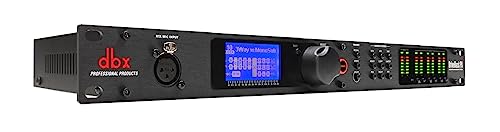
- Setup Wizard and Streamlined AutoEQ
- Advanced Feedback Suppression for live use
- Mobile control on Android, iOS, Mac, and Windows
Best For: Live sound users wanting guided setup and remote tuning
Filter-Rich DSP Controller

- PEQ, shelf, pass, and all-pass filter types
- Butterworth, Bessel, and Linkwitz-Riley crossover alignments
- Built-in signal generator and linked stereo channels
Best For: Venues and installs needing deep filter control and stereo DSP
Rack Digital Mixer Option

- 12-input rack mixer format
- USB connectivity for digital workflow
- Includes iPad for remote-style control
Best For: Small rigs needing a rack digital mixer with USB and app-based control
All-in-One Rack Control
dbx DriveRack 260 2x6 I/O Loudspeaker Management System

- 2-in/6-out loudspeaker management processor
- AFS feedback suppression and limiter protection
- Wizard setup plus DriveWare GUI control
Best For: Live sound engineers and installed PA systems
FIR-Ready DSP
Sound Town MODE Audio MDX-48 4x8 Loudspeaker Processor
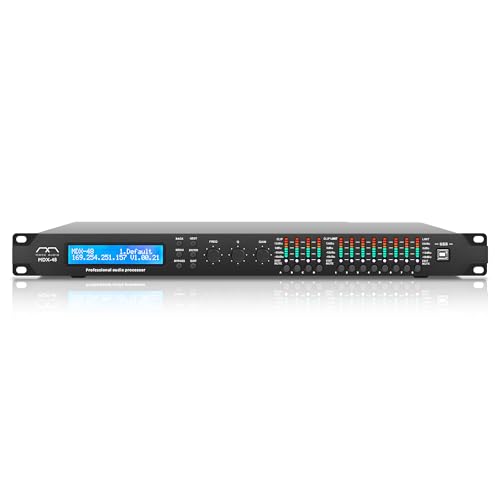
- 4-in/8-out DSP with 96kHz/24-bit processing
- FIR filtering plus extensive EQ, delay, and routing
- Dante, AES, Ethernet, RS-232, and USB control
Best For: Engineers needing FIR processing and Dante/AES integration
PA System Bundle
dbx DriveRack PA2 w/ RTA-M Microphone Kit

- PA2 processor bundled with RTA-M measurement mic
- Includes long XLR cables for calibration and hookups
- Six outputs for stereo low, mid, and high routing
Best For: Bands, DJs, and PA setups starting from scratch
Premium 4x8 DSP Processor
Ashly Protea 4.8SP 4 x 8 Loudspeaker System Processor

- 4-in/8-out loudspeaker system processor
- Front-panel LCD with touch control
- Rack-mount metal enclosure for pro audio
Best For: Professional users needing a rack-mounted 4x8 processor with direct front-panel control
Compact Rack PA2 DSP
Professional 2-in 6-Out Graphic Equalizer Driver Rack PA2

- 2-in/6-out audio processor for loudspeaker management
- Graphic LCD plus limiter and delay features
- Compact rack-friendly design at 2.2 pounds
Best For: Smaller PA setups that need a compact processor with essential DSP features
Advanced Line Array DSP
DP-26 2-In/6-Out Professional Digital Audio Processor

- 1U rackmount DSP with crossover, EQ, limiter, and delay
- USB/RS485/RS232 control with PC software
- 32-bit DSP and 96kHz sampling for detailed tuning
Best For: Line array and pro audio systems needing deep DSP control in a 1U rack unit
Precision DSP Core – Behringer ULTRADRIVE DCX2496LE
If you need a rackmount loudspeaker management processor for precise system tuning, the Behringer ULTRADRIVE DCX2496LE focuses on the essentials: flexible routing, high-resolution conversion, and detailed EQ control. It gives you 2 analog inputs and 6 analog outputs, making it a practical fit for multi-way PA setups and installations that need careful signal management.
Best For: Installers and operators who want a flexible digital speaker processor with 2-in/6-out routing and detailed EQ tools.
Pros:
- 2 analog inputs and 6 analog outputs for flexible speaker routing
- 24-bit/96 kHz A/D and D/A converters with 113 dB dynamic range
- Dynamic EQs and selectable parametric EQs on inputs and outputs
Cons:
- Analog-focused signal path may not suit users looking for newer networked features
- Setup is more technical than an all-in-one easy mode processor
Overall, this is a straightforward loudspeaker management processor built around signal quality and control rather than convenience extras. It makes the most sense for users who want solid digital processing and flexible analog I/O in a rack-friendly format.
Auto-Tuned System Tool – dbx DriveRack PA2
The dbx DriveRack PA2 is a rackmount loudspeaker management processor aimed at making PA tuning more approachable without giving up core control. Its Setup Wizard, AutoEQ, AFS feedback suppression, and mobile control support make it a strong option when you want faster system setup and easier day-to-day adjustments.
Best For: Live sound users who want guided setup, feedback control, and remote tuning from mobile or desktop devices.
Pros:
- Setup Wizard and Streamlined AutoEQ simplify initial tuning
- Advanced Feedback Suppression helps manage feedback on live systems
- Mobile control works with Android, iOS, Mac, and Windows
- Includes compression, graphic EQ, parametric EQs, crossover, and limiting
Cons:
- Best features depend on learning the guided workflow and control options
- More feature-rich than a basic processor, which may be more than some small rigs need
For users who want a rackmount loudspeaker management processor with modern control and a structured setup path, the PA2 stands out. It combines practical protection and tuning tools in a package designed for live PA use.
Filter-Rich DSP Controller – Peavey VSX 26e
The Peavey VSX 26e is a DSP-based rackmount loudspeaker management processor built for precise control over EQ, crossover, delay, and limiting. It adds useful filter choices like PEQ, shelving, pass filters, and all-pass options, plus crossover alignments from Butterworth to Linkwitz-Riley for detailed system shaping.
Best For: Venues, installs, and live sound systems that need deep filter options and stereo-linked DSP control.
Pros:
- Multiple EQ filter types including PEQ, shelf, pass, and all-pass filters
- Crossover and band-pass filters support Butterworth, Bessel, and Linkwitz-Riley alignments
- Includes a signal generator with sine, white noise, and pink noise
- Channels can be linked for simplified stereo operation
Cons:
- Tabletop mount design is less rack-specific than some dedicated units
- Feature depth may be more than needed for simpler PA setups
This model is a strong fit when the priority is control rather than simplicity. If you need a rackmount loudspeaker management processor with extensive filter choices and test-tone tools, the VSX 26e is built for that job.
Rack Digital Mixer Option – Behringer XR12
The Behringer XR12 is a 12-input X Air rack mixer that can serve users looking for a compact rackmount loudspeaker management processor-style workflow with digital control. Its rack form, USB connectivity, and included iPad support make it practical for small systems where remote mixing and simple digital integration matter.
Best For: Small live rigs and compact setups that need a rack digital mixer with USB connectivity and iPad-based control.
Pros:
- 12-input rack mixer format for compact system integration
- USB connectivity for digital workflow support
- Includes iPad for remote-style control use
- Works well in small, corded-electric setups
Cons:
- Primarily a digital mixer, not a dedicated loudspeaker management processor
- Fewer stated processor features than the other units in this roundup
As a rack-mounted digital option, the XR12 is best viewed as a flexible mixer first rather than a full speaker-management box. It still makes sense if your priority is compact control, USB connectivity, and a rack-friendly footprint.
All-in-One Rack Control – dbx DriveRack 260 2×6 I/O Loudspeaker Management System
The dbx DriveRack 260 is a rackmount loudspeaker management processor built for venues that need straightforward system control in one box. With 2-channel input and 6-output routing, it combines crossover, EQ, compression, limiting, delay, and feedback suppression to help you shape and protect a full PA setup.
Best For: Live sound engineers, contractors, and installed systems that need flexible loudspeaker processing with feedback control.
Pros:
- All-in-one processing with crossover, graphic EQ, parametric EQ, compression, and limiting.
- Patent-pending AFS feedback suppression helps manage unpredictable stage feedback in real time.
- PeakStopPlus limiting and alignment delay add speaker protection and system time alignment.
- Setup Wizard and DriveWare GUI simplify configuration and soundcheck workflow.
Cons:
- Uses XLR and rack-mounted hardware, so it is aimed at wired pro audio setups.
- Best suited to users comfortable with DSP-style system tuning rather than plug-and-play operation.
The DriveRack 260 stands out as a practical rackmount loudspeaker management processor when you want deep control without piecing together separate processors. It is especially appealing if you value integrated protection, feedback reduction, and guided setup in one unit.
FIR-Ready DSP – Sound Town MODE Audio MDX-48 4×8 Loudspeaker Processor
The Sound Town MODE Audio MDX-48 is a rackmount loudspeaker management processor made for more advanced PA tuning and routing. It offers 4-in/8-out DSP processing, 96kHz/24-bit operation, FIR filtering, and multiple control and networking options for systems that need precise alignment and flexible integration.
Best For: Engineers and system builders who want FIR-based processing, Dante/AES support, and detailed control in a rack unit.
Pros:
- 4-in/8-out DSP with 96kHz, 24-bit sampling for full PA system management.
- FIR filtering provides linear phase response and precise filtering.
- Broad connectivity including analog XLR, AES digital, Dante, Ethernet, RS-232, and USB.
- Front-panel LCD, channel buttons, and Mconsole software support convenient setup and control.
Cons:
- Feature set is extensive, so it is better suited to users comfortable with advanced DSP workflows.
- Four input channels may be limiting for larger routing needs that require more sources.
For users who want a rackmount loudspeaker management processor with FIR tools and networked audio support, the MDX-48 is the most technically capable option here. It is a strong fit for tuning-focused systems that need precise processing and flexible integration.
PA System Bundle – dbx DriveRack PA2 w/ RTA-M Microphone Kit
dbx DriveRack PA2 PA Management System w/ RTA-M Measurement Microphone, Cables Bundle
Check Price On AmazonThe dbx DriveRack PA2 bundle is a practical rackmount loudspeaker management processor package for users who want measurement gear included from the start. It pairs the PA2 with an RTA-M microphone, long XLR cabling, and output cables, making it easier to calibrate and connect a stereo PA system with six outputs.
Best For: Bands, DJs, and PA users who want an all-in-one processor bundle with measurement microphone and cables included.
Pros:
- Includes the DriveRack PA2 plus an RTA-M measurement microphone for system calibration.
- Bundle adds a 50ft XLR cable and eight 20ft XLR cables for easier hookup.
- Six-output architecture supports stereo low, mid, and high channel routing.
- Extended warranty is included in the package.
Cons:
- Floor-standing and cabling-focused bundle may be more than some users need if they already own test gear.
- Package value depends on needing the included microphone and cables.
If you want a rackmount loudspeaker management processor bundle that covers both processing and calibration accessories, this PA2 package is a convenient buy. It is especially sensible for users setting up a system from scratch and wanting the essentials in one purchase.
Premium 4×8 DSP Processor – Ashly Protea 4.8SP 4 x 8 Loudspeaker System Processor
If you want a rackmount loudspeaker management processor for professional audio applications, the Ashly Protea 4.8SP keeps the focus on straightforward control and flexible routing. Its 4-in/8-out design, balanced stereo output mode, and front-panel LCD make it a practical fit for studios, stages, and other installed systems that need reliable system processing in a 1U rack format.
Best For: Engineers and integrators who need a rack-mounted 4-input/8-output processor with front-panel control and balanced outputs.
Pros:
- 4-in/8-out configuration supports flexible loudspeaker system processing.
- Front-panel parameter control with LCD screen for direct setup.
- Rack-mount metal enclosure fits professional audio installs.
- Balanced stereo output mode suits studio and stage use.
Cons:
- Audio latency is listed at 682 milliseconds.
- Heavier than some compact processors at 9.4 pounds.
Overall, the Protea 4.8SP is best viewed as a solid rackmount loudspeaker management processor for users who value hands-on control and a conventional 4×8 architecture. Its feature set is practical rather than flashy, which can be a strength in installed professional systems.
Compact Rack PA2 DSP – Professional 2-in 6-Out Graphic Equalizer Driver Rack PA2
This rackmount loudspeaker management processor is positioned as a compact audio processor for stage sound equipment and high-performance audio setups. The 2-in/6-out layout, graphic LCD display, stereo output limiter, delay, and 24-bit A/D conversion make it a functional choice when you need core DSP features without a large chassis.
Best For: Compact loudspeaker management setups that need basic processing tools in a small rack-friendly unit.
Pros:
- 2-in/6-out design suits smaller loudspeaker management systems.
- Includes stereo output limiter and speaker fine-tuning delay.
- 24-bit A/D converter with over 110dB dynamic range.
- Graphic LCD display supports easier configuration.
Cons:
- Product details are limited compared with more fully specified processors.
- Generic model identification may be a drawback for buyers wanting a known platform.
As a rackmount loudspeaker management processor, this unit is appealing mainly for its core DSP toolset and compact footprint. It looks best suited to buyers who want the essentials—limiting, delay, and equalization—rather than a deeply documented premium platform.
Advanced Line Array DSP – DP-26 2-In/6-Out Professional Digital Audio Processor
The DP-26 is a rackmount loudspeaker management processor built for line array systems and other professional setups that need extensive DSP control in a 1U chassis. With crossover, equalizer, limiter, delayer, and filter functions, plus PC software control and storage for 12 user programs, it offers a more advanced workflow for system tuning and deployment.
Best For: System techs and integrators who want a feature-heavy rackmount processor with detailed crossover and delay control.
Pros:
- 1U rack-mountable design with multiple DSP functions in one unit.
- USB, RS485, and RS232 control options for flexible setup.
- 32-bit DSP with 96kHz sampling and 24-bit conversion.
- Per-channel EQ, crossover shaping, phase, and delay controls.
Cons:
- Feature depth may require more setup time than simpler processors.
- At 10.08 pounds, it is not the lightest option in its class.
For buyers comparing a rackmount loudspeaker management processor with serious tuning capability, the DP-26 stands out for its extensive control set and software support. It is especially attractive when you need one unit to replace several separate processing devices.
How We Picked the Best Rackmount Loudspeaker Management Processor
For this roundup, we focused on the features that matter most in a Rackmount Loudspeaker Management Processor: I/O flexibility, crossover and filter options, EQ tools, delay, limiting, room correction support, connectivity, and ease of setup. We also weighed whether the processor is better suited to portable PA rigs, installed sound, or more advanced system tuning.
Quick Comparison
Some models are built for straightforward PA optimization and fast setup, while others offer deeper DSP control for demanding installations and line array applications. If you want simple operation, look for guided setup tools, auto-EQ, and bundled measurement hardware. If you need more advanced routing or network audio, prioritize matrix flexibility and digital connectivity.
Key Buying Factors for a Rackmount Loudspeaker Management Processor
I/O Count and Routing
Match the input and output configuration to your system. A 2-in/6-out processor works well for many stereo PA rigs, while 4×8 and matrix-based designs are better for multi-zone systems or larger loudspeaker arrays.
Crossover, EQ, Delay, and Limiting
These are the core tools of any Rackmount Loudspeaker Management Processor. Crossovers split the signal properly, EQ helps shape tonal balance, delay aligns speakers, and limiters add protection for amps and drivers.
Measurement and Tuning Tools
Auto-EQ, RTA support, and software control can speed up setup significantly. These features are especially helpful if you tune systems frequently or work in changing venues.
Connectivity and Workflow
Consider whether you need front-panel control, computer-based editing, app control, or digital audio networking. The best workflow depends on how often you adjust the system and how many users will operate it.
Who Should Buy Which Rackmount Loudspeaker Management Processor?
If you need a simple and reliable processor for small to mid-size PA use, choose a model with guided tuning and straightforward presets. Installers and advanced users should look at more configurable processors with stronger matrix routing and deeper DSP control. For line array or larger system management, prioritize units with FIR processing, network audio support, and precise delay alignment.
In short, the best Rackmount Loudspeaker Management Processor is the one that matches your system size, your tuning experience, and how much control you need on the road or in a fixed installation.