Choosing a wireless in ear monitor system with earbuds can make rehearsals, live gigs, and studio sessions far easier to control. The right system should keep your mix clear, reduce stage volume, and stay stable under real performance conditions.
Below, we focus on practical differences that matter most: latency, frequency band, range, stereo support, and ease of pairing. If you need a dependable monitor setup for solo practice or full-band use, this roundup is built to help you narrow it down fast.
Best 10 Wireless in Ear Monitor System with Earbuds Picks for 2026
Ultra-Portable 2.4GHz Set
Xvive U4 Wireless in-Ear Monitor System Set
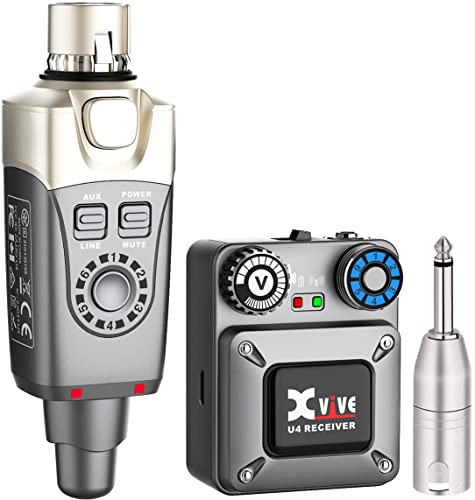
- 2.4GHz wireless with under-5ms latency
- Over 90 feet of range for small venues
- Includes transmitter, receiver, and carry bag
Best For: Compact live monitoring and rehearsal setups
Auto-Pairing Stereo Pack
LEKATO MS-1 Wireless In Ear Monitor System
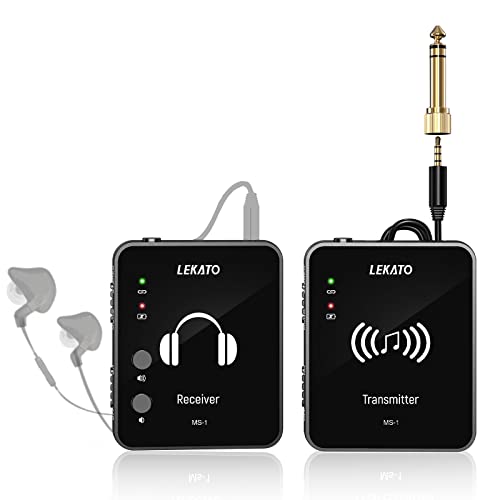
- Auto-pairing keeps setup simple
- Supports up to 6 devices at once
- Stereo transmission with about 100 ft range
Best For: Group rehearsals and small-stage monitoring
Pro UHF Starter Set
Sennheiser XSW-IEM Wireless In-ear Monitor System
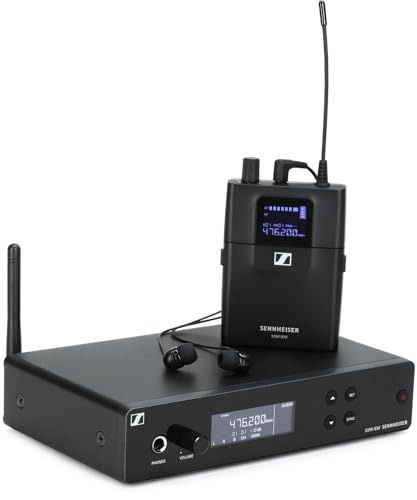
- Reliable UHF wireless connection
- Focus mode with EQ and limiter
- Infrared sync for multiple receivers
Best For: Musicians wanting more control over their in-ear mix
Practice-Friendly 2.4G Set
JOYO Wireless in Ear Monitor System JW-07

- Auto-pairing 2.4GHz wireless design
- Under-5ms latency for responsive monitoring
- Over 8 hours of battery life
Best For: Guitar practice and solo monitoring
Stereo Stage Pick
Phenyx Pro PTM-10 Stereo Wireless IEM

- True stereo or mono monitoring
- 900MHz UHF with 89 frequencies
- Includes earbuds, case, and rack kit
Best For: Performers who want a stereo wireless IEM with earbuds for stage and studio
Starter-Friendly Option
LEKATO MS-20 2.4G Wireless IEM
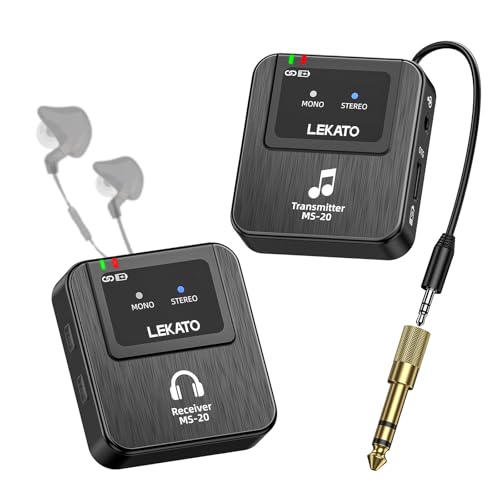
- 2.4GHz low-latency monitoring
- Auto-pairing with OTG support
- Works with up to 10 receiver pairs
Best For: Beginners and rehearsal users who want a compact, easy wireless IEM system
Clear Mono Choice
Phenyx Pro PTM-11 Mono Wireless IEM

- Mono monitoring avoids phase issues
- UHF 900MHz with 50 selectable frequencies
- Includes metal transmitter and carry case
Best For: Users who want focused mono monitoring for church, broadcast, conferences, or live performance
Top Pick for Cue-Ready Bands
SWIFF AUDIO WX520 5.8GHz IEM System

- Cue talkback with external dynamic microphone support
- 5.8GHz signal with 4 channels and low latency
- One transmitter can serve multiple receivers
Best For: Bands and live teams needing cue communication and flexible monitoring
Best Value with Included Earbuds
UHF Metal IEM System with Pro Earphones

- Includes pro earphones with 6 earbud sizes
- 16 channels help avoid interference
- Portable rechargeable transmitter and receiver
Best For: Singers, DJs, and bands wanting an easy all-in-one monitor bundle
Best Plug-and-Play Option

- Auto-pairing for fast setup
- 10 channels with under 5ms latency
- Up to 10-12 hours of battery life
Best For: Musicians who want quick setup and long runtime
Ultra-Portable 2.4GHz Set – Xvive U4 Wireless in-Ear Monitor System Set
If you want a wireless in ear monitor system with earbuds-style convenience for small stages or rehearsal spaces, the Xvive U4 is built around simplicity and portability. Its 2.4GHz connection, sub-5ms latency, and included transmitter/receiver set make it easy to send monitor audio wirelessly without a complicated setup.
Best For: Performers, small bands, and venues that need a compact wireless monitor solution with quick setup.
Pros:
- 2.4GHz wireless system works anywhere in the world.
- Less than 5ms latency helps keep monitoring distraction-free.
- Over 90 feet of working range suits small clubs and stages.
- Up to 5 hours of rechargeable battery life for show use.
Cons:
- Battery life is limited compared with longer-run systems.
- Designed for smaller venues rather than large stage coverage.
- Only one receiver is included in the set.
Overall, the U4 is a straightforward pick if you value portability, low latency, and an included carry bag over advanced system features. It keeps the experience simple while covering the basics well for live monitoring.
Auto-Pairing Stereo Pack – LEKATO MS-1 Wireless In Ear Monitor System
The LEKATO MS-1 is a practical wireless in ear monitor system with earbuds-style monitoring in mind for bands, churches, and small gigs. It focuses on easy setup, stereo transmission, and a one-to-many design, so it can fit multi-user practice sessions without a complicated menu.
Best For: Bands, churches, and small/medium performance setups that want simple pairing and multiple receivers.
Pros:
- Supports up to 6 devices working at the same time.
- Auto-pairing reduces setup time and channel selection.
- True stereo transmission with stereo/mono input switching.
- About 100 feet of range and more than 5 hours of battery life.
Cons:
- Latency is listed at under 12ms, not the lowest in class.
- One transmitter can pair to many receivers, but the system is still aimed at smaller-scale use.
- Requires a stereo source for full stereo performance.
As a value-focused monitor system, the MS-1 stands out for convenience and flexibility more than premium polish. If you need a wireless setup that is easy to pair and ready for group use, this is a solid fit.
Pro UHF Starter Set – Sennheiser XSW-IEM Wireless In-ear Monitor System
The Sennheiser XSW-IEM is a more professional take on a wireless in ear monitor system with earbuds, built around reliable UHF wireless and flexible control. It is aimed at musicians who want a starter set that still offers detailed audio control, including focus mode, EQ, limiter functions, and easy receiver syncing.
Best For: Players who want a dependable UHF in-ear monitoring system with more control over their mix.
Pros:
- UHF wireless connection is designed for reliable, easy management.
- Flexible audio modes and frequency presets or manual control.
- Focus mode helps balance a personal mix.
- EQ, limiter, and infrared syncing add useful pro features.
Cons:
- Fewer setup details are listed than on some simpler 2.4GHz models.
- May be more system than casual users need.
- Specific range and battery figures are not provided in the supplied notes.
This set makes sense if you want a more refined monitoring tool rather than the simplest plug-and-play option. Its controls and UHF design point toward users who care about mix management as much as wireless convenience.
Practice-Friendly 2.4G Set – JOYO Wireless in Ear Monitor System JW-07
If you are shopping for a wireless in ear monitor system with earbuds for practice, guitar, DJ work, or live use, the JOYO JW-07 focuses on straightforward monitoring and strong battery life. It uses 2.4GHz wireless, automatic pairing, and low-latency transmission to keep the signal responsive during rehearsal or performance.
Best For: Guitar players, beginners, and practice-focused users who want a simple wireless monitor system with long battery life.
Pros:
- Less than 5ms latency supports real-time monitoring.
- Over 8 hours of battery life is strong for extended practice sessions.
- 2.4GHz system includes automatic pairing for easier setup.
- Frequency hopping is designed to help reduce interference.
Cons:
- One transmitter does not support multiple receivers.
- Open-space range is listed at 40-60 feet, which is shorter than some rivals.
- More focused on practice and smaller-scale use than larger stage systems.
For solo players or anyone prioritizing easy monitoring and battery endurance, the JW-07 is a practical choice. It trades multi-receiver flexibility for a simple, stable setup that works well for individual use.
Stereo Stage Pick – Phenyx Pro PTM-10 Stereo Wireless IEM
If you want a wireless in ear monitor system with earbuds that feels built for live work, the Phenyx Pro PTM-10 is a strong stereo option. Its UHF 900MHz design aims for lower congestion than 2.4GHz systems, while stereo mode gives a wider, more directional mix for performers who want detail on stage.
Best For: Singers, bands, drummers, speakers, and worship teams that want stereo monitoring with reliable range.
Pros:
- True stereo monitoring with mono/stereo mode selection
- UHF 900MHz system with 89 tunable frequencies and support for up to 5 systems
- Up to 160 ft. operating range for stage, studio, lecture, and exhibit use
- Includes earbuds, rackmount kit, carrying case, and metal transmitter housing
Cons:
- Best suited to users who want a more involved setup than ultra-minimal starter units
- Focuses on wired earbuds rather than a truly all-in-one listening package
Overall, the PTM-10 stands out for performers who want stereo clarity, practical onboard controls, and professional-friendly build features. It’s a versatile choice when you need dependable monitoring and value the extra control of a feature-rich UHF system.
Starter-Friendly Option – LEKATO MS-20 2.4G Wireless IEM
The LEKATO MS-20 is a practical wireless in ear monitor system with earbuds support in a simple, portable package. It uses 2.4GHz wireless audio with low-latency monitoring, auto-pairing, and OTG support, making it a good fit for quick setup with phones, tablets, laptops, or desktops.
Best For: Beginner musicians, singers, and rehearsal setups that need a compact and easy-to-use monitor system.
Pros:
- 2.4GHz wireless system with 24bit/48kHz HD audio
- Auto-pairing receiver and compact clip-on design for portability
- OTG support for smartphones and tablets
- One transmitter can feed up to 10 receiver pairs
Cons:
- Earphones are not included, so you’ll need your own earbuds or monitors
- Battery life is listed at 8+ hours, which may be enough for practice but not ideal for very long sessions
For a starter-friendly IEM setup, the MS-20 keeps things straightforward without stripping away useful features. It’s especially appealing if you want easy pairing, flexible device input, and the option to use your preferred earbuds.
Clear Mono Choice – Phenyx Pro PTM-11 Mono Wireless IEM
The Phenyx Pro PTM-11 is a mono-focused wireless in ear monitor system with earbuds included, designed for clear and stable monitoring on stage or in the studio. Its UHF 900MHz operation, separate outputs, and half-rack metal transmitter make it a practical choice when you want a straightforward monitoring path without stereo complexity.
Best For: Church, conference, broadcast, and live performance users who prefer clean mono monitoring and simple operation.
Pros:
- Mono monitoring helps avoid phase issues and keeps the mix focused
- UHF 900MHz system with 50 selectable frequencies and up to 5 systems working together
- Separate left/right inputs and line out for flexible signal routing
- Metal transmitter, rackmount kit, and carrying case included
Cons:
- Mono sound won’t appeal to users who specifically want stereo imaging
- Only one earphone is listed in the box contents
If your priority is clarity, stability, and easy monitoring, the PTM-11 delivers exactly that. It’s a strong fit for users who need a dependable wireless in-ear monitor system with a practical feature set and a more streamlined listening approach.
Top Pick for Cue-Ready Bands – SWIFF AUDIO WX520 5.8GHz IEM System
If you want a wireless in ear monitor system with earbuds for live shows, the SWIFF AUDIO WX520 is built around practical stage needs: cue talkback, stereo/mono switching, and stable 5.8GHz transmission. It’s a good fit when you need clear monitoring plus a way to coordinate with the band without adding much setup complexity.
Best For: Bands, studio sessions, worship teams, and live performers who need cue communication and flexible monitoring.
Pros:
- 5.8GHz wireless design with 4 selectable channels for stronger anti-interference performance.
- Supports stereo/mono switching and external dynamic-mic cue talkback.
- Low latency under 9.2ms for real-time stage monitoring.
- One transmitter can support multiple receivers on the same channel.
Cons:
- Receiver battery life is listed at up to 5 hours.
- Best used in environments where 5.8GHz compatibility fits your setup.
Overall, the WX520 stands out when cue communication matters as much as monitor mix quality. Its charging-case transmitter and multi-user support make it a strong choice for rehearsals and gigs where reliability and coordination come first.
Best Value with Included Earbuds – UHF Metal IEM System with Pro Earphones
If you’re shopping for a wireless in ear monitor system with earbuds and want a more straightforward monitor package, this UHF model focuses on stable signal, passive isolation, and easy everyday use. The included pro earphones and 16 adjustable channels make it practical for singers, DJs, studio work, and live performance settings.
Best For: Performers who want a simple, portable UHF monitor system with included earphones and good isolation.
Pros:
- UHF wireless design helps resist interference from other wireless devices.
- Includes pro earphones with 6 earbud sets and up to 33dB passive noise cancellation.
- 16 adjustable channels help avoid same-location frequency conflicts.
- Rechargeable transmitter and receiver offer about 5 hours of use.
Cons:
- Battery life is shorter than some longer-running stage options.
- Only the supplied earphones are described, so it’s more of an all-in-one bundle than a fully customizable monitor setup.
This is a sensible pick if you value included earbuds, portable charging, and easy setup over advanced stage features. It keeps the focus on reliable monitoring and isolation without requiring much fuss.
Best Plug-and-Play Option – M6S 2.4GHz Stereo IEM System
The M6S is a wireless in ear monitor system with earbuds built for quick setup and simple live use. With auto-pairing, 2.4GHz stereo monitoring, and a claimed 164-foot range, it’s aimed at players who want to plug in and start monitoring without spending time on configuration.
Best For: Musicians and bands that want an easy plug-and-play monitor system with long battery life.
Pros:
- Auto-pairing makes setup fast and straightforward.
- 2.4GHz stereo system supports 10 simultaneous channels with no cross-interference.
- Less than 5ms latency with hi-fi 24-bit/48 kbps audio.
- Battery life is rated up to 10-12 hours per charge.
Cons:
- No noise control is listed.
- Uses a 6.35mm jack, so compatibility depends on your audio source.
If you want simple operation and long runtime, the M6S is easy to appreciate. It delivers the core features most performers need for rehearsal and stage monitoring without adding extra complexity.
How We Picked the Best Wireless in Ear Monitor System with Earbuds
We prioritized systems that balance sound stability, usable range, and straightforward operation. For a Wireless in Ear Monitor System with Earbuds, the most important factors are low-latency transmission, consistent wireless performance, and a receiver design that is comfortable to wear for long sessions.
We also looked at whether each model supports mono or stereo monitoring, how easy it is to pair, and whether the system is practical for live stage use, rehearsals, church bands, streaming, or home practice.
Quick Comparison: What Matters Most
Most buyers will fall into one of three groups. Budget-friendly 2.4GHz systems are usually the easiest way to get started. UHF systems often offer more routing flexibility and stronger performance in crowded environments. Higher-end options may add useful features like selectable frequencies, charging cases, or cue mic support.
If you need a simple setup for one performer, look for auto-pairing and a compact bodypack receiver. If you are monitoring a full band, pay closer attention to stereo support, channel control, and interference management.
Key Buying Factors for a Wireless In-Ear Monitor System with Earbuds
Latency and Audio Stability
Low latency helps the mix feel natural, especially for drummers, vocalists, and guitarists. Even small delays can be distracting. Stability matters just as much, so choose a system known for steady signal lock and predictable performance at your typical stage distance.
Frequency Band and Interference
2.4GHz systems are common and convenient, while UHF models are often better for environments with heavy wireless congestion. If you perform in clubs, churches, or event spaces with many wireless devices, a selectable-frequency UHF option can be a smart upgrade.
Stereo Versus Mono
Stereo monitoring gives you better placement and separation, which can be helpful for detailed mixes. Mono is simpler and sometimes more robust for basic vocal or click-track monitoring. The best choice depends on how much mix control you need.
Range, Battery Life, and Build
Check real-world operating range, not just the maximum claim on the box. Battery life should cover your rehearsals or full set without stress. Durable transmitters, metal receivers, and secure belt clips are useful if you gig regularly.
Who Should Buy Which Wireless in Ear Monitor System with Earbuds?
Choose a simpler 2.4GHz Wireless in Ear Monitor System with Earbuds if you want quick setup, lighter use, or a lower entry price. Pick a UHF system if you need stronger flexibility for live production or multi-device environments. If you are a vocalist, drummer, or worship musician, prioritize low latency and a stable mix. If you are a solo performer or content creator, ease of pairing and compact size may matter more than advanced routing.
In short, match the system to your stage size, wireless environment, and monitoring needs rather than chasing the longest spec sheet.