Choosing a professional wireless in ear monitoring system can make a dramatic difference in how confidently you perform, rehearse, and mix on stage. The right setup gives you clearer detail, less stage volume, and a more controlled listening experience.
In this roundup, we focus on systems that balance sound quality, wireless stability, ease of use, and real-world value for musicians, worship teams, and studio users.
Best 10 Professional Wireless in Ear Monitoring System Picks for 2026
Portable 2.4GHz Stage Monitoring
Xvive U4 Wireless in-Ear Monitor System Set
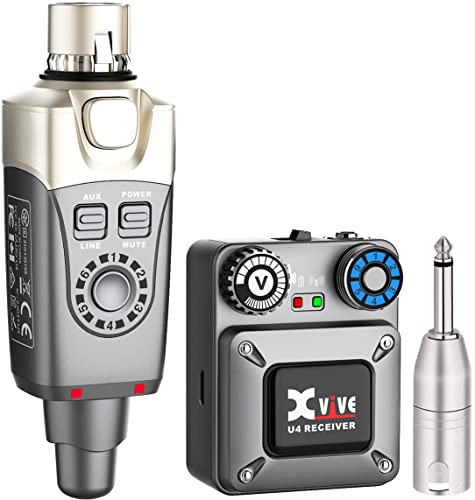
- 2.4GHz wireless works anywhere in the world
- Under 5ms latency for tight monitoring
- Over 90 feet of range with 5-hour battery life
Best For: Small clubs, rehearsals, and portable stage setups
Rackmount Live Sound System
Sennheiser XSW IEM Wireless In-Ear Monitoring System

- Rackmountable transmitter and full live-sound package
- Sound isolation with IE4 in-ear headphones
- Designed for theater, public speaking, and live music
Best For: Installed live sound rigs and stage professionals
Multi-Receiver UHF Band Monitoring
Phenyx Pro PTM-33-4B 4-Channel Wireless IEM System

- Comes with 4 bodypacks and 4 in-ear earphones
- Four separate mixes with UHF 4x25 frequency options
- 140-164 ft line-of-sight range for stage movement
Best For: Four-performer bands and worship teams
Compact Stereo Practice Monitor
LEKATO MS-1 2.4GHz Stereo Wireless IEM System
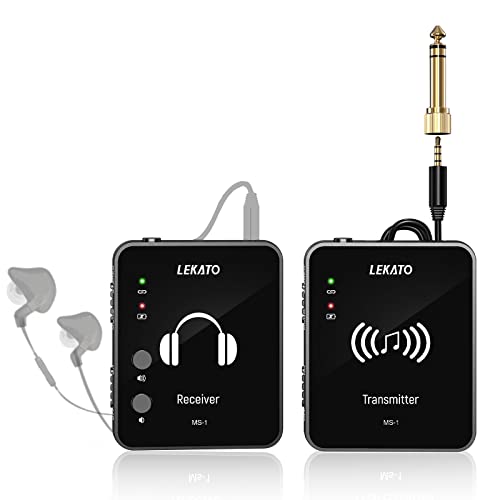
- Supports up to 6 receiver sets from one transmitter
- Automatic pairing with true stereo transmission
- Less than 12ms latency and 5-hour battery life
Best For: Small bands, rehearsal rooms, and church practice
True Stereo Flexibility
Xvive U45D True Stereo Wireless IEM System

- Four monitoring modes for stereo and mono use
- Dual XLR inputs for clearer left/right separation
- Less than 5 ms latency with quick channel setup
Best For: Musicians and worship teams needing flexible low-latency monitoring
Simple 2.4GHz Monitor Rig

- 2.4GHz wireless system with mono XLR or TS input
- Less than 5 ms latency and six channel options
- Built-in limiter and about 5 hours of battery life
Best For: Solo performers and small groups wanting an easy wireless monitor feed
Rack-Ready UHF Control

- 900MHz system with up to 89 tunable frequencies
- Stereo/mono monitoring plus EQ, limiter, and lock functions
- Rack mount kit included for pro installations
Best For: Stage and studio users who want rack-ready control and multi-system flexibility
Reliable 5.8 GHz Monitoring

- 5.8 GHz true diversity wireless connection
- 24-bit/48kHz audio with 20Hz–20kHz range
- Up to 5 hours of battery life
Best For: Reliable stage or home monitoring with simple channel scanning
Low-Latency Stereo Pick

- Mono mode latency under 4.5 ms
- One transmitter supports up to 4 receiver pairs
- 6–8 hours of battery life with LED status
Best For: Bands, churches, and rehearsal setups needing multi-receiver support
Long-Run Portable System

- Up to 30 hours with the charging case
- OTG support for smartphones and USB-C devices
- One transmitter supports up to 10 receivers
Best For: Long sessions, portable setups, and phone-based playback
Portable 2.4GHz Stage Monitoring – Xvive U4 Wireless in-Ear Monitor System Set
If you want a professional wireless in ear monitoring system that is simple to deploy and easy to take on the road, the Xvive U4 is built around portability and low-latency performance. Its 2.4GHz design works anywhere in the world, with over 90 feet of range and under 5ms latency for small clubs, rehearsal spaces, and live stages.
Best For: Small bands, clubs, and performers who need a compact wireless monitor solution.
Pros:
- 2.4GHz wireless design works globally without worrying about local bands.
- Less than 5ms latency helps keep monitoring tight and distraction-free.
- Over 90 feet of range suits small venues and stage use.
- Rechargeable transmitter and receiver offer up to 5 hours of battery life.
Cons:
- Battery life tops out at 5 hours, so longer shows may need planning.
- Range is best suited to small clubs and venues rather than large stages.
Overall, the Xvive U4 is a practical pick when you want a straightforward wireless in-ear system for live performance without a lot of setup complexity. It focuses on portability, low latency, and enough range for compact stages.
Rackmount Live Sound System – Sennheiser XSW IEM Wireless In-Ear Monitoring System
The Sennheiser XSW IEM is a professional wireless in ear monitoring system designed for live sound applications, theater, public speaking, and live music. It combines a rackmountable transmitter, bodypack receiver, and IE4 in-ear headphones, with sound isolation and a balanced armature driver aimed at clear monitoring on stage.
Best For: Live sound users who want a rackmountable monitoring setup from a trusted brand.
Pros:
- Rackmountable transmitter supports a more permanent live sound setup.
- Sound isolation and IE4 in-ear headphones help block distractions.
- Balanced armature driver and 20 Hz – 20 kHz range support detailed monitoring.
- Built for live sound, theater, public speaking, and live music use.
Cons:
- Wireless technology is listed as Bluetooth, which may not suit every pro workflow.
- Heavier than compact clip-on alternatives at 700 g.
For users prioritizing a rack-friendly monitor rig and stage-focused feature set, this Sennheiser system is the most installation-ready option in the group. It leans toward dependable live sound monitoring rather than ultra-portable use.
Multi-Receiver UHF Band Monitoring – Phenyx Pro PTM-33-4B 4-Channel Wireless IEM System
If you need a professional wireless in ear monitoring system for multiple performers, the Phenyx Pro PTM-33-4B is built around four bodypacks and four separate mixes. Its UHF mono design, 140-164 ft line-of-sight range, and rackmount-friendly transmitter make it a strong fit for bands, worship teams, and stage crews.
Best For: Four-person bands, worship teams, and live stages that need separate monitor mixes.
Pros:
- Includes 4 bodypack receivers and 4 in-ear earphones for multiple performers.
- Four groups of left/right inputs and loop outputs support flexible monitor routing.
- UHF operation with 4×25 frequencies helps avoid interference.
- 140-164 ft line-of-sight range gives performers room to move on stage.
Cons:
- Mono monitoring only, so it is not the best choice if you need stereo IEMs.
- Performance range depends on avoiding thick walls, glass, and metal blocks.
This is the most channel-capable option here for groups that need practical monitoring control across several performers. It is geared toward organized live setups where separate mixes and rackmount convenience matter.
Compact Stereo Practice Monitor – LEKATO MS-1 2.4GHz Stereo Wireless IEM System
The LEKATO MS-1 is a practical professional wireless in ear monitoring system for rehearsal rooms, small gigs, and studio use. It supports up to six receiver sets from one transmitter, offers true stereo transmission, and keeps setup easy with automatic pairing and a compact 2.4GHz wireless design.
Best For: Bands and small venues that want an easy stereo monitoring system for practice and performance.
Pros:
- Supports up to 6 sets working at the same time from one transmitter.
- Automatic pairing makes setup fast and simple.
- True stereo transmission with stereo/mono input switching.
- 2.4GHz wireless design offers less than 12ms latency and 5-hour battery life.
Cons:
- Wireless range is rated at 100 feet, which is best for small and medium spaces.
- Battery life is good for daily use, but still limited to about 5 hours.
For users who want an affordable-feeling, easy-to-run monitoring solution, the MS-1 is focused on convenience and stereo flexibility. It is especially appealing when quick setup matters more than a large-scale stage system.
True Stereo Flexibility – Xvive U45D True Stereo Wireless IEM System
If you want a professional wireless in ear monitoring system that can adapt to different mixes fast, the Xvive U45D is built for exactly that. Its four monitoring modes make it easy to switch between true stereo, left or right-only listening, and a combined mono mix, so it works well for bands, worship teams, and rehearsals where needs can change from song to song.
Best For: Musicians and worship teams that need flexible stereo/mono monitoring with simple setup.
Pros:
- Four monitoring modes cover stereo, left, right, and mix workflows.
- True stereo with dual XLR inputs helps separate vocals, instruments, and click tracks.
- Less than 5 ms latency keeps monitoring feeling immediate and connected.
- Fast setup with six channels and channel scan reduces menu work.
Cons:
- Battery life is up to 5 hours, so long sessions may need charging plans.
- Range is listed at up to 100 ft, which may be limiting for larger venues.
Overall, the U45D is a practical choice if you need low-latency wireless monitoring without a complicated rack setup. Its same-mix sharing and stereo options make it especially useful for groups that want one system to serve multiple performers.
Simple 2.4GHz Monitor Rig – Xvive U4 Wireless IEM System
The Xvive U4 is a straightforward professional wireless in ear monitoring system for players who want an easy personal monitor feed. It uses a 2.4GHz wireless connection, supports mono balanced XLR or mono unbalanced TS input, and is designed for quick plug-in, power-on operation for studio work, rehearsal, and live performance.
Best For: Solo performers, small bands, and rehearsal setups that want a simple wireless IEM system.
Pros:
- Less than 5 ms latency supports tight timing on stage.
- Six channels with simultaneous broadcasts help avoid interference.
- Built-in limiter helps reduce distortion from excessive input levels.
- Rechargeable battery provides about 5 hours of use.
Cons:
- Mono input only, so it is not built for true stereo monitoring.
- 2.4GHz systems can be more crowded than lower-frequency options in some environments.
For users who value simplicity over advanced routing, the U4 keeps the monitoring chain compact and easy to manage. It is a solid pick when you need reliable wireless personal monitoring without extra rack complexity.
Rack-Ready UHF Control – Phenyx Pro PTM-10 Stereo IEM
If you need a professional wireless in ear monitoring system with more control and venue-friendly range, the Phenyx Pro PTM-10 is a strong contender. It uses the 900MHz band, offers stereo or mono monitoring, and includes tools like EQ, balance, limiter, pad, and lock functions to help you shape and protect your monitor mix.
Best For: Stage, studio, speech, and conference use where rack mounting and mix control matter.
Pros:
- 900MHz operation is designed to avoid some of the congestion common in 2.4GHz setups.
- Up to 89 tunable frequencies and support for up to 5 systems help multi-rig setups.
- Useful controls include EQ, balance, limiter, pad, and lock functions.
- Rack mount kit and carrying case make it practical for professional transport and installation.
Cons:
- The receiver uses AA batteries, which adds ongoing battery management.
- At 160 ft. range, it is capable, but not the longest option in this roundup.
The PTM-10 stands out when you want more system control than a basic bodypack setup typically offers. Its combination of stereo monitoring, rack-ready hardware, and interference management makes it a versatile fit for demanding environments.
Reliable 5.8 GHz Monitoring – Xvive U45 5.8GHz IEM System
If you want a professional wireless in ear monitoring system built for dependable stage use, the Xvive U45 is a strong pick. Its 5.8 GHz true diversity design is aimed at stable RF performance, while the 20Hz–20kHz range and 24-bit/48kHz audio support a clear monitoring mix for rehearsals, live shows, or home practice.
Best For: Players and engineers who want a simple, reliable 5.8 GHz IEM setup with solid sound quality.
Pros:
- 5.8 GHz true diversity wireless design for more dependable RF connection
- 100 ft / 30.5 m operating distance for stage or home use
- 20Hz–20kHz response with 24-bit/48kHz audio and 110 dB signal-to-noise ratio
- USB-C charging with up to 5 hours of battery life and dual charging cables included
Cons:
- Battery life is shorter than some competing systems
- Channel setup requires manual matching after scan mode
The U45 focuses on straightforward performance monitoring rather than extra features. If your priority is stable wireless audio, clear detail, and a compact system you can quickly set up, this one fits that brief well.
Low-Latency Stereo Pick – LEKATO MS-02 2.4G IEM System
The LEKATO MS-02 is a practical professional wireless in ear monitoring system for small to medium setups that need low-latency monitoring and easy expansion. With mono mode latency under 4.5 ms, 24bit/48kHz audio, and support for one transmitter to multiple receivers, it works well for bands, church teams, and practice spaces.
Best For: Performers who want low-latency monitoring with the option to feed multiple receivers from one transmitter.
Pros:
- Upgraded 2.4G wireless with mono mode latency under 4.5 ms
- One transmitter can send to up to 4 receiver pairs
- 6–8 hours of battery life with LED battery and volume indicators
- 100 ft wireless range and one-key mute for quick control
Cons:
- Earbuds are not included
- Open-area range may be reduced in real-world venues
This system keeps the setup compact while still covering the essentials for monitoring. If you need a flexible IEM option for rehearsals or live performance and do not mind supplying your own earbuds, the MS-02 is a sensible choice.
Long-Run Portable System – LEKATO MS-20 Charging IEM Kit
If battery life matters most in a professional wireless in ear monitoring system, the LEKATO MS-20 stands out with its included charging case and long runtime. It offers 2.4GHz wireless transmission, OTG support for smartphones and USB-C devices, and up to 150 ft range for stage, studio, or rehearsal use.
Best For: Performers who need long battery life, portable charging, and phone or USB-C input support.
Pros:
- Up to 30 hours of usage time with the charging case
- OTG audio input support for smartphones and USB-C devices
- Supports one transmitter to up to 10 receivers
- 150 ft open-area range with 24-bit/48kHz audio and 20–20kHz response
Cons:
- Earphones are not included
- Not water resistant
The MS-20 is built for convenience and staying power more than minimalism. For players who want a portable system that can run longer, handle multiple receivers, and connect directly to modern devices, it is a very practical option.
How We Picked the Best Professional Wireless in Ear Monitoring System
We looked for options that fit real performance needs first: dependable wireless transmission, usable range, straightforward setup, and monitoring features that help musicians hear what matters. We also prioritized systems that serve different use cases, from simple one-person rigs to multi-user setups for bands and worship teams.
For a Professional Wireless in Ear Monitoring System, the most important factors are not just sound quality, but also latency, channel flexibility, battery life, and how well the system behaves in crowded RF environments.
Quick Comparison
Some of these systems are best for solo performers who want a compact, easy-to-carry rig. Others are better suited to groups needing stereo monitoring, multiple receivers, or more flexible frequency handling. If you need the simplest setup, look at the compact 2.4GHz and 5.8GHz options. If you need more control in demanding venues, the UHF and rack-mountable systems may be the better fit.
Key Buying Factors for a Professional Wireless In-Ear Monitoring System
Latency and Sound Stability
Low latency keeps your in-ear mix aligned with what you are playing or singing. Stability matters just as much, especially in live venues where interference can cause dropouts or audible artifacts.
Stereo Vs. Mono
Stereo monitoring gives you better placement and separation, which can help with vocals, click tracks, and detailed mixes. Mono can still work well for simpler setups and may be easier to manage in fast-paced live environments.
Wireless Band and Interference Resistance
Different wireless bands have different strengths. UHF systems often suit more demanding live environments, while 2.4GHz and 5.8GHz models can offer convenience and portability. Choose based on your venue, crowd density, and existing wireless gear.
Range, Power, and Expandability
Think about how far you need to move from the transmitter and whether you need one receiver or several. A Professional Wireless in Ear Monitoring System should match your stage size, rehearsal space, and long-term growth plans.
Who Should Buy Which Professional Wireless in Ear Monitoring System?
Solo singers and small bands: Compact systems with simple pairing and portable receivers are usually the best fit.
Worship teams and touring groups: Look for stereo capability, multiple monitoring modes, stronger range, and reliable transmission across a crowded stage.
Studio users and rehearsal spaces: Ease of setup, predictable performance, and clean audio monitoring may matter more than advanced features.
Teams needing several listeners: Multi-receiver or multi-channel options are worth considering when you need multiple performers on the same monitoring solution.
Whichever route you choose, focus on the combination of clarity, reliability, and comfort. The best system is the one that fits your workflow and lets you hear the mix without distraction.