If you want a single rig that can cover tones, amp models, and direct recording, a guitar multi effects processor for recording is one of the smartest buys you can make.
We focused on units that are useful in real home-studio workflows, with strong connectivity, convincing modeling, and easy editing for fast results.
Best 10 Guitar Multi Effects Processor for Recording Picks for 2026
Studio-Ready Touchscreen Pick
Zoom G6 Guitar Multi-Effects Processor with Amp Modeling
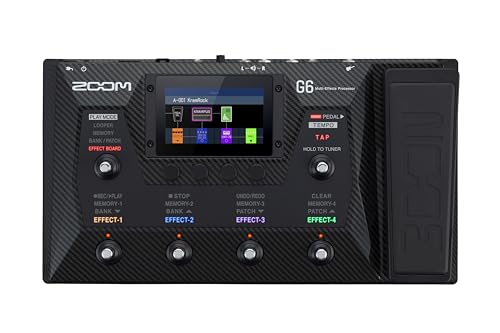
- Seven effects plus amp modeling at once
- USB audio interface for DAW recording
- Touchscreen with 240 patches and SD-card looper
Best For: Players who want a touchscreen unit for studio recording and patch building.
Budget Practice Recorder
MOOER GE100 Multi-Effects Guitar Pedal

- 80 preset patches and 80 user slots
- 180-second looper with drum machine
- Expression pedal and line out mode
Best For: Guitarists who want an affordable pedal for practice, looping, and simple home recording.
Compact OTG Creator Pick
LEKATO Desktop Multi Guitar Effects Processor

- OTG recording to phone for videos
- USB interface with backing-track loopback
- 20 amp sims, 20 IRs, and app editing
Best For: Content creators and mobile players who want compact recording features and app control.
Portable Studio Clip-On
ANN Amp Modeling with USB Recording

- ANN amp modeling with 80 presets
- USB OTG recording at 44.1kHz/24-bit
- Clip-on design with battery and Bluetooth
Best For: players wanting a pocketable recording-friendly processor
Battery Floorboard
GE150 Pro Li Multi-Effects with OTG

- Up to 9 hours of battery power
- 200 presets with 170 effects and 55 amp models
- NAM/MNRS support plus OTG recording
Best For: players who want a battery-powered floor processor
Smart Desktop Rig

- 130+ effects with 9 simultaneous modules
- NAM/IR support and USB loopback recording
- Built-in looper, tuner, metronome, and drum rhythms
Best For: home-recording players who want modern loading support
Portable Stage Companion

- 9-hour integrated battery
- OTG recording and XLR outputs
- 55 amp models with 26 cab sims
Best For: Battery-powered recording and live use
Recording-Ready Modeling Board

- 200+ effects with HD modeling
- 6-in/4-out USB audio interface
- Built-in battery with IR/NAM support
Best For: Home recording and portable USB use
Studio-Friendly Floor Processor

- 255 memory slots and 270+ models
- OTG recording with USB MIDI
- PC editing and cloud preset sharing
Best For: Studio recording and preset editing
Studio-Ready Touchscreen Pick – Zoom G6 Guitar Multi-Effects Processor with Amp Modeling
If you want a guitar multi effects processor for recording that keeps setup fast and tone options wide open, the Zoom G6 is built for that workflow. It lets you run up to seven effects plus amp modeling at once, record directly to your DAW over USB, and build patches quickly on its 4.3″ touchscreen.
Best For: Players who want a touchscreen multi-effects unit for studio recording, looping, and deep patch building.
Pros:
- Chains up to 7 effects plus amp modeling simultaneously.
- USB audio interface for direct recording into a DAW.
- Includes 70 preloaded IRs, with room for 100 more.
- 2-hour looper saves audio to SD card for longer ideas.
Cons:
- Touchscreen workflow may be more than some players need.
- Best suited to users who want to manage patches and IRs.
The Zoom G6 stands out if you want an all-in-one recording-friendly processor with a lot of sound-shaping depth. Between USB recording, IR storage, and its built-in looper, it is a practical pick for home studios and writing sessions.
Budget Practice Recorder – MOOER GE100 Multi-Effects Guitar Pedal
The MOOER GE100 is a straightforward guitar multi effects processor for recording practice takes, writing ideas, and building everyday tones without a complicated layout. It gives you 80 preset patches, 80 user patches, a 180-second looper, and a drum machine, so you can sketch parts without reaching for a computer.
Best For: Guitarists who want an affordable multi-effects pedal for practice, looping, and simple home recording.
Pros:
- 80 preset patches plus 80 user patches.
- 180-second looper and built-in drum rhythms.
- Assignable expression pedal adds real-time control.
- Line out mode helps when playing without an amp.
Cons:
- Not as recording-focused as units with built-in USB audio.
- Looper time is shorter than some studio-oriented processors.
For players who mainly need a compact effects board for practice and songwriting, the GE100 covers the basics well. It is a useful choice if you want playable tones, simple looping, and drum support in one pedal.
Compact OTG Creator Pick – LEKATO Desktop Multi Guitar Effects Processor
If your priority is a guitar multi effects processor for recording content on the go, the LEKATO desktop unit is aimed at that exact use case. It combines amp and IR loading, a USB audio interface, and OTG recording support, so you can capture guitar directly to a smartphone for videos and quick demos.
Best For: Content creators and mobile players who want compact recording features and app-based control.
Pros:
- OTG recording support for direct phone capture.
- USB audio interface with loopback for backing track plus guitar.
- 20 amp sims and 20 cabinet IRs, with third-party file support.
- Very lightweight design with about 9 hours of battery life.
Cons:
- Desktop format is less pedalboard-like than floor processors.
- Best suited to practice and content creation rather than stage-style operation.
The LEKATO makes sense if you want a small processor that is easy to record with and easy to carry. Its OTG and loopback features are especially useful when you want to make fast guitar videos or layered practice recordings.
All-In-One Stage Recorder – Donner Arena 2000 Multi-Effects Pedal
For players who want a guitar multi effects processor for recording with plenty of onboard processing, the Donner Arena 2000 is packed with effects, amp sims, and routing options. It offers USB-style OTG capture, XLR L/R output, MIDI support, and a drum machine, making it flexible for demos, practice, and performance.
Best For: Guitarists who want a feature-rich multi-effects processor for home recording, demos, and stage use.
Pros:
- 278 effect types with amp and cabinet simulations.
- 100 IRs total, with third-party IR support and long IR resolution.
- 40 drum rhythms plus a 60-second looper for one-man-band use.
- XLR L/R, MIDI, Aux In, and cab sim output options.
Cons:
- More feature-heavy than a simple practice pedal.
- Requires careful headphone selection for best volume, per the notes.
The Arena 2000 is the most fully loaded option here, especially if you want lots of routing and recording flexibility. It is a strong fit for players who want one processor that can handle bedroom tracking and more serious live setups.
Portable Studio Clip-On – ANN Amp Modeling with USB Recording
If you want a compact guitar multi effects processor for recording, the SK17 focuses on easy capture and flexible tone shaping in a tiny clip-on format. Its ANN amp modeling, IR loading, and USB audio interface make it a practical option for home tracking, mobile sessions, and silent practice.
Best For: Guitarists who want a pocketable recorder-friendly processor with amp modeling and app-based preset control.
Pros:
- ANN modeling aims to deliver natural, touch-sensitive amp-style response.
- USB sound card supports OTG internal recording at 44.1kHz/24-bit.
- 80 presets and 6 reorderable modules give plenty of sound-building flexibility.
- Includes 3rd-party IR support, Bluetooth audio input, and a headphone jack.
Cons:
- Clip-on format may not suit players who prefer a floor unit with footswitches.
- Battery life is listed at up to 7 hours, which is solid but not class-leading.
- Controls are more menu/app-driven than hands-on pedalboard-style operation.
Overall, the SK17 stands out if recording convenience matters as much as tone variety. It is built for players who want a small, all-in-one processor that can plug into a phone or PC and get to work quickly.
Battery Floorboard – GE150 Pro Li Multi-Effects with OTG
The MOOER GE150 Pro Li is a guitar multi effects processor for recording that leans hard into deep preset capacity, onboard modeling, and extended battery use. With OTG recording, NAM and MNRS support, and a full floorboard layout, it is a strong pick for players who want a flexible rig that can move from practice to session work.
Best For: Players who want a battery-powered floor processor with extensive modeling and hands-on foot control.
Pros:
- Up to 9 hours of battery life makes it easy to use away from mains power.
- 200 presets, 170 effects, and 55 amp models provide a wide sound range.
- Supports NAM and MNRS sample files, plus 20 IR slots for amp/cab flexibility.
- Four footswitches, looper, tuner, and drum machine make it useful for practice and performance.
Cons:
- It is larger and heavier than compact clip-on or desktop units.
- Getting the most from NAM support may require updating to the latest software.
- The feature set is broad, so setup may take more time than simpler pedals.
As a recording and performance tool, the GE150 Pro Li offers a lot of room to grow. It is especially appealing if you want a battery-powered board with serious preset depth and external sample support.
Smart Desktop Rig – QME-20 with NAM, IR, and USB
The SONICAKE QME-20 is a portable guitar multi effects processor for recording with a strong emphasis on editing, connectivity, and modern amp/cab modeling features. Its USB audio interface, NAM and cabinet IR support, and compact floor format make it a practical fit for home studios and players who want a smart all-in-one effects box.
Best For: Guitarists who want a compact, recording-ready processor with app control and modern model loading support.
Pros:
- Offers 130+ effects, 9 simultaneous modules, and 100 preset slots.
- Supports third-party NAM and cabinet IR files for expanded tone options.
- USB audio interface includes loopback and re-amp support for recording workflows.
- Built-in looper, tuner, metronome, and 100 drum rhythms add practice utility.
Cons:
- Battery runtime is limited to up to 3.5 hours of wireless operation.
- Firmware update guidance is cautious, especially for Windows 11 users.
- Package does not include the 9V DC adapter or USB cable.
For players focused on home recording, the QME-20 hits a useful balance of modern features and small size. It is a strong choice if you want deep editing, stereo outputs, and direct USB recording without moving up to a larger floorboard.
Portable Stage Companion – MOOER GE150 Max Li
If you want a guitar multi effects processor for recording that can also handle rehearsals and stage work, the MOOER GE150 Max Li stands out for its battery-powered design and flexible routing. It combines amp modeling, IR support, OTG audio recording, and balanced XLR outputs in a compact floor unit, making it easy to move from home sessions to live playback without changing gear.
Best For: Players who want a battery-powered multi-effects unit for recording, looping, and live use.
Pros:
- Integrated lithium battery provides up to 9 hours of playtime.
- USB/OTG recording support plus 1/4-inch, 3.5mm, and XLR stereo outputs.
- 55 amp preamps, 26 cabinet sims, and support for third-party IR loading.
- 80-second looper, drum machine, and spill-over for smoother preset changes.
Cons:
- Menu depth and multiple footswitch functions may take time to learn.
- Best fit for players who need a floor processor rather than a compact pedalboard of separate stompboxes.
For recording-focused guitarists who also need stage-ready outputs, the GE150 Max Li offers a strong balance of portability, amp modeling, and practical performance tools. Its battery power and recording connectivity make it especially appealing for mobile setups.
Recording-Ready Modeling Board – Valeton GP-150
The Valeton GP-150 is a guitar multi effects processor for recording players who want modern modeling, flexible routing, and straightforward USB integration. With over 200 effects, IR and NAM support, and a built-in battery, it is designed to work as a compact all-in-one solution for practice, tracking ideas, and direct-to-computer sessions.
Best For: Guitarists who want a feature-packed USB audio interface processor for home recording and mobile use.
Pros:
- Over 200 effects with second-generation HD modeling and a 48kHz sample rate.
- Supports third-party IRs and NAM file conversion for deeper tone shaping.
- Works as a 6-in/4-out USB audio interface for Windows, Mac, iOS, and Android.
- Built-in 3000mAh battery, plus Bluetooth and MIDI support.
Cons:
- Dual footswitch and expression pedal layout is less expansive than larger floorboards.
- Battery life is solid, but shorter than some players may want for long unplugged sessions.
For recording workflows, the GP-150 brings together modeling, interface functions, and portable power in a practical package. It is a strong choice if you want one device to cover tones, interface duties, and basic practice tools without extra hardware.
Studio-Friendly Floor Processor – MOOER GE200 Plus
The MOOER GE200 Plus is a guitar multi effects processor for recording players who want deep preset storage, computer editing, and broad output options. It pairs over 270 effect models with USB MIDI, low-latency ASIO audio interface support, OTG recording, and cloud preset sharing, so it fits naturally into a studio or rehearsal workflow.
Best For: Players who want a studio-oriented processor with editing software, cloud sharing, and recording connectivity.
Pros:
- 255 memory slots and over 270 effect models for extensive preset building.
- OTG recording, USB MIDI, and low-latency ASIO USB audio interface support.
- Stereo XLR outputs plus headphone output for flexible monitoring and routing.
- PC preset editing software and MOOER Cloud support for preset/sample sharing.
Cons:
- Analog signal format may matter less to players looking for a fully digital signal path.
- Less battery-focused than some portable rivals because it is USB powered.
If your priority is recording and editing rather than battery-powered portability, the GE200 Plus offers a very practical feature set. Its software support, MIDI compatibility, and studio-friendly outputs make it a versatile hub for guitar tracking and preset management.
How We Picked the Best Guitar Multi Effects Processor for Recording
We looked for processors that make recording simpler, not harder. That meant usable amp and cab modeling, reliable USB or OTG audio, preset flexibility, and outputs that fit both interfaces and mixers. Battery power, XLR outs, MIDI, looper features, and IR support were all considered when they added real value for studio work.
Quick Comparison
For straightforward desktop recording, compact units with USB audio and simple editing are easiest to live with. If you want more control and a larger stage-ready footprint, floor units with extra footswitches, expression control, and XLR output offer more flexibility. Players who want modern tone libraries and faster workflow may prefer models with NAM or AI-assisted preset tools, while beginners may value smaller menus and fewer setup steps.
Key Buying Factors for a Guitar Multi Effects Processor for Recording
Direct Recording Quality
Check whether the unit can send processed tone cleanly over USB and whether it includes speaker simulation or IR loading. Good direct sound matters more than a long effects list when you are recording.
Editing Workflow
A clear display, logical preset layout, and quick access to modules can save time. If you record often, you will appreciate hardware that lets you build tones without constant menu diving.
Connectivity
USB audio is the baseline, but XLR outputs, MIDI, and headphone monitoring can make the processor fit into more recording setups. OTG support is useful for mobile and tablet recording.
Effects and Modeling Depth
Look for enough amp models, cab IRs, and core effects to cover your style, but avoid paying for extras you will not use. A smaller, well-tuned effects set can be more practical than a huge library.
Power and Portability
Battery-powered units are convenient for mobile recording or writing sessions away from the desk. Desktop-style processors are often easier to edit, while larger floor units are better if you also plan to use them live.
Who Should Buy Which Guitar Multi Effects Processor for Recording?
Choose a compact model if you want a simple Guitar Multi Effects Processor for Recording at home with minimal setup. Pick a feature-rich floor processor if you need deeper routing, XLR outs, and foot control for tracking multiple parts. If you are a beginner, start with a unit that prioritizes easy presets and onboard tuner support. If you are more advanced, look for IR loading, NAM or MNRS support, and strong USB workflow to get the most from your recordings.