A great floor processor can replace a crowded pedalboard while adding amp modeling, presets, and direct-out convenience.
Below, we focus on 10 options that make sense for players who want a professional floor guitar effects processor for live gigs, home recording, and fast preset changes.
Best 10 Professional Floor Guitar Effects Processor Picks for 2026
Flagship Hands-On Floorboard
BOSS ME-90 Guitar Multi-Effects
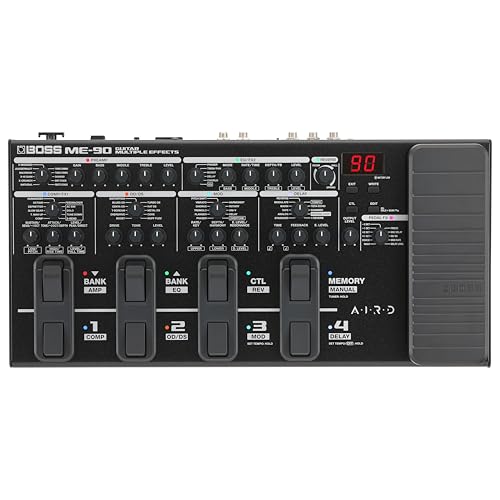
- 11 AIRD amp models with 24-bit/32-bit processing
- 60 GT-1000-derived effects and effects loop
- 8 footswitches, expression pedal, 36 user patches
Best For: Performing guitarists who want an intuitive, premium all-in-one floor processor
Pedalboard Control Hub
Line 6 HX Effects Guitar Processor

- 100+ HX effects with up to 9 simultaneously
- Legacy sounds from M-series and classic Line 6 pedals
- Scribble strips, LED rings, and command-center control
Best For: Guitarists who want a pro-grade effects hub for a pedalboard or amp rig
Battery-Ready Live Rig

- Up to 9 hours of integrated battery life
- 200 presets with NAM/MNRS support and 20 IR slots
- 4 footswitches, looper, drum machine, and tuner
Best For: Mobile guitarists and buskers who need a portable all-in-one effects processor
Budget Practice Processor
Zoom G1 Four Guitar Multi-Effects
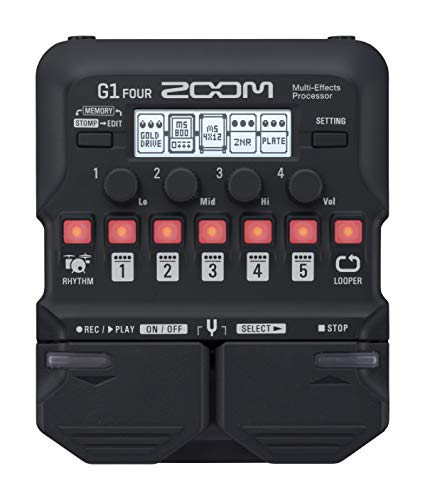
- 65 effects and 13 amp models in a compact unit
- 30-second looper plus 68 rhythm patterns
- Free Guitar Lab software for Mac/Windows
Best For: Home players and beginners who want a compact, battery-powered effects processor
Pro Tone Workhorse
MOOER GE150 Pro Multi Effects Processor

- 200 presets with 55 amp models and 26 cab sims
- 4 footswitches plus expression pedal control
- USB-C, OTG recording, looper, and drum machine
Best For: players who want a flexible floor processor for live presets, practice, and USB/OTG recording
Compact Modeler Pick
Valeton GP-50 Multi-Effects Processor
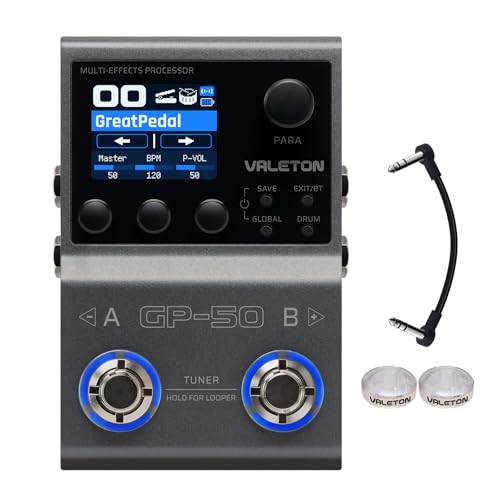
- 100+ HD effects with NAM and IR loader support
- Up to 9 simultaneous modules and 100 patch slots
- Bluetooth 5.0 app control with USB audio/MIDI
Best For: guitarists and bass players who want a compact, app-controlled processor with NAM and IR support
Live Stage Control Pick
MOOER GE150 Max Li Floor Processor

- 8 footswitches with CTRL mode for detailed live control
- Balanced XLR outputs plus 200 preset slots
- 9-hour lithium battery in the Li version with spill-over
Best For: live players who want maximum footswitch control, balanced XLR outputs, and onboard battery power
Premium All-in-One Modeler
MK-300 320+ Effects Multi-Effects Processor

- 360+ effect types and 160 preset slots
- Built-in expression pedal, looper, and drum machine
- Battery-powered with Bluetooth and USB/OTG recording
Best For: Players who want a deep, portable guitar/bass floor processor
Smart Editing Workstation
QME-20 Multi-Effects Pedal with NAM/IR Support

- 130+ effects with 100 preset slots
- NAM and IR file support plus app-based editing
- USB audio interface with looper, tuner, and drum rhythms
Best For: Tone builders who want deep editing and recording features in a compact floor unit
Starter Friendly Floorboard
Zoom G1X Four Multi-Effects Processor

- 71 effects and 13 amp models
- 30-second looper with 68 rhythm patterns
- Includes an expression pedal for added control
Best For: Beginners who want an easy, practice-friendly floor effects processor
Flagship Hands-On Floorboard – BOSS ME-90 Guitar Multi-Effects
If you want a professional floor guitar effects processor that feels immediate on stage, the BOSS ME-90 is built around fast, stompbox-style control. It combines 11 AIRD amp models, 60 effects derived from the GT-1000, an effects loop, and BOSS’s knob-based workflow so you can build and adjust sounds quickly without menu diving.
Best For: Performing guitarists who want a compact, hands-on all-in-one processor with premium BOSS tones and easy editing.
Pros:
- 11 flagship-grade AIRD amp models with 24-bit AD/DA and 32-bit floating point processing
- 60 effects derived from the GT-1000, plus seven simultaneous effect categories
- Eight multi-function footswitches and a redesigned expression pedal with toe switch
- 36 preset patches and 36 user patches for quick setup changes
Cons:
- Uses a knob-based, hardware-first approach rather than deep on-device menu editing
- Bluetooth audio/MIDI editing requires the optional dual adaptor
The ME-90 stands out if you value practical control and high-quality BOSS processing over complexity. It’s a strong pick for players who need a reliable floor unit for live work, rehearsals, and quick tone building.
Pedalboard Control Hub – Line 6 HX Effects Guitar Processor
The Line 6 HX Effects is a professional floor guitar effects processor for players who want high-end effects in a pedalboard-friendly format. It offers more than 100 HX effects, legacy sounds from the M-series and classic Line 6 pedals, and the ability to run up to nine effects at once, making it a flexible centerpiece for a serious live rig.
Best For: Players building a pedalboard-centered rig who want advanced effects control and wide sound options.
Pros:
- 100+ HX effects with up to 9 running simultaneously
- Includes legacy effects from M13, M9, M5, DL4, MM4, FM4, and DM4
- Capacitive-sensing switches with LED rings and scribble strips
- Acts as the command center for an amp and pedal rig
Cons:
- Focused on effects rather than full amp-modeling workflow
- Heavier than compact multi-effects pedals at 7.1 pounds
This unit makes the most sense for guitarists who already like working with external amps or pedals and need a strong effects brain. Its control layout and deep library are aimed at live practicality rather than lightweight simplicity.
Battery-Ready Live Rig – MOOER GE150 Pro Li Plum
The MOOER GE150 Pro Li is a professional floor guitar effects processor designed for live performance, busking, and flexible control on the move. With battery power, 200 presets, NAM and MNRS support, 20 IR slots, and built-in looping and drum features, it packs a lot of performance tools into one portable unit.
Best For: Mobile players who need a battery-powered processor for live sets, busking, and practice.
Pros:
- Integrated lithium battery with up to 9 hours of battery life
- 200 factory presets, 55 amp preamps, and 26 cabinet simulations
- Four multi-purpose footswitches for flexible preset and function control
- Built-in 80-second looper, drum machine, and tuner for practice or performance
Cons:
- Battery-powered design may be less appealing for players who prefer a mains-only setup
- Feature-rich interface can take time to learn
If portability matters as much as tone variety, the GE150 Pro Li brings a strong mix of mobility and modern modeling features. It is especially useful for players who want one processor to handle presets, looping, rhythm support, and live control.
Budget Practice Processor – Zoom G1 Four Guitar Multi-Effects
The Zoom G1 Four is a practical entry-point professional floor guitar effects processor for players who want a compact, affordable way to cover core sounds. It includes 65 effects, 13 amp models, a 30-second looper, and 68 rhythm patterns, plus software support for editing on Mac or Windows.
Best For: Players who want a compact, battery-powered multi-effects unit for practice, home use, or simple live setups.
Pros:
- 65 built-in guitar effects and 13 amp models
- 30-second looper and 68 built-in rhythm patterns
- Free Zoom Guitar Lab software for Mac/Windows editing
- Compact size with battery-powered operation
Cons:
- Less deep than more advanced floor processors
- Rhythm and looper features are more basic than pro performance units
The G1 Four is a sensible choice if you need useful effects without a large footprint or complicated setup. It is especially appealing for practice and home players who want a straightforward processor that still covers the essentials.
Pro Tone Workhorse – MOOER GE150 Pro Multi Effects Processor
The MOOER GE150 Pro is a professional floor guitar effects processor built for players who want deep preset access, amp modeling, and practical stage control in a compact unit. With 200 factory presets, 55 amp models, 26 cab sims, and support for NAM and MNRS files, it gives you a lot of tone-shaping options without making the board overly complicated.
Best For: Guitarists who want a flexible floor processor for live presets, practice, and USB/OTG recording.
Pros:
- 4 multi-purpose footswitches offer broader control for preset browsing and performance functions.
- Expression pedal supports both parameter mapping and volume control.
- Built-in 80-second stereo looper, tuner, drum machine, and metronome tools add practice value.
- USB-C and OTG support make tone editing and phone recording straightforward.
Cons:
- The standard version is corded electric, so portability depends on access to power.
- Its feature set may be more than casual players need.
If you want a floor processor that balances modeling depth with real-world control, the GE150 Pro is a strong candidate. It is especially appealing for players who value preset flexibility, loop-based practice, and quick recording workflows.
Compact Modeler Pick – Valeton GP-50 Multi-Effects Processor
The Valeton GP-50 is a professional floor guitar effects processor aimed at players who want modern modeling tools in a compact pedalboard-friendly format. It combines over 100 HD effects with NAM loading, IR cabinet loading, and up to 9 simultaneous modules, making it a strong option for building detailed tones without taking up much space.
Best For: Guitarists and bass players who want a compact, app-controlled processor with NAM and IR support.
Pros:
- Supports up to 9 simultaneous effect modules with customizable order.
- Loads up to 80 NAM files and 20 third-party cab IRs for expanded tone options.
- Bluetooth 5.0 app control adds wireless editing convenience.
- USB audio and USB MIDI increase usefulness for recording and setup integration.
Cons:
- Dual footswitch layout is less expansive than larger floor units.
- Its compact size may feel limited for players wanting more onboard controls.
The GP-50 stands out if you want advanced modeling features in a small, portable package. It is especially practical for players who use mobile editing, record over USB, or need a streamlined rig for guitar or bass.
Live Stage Control Pick – MOOER GE150 Max Li Floor Processor
The MOOER GE150 Max Li is a professional floor guitar effects processor designed for players who want more hands-on control in live settings. With 8 multi-purpose footswitches, a 3.5-inch color display, 200 preset slots, 55 amp preamps, 26 cab simulations, and support for 3rd-party IRs, it is built around performance flexibility and detailed tone management.
Best For: Live players who want maximum footswitch control, balanced XLR outputs, and onboard battery power.
Pros:
- 8 footswitches and CTRL mode allow more granular control over modules within presets.
- Stereo balanced XLR outputs are well suited to professional live routing.
- Integrated lithium battery offers up to 9 hours of runtime in the Li version.
- Spill-over function helps delay and reverb tails fade naturally between presets.
Cons:
- At 3.8 pounds, it is less lightweight than some compact processors.
- The larger control layout may be more than home-only users need.
If your priority is stage control, the GE150 Max Li brings together practical routing, preset depth, and expressive performance features. It is especially attractive for gigging guitarists who want a battery-powered floor unit with pro-style outputs and smoother preset changes.
Premium All-in-One Modeler – MK-300 320+ Effects Multi-Effects Processor
If you want a professional floor guitar effects processor that can handle guitar or bass, the MK-300 packs a very broad effects library, amp/cab modeling, IR loading, and deep preset control into one portable unit. It is built for players who want a flexible live rig with editing, recording, and practice features in a single floorboard.
Best For: Guitarists or bassists who want a feature-heavy floor processor with battery power, looper, and app-based control.
Pros:
- Over 360 effect types with 160 user preset slots.
- Built-in expression pedal, plus support for an external expression pedal.
- 3.5-minute stereo looper, drum machine, Bluetooth audio/MIDI, and USB/OTG recording support.
- Built-in battery rated for up to 10 hours of use.
Cons:
- Large feature set may take time to learn.
- Warranty is listed as 30 days.
For players who prioritize versatility and control over simplicity, the MK-300 offers a lot of value in a single floor unit. Its neural-network modeling, IR support, and firmware-update path make it a strong pick for modern players who want to build and refine tones over time.
Smart Editing Workstation – QME-20 Multi-Effects Pedal with NAM/IR Support
The SONICAKE QME-20 is a professional floor guitar effects processor aimed at players who want modern modeling, flexible routing, and easy editing in a compact unit. With amp, cab IR, EQ, delay, reverb, and more running in up to 9 simultaneous modules, it is built for both stage use and detailed tone shaping.
Best For: Players who want a compact multi-effects floor unit with NAM/IR support, app editing, and stereo connectivity.
Pros:
- Over 130 effects and 100 preset slots with 9 simultaneous modules.
- Supports third-party NAM and cabinet IR files for expanded tone options.
- Includes USB audio interface features with loopback and re-amp support.
- Built-in looper, tuner, metronome, drum rhythms, and multi-color LED footswitch rings.
Cons:
- Wireless battery runtime is limited to about 3.5 hours.
- Package does not include the 9V DC adapter or USB cable.
- Firmware update note advises avoiding Windows 11 for now.
If you want a modern floorboard that can double as a recording interface and editing hub, the QME-20 is especially capable. Its mix of stereo outputs, mobile/desktop control, and broad file support makes it a practical choice for players who like to fine-tune every detail.
Starter Friendly Floorboard – Zoom G1X Four Multi-Effects Processor
The Zoom G1X Four is a practical professional floor guitar effects processor for players who want straightforward sounds, amp modeling, and built-in practice tools without a steep learning curve. With 71 effects, 13 amp models, and an expression pedal, it covers everyday practice, songwriting, and simple live use.
Best For: Beginners and budget-minded players who want a simple floor processor with looper, rhythms, and expression control.
Pros:
- 71 effects and 13 amp models for a wide range of tones.
- 30-second looper supports practice and songwriting.
- 68 rhythm patterns make solo practice more useful and musical.
- Expression pedal included for added control.
Cons:
- Fewer advanced connectivity and editing features than the newer models here.
- Uses an analog signal format, so it is less feature-dense than digital modeling units.
The G1X Four is best when you want the essentials done well and do not need extensive routing or app-driven editing. It is an easy pick for home practice, basic recording ideas, and players who want a compact all-rounder with useful built-in rhythm support.
How We Picked the Best Professional Floor Guitar Effects Processor
We prioritized tone quality, preset capacity, stage-ready switching, connectivity, and overall value. For a Professional Floor Guitar Effects Processor, the most useful extras are reliable footswitch layout, amp/cab simulation, USB recording support, expression control, and practical output options for DI or FRFR use.
Quick Comparison
These 10 models cover a wide range of needs: compact practice units, busking-friendly battery-powered boards, and more advanced processors with NAM/IR support, MIDI, and larger effect libraries. Some lean toward simplicity and portability, while others are better suited to players who want deeper editing and broader routing.
Key Buying Factors for a Professional Floor Guitar Effects Processor
Effects and Amp Modeling
Check whether the unit has the core sounds you actually use, plus believable amp and cab models if you plan to go direct. Players using an external amp may value effects quality more than amp modeling, while direct-recording users should pay close attention to cabinet simulation and IR loading.
Preset Handling and Switching
More presets help when you need setlist organization, but footswitch behavior matters just as much. Look for easy bank navigation, spillover or seamless switching if available, and enough switches to avoid menu-diving on stage.
Connectivity and Workflow
USB audio, stereo outputs, MIDI, expression inputs, and mobile app control can make a big difference in real-world use. A strong Professional Floor Guitar Effects Processor should fit both rehearsal and recording workflows without forcing constant workarounds.
Portability and Power
If you busk, travel, or rehearse in multiple locations, battery operation and lightweight construction become major advantages. Gigging players with larger setups may prefer a sturdier floor unit with more I/O and a clearer onboard display.
Who Should Buy Which Professional Floor Guitar Effects Processor?
Choose a compact model if you want simple practice and travel-friendly editing. Pick a midrange processor if you need a balance of effects, presets, and easy live control. Go for a more advanced floorboard if you want deeper sound design, amp modeling, IR support, MIDI control, and a setup that can serve as the center of your rig.
If your priority is speed and convenience, buy for usability first. If you need studio-style flexibility, buy for routing, output options, and editing depth first. The best choice is the one that matches how you actually play.