Choosing the right MIDI interface can make Sunday setup faster, cleanup simpler, and live worship more reliable. For church musicians, the best options balance stable connectivity, enough ports for your rig, and easy integration with keys, pedals, computers, and playback systems.
This roundup focuses on practical, stage-ready gear for worship teams of all sizes, from compact USB host solutions to multi-port interfaces built for more complex MIDI routing.
Best 10 Midi Interfaces for Church Musicians Picks for 2026
Compact Routing Hub
CME U6MIDI Pro 3-in-3-out MIDI Interface

- 3-in-3-out standalone MIDI routing
- Works across major operating systems
- Supports split, merge, thru, and filtering
Best For: worship keyboard setups needing flexible MIDI routing
Standalone USB Bridge

- USB MIDI host to 5-pin DIN conversion
- No computer required for operation
- LED indicators for power and activity
Best For: direct USB-to-DIN connection for live church rigs
Stage MIDI Splitter

- One MIDI input feeds five outputs
- USB-C is power only
- Compact size for pedalboards and tight rigs
Best For: sending one MIDI source to several church devices
All-in-One Audio Hub
Focusrite Scarlett 4i4 4th Gen

- Built-in MIDI I/O plus audio inputs
- Two mic preamps and four line inputs
- USB-C interface with Auto Gain and Clip Safe
Best For: church rigs needing both audio and MIDI connectivity
Networked MIDI Hub
mioXM 4x4 DIN + USB + RTP-MIDI

- 4 DIN in/out ports plus 4 USB-MIDI host ports
- Ethernet RTP-MIDI with 12 virtual network ports
- Class-compliant Mac, Windows, and iOS connectivity
Best For: Church rigs that need flexible routing and networked MIDI control
Compact Audio + MIDI
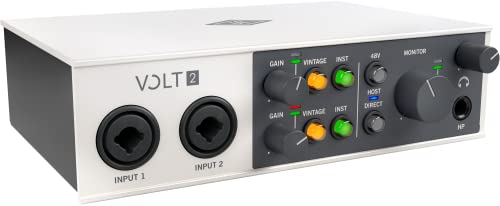
- 2x2 USB-C interface with MIDI support
- Up to 24-bit / 192 kHz recording and mixing
- Works with Mac, Windows, iPad, and iPhone
Best For: Smaller church teams wanting a compact audio interface with MIDI support
High-Port MIDI Rack Unit

- 16x16 MIDI port count for larger setups
- USB class-compliant for Mac and PC
- Bus powered and works with all MIDI software
Best For: Larger church MIDI rigs needing many standard DIN connections
Hybrid USB Host Bridge
CME H2MIDI Pro Compact USB Host MIDI Interface

- Standalone USB host for class-compliant USB MIDI devices
- USB-C mode adds 2-in-2-out virtual MIDI ports
- Routing, filtering, mapping, and presets via HxMIDI Tools
Best For: Church musicians who need a compact bridge between USB controllers and DIN MIDI gear
Audio + MIDI Workhorse
Behringer U-PHORIA UMC404HD 4x4 USB Audio/MIDI Interface
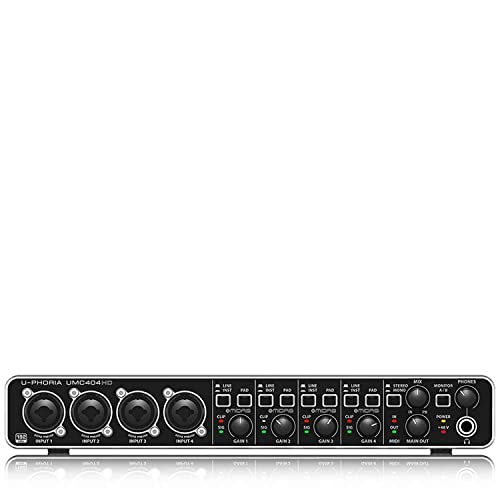
- 4x4 USB audio interface with 1x MIDI I/O
- Four MIDAS mic preamps with +48V phantom power
- Metal chassis built for durability
Best For: Church teams that need MIDI plus multiple audio inputs and outputs
Compact USB-C All-Rounder
Yamaha URX22C 2-in/2-out USB-C Audio/MIDI Interface

- 2-in/2-out interface with MIDI I/O
- DSP monitoring with reverb, channel strip, and amp effects
- Full-metal housing for durability
Best For: Small church setups needing a compact USB-C interface with MIDI and DSP monitoring
Compact Routing Hub – CME U6MIDI Pro 3-in-3-out MIDI Interface
For church musicians who need midi interfaces for church musicians setups that can handle both simple and more advanced routing, the CME U6MIDI Pro is a strong fit. It works as a plug-and-play USB-C interface on major platforms, and it also functions as a standalone 3-in-3-out MIDI router with split, thru, merge, and filtering options.
Best For: Keyboard players and worship tech teams that want flexible MIDI routing for computers or standalone rigs.
Pros:
- 3-in-3-out design supports standalone routing, split, thru, merge, and filtering.
- Compatible with macOS, iOS, Windows, Android, Linux, and Chrome OS.
- Supports all MIDI channels and messages, including clock, sysex, timecode, and MPE.
- Compact build with close-to-zero latency and no jitter.
Cons:
- Advanced routing setup is handled through free software on Win/Mac.
- It is MIDI-only, so it does not replace an audio interface.
Overall, this is a versatile choice if your church rig needs dependable MIDI distribution across multiple devices. Its small size and broad compatibility make it practical for both stage and rehearsal use.
Standalone USB Bridge – DigitalLife USB MIDI Host Box
If you need midi interfaces for church musicians that connect USB controllers to older 5-pin gear without a computer, the DigitalLife USB MIDI Host Bridge Box is built for that job. It is designed for standalone use in studio, rehearsal, and live performance settings, with simple plug-and-play operation and LED status indicators.
Best For: Musicians who want to connect a USB MIDI keyboard or controller directly to DIN hardware on stage.
Pros:
- Converts USB MIDI to standard 5-pin DIN MIDI without a computer.
- Simple USB Type-A connection and plug-and-play setup with supported devices.
- LED indicators show power and MIDI activity.
- Designed for stable studio and live performance use.
Cons:
- USB hubs are not supported.
- Some non-standard USB MIDI devices may not transmit properly.
This is a practical bridge for churches mixing modern USB controllers with older MIDI hardware. Just be sure your device is class-compliant and compatible before relying on it for Sunday service.
Stage MIDI Splitter – CME MIDI Thru5 WC 1-in-5-out
For church musicians who need midi interfaces for church musicians setups centered on reliable signal distribution, the CME MIDI Thru5 WC is a focused 1-in-5-out thru box. It is made for standard 5-pin MIDI cabling, with low-latency performance and accurate transmission for stage, studio, and pedalboard use.
Best For: Players and tech teams that need one MIDI source sent cleanly to multiple devices.
Pros:
- Splits one MIDI input to five outputs for simple distribution.
- Close-to-zero latency with no jitter.
- Supports all MIDI channels and messages, including clock, sysex, timecode, and MPE.
- Compact, lightweight housing suits pedalboards and tight spaces.
Cons:
- USB connection is for power only, not MIDI data.
- It needs standard 5-pin MIDI cabling rather than USB control.
This model makes sense when your priority is clean MIDI splitting rather than routing or computer connectivity. Its small footprint and stable wired transmission are especially useful in crowded worship setups.
All-in-One Audio Hub – Focusrite Scarlett 4i4 4th Gen
When a church setup needs more than a basic MIDI port, the Focusrite Scarlett 4i4 4th Gen gives you a broader studio-style interface with MIDI I/O included. It combines mic preamps, instrument inputs, line inputs, and four outputs, making it useful for worship rigs that record, play back, and control gear from one box.
Best For: Church musicians who want an audio interface with built-in MIDI alongside mics, keys, and playback gear.
Pros:
- Includes MIDI In/Out along with audio inputs and outputs.
- Two mic preamps, two Hi-Z inputs, and four line inputs support mixed setups.
- Auto Gain and Clip Safe help with level management.
- USB-C connectivity and broad OS compatibility make setup straightforward.
Cons:
- It is larger and more complex than a dedicated MIDI-only interface.
- Some buyers may pay for audio features they do not need if they only want MIDI.
This is the most flexible choice here if your church rig needs both audio and MIDI in one unit. It is best for teams that want a central interface for keys, microphones, and computer-based worship production.
Networked MIDI Hub – mioXM 4×4 DIN + USB + RTP-MIDI
If you need midi interfaces for church musicians that can handle keyboards, controllers, computers, and mobile devices in one place, the mioXM is built for routing-heavy setups. With 4 in x 4 out 5-pin DIN ports, 4 USB-MIDI host ports, and Ethernet RTP-MIDI networking, it can connect multiple pieces of gear and make them available across Mac, PC, and iOS workflows.
Best For: Church rigs that need flexible routing, multiple MIDI devices, and networked computer connections from a single interface.
Pros:
- 4 in x 4 out 5-pin DIN-MIDI ports for traditional hardware connections
- 4 USB-MIDI host ports support multiple class-compliant USB MIDI devices
- Ethernet RTP-MIDI network port with 12 virtual network ports for expanded routing
- Class-compliant USB connectivity with no drivers required
Cons:
- More complex than a basic two-port interface
- Best suited to users who actually need routing and network features
- Configuration software is separate and required for deeper preset setup
The mioXM stands out when a church needs more than a simple MIDI link. Its combination of DIN, USB host, and network connectivity makes it a strong fit for centralized control systems and multi-device production environments.
Compact Audio + MIDI – Volt 2 USB Audio Interface
For smaller midi interfaces for church musicians, the Volt 2 is a straightforward choice when you want audio recording plus MIDI support in a compact USB interface. It offers 2 channels, 24-bit / 192 kHz conversion, and compatibility with Mac, Windows, iPad, and iPhone, making it practical for volunteer-driven setups that move between devices.
Best For: Smaller church teams that want a simple USB interface for recording, playback, and MIDI-capable workflows.
Pros:
- Compact 2×2 USB-C interface for simple setups
- Up to 24-bit / 192 kHz quality with crystal clear converters
- Works with MacOS, Windows, iPad, and iPhone support
- Includes Vintage mode for UA 610 preamp character
Cons:
- Only 2 channels, so it is not ideal for larger rigs
- Less focused on multi-device MIDI routing than dedicated MIDI interfaces
- Requires external power supply for use
The Volt 2 makes sense if your church setup needs a compact interface with strong audio features and basic MIDI capability, rather than a full routing hub. It is a good fit for simple, portable production stations.
High-Port MIDI Rack Unit – midiplus 16×16 MIDI Interface
If you are comparing midi interfaces for church musicians and need lots of straight MIDI ports, the midiplus MIDI 16×16 is designed for larger hardware setups. It is USB class-compliant for Mac and PC, bus powered, and works with all MIDI software, which makes it a practical option for connecting many keyboards, modules, or controllers at once.
Best For: Larger church MIDI rigs that need lots of standard DIN connections without extra network features.
Pros:
- 16×16 MIDI interface offers high port count for bigger setups
- USB class-compliant for Mac and PC
- Bus powered for simpler desk or rack use
- Works with all MIDI software
Cons:
- No Ethernet or network MIDI features listed
- Heavier and larger than compact interfaces
- Focused on standard MIDI I/O rather than extra workstation features
This model is the most direct choice if your church cares mainly about port count and straightforward compatibility. It is built for connecting a lot of MIDI gear in one place without adding unnecessary complexity.
Hybrid USB Host Bridge – CME H2MIDI Pro Compact USB Host MIDI Interface
If you need midi interfaces for church musicians that can bridge modern USB controllers with older 5-pin DIN gear, the CME H2MIDI Pro is built for that exact job. It works as a standalone USB host with no computer required, but also supports USB-C computer connection for flexible hybrid rigs.
Best For: Church musicians who want a compact MIDI bridge for keyboards, controllers, and legacy hardware in a live or rehearsal setup.
Pros:
- Standalone USB host mode connects class-compliant USB MIDI devices directly to DIN hardware.
- USB hub support expands to up to 8 USB MIDI device ports.
- USB-C client mode provides 2-in-2-out virtual MIDI ports for computer-based use.
- Routing, filtering, mapping, and splitting can be configured with HxMIDI Tools and saved as presets.
Cons:
- Only one 5-pin DIN MIDI I/O pair is built in.
- Advanced setup may require using the companion software.
- Best suited to MIDI routing and hosting rather than audio recording.
This is a strong fit if your church rig mixes USB controllers with traditional MIDI hardware and you want a very small interface with flexible routing options. Its low-profile design and preset support make it practical for stage use and changing service setups.
Audio + MIDI Workhorse – Behringer U-PHORIA UMC404HD 4×4 USB Audio/MIDI Interface
For midi interfaces for church musicians who also need to record vocals or instruments, the Behringer U-PHORIA UMC404HD offers a practical 4×4 audio/MIDI layout. It combines one MIDI I/O with four audio inputs and outputs, so it can serve a small worship recording or rehearsal workstation.
Best For: Church teams that want an affordable USB interface with MIDI plus multiple mic and instrument inputs for recording or playback.
Pros:
- 4×4 USB audio interface includes 1x MIDI I/O.
- 24-bit/192 kHz support is aimed at high-resolution recording.
- Four MIDAS-designed mic preamps include +48V phantom power.
- Metal chassis is described as built-like-a-tank for durability.
Cons:
- Bulky compared with compact MIDI-only interfaces.
- Software compatibility notes are centered on computer recording use.
- Windows is listed in the detailed specs, so platform support may need checking for your setup.
If your church needs one interface to cover MIDI, microphones, and instrument recording, this model gives you more connectivity than a basic MIDI box. It makes the most sense when audio capture is just as important as MIDI control.
Compact USB-C All-Rounder – Yamaha URX22C 2-in/2-out USB-C Audio/MIDI Interface
When looking at midi interfaces for church musicians, the Yamaha URX22C stands out as a compact USB-C option that also handles audio capture. It pairs two combo inputs, MIDI I/O, and DSP-powered monitoring, which can be useful for small worship rigs or personal practice stations.
Best For: Small church setups that want a durable USB-C interface with MIDI, two mic/instrument inputs, and low-latency monitoring.
Pros:
- 2-in/2-out design includes MIDI I/O in a compact footprint.
- 32-bit/192 kHz support and D-PRE mic preamps provide modern audio specs.
- DSP-powered monitoring includes REV-X reverb, Channel Strip, and Guitar Amp Classics.
- Full-metal housing adds durability for frequent transport or stage use.
Cons:
- Only two analog inputs, so it is not meant for larger multichannel recording needs.
- Includes MIDI I/O, but the product focus is still primarily audio interface functionality.
- Software bundle is centered on Steinberg tools, which may not fit every workflow.
This is a sensible choice if you want a small interface that does a little of everything without taking much space on a church desk or keyboard station. Its monitoring tools and rugged build make it especially appealing for simple live or rehearsal setups.
How We Picked the Best Midi Interfaces for Church Musicians
We looked for Midi Interfaces for Church Musicians that prioritize dependable performance, flexible routing, and low-friction setup. Strong picks needed solid build quality, clear port availability, and compatibility with both studio-style and live worship workflows. We also favored units that make sense for real church use, where quick soundcheck changes and consistent playback matter.
Quick Comparison
If your setup is simple, a compact interface or MIDI host bridge is often enough. If you run multiple keyboards, controllers, or playback devices, a multi-port interface can save time and reduce cable clutter. Audio interface models with MIDI are useful when your church needs both sound input and MIDI connectivity in one unit.
Key Buying Factors for Midi Interfaces for Church Musicians
Port Count and Routing
Choose enough inputs and outputs for today’s rig plus a little room to grow. Single-keyboard players usually need far less than MDs or worship leaders managing multiple controllers, click tracks, or backing systems.
USB Host Vs. Traditional MIDI
Some setups need a USB host interface to connect modern controllers directly without a computer. Others need standard 5-pin DIN ports for traditional keyboards, sound modules, and stage rigs. Make sure the interface matches the devices you already own.
Live Reliability
For church use, stable timing and predictable operation matter more than flashy software. Look for interfaces with straightforward connections, clear status indicators, and a reputation for working consistently under live conditions.
Audio + MIDI Combo Needs
If your team also records services, runs direct-to-PA audio, or streams worship, a combined audio/MIDI interface may be the better value. These can simplify your setup by reducing the number of boxes on stage.
Who Should Buy Which Midi Interfaces for Church Musicians?
Solo keyboard players and small worship teams will usually be happiest with compact, easy-to-use options. Larger churches with multiple instruments and more complex routing should lean toward high-port-count units or expandable MIDI solutions. If your priority is controlling both sound and MIDI from one device, an audio interface with MIDI may be the most practical choice.
In short, the best Midi Interfaces for Church Musicians are the ones that fit your worship workflow, stay dependable on stage, and make Sunday production easier for everyone involved.