Choosing the right compressor can make vocals, instruments, and full mixes sound tighter, smoother, and more professional. The best option depends on whether you need transparent control, punchy color, multi-channel flexibility, or a compact inline design.
In this roundup, we focus on the most useful audio compressors for studio, live, and streaming setups, so you can compare features and buy with confidence.
Best 10 Audio Compressors Picks for 2026
Rack-Ready Dynamics Control

- Smooths uneven levels with easy front-panel control
- LED displays support fast, accurate setup
- Good for guitars, drums, and general program material
Best For: portable, tour, and studio users who need simple compressor/gate control
Dual-Channel Value Pick

- 2-channel compressor/limiter/gate with de-esser
- Suited to production, mixing, and mastering
- Compact rack unit for flexible everyday use
Best For: home studios needing a versatile multi-function dynamics processor
Vintage FET Character Choice
Klark Teknik 76-KT FET Compressor

- 1176-style FET compressor with classic revisions
- Discrete signal path and Class-A output amp
- MIDAS transformers and all-button mode
Best For: pro users seeking vintage-inspired compression character
Stereo Rack Flexibility
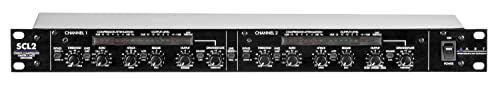
- Dual-channel or linked stereo operation
- Balanced TRS and XLR inputs
- Auto/manual attack and release with LED meters
Best For: stereo buses or two-channel rack dynamics control
Inline Studio Leveling
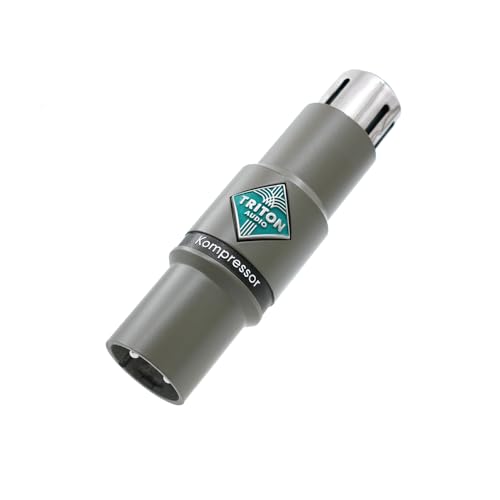
- Inline FET-OPTO compression plus 25 dB gain
- Works with dynamic and ribbon microphones
- Single-knob control keeps setup simple
Best For: Podcasters and low-output mic users who want easy source-level compression
Classic Pedal Sustain

- Evens out guitar signal for stable dynamics
- Adds sustain with a simple compressor circuit
- Runs on 9V battery or AC adapter
Best For: Guitarists wanting a classic, easy-to-use compressor pedal
Rack Channel Control

- Four-channel expander/gate/compressor/limiter
- Dynamic enhancer helps keep audio lively
- Low contour filter reduces pumping
Best For: Rack setups and live or studio rigs needing multi-channel dynamics control
Pedal-Format Optical Compression
Universal Audio LA2A Studio Compressor Pedal

- Authentic LA-2A-style optical compression
- Mix control for parallel compression
- Compact stompbox with Stock/Fast attack
Best For: Players who want classic LA-2A compression in pedal form
Vintage Stereo Rack Glue
Behringer Classic 2-Channel Precision Stereo Compressor and Limiter

- Neve 33609-inspired vintage sound
- Separate compressor and limiter sections
- Stereo or mono 2U rackmount design
Best For: Studio and live users who want vintage-style stereo dynamics control
Dual-Channel Utility Dynamics
Professional Dual-Channel Black Dynamic Processor

- Dual-channel compression with Overeasy mode
- Built-in noise gate and side chain insert
- XLR/TRS connectivity for studio or live use
Best For: Users who want a flexible rack compressor with gating and sidechain options
Rack-Ready Dynamics Control – dbx 266xs Compressor/Gate
The dbx 266xs is a practical choice among audio compressors when you want simple, reliable control over uneven levels in a live rack, studio chain, or portable setup. Its compressor/gate design is aimed at smoothing vocals and instruments while keeping setup straightforward with front-panel controls and clear LED gain-reduction and threshold displays.
Best For: Users who want an easy-to-operate compressor/gate for tightening mixes, guitars, drums, and general program material.
Pros:
- Error-proof operation for smoothing uneven levels and adding sustain or punch
- Separate precision LED displays help with quick, accurate setup
- Program-adaptive expander/gates and new gate timing algorithms for smoother release
- Single 1U rack space makes it convenient for portable, tour, or studio use
Cons:
- Analog, corded rack unit only, so it is less flexible than smaller portable processors
- Focused on straightforward dynamics control rather than advanced feature depth
The 266xs is a solid “set it and use it” option for anyone who values dependable dynamics shaping over complexity. If you need a rackmount compressor/gate that can handle everyday audio cleanup and level control, this dbx model fits that brief well.
Dual-Channel Value Pick – Behringer MDX2600 Compressor
The Behringer Composer Pro-XL MDX2600 is a budget-friendly option in audio compressors for users who need a flexible 2-channel dynamics tool. With compressor, limiter, gate, and de-esser functionality, it is built around audio production, mixing, and mastering workflows where you want broad control in one rack unit.
Best For: Home studios and engineers looking for a multi-function dual-channel compressor for production and mixing.
Pros:
- 2-channel compressor/limiter/gate design adds versatility
- Includes de-esser for broader vocal and mix control
- Suitable for audio production, mixing, and mastering
- Portable corded unit with a compact rack-friendly footprint
Cons:
- Feature list is broad, but the product notes do not emphasize premium build or advanced controls
- Some listing details are inconsistent, so buyers should rely on the core compressor/de-esser function set
Overall, the MDX2600 is appealing if you want one affordable unit to cover several dynamics tasks. It makes the most sense when utility and channel count matter more than boutique character.
Vintage FET Character Choice – Klark Teknik 76-KT FET Compressor
The Klark Teknik 76-KT stands out among audio compressors if you want classic FET-style behavior inspired by the iconic 1176LN revisions. It pairs a completely discrete signal path with a Class-A line-level output amplifier and MIDAS transformers, making it a strong fit for professional audio applications where sonic character matters.
Best For: Engineers and producers who want a vintage-inspired FET compressor with transformer color and simple ratio selection.
Pros:
- Classic FET-style design modeled after the 1176LN D and E revisions
- Completely discrete signal path with Class-A line-level output amplifier
- Custom-built MIDAS input and output transformers
- Push-button ratio selection plus all-button mode and adjustable attack/release
Cons:
- Best suited to users who want a specific vintage-style compression sound
- Single-channel, rackmount hardware may be more than casual users need
If you want compression with recognizable character rather than just transparent level control, the 76-KT is a compelling pick. Its feature set is centered on classic workflow and tone-shaping tools that experienced users will immediately recognize.
Stereo Rack Flexibility – ART SCL2 Dual Compressor
The ART SCL2 is a strong fit for audio compressors buyers who need either dual-channel operation or linked stereo processing in one rack unit. With balanced TRS and XLR inputs, selectable auto/manual attack and release, and precise LED metering, it is designed for practical control in stereo or paired-channel setups.
Best For: Users who need a rackmount compressor/limiter for stereo processing or two independent channels.
Pros:
- Dual-channel or linked stereo operation adds setup flexibility
- Balanced TRS and XLR inputs support common studio wiring
- Selectable auto/manual attack and release for control over dynamics response
- Precise LED level meters help with monitoring
Cons:
- Rackmount format is not suited to small desktop or portable use
- Feature set is practical rather than flashy, so it appeals more to utility-focused buyers
For stereo buses, matched channels, or two separate sources, the SCL2 offers the kind of flexibility that makes rack dynamics gear useful day to day. It is a straightforward, workmanlike compressor/limiter built for common studio connections and simple operation.
Inline Studio Leveling – Triton Audio Kompressor
Triton Audio’s Kompressor is a practical choice in audio compressors when you want cleaner gain and controlled dynamics right at the microphone. This in-line FET-OPTO unit combines a preamp and compression in a compact XLR barrel, making it especially useful for low-output mics that need a little help before the signal ever reaches your interface.
Best For: Podcasters, recording setups, and dynamic or ribbon microphone users who want simple source-level compression and a 25 dB gain boost.
Pros:
- Combines compression and a 25 dB gain boost in one inline XLR unit
- Designed for dynamic and ribbon microphones, including low-output models
- One-knob control makes leveling quick and straightforward
- Blocks 48V phantom power from reaching the microphone for added ribbon safety
Cons:
- Requires 48V phantom power to operate
- Single-control design offers less detailed tweaking than larger compressors
- Built for inline use, not a rack or pedal-based workflow
For a streamlined front-end solution, this Kompressor is geared toward consistent, broadcast-ready signal control without adding much complexity. It’s a strong fit if you want source-level compression that is easy to set and forget.
Classic Pedal Sustain – MXR Dyna Comp Compressor
The MXR Dyna Comp is one of the best-known audio compressors for guitar players who want an easy way to even out signal and add sustain. Its simple compressor circuit and sensitivity control make it a straightforward pedal for stable dynamics at the amp or pedalboard level.
Best For: Guitarists who want a classic compressor pedal for smoother dynamics and more sustain.
Pros:
- Evens out the signal to your amplifier for more consistent output
- Useful for increased sustain with stable dynamics
- Simple knob-based control keeps operation easy
- Can run on a 9V battery or Dunlop ECB003 AC adapter
Cons:
- Pedal format is geared toward instrument use, not studio rack processing
- Limited control compared with more advanced compressors
- May be too simple for users wanting detailed shaping
If you want a familiar, no-fuss compressor pedal, the Dyna Comp delivers the classic behavior many players expect. It’s best treated as a tone-and-sustain tool rather than a deep control center.
Rack Channel Control – Behringer MDX4600 V2
Behringer’s COMPOSER PRO-XL MDX4600 V2 is a rack-style option in audio compressors for users who need multi-channel control and flexible dynamics processing. It combines expander/gate, compression, and peak limiting with extras like a dynamic enhancer and low contour filter to help manage louder, fuller, or noisier material.
Best For: Home studios, live rigs, and rack setups that need four channels of dynamics control.
Pros:
- Four-channel design gives you more processing in one unit
- Includes expander/gate, compressor, and peak limiter functions
- Dynamic enhancer can keep compressed audio lively
- Low contour filter helps reduce pumping from bass-heavy material
Cons:
- Rack unit format is less portable than pedal or inline compressors
- Requires corded electric power
- More complex than a simple one-knob compressor
This model makes sense when you need a lot of control in a single chassis, especially for setups that process multiple signals. It’s a practical pick if you want a feature-rich dynamics processor rather than a minimal compressor.
Pedal-Format Optical Compression – Universal Audio LA2A Studio Compressor Pedal
If you want audio compressors with a classic smooth feel in a compact format, the Universal Audio LA2A Studio Compressor Pedal brings the Teletronix LA-2A style into a stompbox. Its emulation covers the vintage transformers, tube amplifiers, and T4 optical cell, so it’s aimed at players and producers who want thick, three-dimensional compression without a rack unit.
Best For: Guitarists and studio users who want an authentic LA-2A-style optical compressor in pedal form.
Pros:
- Authentic emulation of the iconic LA-2A optical tube compressor/limiter
- Mix control supports easy parallel compression
- Stock/Fast attack switch adds useful flexibility
- Compact stompbox design with true/buffered bypass
Cons:
- Pedal format may not suit users who need a traditional rack compressor
- Single-purpose design is focused on LA-2A-style compression
This is a strong choice if you value character and simplicity over deep parameter control. The LA2A Studio Compressor Pedal is built for users who want that familiar vintage compression flavor in a portable, easy-to-use format.
Vintage Stereo Rack Glue – Behringer Classic 2-Channel Precision Stereo Compressor and Limiter
Among audio compressors for mix bus or mastering-style work, the Behringer 369 is aimed at users who want a vintage, cohesive sound with flexible stereo or mono operation. It captures the character of the Neve 33609 and adds compressor and limiter sections, making it a practical option for shaping dynamics in studio, live sound, or on-location setups.
Best For: Engineers who want a stereo rack compressor/limiter with vintage-style glue and limiter control.
Pros:
- Inspired by the Neve 33609 for rich, vintage tone
- Dual-channel compressor and limiter modes add flexibility
- Adjustable Threshold, Recovery, Gain, and Ratio controls
- 2U rackmount design supports studio and live use
Cons:
- Rack format is less portable than a pedal or tabletop unit
- Designed for users who want more than simple one-knob compression
If you need a compressor that can provide musical glue as well as peak control, this model fits that brief well. Its combination of stereo flexibility, limiter function, and vintage-inspired sound makes it a practical dynamics tool for more demanding setups.
Dual-Channel Utility Dynamics – Professional Dual-Channel Black Dynamic Processor
If you’re comparing practical audio compressors for studio, streaming, or live work, this dual-channel processor is built around straightforward control and flexible connectivity. It includes Overeasy compression, Auto attack/release settings, a built-in noise gate, and a side chain insert, so it suits users who need reliable dynamics management across vocals, guitars, drums, and other sources.
Best For: Streamers, performers, and studio users who need a flexible dual-channel compressor with gate and sidechain features.
Pros:
- Dual-channel design works on multiple sources
- Overeasy compression and Auto attack/release simplify setup
- Built-in noise gate helps reduce unwanted background noise
- Side chain insert supports targeted frequency ducking
Cons:
- Generic control layout may appeal less to users seeking a specific vintage flavor
- Rackmount form factor is less convenient for small desktop setups
This unit looks like a good fit when you need utility and routing options more than character-driven coloration. Its LED monitoring, gate function, and sidechain capability make it a versatile dynamics processor for everyday production and performance tasks.
How We Picked These Audio Compressors
We focused on units that solve real buying needs: dependable compression behavior, useful I/O and routing, channel count, and fit for common workflows such as tracking, mixing, live sound, and content creation. We also considered value, rack or pedal form factor, and whether a model adds extra tools like gating, sidechain access, or de-essing.
Quick Comparison
If you want straightforward rack compression for live or studio use, 1U dual-channel and multi-channel units are the most versatile. If you want character and vintage-style tone, opt for FET or opto designs. For guitars and pedalboards, a stompbox compressor is the easiest path. For microphones, especially dynamic or ribbon models, an inline compressor/preamp can be the most convenient choice.
Key Buying Factors for Audio Compressors
Channel Count
Single-channel models suit one vocal, bass, or insert chain, while dual-channel and 4-channel units are better for stereo sources, subgroups, or live rigs.
Compression Style
Transparent compressors control peaks without obvious coloration. FET-style designs are often faster and more aggressive, while opto and leveling-style circuits tend to sound smoother. Choose based on whether you want control, character, or both.
Extra Processing
Features such as gates, expanders, de-essers, and sidechain inserts can add real value, especially in live sound and broadcast setups where isolation and control matter.
Form Factor and Integration
Rackmount Audio Compressors are the standard for studios and PA racks, while pedals and inline units are better for portable or instrument-specific use. Make sure the unit matches your signal chain, power needs, and available space.
Connectivity and Build
Balanced connections, sturdy controls, and reliable metering matter more than flashy features if you plan to use the compressor regularly on stage or in a working studio.
Who Should Buy Which Audio Compressors?
Buy a simple dual-channel rack unit if you need flexible day-to-day compression for vocals, bass, or stereo sources. Choose a multi-channel processor if you manage live sound, multiple microphones, or several inserts at once. Pick a classic analog-style compressor if you want sonic character, and choose a compact inline or pedal model if your workflow is centered on one microphone or guitar signal. For most buyers, the best Audio Compressors are the ones that match the source, the workflow, and the amount of control you actually need.