If your podcast voice jumps between quiet and loud, a compressor can make every episode sound more polished and easier to listen to.
Below, we’ve rounded up 10 of the best options for creators who want smoother dialogue, more consistent levels, and a better recording chain in 2026.
Best 10 Audio Compressors for Podcasting Picks for 2026
Broadcast Channel Strip

- Compression, de-essing, enhancer, and gate in one unit
- Classic dbx compression helps vocals stay clear and present
- Rack-mount mic preamp with XLR and 1/4" inputs
Best For: Podcasters who want an all-in-one vocal channel strip.
Vintage FET Grabber
Klark Teknik 76-KT FET Compressor

- 1176LN-inspired FET-style compressor with discrete signal path
- Selectable ratios plus adjustable attack and release
- MIDAS transformers and Class-A output stage
Best For: Voice users wanting vintage-style compression control.
Dual-Channel Rack Control

- Two-channel compressor/gate for dual-mic setups
- Program-adaptive expander/gates smooth uneven levels
- LED meters make threshold and gain reduction easy to see
Best For: Podcasters needing dual-channel compression with gating.
Budget Stereo Dynamics
Behringer MDX2600 Dual-Channel Processor

- 2-channel compressor/limiter/gate with de-esser
- General-purpose dynamics tool for production and mixing
- Compact rack format for centralized setups
Best For: Budget-minded creators needing dual-channel dynamics control.
Dual-Channel Studio Control
Professional Dual-Channel Black Dynamic Processor

- Dual-channel compression for two sources
- Noise gate and LED gain-reduction monitoring
- XLR/TRS I/O with sidechain insert
Best For: Podcasters and streamers needing rackmount dynamics control
Classic Tube Smoothness
Warm Audio WA-2A Optical Compressor

- 1-channel optical compressor for simple vocal chains
- All-discrete tube signal path with custom photocell
- XLR connectivity for standard studio setups
Best For: Voice-focused podcasters wanting smooth optical compression
Multi-Channel Rack Utility
Behringer COMPOSER PRO-XL MDX4600 V2

- Four-channel dynamics processing for multiple mics
- Expander/gate plus peak limiting for cleaner audio
- Dynamic enhancer and low contour filter included
Best For: Multi-mic podcast setups needing rackmount dynamics processing
Inline Dynamics Control
Triton Audio Kompressor in-line FET-OPTO compressor
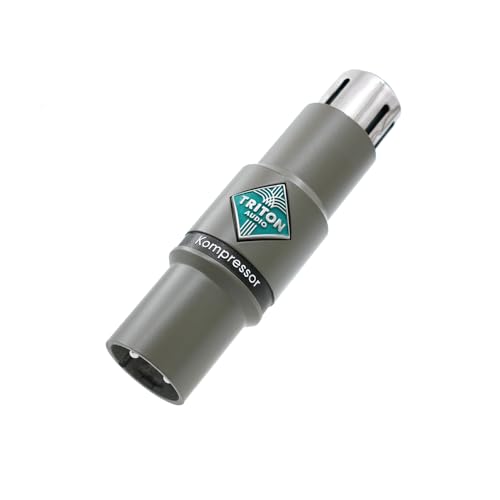
- In-line compressor plus 25 dB gain boost
- Works with dynamic and ribbon microphones
- One-knob control with phantom blocking
Best For: Podcast hosts who want compact, source-level leveling for low-output mics
Rack Stereo Utility
ART SCL-2 dual/stereo compressor-limiter
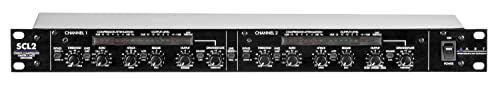
- Dual-channel or linked stereo operation
- Balanced XLR and 1/4-inch TRS inputs
- Includes expander, gate, and level meters
Best For: Studios needing rackmount compression for dual-mic or stereo podcast setups
Variable Voice Shaping
ART Solo VLA multi-voice compressor

- Selectable tube or solid-state control
- Optical compression with variable dry/wet blend
- Switchable +4dBu and -10dBV level modes
Best For: Podcasters who want flexible voice shaping and parallel compression control
Broadcast Channel Strip – dbx 286s Vocal Front-End
If you’re shopping for audio compressors for podcasting, the dbx 286s is a practical channel-strip style option that does more than simple compression. It combines mic preamp, compression, de-esser, enhancer, and expander/gate in a single rack unit, making it useful when you want cleaner, more controlled spoken-word tracks with minimal extra gear.
Best For: Podcasters who want an all-in-one mic front end with compression and extra vocal cleanup tools.
Pros:
- Classic dbx compression helps bring vocals forward with greater clarity and presence.
- Built-in de-esser targets harsh high frequencies and sibilance.
- Enhancer and expander/gate add more control over detail and background noise.
- Mic preamp plus XLR and 1/4″ inputs make it flexible for voice and line-level sources.
Cons:
- It is a rack-mount unit, so it is less portable than a desktop processor.
- More feature-rich than a basic compressor if you only need simple level control.
The dbx 286s stands out when you want one piece of hardware to handle several podcast vocal-cleanup tasks at once. For a spoken-word setup that benefits from compression plus de-essing and gating, it offers a straightforward, studio-style workflow.
Vintage FET Grabber – Klark Teknik 76-KT FET Compressor
For creators comparing audio compressors for podcasting, the Klark Teknik 76-KT is a more characterful option built around a classic FET-style design. It is modeled after the iconic 1176LN and includes selectable ratios, adjustable attack and release, and a completely discrete signal path, which makes it a strong choice when you want more assertive control over spoken-word dynamics.
Best For: Podcasters and voice users who want a vintage-style compressor with fast, flexible dynamics control.
Pros:
- Classic FET-style compressor modeled after the 1176LN D and E revisions.
- Selectable compression ratios: 4:1, 8:1, 12:1, and 20:1.
- Adjustable attack and release times give you more control over voice shaping.
- MIDAS input and output transformers and Class-A output stage add pro-grade hardware appeal.
Cons:
- It is a single-channel unit, so it is not designed for multi-mic setups on its own.
- Its vintage-style operation may be more compressor than a beginner needs for basic podcast leveling.
The 76-KT is best viewed as a tone-rich dynamics tool rather than a simple utility compressor. If you want a more distinctive feel and are comfortable dialing in attack, release, and ratio settings, it can be a compelling podcast front-end piece.
Dual-Channel Rack Control – dbx 266xs Compressor/Gate
The dbx 266xs is a straightforward option among audio compressors for podcasting when you want reliable level control plus gating in a rack unit. Its dual-channel layout, sidechain insert, and program-adaptive expander/gates make it suited to spoken-word chains that need smoother levels and tighter cleanup without complicated setup.
Best For: Podcasters who want a simple dual-channel compressor/gate for consistent voice control.
Pros:
- Dual-channel design works well for two-mic podcast setups.
- Program-adaptive expander/gates help smooth uneven levels and tighten the noise floor.
- Separate LED displays for gain reduction, compression threshold, and gate threshold simplify setup.
- Sidechain insert adds extra routing flexibility.
Cons:
- Rack-mount form factor is less convenient than a compact desktop device.
- Focused on dynamics control rather than broader vocal processing features.
As a podcast compressor, the 266xs makes sense when you need dependable stereo or dual-mono processing and want gate behavior built in. It is a practical pick for creators who prefer clear front-panel feedback and a no-nonsense workflow.
Budget Stereo Dynamics – Behringer MDX2600 Dual-Channel Processor
If you’re comparing audio compressors for podcasting and want a 2-channel rack processor, the Behringer Composer Pro-XL MDX2600 fits the role as a compressor/limiter/gate with de-essing. It is positioned as a flexible dynamics tool for audio production, mixing, and mastering, giving spoken-word chains extra control without requiring multiple separate processors.
Best For: Budget-conscious podcasters who want a basic dual-channel dynamics processor with de-essing.
Pros:
- 2-channel compressor/limiter/gate design supports more than one mic path.
- Built-in de-esser helps tame harsh vocal frequencies.
- Useful as a general-purpose dynamics processor for production and mixing workflows.
- Compact rack-style format keeps the setup centralized.
Cons:
- The supplied notes provide fewer detailed control features than the other units here.
- It is still a rack processor, so it is not ideal if you want a simple desktop solution.
The MDX2600 is a sensible entry point when you need basic compression, limiting, gating, and de-essing in one box. For podcast studios that value multi-purpose dynamics control over premium-specific vocal features, it is an efficient choice.
Dual-Channel Studio Control – Professional Dual-Channel Black Dynamic Processor
If you’re comparing audio compressors for podcasting, this dual-channel unit is built for hands-on control over voices and other sources. Its Overeasy compression, auto attack/release, and VCA circuitry are aimed at smooth, natural dynamics shaping, while the built-in noise gate helps reduce unwanted room noise.
Best For: Podcasters, streamers, and small studios that want a rackmount compressor with flexible routing and noise control.
Pros:
- Dual-channel design handles two sources or stereo duties.
- Overeasy compression and auto attack/release support natural-sounding control.
- Built-in noise gate and LED gain-reduction indicators aid setup.
- XLR/TRS I/O and sidechain insert offer flexible integration.
Cons:
- 1U rackmount format is less convenient for portable setups.
- Requires some familiarity with compression controls to dial in quickly.
For podcasting workflows that need more than a simple one-knob solution, this compressor offers a practical feature set with visual monitoring and targeted control. It fits best in a fixed studio or streaming rack where clean signal paths matter.
Classic Tube Smoothness – Warm Audio WA-2A Optical Compressor
Among audio compressors for podcasting, the WA-2A is a classic-style option for creators who want smooth optical leveling with a tube signal path. Its all-discrete design, custom optical photocell, and Cinemag transformers are built for a polished, controlled vocal chain.
Best For: Voice-focused podcasters and studios looking for a one-channel optical compressor with a vintage-style feel.
Pros:
- 1-channel optical compressor keeps the workflow simple.
- Tube, all-discrete signal path is designed for classic smoothness.
- Custom optical photocell and Cinemag transformers add premium hardware.
- XLR connectivity fits standard studio signal chains.
Cons:
- Single-channel design limits use to one source at a time.
- No multi-band or advanced routing features are listed.
This is a straightforward choice if your priority is refined vocal compression rather than lots of controls. It makes the most sense in a podcast chain centered on one host mic or a single lead voice.
Multi-Channel Rack Utility – Behringer COMPOSER PRO-XL MDX4600 V2
If you’re shopping for audio compressors for podcasting and need to manage several channels at once, the MDX4600 V2 is built for practical rack use. It combines compression, expander/gate functions, peak limiting, and dynamic enhancement in a single 4-channel unit.
Best For: Studios or production setups that need affordable multi-channel dynamics control for podcast panels and mixed audio.
Pros:
- Four channels make it useful for multi-mic podcast workflows.
- Expander/gate circuitry helps suppress noise more effectively.
- Dynamic enhancer and low contour filter add control over compressed sound.
- Interactive knee and ratio circuits aim for smoother, adaptive compression.
Cons:
- Rackmount design is best suited to fixed installations.
- Feature-rich layout may be more than a simple solo podcast needs.
For larger podcast setups, this unit offers a lot of channel capacity and utility in one chassis. It is most appealing when you need a budget-conscious, all-in-one dynamics processor rather than a minimalist vocal compressor.
Inline Dynamics Control – Triton Audio Kompressor in-line FET-OPTO compressor
If you want audio compressors for podcasting that work right at the mic, the Triton Audio Kompressor is built for clean, simple leveling on low-output dynamic and ribbon microphones. This in-line XLR unit combines compression and a 25 dB gain boost, so it can help bring up quieter sources while smoothing peaks before they hit your interface.
Best For: Podcasters using dynamic or ribbon mics like the Shure SM7B who want compact, source-level compression.
Pros:
- Combines an in-line compressor with a 25 dB preamp boost
- Designed for dynamic and ribbon microphones
- One-knob control makes compression quick to dial in
- Blocks 48V phantom power from reaching the microphone
Cons:
- Requires phantom power to operate
- Only offers a simple Less-to-More control, not detailed parameter editing
Overall, this is a practical front-end solution for users who want controlled, broadcast-ready vocal levels without adding a large rack unit to the setup. It is especially appealing when the microphone itself needs extra gain and gentle dynamic smoothing.
Rack Stereo Utility – ART SCL-2 dual/stereo compressor-limiter
For podcast studios that need audio compressors for podcasting in a rack-style format, the ART SCL-2 offers dual-channel or linked stereo operation with balanced XLR and 1/4-inch TRS inputs. It adds compressor/limiter, expander, and gate functions, making it a flexible tool for controlling vocal levels and cleaning up a two-mic or stereo setup.
Best For: Podcast studios that need a dual-channel or stereo compressor with gating and limiter tools.
Pros:
- Dual-channel or linked stereo operation
- Balanced XLR and 1/4-inch TRS inputs
- Selectable auto/manual attack and release
- Includes expander and gate functions
Cons:
- Large rack unit compared with in-line options
- More complex than a simple one-knob compressor
This is a strong fit when you want more control than a compact inline unit can provide and need processing for multiple channels. Its meter set and mode options make it better suited to a dedicated studio chain than to a portable podcast rig.
Variable Voice Shaping – ART Solo VLA multi-voice compressor
If you want audio compressors for podcasting with more tonal flexibility, the ART Solo VLA brings a mastering-quality signal path and selectable MultiVoice tube or solid-state control. It also uses optical isolators and a variable blend between uncompressed and compressed signals, which can make it easier to shape voice dynamics without fully flattening the sound.
Best For: Podcasters who want tube or solid-state compression options with parallel blend control.
Pros:
- Selectable MultiVoice tube or solid-state control
- Optical isolator-based compression path
- Variable blend mixes uncompressed and compressed signals
- Switch-selectable +4dBu/-10dBV level modes
Cons:
- Larger, corded unit rather than a compact inline device
- More involved than a basic set-and-forget compressor
This compressor is the most flexible of the group if you care about how the processed voice blends with the dry signal. It is better suited to a controlled studio environment where you can take advantage of its mode selection and blending options.
How We Picked These Audio Compressors for Podcasting
We focused on compression tools that make sense for spoken-word production: predictable control, simple operation, clean gain staging, and formats that fit home studios, live setups, and small broadcast rigs. We also weighed features that matter to podcasters, such as de-essing, gating, sidechain inserts, and channel flexibility.
Because Audio Compressors for Podcasting can serve very different workflows, we included both straightforward channel-strip style units and more advanced rack compressors for multi-mic setups. The goal is to help you match the tool to your room, mic chain, and editing habits.
Quick Comparison: What Matters Most
For a solo voiceover desk, a compact inline or single-channel compressor may be enough. For a two-host show or a studio with multiple mics, dual- or four-channel models can be more efficient. If you want a warmer, smoother sound, optical designs are often appealing; if you want faster control over sharp peaks, FET-style units are a strong fit.
Also consider whether you need extra processing beyond compression. Some podcast setups benefit from a built-in gate to reduce room noise, a de-esser to tame harsh S sounds, or a limiter to protect against overloads.
Key Buying Factors for Audio Compressors for Podcasting
Channel Count
Single-channel units work well for one microphone or one voice path. Dual-channel and four-channel options are better for interviews, panels, or studios that want consistent processing across several sources.
Compression Character
Optical compressors tend to feel smoother and more musical, while FET-style units are usually quicker and more aggressive. For podcasting, either can work; the right choice depends on whether you want subtle leveling or more obvious control.
Extra Processing Tools
Many podcasters benefit from integrated de-essers, gates, expander sections, or sidechain inserts. These features can simplify your rack and reduce the need for additional plugins or outboard gear.
Workflow and Connectivity
Check whether the unit matches your interface, preamp, or mixer setup. Rackmount units are best for permanent studios, while compact inline solutions are useful when desk space is limited or when you need a cleaner mobile rig.
Who Should Buy Which Audio Compressors for Podcasting?
If you’re a solo podcaster who wants a simple upgrade, choose a single-channel or inline compressor that is easy to set and forget. If you record interviews or multi-host shows, a dual-channel or four-channel model gives you more flexibility and consistency.
If you’re chasing a polished broadcast tone, look closely at optical and channel-strip-style options. If your priority is control over fast peaks, plosives, or energetic speakers, a faster compressor design with gating or limiting may be the better match. For the best results, pick the unit that solves your specific recording problem rather than the one with the most features.