The STRICH SDP-P7 88-Key Digital Piano review starts with one big advantage: it gives beginners and casual pianists a weighted, full-size playing experience without the bulk of an acoustic.
If you want a portable digital piano with practice-friendly features and modern connectivity, the STRICH SDP-P7 deserves a close look.
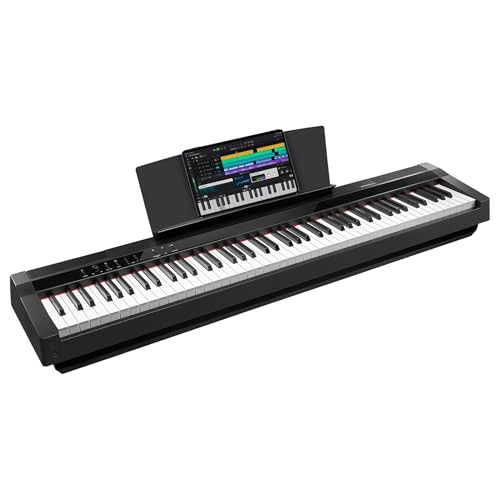
STRICH SDP-P7 Review Summary
The STRICH SDP-P7 88-Key Digital Piano is best for beginners, teens, and adults who want an acoustic-style feel in a compact digital format. It combines graded hammer-action keys, a broad sound palette, dual headphone jacks, and useful MIDI/wireless connectivity, making it especially appealing for home practice, early lessons, and lightweight recording or rehearsal setups.
From a buyer’s perspective, this is a strong all-around starter digital piano rather than a premium stage instrument.
That distinction matters.
The STRICH SDP-P7 focuses on the essentials that most new players actually use: realistic key response, quiet practice, simple learning tools, and enough sound options to stay useful as skills improve.
For that reason, it stands out as a practical value choice for households that want one instrument to cover lessons, independent practice, and casual playing.
Scorecard
| Category | Score | Why It Matters |
|---|---|---|
| Key Action & Feel | 9.0 | Fully weighted, graded hammer-action keys create a more acoustic-like response. |
| Sound Quality | 8.0 | Sampled grand-piano tones plus multi-layer dynamic sampling and dual DSP processing improve realism. |
| Speaker Performance | 8.0 | 2-way speaker design with tweeters and woofers delivers fuller stereo output. |
| Feature Set | 9.0 | Includes 200 tones, 60 demo songs, layering, dual mode, transpose, metronome, and connectivity. |
| Portability | 8.0 | At 15 kilograms and a slim footprint, it is easier to move than an acoustic piano. |
| Practice Convenience | 9.0 | Headphone support and beginner-focused extras make it ideal for private practice. |
| Connectivity & Compatibility | 8.0 | Wireless connect plus USB/MIDI support works with devices and standard MIDI software. |
Bottom line: if you want a full-size digital piano for learning, home use, and flexible practice, the STRICH SDP-P7 offers a compelling mix of touch, features, and portability.
It is not trying to be a luxury concert instrument; it is trying to be a smart, usable piano for real-world players.
Quick recommendation: buy it if you need a realistic beginner piano with weighted keys, headphone practice, and modern connectivity.
Skip it if you are chasing high-end stage depth, premium cabinet resonance, or the tactile mass of an acoustic upright.
Key Features and Specifications of STRICH SDP-P7
The STRICH SDP-P7 is built around the features buyers care about most in a home digital piano.
Here is a clear look at the core specifications and what they mean in everyday use.
| Specification | Details |
|---|---|
| Brand / Model | STRICH SDP-P7 |
| Instrument Type | Digital piano |
| Keys | 88 full-size keys |
| Action | Weighted, graded hammer-action |
| Sound System | 2-way speaker system |
| Speakers | 5W x 2 tweeters and 20W x 2 woofers |
| Tones | 200 |
| Demo Songs | 60 |
| Practice Tools | Dual keyboard mode, layering, metronome, transpose |
| Connectivity | Dual wireless connect, USB/MIDI |
| Software Support | Standard MIDI software, cross-platform compatible |
| Headphone Support | Dual headphone jacks, 6.35mm headphone jack |
| Power | Corded electric |
| Weight | 15 kilograms |
| Dimensions | 11.8" D x 51.6" W x 6.5" H |
| Color | Black |
| Included Accessories | Sustain pedal, piano stickers, music rest |
| Recommended Use | Home, studio, stage, outdoor gigs |
These specs tell a clear story: the STRICH SDP-P7 88-Key Digital Piano is designed to bridge the gap between beginner practice instrument and portable performance tool.
It is not an ultra-light travel keyboard, but it is far more manageable than an acoustic piano and significantly more versatile than many bare-bones entry-level boards.
The included sustain pedal, piano stickers, and music rest are also meaningful for new buyers.
They reduce the number of extra purchases needed to start practicing seriously.
That makes the STRICH SDP-P7 particularly attractive for first-time players or parents buying for a student.
Pros and Cons of STRICH SDP-P7
Every buyer should understand the STRICH SDP-P7 88-Key Digital Piano pros and cons before deciding.
This model has a lot going for it, but it is still built for a specific kind of user.
Pros
- Authentic key feel: The weighted hammer-action keyboard is the main selling point and a major advantage for proper technique development.
- Useful sound variety: 200 tones and 60 demo songs add creativity and keep practice sessions from feeling repetitive.
- Quiet practice support: Dual headphone jacks make it easy to practice privately or do teacher-student sessions.
- Strong connectivity: Wireless connect plus USB/MIDI support makes the piano useful with apps, computers, and production software.
- Good speaker layout: The 2-way system should sound fuller than the tiny speakers found on many budget keyboards.
- Starter-friendly bundle: The included pedal, stickers, and music rest improve the out-of-box experience.
- Portable for its size: At 15 kilograms, it remains practical for room-to-room movement and occasional transport.
Cons
- Not a true acoustic replacement: It will not match the resonance, cabinet feel, and dynamic complexity of a grand or upright piano.
- Requires corded power: You need access to an outlet, so placement is less flexible than on battery-powered gear.
- Best for practice-first buyers: Players seeking a premium stage-piano experience may want a higher-end model.
- Move it carefully: Although portable, it is still substantial enough that one person may struggle with setup or relocation.
In short, the STRICH SDP-P7 88-Key Digital Piano pros and cons point toward one conclusion: it is a smart practice piano with strong value, not a luxury statement piece.
How the Weighted Keys Feel
Key feel is the main reason many people choose the STRICH SDP-P7 over a standard keyboard.
The fully weighted, graded hammer-action keys are designed to mimic the response of an acoustic piano, where lower notes feel heavier and higher notes feel lighter.
That design choice matters for learning finger strength, dynamics, and hand control.
For beginners, this is a genuine advantage.
If you start on unweighted keys, the transition to an acoustic instrument later can feel abrupt.
With the STRICH SDP-P7 88-Key Digital Piano, the transition is easier because the playing surface already encourages a more proper piano technique.
From a practical standpoint, the action seems best suited to home students, hobbyists, and adults who want real piano training without spending on a larger instrument.
It is firm enough to teach control, but still approachable for first-time players.
If touch response matters most to you, this is one of the strongest reasons to consider the STRICH SDP-P7.
Sound Engine and Speaker Output
The sound engine is another area where the STRICH SDP-P7 makes sensible choices.
It uses sampled grand-piano tones, multi-layer dynamic sampling, and dual DSP processors to improve realism across different playing intensities.
In plain language, that means soft notes and louder notes should respond with more variation than a basic beginner keyboard can offer.
The built-in 2-way speaker setup is also better than you might expect from a compact digital piano in this class.
With 5W x 2 tweeters and 20W x 2 woofers, the system is designed to create a more balanced stereo image, with clearer highs and stronger low-end presence.
That does not make it a concert PA system, but it should sound full enough for home practice, small rooms, and casual playing without headphones.
The 200 included tones are useful if you like experimentation.
Even if you spend most of your time on piano voices, having electric pianos, organs, strings, and other tone options can keep practice sessions interesting.
For many buyers, this feature set makes the STRICH SDP-P7 more flexible than competing models that focus only on one or two piano sounds.
Sound-wise, the main strength is balance: it aims for realistic enough piano tone while still giving you plenty of alternate voices for learning and creativity.
Practice Features for Beginners
If your main goal is learning, the STRICH SDP-P7 is built with that use case in mind.
The metronome is a classic but important tool for timing work, while transpose makes it easier to play alongside other instruments or adjust keys for singers.
Layering and dual keyboard mode expand what you can do during lessons or independent study.
The 60 demo songs are especially useful for new players who want examples of rhythm, expression, and phrasing.
A good digital piano should do more than make sound; it should help you understand how music is supposed to feel.
That is where the STRICH SDP-P7 earns points.
It gives beginners a richer learning environment than a plain controller keyboard would.
Headphone practice support is a major buying factor for apartments, shared homes, and late-night sessions.
The dual headphone jacks are particularly valuable if a teacher and student want to listen at the same time.
That is a small feature on paper, but it can make lessons much smoother in real use.
The included piano stickers are also worth mentioning for brand-new learners.
Some experienced players will ignore them, but for absolute beginners, visual note guidance can help build confidence early on.
This is a beginner-friendly package, not just a keyboard in a box.
Connectivity, MIDI, and Recording Setup
Modern buyers often want a digital piano that can connect to more than just speakers and headphones.
The STRICH SDP-P7 addresses that need with dual wireless connect and USB/MIDI support.
That means it can fit into mobile learning apps, desktop music software, and simple recording workflows.
For home studios, this is a strong advantage.
You can use the piano with standard MIDI software on compatible platforms, which opens the door to notation software, virtual instruments, and DAW-based production.
If you are learning composition or want to try arranging, that makes the STRICH SDP-P7 more useful than many entry-level digital pianos with limited output options.
Wireless connectivity is convenient, but buyers should still pay attention to the practical setup.
Depending on your devices, app compatibility and workflow may vary.
The good news is that the piano’s broad compatibility makes it easier to integrate into a modern practice or production space than a traditional acoustic instrument ever could.
If your goal is to combine learning with computer-based music making, this model checks many of the right boxes.
It is a strong fit for buyers who want one instrument that can move from lesson mode to MIDI mode quickly.
Portability for Home, Studio, and Small Gigs
The STRICH SDP-P7 is portable in the meaningful sense, not in the ultra-light “throw it in a backpack” sense.
At 15 kilograms and with dimensions of 11.8 inches deep, 51.6 inches wide, and 6.5 inches high, it is compact enough to fit in a home music room or studio corner without taking over the space.
That footprint makes it appealing for apartment users and households that do not have room for a full acoustic piano.
It is also suitable for small live settings, rehearsal spaces, and occasional outdoor gigs where you need a realistic keyboard feel without hauling a heavy cabinet instrument.
The included power cable requirement means it is not fully free-roaming, but that is normal for a digital piano in this class.
For transport, the key question is how often you expect to move it.
Room-to-room relocation is reasonable.
Frequent gigging is also possible, but it may be more comfortable with a proper keyboard case or at least a two-person carry for safety.
This is portable enough for practical use, but not so light that build quality feels compromised.
STRICH SDP-P7 Review Summary Compared With Alternatives
When comparing the STRICH SDP-P7 88-Key Digital Piano with common alternatives, the question is usually not whether it is “good” in isolation, but whether it is the best match for your priorities.
If you want a well-known benchmark, the Yamaha P-45 digital piano is a frequently chosen alternative for players who want a mainstream brand name and a straightforward playing experience.
It tends to attract buyers who value a proven, no-frills formula.
The Alesis Recital Pro digital piano is another common comparison point, especially for shoppers who want a budget-friendly 88-key setup with practice features.
It may appeal to buyers prioritizing value and basic functionality over a more refined touch profile.
If you want a more premium compact feel, the Roland FP-10 digital piano is often considered by players who care deeply about key response and brand reputation.
Meanwhile, the Casio PX-S1100 digital piano is a popular slim alternative for buyers who want a modern design and a more portable silhouette.
Against those options, the STRICH SDP-P7 stands out as a feature-rich value pick with a particularly beginner-friendly bundle.
It may not outclass the best-known models in absolute refinement, but it offers a very balanced package for learning, practice, and flexible use.
Who Should Buy STRICH SDP-P7?
The STRICH SDP-P7 is a strong match for several buyer types.
Beginners who want an 88-key weighted piano should absolutely consider it. It gives them the right foundation for technique and makes practice easier through headphone support and built-in learning aids.
Adults returning to piano after a break are another good fit.
If you are restarting and want a realistic keyboard without committing to an acoustic instrument, this model gives you enough authenticity to rebuild skills comfortably.
Parents buying for a teen should also pay attention.
The instrument feels serious enough to support real lessons, and the included accessories reduce the need for add-on purchases.
Home studio users and casual creators will appreciate the MIDI and wireless connectivity.
That makes the STRICH SDP-P7 useful not only for practice, but also for composition, simple recording, and software-based music work.
Who should skip it? Players who want a premium stage piano, advanced modeling, or the nuanced resonance of an acoustic grand should look higher up the market.
If your top priority is maximum realism in a professional performance context, you may prefer a more established performance line.
Is STRICH SDP-P7 Worth It?
So, is STRICH SDP-P7 88-Key Digital Piano worth it?
For the right buyer, yes.
It is worth considering if you want a weighted 88-key digital piano that supports real learning, quiet practice, and modern connectivity without pushing you into a more expensive or less portable setup.
The biggest value drivers are easy to identify: a realistic hammer-action keyboard, a usable speaker system, flexible tone selection, and beginner-friendly tools that matter in daily use.
Those features make the STRICH SDP-P7 88-Key Digital Piano review land firmly in positive territory for home players and students.
The main drawbacks are also clear: it depends on corded power, it will not fully match an acoustic piano’s depth, and it is probably more attractive to practice-focused buyers than serious stage performers.
But those trade-offs are reasonable for this category.
Final verdict: if you want an affordable-feeling, practical, and thoughtfully equipped digital piano for learning and everyday playing, the STRICH SDP-P7 is a smart buy.
If you need elite performance realism or a top-tier concert feel, keep shopping.
Otherwise, this model earns a solid recommendation as a well-rounded starter-to-intermediate digital piano.