STRICH SDP-300 Digital Piano review: this model is built for beginners who want a realistic piano feel without giving up modern learning features.
It also makes a strong case as a home instrument thanks to its furniture-style design and full-size 88-key layout.
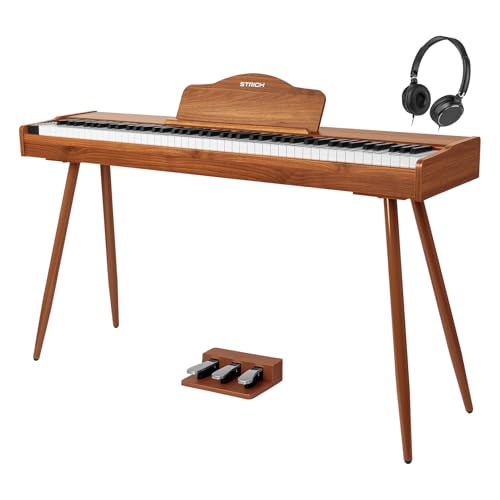
STRICH SDP-300 Review Summary
If you want a beginner digital piano that feels closer to an acoustic instrument than a lightweight keyboard, the STRICH SDP-300 is worth a close look.
It combines 88 full-size weighted hammer-action keys, a mahogany wood-grain cabinet, and app-friendly connectivity, making it a practical fit for students, families, and home learners who plan to practice consistently.
What stands out most is the balance: the STRICH SDP-300 is designed to be easy enough for a first-time buyer, yet substantial enough that it does not feel like a toy keyboard.
It is especially appealing if you want a piano for lessons, daily drills, and quiet headphone practice, while still getting built-in speakers and enough voices to keep things interesting.
Scorecard
| Category | Score | Why it matters |
|---|---|---|
| Key action and feel | 9.0 | 88 weighted hammer-action keys with simulated ivory texture support realistic practice. |
| Sound variety | 8.0 | 128 preset timbres and 200 drum rhythms give beginners plenty to explore. |
| Learning features | 8.0 | Built-in demos, dual-keyboard mode, smart chord support, and app compatibility help self-study. |
| Connectivity and compatibility | 8.0 | Wireless, USB-MIDI, and audio-in improve use with tablets, phones, and lesson apps. |
| Speaker performance | 8.0 | Dual 25W speakers should provide solid room-filling sound for home practice. |
| Home furniture appeal | 9.0 | Mahogany wood-grain styling blends into living spaces better than a basic keyboard stand. |
| Beginner friendliness | 9.0 | The feature set is tailored to new players who need guidance, comfort, and proper piano size. |
Bottom line: the STRICH SDP-300 is a smart buy for beginners who want real piano-style practice, home-friendly looks, and enough digital features to support lessons and motivation.
It is not the most portable option, but for a dedicated practice space it offers a compelling overall package.
Key Features and Specifications of STRICH SDP-300
The STRICH SDP-300 Digital Piano is clearly aimed at home players who want a fuller, more realistic playing experience.
Below is a practical breakdown of the core specs and features that matter most when deciding whether it is the right fit.
| Specification | Details |
|---|---|
| Brand / Model | STRICH SDP-300 |
| Keyboard size | 88 full-size keys |
| Key action | Hammer action, weighted |
| Key surface | Simulated ivory texture |
| Finish | Mahogany wood-grain |
| Speaker system | Built-in speakers, 25W x 2 |
| Polyphony | 128-note maximum |
| Preset timbres | 128 |
| Drum rhythms | 200 |
| Learning / play modes | Built-in demos, dual-keyboard mode, smart chord, layer, split, octave shift, transpose |
| Effects | Chorus |
| Connectivity | Wireless, USB-MIDI, audio-in, headphone jack |
| App support | Compatible with teaching apps on iPad or phone |
| Power | AC 100V-240V input, DC 12V 3A output, 5.5mm x 2.2mm connector |
| Skill level | Beginner |
From a buyer’s perspective, the biggest hardware strengths are the 88-key layout and the weighted hammer-action feel.
Those two features are the main reason this product stands above compact entry-level keyboards that can feel too light or too narrow for proper piano technique.
The 128-note polyphony is also important.
While not a headline feature for casual buyers, it helps the piano handle layered sounds, sustain, and more complex passages without notes cutting off too quickly.
For a beginner instrument, that is a meaningful plus.
The combination of 128 timbres, 200 drum rhythms, smart chord support, and play modes like split and layer gives the SDP-300 enough flexibility to remain useful beyond the first few months of learning.
That matters because many starter keyboards get abandoned when they feel too limited.
Pros and Cons of STRICH SDP-300
Here is the practical STRICH SDP-300 Digital Piano pros and cons breakdown from a buyer’s point of view.
Pros
- Realistic weighted hammer-action keys support proper piano technique and finger strength development.
- Full 88-key range makes it suitable for real repertoire and structured lessons.
- Dual 25W speakers are strong for home practice and casual playing.
- Mahogany furniture-style design looks more refined in a living room or music room.
- USB-MIDI and wireless support improve compatibility with learning apps and devices.
- Learning modes and smart chord tools help beginners stay engaged.
- 128 timbres and 200 rhythms provide enough variety to avoid early boredom.
Cons
- Not the most portable choice if you need to move the instrument often.
- Primarily beginner-focused, so advanced performers may want a more refined action or premium sound engine.
- Furniture-style footprint requires more space than a simple portable keyboard.
- Feature-rich controls may take a little time for total beginners to learn.
The strengths are easy to see: this is designed to feel like a piano, not a toy.
The drawbacks are mostly trade-offs that come with a full-size home instrument.
How the Hammer Action Feels for Practice
The most important buying decision in this category is the key action, and that is where the STRICH SDP-300 makes its strongest argument.
The 88 full-size weighted keys with hammer action are the right starting point for anyone who wants to learn real piano technique rather than just play melodies on a synth-style keyboard.
In practical terms, hammer action helps players develop control over dynamics, phrasing, and finger independence.
That matters for classical pieces, pop ballads, church music, and exam preparation.
The simulated ivory texture is another subtle but useful touch because it can make the keys feel less slippery during longer practice sessions.
For beginners, this is a very sensible design choice.
Many first-time buyers underestimate how quickly an unweighted keyboard can become limiting.
If you already know you want to build solid technique, the STRICH SDP-300 Digital Piano review answer is positive on feel alone.
That said, buyers coming from higher-end acoustic uprights or premium stage pianos should keep expectations realistic.
The SDP-300 is clearly tuned for the beginner segment, so while the action is a major strength, it is not marketed as a concert-level instrument.
Sound Modes, Timbres, and Rhythm Options
Sound variety is another reason the STRICH SDP-300 stands out in the beginner class.
With 128 preset timbres and 200 drum rhythms, it offers enough diversity for practice, experimentation, and simple arrangement work.
That is helpful for players who want more than just a plain piano voice.
The built-in chorus effect, layer mode, split mode, octave shift, and transpose functions broaden its usefulness even more.
Layer mode can be great for creating richer textures during casual play, while split mode helps with lessons, duet practice, or combining bass and melody sounds across the keyboard.
The built-in demo songs are also useful for self-learners.
They are not just filler features; they help new players hear phrasing, timing, and tone quality in context.
Combined with smart chord support, the SDP-300 gives beginners several ways to stay engaged without needing external equipment.
From a category-expertise standpoint, this is a good balance.
The piano does not try to overwhelm buyers with hundreds of gimmicky sounds.
Instead, it offers enough tonal variety to keep practice fresh while still keeping the core piano voice front and center.
Wireless and USB-MIDI Connectivity
Modern digital pianos win or lose on connectivity, and the STRICH SDP-300 gets this area right for its class.
USB-MIDI support is especially useful because it lets the keyboard communicate with learning apps, recording software, notation tools, and teaching platforms.
That makes the piano more future-proof and more useful for students who learn with a tablet or phone.
The added wireless connection support gives it another layer of convenience, assuming your device and app setup are compatible.
If you like the idea of using interactive lessons, backing tracks, or remote teaching tools, that is a strong selling point.
The audio-in port is also worth noting.
It lets you bring external audio into the practice setup, which is useful for playing along with lessons or accompaniment.
Pair that with the headphone jack and you get a flexible home-practice instrument that can be used quietly without disturbing others.
Buyer tip: if app-based learning is central to your plan, confirm device compatibility before purchasing.
Wireless support is valuable, but your specific phone, tablet, or lesson app still needs to cooperate with the piano’s system.
Best Uses for Home Learning and Teaching
The STRICH SDP-300 is at its best in a dedicated home practice setup.
It is especially well suited to beginners, students, and families who want an instrument that encourages regular play instead of feeling temporary or disposable.
For self-study, the learning modes matter.
Dual-keyboard mode can be useful when a teacher and student need to demonstrate notes side by side, and smart chord features can help newer players sound more musical sooner.
That kind of early confidence can make a big difference in whether a beginner sticks with lessons.
For teaching, the 88-key format is a major advantage.
Piano teachers generally prefer students to practice on a full-size layout so hand position and spacing transfer properly from home to lessons.
If a child or adult student practices on the SDP-300, they are less likely to be surprised by a standard piano later.
If your goal is casual background music or a portable stage setup, this is less compelling.
But if your goal is structured learning, the SDP-300 fits the job very well.
Mahogany Finish and Room Placement
One of the more underrated features here is the mahogany wood-grain finish.
In this category, design matters because many buyers do not want a black plastic keyboard dominating the room.
The SDP-300 is trying to solve that problem with a furniture-style look that feels more permanent and more intentional.
That visual design makes it easier to place in a living room, den, bedroom corner, or dedicated music space.
For households that care about décor, this can be a deciding factor.
A piano that looks good is more likely to stay out and get used regularly.
Of course, the trade-off is size.
A furniture-style instrument typically needs more floor space than a slim portable keyboard.
So before buying, measure your room carefully and think about where the bench, pedals, and player clearance will go.
As a practical recommendation, this is better for buyers who want a semi-permanent or permanent setup rather than something they will move around often.
Comparisons and Alternatives to Consider
If you are comparing the STRICH SDP-300 against other beginner digital pianos, the most relevant alternatives are the mainstream 88-key home and portable models from well-known brands.
The right choice depends on whether you value cabinet styling, portability, or brand reputation more.
- Yamaha P-series digital piano — a strong option if you want a widely trusted name with a portable layout and proven beginner appeal.
- Alesis Recital digital piano — worth comparing if you want a simple, budget-friendly practice keyboard with full-size keys.
- Casio Privia digital piano — a good choice for buyers who want a more established digital piano line with multiple models.
- Roland FP-series digital piano — ideal if you want a more premium feel and are willing to pay for it.
Compared with these alternatives, the STRICH SDP-300’s biggest appeal is its home-friendly furniture style plus beginner-oriented features.
That combination may be more attractive than a bare portable keyboard if you are building a practice corner that should look polished.
On the other hand, if portability, a stronger brand ecosystem, or a more advanced action are your top priorities, one of the alternatives above may suit you better.
Who Should Buy STRICH SDP-300?
The STRICH SDP-300 is a strong match for:
- Beginners who want a full-size digital piano for proper technique development.
- Students using teaching apps on an iPad, phone, or tablet.
- Families setting up a home practice area for lessons and daily use.
- Players who prefer weighted keys over lightweight keyboard action.
- Buyers who care about room aesthetics and want a piano that looks like furniture.
Who should skip it?
If you need a compact travel keyboard, a lightweight gigging instrument, or something with a more premium stage-piano identity, this is probably not the best fit.
Also, advanced players who already know they want a higher-end action may outgrow it faster.
In other words, buy this if your priority is a serious beginner home piano.
Is STRICH SDP-300 Worth It?
So, is STRICH SDP-300 Digital Piano worth it?
For the right buyer, yes.
It delivers the three things that matter most in this category: proper 88-key size, weighted hammer-action feel, and practical learning features.
The main reason to choose it is simple: it helps a beginner start on something that feels like a real piano while still offering modern conveniences like USB-MIDI, app compatibility, built-in speakers, and multiple sound options.
That makes it more useful than a basic starter keyboard and more approachable than many heavier, more expensive-looking home pianos.
The drawbacks are equally clear.
It is not especially portable, it is aimed mainly at beginners, and the furniture-style footprint demands room.
But those are acceptable trade-offs if you are creating a dedicated practice setup.
Final verdict: if you want a beginner digital piano that combines realistic key action, home-friendly styling, and flexible practice tools, the STRICH SDP-300 Digital Piano is a smart shortlist pick.
If your needs are more portable or more advanced, compare it against established Yamaha, Casio, Alesis, or Roland alternatives before deciding.
Overall, this is a worthwhile buy for learners who want to practice seriously at home.