The Jolgoo 2×2 USB Audio Interface is aimed at buyers who want a compact recording hub without complicated setup.
On paper, it fits solo vocals, podcasting, and small instrument rigs.
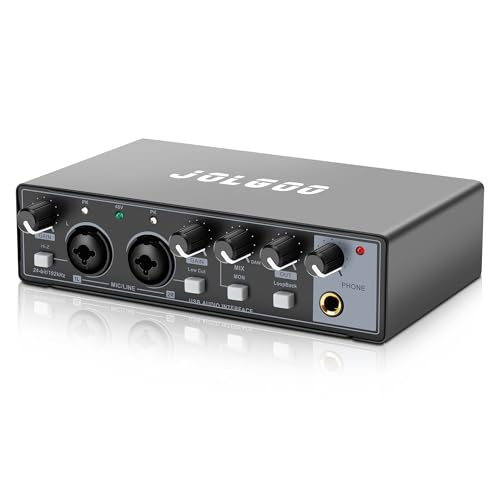
Jolgoo 2×2 Interface Review Summary
The Jolgoo 2×2 USB Audio Interface makes sense for creators who value straightforward operation, portable size, and the essentials in one box.
Its strongest appeal is that it combines dual combo inputs, +48V phantom power, direct monitoring, and broad plug-and-play compatibility in a metal-bodied unit that should suit simple home-studio workflows.
If you are building a first recording setup for a condenser mic, a guitar, or a two-person podcast, this product covers the core needs without asking you to learn a complex rack-style signal chain.
It is not trying to be a premium production interface with advanced routing or lots of channels. Instead, it focuses on the basics that matter most to beginners and practical creators.
Review Scorecard
| Category | Score | Rationale |
|---|---|---|
| Recording flexibility | 8/10 | Dual XLR/line combo inputs and independent gain controls support common small-studio setups. |
| Monitoring usefulness | 8/10 | Direct Monitor support is a meaningful advantage for tracking without delay. |
| Mic support | 8/10 | +48V phantom power makes condenser mics usable, which is important for voice work. |
| Portability | 9/10 | USB-powered operation and compact metal housing favor travel and desk-friendly use. |
| Compatibility | 8/10 | Listing claims Windows, macOS, iOS, Android, and major DAWs support. |
| Expandability | 5/10 | This is a compact 2×2 interface, so it is built for simplicity rather than growth. |
| Value for simple setups | 8/10 | The feature set is well matched to solo creators and small projects. |
Key Features and Specifications of Jolgoo 2×2 Interface
The product listing positions the Jolgoo 2×2 USB Audio Interface as a 24-bit/192kHz interface with two inputs and the essentials needed for home recording.
The focus is not on extensive routing, but on a clean, compact set of features that covers the most common first-step use cases.
Key listed details:
| Feature | Details |
|---|---|
| Brand | Jolgoo |
| Type | 2×2 USB audio interface |
| Audio resolution | 24-bit/192kHz |
| Inputs | Dual XLR/line combo inputs |
| Mic power | +48V phantom power |
| Monitoring | Direct Monitor switch |
| Controls | Independent gain control |
| Indicators | LED peak indicators |
| Outputs | Headphone monitoring and stereo line-outs |
| Connectivity | USB-C/USB-A cables included |
| Build | Metal housing |
| Compatibility | Windows, macOS, iOS, Android |
For buyers scanning listings, the headline feature is the combination of dual combo inputs and phantom power.
That means the interface is intended to handle dynamic or condenser microphones, along with other line-level sources, in one compact unit.
The direct monitoring switch is also important because it lets you listen to your input signal without the distracting delay that can make recording feel awkward.
The listing also emphasizes driver-free or plug-and-play use.
That matters for people who do not want to spend time digging through setup menus before making a recording.
The included USB-C and USB-A cables are a useful practical touch because they reduce the chance that a buyer has to source extra adapters immediately.
The metal housing is another small but relevant point.
On a low-cost interface, build quality can be a weak spot, so a sturdier shell helps this model stand out as a desk device or portable recording companion.
Pros and Cons of Jolgoo 2×2 Interface
Pros
- Dual combo inputs give it more practical flexibility than a single-input starter interface.
- +48V phantom power supports condenser microphones for voice or acoustic recording.
- Direct monitoring is valuable for cleaner, more comfortable tracking.
- USB-powered operation keeps the setup simple and travel-friendly.
- Broad platform support makes it easier to pair with common computers and mobile devices.
- The metal body suggests a more durable design than the cheapest plastic alternatives.
Cons
- A 2×2 layout is inherently limited for larger sessions or expanding setups.
- The listing is focused on basics, so advanced routing or production features are not the point here.
- Buyers with multi-mic podcasts, drum miking, or band recording will likely outgrow it quickly.
- The product page does not provide enough detail to judge converter quality beyond the marketing claims.
The balance here is clear: the Jolgoo 2×2 USB Audio Interface looks strongest as a practical entry-level interface, not a long-term studio centerpiece. If you want uncomplicated tools for one or two sources, the pros outweigh the limitations.
If you already know you need more channels or more advanced monitoring options, the cons matter more.
Who Should Buy Jolgoo 2×2 Interface?
This interface is best for solo creators who want an easy way to record vocals, spoken word, or a single instrument.
It also makes sense for a small podcast setup where two inputs are enough and portability matters.
It should appeal to buyers who want:
- A simple first interface for home recording
- Phantom power for a condenser microphone
- Direct monitoring for voice and instrument tracking
- A compact desktop device with basic connectivity
- Broad compatibility across common devices and DAWs
It is less compelling for:
- Bands or multi-person recording sessions
- Producers who need more inputs, more outputs, or more routing control
- Buyers who want a feature-heavy interface with lots of software extras
- Anyone expecting a more advanced studio expansion path from day one
If you are asking, is Jolgoo 2×2 USB Audio Interface worth it, the answer depends on your setup size.
For a bedroom studio, a podcast desk, or a travel-ready recording bag, it looks like a sensible fit.
For a larger production room, it is too small by design.
Recording Workflow with Jolgoo 2×2 Interface
Direct Monitoring for Faster Takes
The direct monitor switch is one of the most useful features in the listing because it addresses a real workflow problem: hearing yourself too late.
For vocals, guitar, and spoken word, real-time monitoring makes it easier to perform naturally and catch issues before they become full takes.
Dual Inputs for Small Sessions
The dual XLR/line combo inputs are the practical center of the product.
They let the interface handle common source types without forcing buyers into a single microphone-only workflow.
For a solo creator, that means microphone plus instrument.
For a duo, it means two simple inputs in one box.
Phantom Power and Mic Choice
The built-in +48V phantom power matters because it keeps condenser mic options open.
Buyers who already own a condenser mic, or plan to buy one later, should treat this as a key capability rather than a bonus.
It is one of the main reasons this interface is more capable than the most stripped-down budget models.
Desktop Convenience and Portability
The USB-powered design and included cable options make the interface easy to place on a desk or move between locations.
That is useful for home creators who record in different rooms or want to pack the interface with a laptop.
The compact metal build reinforces that portable use case.
Alternatives to Jolgoo 2×2 Interface
If you want a broader brand comparison, consider searching Amazon for a few established alternatives:
These are credible comparisons because they sit in the same general home-recording category.
Some buyers will prefer a more recognized ecosystem, while others will prioritize the Jolgoo unit if the bundled basics and compact design are enough.
Is Jolgoo 2×2 Interface Worth It?
Yes, if your goal is a simple, compact, two-input recording interface with phantom power and direct monitoring. The Jolgoo 2×2 USB Audio Interface looks well matched to beginner studios, solo vocal recording, podcast setups, and small mobile rigs.
No, if you need room to grow into more channels or more advanced studio routing. This is a focused utility device, and that focus is exactly why it can be attractive.
For the right buyer, it offers the right feature mix without unnecessary complexity.
For anyone planning larger sessions, a bigger interface is the smarter long-term move.