A dependable in-ear monitoring system can help guitarists hear their mix clearly without relying on loud stage wedges. The right setup balances wireless stability, latency, battery life, range, and the number of receivers you need.
We compare 10 wireless in-ear monitor systems for rehearsal rooms, churches, studios, and live stages, with practical guidance to help you choose a system that fits your rig and performance needs.
Best 10 Wireless in Ear Monitor Systems for Guitarists Picks for 2026
Best Overall Stability

- 5.8 GHz True Diversity reception
- 24-bit/48 kHz audio with under 5 ms latency
- XLR and 1/4-inch mixer connectivity
Best For: Guitarists who want stable RF performance and flexible stage connections
Best Simple Setup
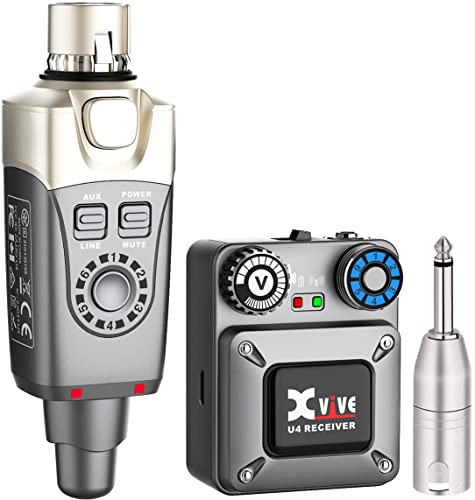
- Over 90 feet of working range
- Under 5 ms latency with six channels
- Includes 1/4-inch-to-XLR adapter
Best For: Guitarists needing a compact monitor system for small venues and rehearsals
Best Battery Life

- Up to 10 hours of rechargeable battery life
- Mono/stereo switching with color-screen receiver
- 1/4-inch, 1/8-inch, and XLR compatibility
Best For: Guitarists wanting long runtime and flexible monitoring connections
Best for Shared Band Mixes

- 5.8 GHz stereo transmission under 5 ms latency
- Automatic pairing with multiple receivers
- 100-foot range and over five hours of use
Best For: Bands sharing one monitor mix across multiple performers
Reliable Stage Monitoring

- Under 5 ms latency and 24-bit/48 kHz audio
- XLR and 1/4-inch input support
- Up to 5 hours of rechargeable use
Best For: Guitarists using mixers in rehearsals and live performances
Band-Friendly Battery Choice

- Up to 30 hours with the charging case
- One transmitter supports up to 10 receiver pairs
- OTG input and mono/stereo switching
Best For: Bands and multi-listener rehearsal setups
Simple Stereo Monitoring

- Automatic transmitter-receiver pairing
- 24-bit/48 kHz low-delay audio
- Includes in-ear headphones and 6.35 mm adapter
Best For: Guitarists wanting easy setup and included earphones
Expandable Stereo Pick

- Two receivers included with expandable multi-user support
- 24-bit/48kHz stereo audio and under-14.9ms latency
- Up to 24-hour transmitter battery life with charging case
Best For: Shared guitar practice, recording, and small live setups
Ultra-Low-Latency Starter

- Under-5ms latency for responsive monitoring
- More than 8 hours of battery life per charge
- 12 channel banks with frequency-hopping transmission
Best For: Solo guitar practice and beginner recording
Band Rehearsal Value
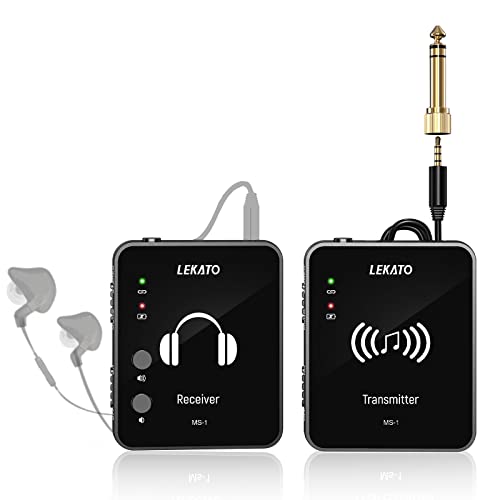
- One transmitter supports multiple receivers
- Stereo/mono input switching with under-12ms latency
- Up to 100 feet of open-area range
Best For: Band rehearsals, churches, and small live gigs
Best Overall Stability – Xvive U45 True Diversity IEM
For guitarists comparing wireless in ear monitor systems for guitarists, the Xvive U45 stands out with 5.8 GHz transmission, True Diversity reception, and a dual-antenna receiver. Its low latency and flexible mixer connections make it practical for stage monitoring.
Best For: Guitarists and bands that prioritize stable RF performance and flexible audio-source connections.
Pros:
- 5.8 GHz True Diversity design with dual antennas helps maintain a stable connection.
- 24-bit/48 kHz audio, 20 Hz–20 kHz response, and under 5 ms latency.
- Supports balanced XLR and 1/4-inch TS inputs with selectable line and aux modes.
- Offers up to six channels for multi-performer setups.
Cons:
- Rated battery life is up to five hours.
- Requires channel scanning and transmitter matching during setup.
The U45 is a strong choice when dependable stage coverage and system flexibility matter more than the simplest plug-and-play setup.
Best Simple Setup – Xvive U4 Wireless IEM
The Xvive U4 is a straightforward option among wireless in ear monitor systems for guitarists. Its 2.4 GHz connection, six-channel operation, and compact transmitter-receiver set are suited to small venues, rehearsals, and performers who want a quick monitoring solution.
Best For: Guitarists playing small clubs, rehearsing with a band, or building a personal monitor system.
Pros:
- Over 90 feet of working range for small venues and onstage movement.
- Less than 5 ms latency helps keep monitoring responsive.
- Six channels support simultaneous broadcasts.
- Rechargeable transmitter and receiver provide up to five hours of battery life.
Cons:
- Uses the 2.4 GHz band rather than 5.8 GHz.
- The listed set includes one transmitter and one receiver.
With its focused feature set and included 1/4-inch-to-XLR adapter, the U4 is a practical entry point for individual monitoring without a complicated system.
Best Battery Life – Donner CV-3 Stereo IEM
The Donner CV-3 combines stereo or mono monitoring with a color-screen receiver, making it a versatile pick among wireless in ear monitor systems for guitarists. Its 2.4 GHz transmission, broad input compatibility, and claimed 10-hour battery life suit extended rehearsals and performances.
Best For: Guitarists and bands that need long runtime, visual receiver controls, and multiple connection options.
Pros:
- Supports mono and stereo monitoring for vocals and instruments.
- 192 kHz sampling, 24-bit depth, 110 dB SNR, and under 6 ms latency.
- Color screen provides real-time audio visualization and system information.
- Up to 10 hours of battery life with 1/4-inch, 1/8-inch, and XLR connectivity.
Cons:
- Uses the 2.4 GHz wireless band.
- Its feature-rich receiver may be more than needed for basic monitoring.
The CV-3 is especially appealing for players who value endurance and setup flexibility, while the screen adds useful at-a-glance feedback during performances.
Best for Shared Band Mixes – 5.8GHz Stereo IEM System
This 5.8 GHz stereo system is designed for guitarists and bands seeking wireless in ear monitor systems for guitarists with low-latency stereo audio. Automatic pairing with multiple receivers can simplify shared monitor mixes for rehearsals, worship teams, and live stages.
Best For: Bands and teams that want one transmitter to support multiple receivers over a 100-foot range.
Pros:
- 5.8 GHz transmission is positioned as an alternative to crowded 2.4 GHz systems.
- 48 kHz/24-bit stereo audio and latency below 5 ms.
- One-to-many automatic pairing supports multiple performers.
- Rechargeable design provides over five hours of use and up to 100 feet of range.
Cons:
- Battery life is shorter than the Donner CV-3’s stated runtime.
- The receiver has no headphone jack listed in the supplied specifications.
Its strongest advantage is shared-system convenience: multiple performers can use the same monitor transmission without a complicated pairing process.
Reliable Stage Monitoring – Xvive U4
The Xvive U4 is a practical choice among wireless in ear monitor systems for guitarists who want low-latency monitoring from a mixer or other professional audio source. Its balanced XLR and unbalanced 1/4-inch inputs, metal housing, and simple pairing make it well suited to rehearsals and live work.
Best For: Guitarists and small bands using a mixer or stage audio device with XLR or 1/4-inch outputs.
Pros:
- Under 5 ms latency with 24-bit/48 kHz audio and a 20 Hz–20 kHz response.
- Supports mono balanced XLR and mono unbalanced TS inputs.
- Rechargeable battery provides up to 5 hours of use.
- Built-in limiter helps reduce distortion from excessive input levels.
Cons:
- Battery life is shorter than some newer competing systems.
- Includes one transmitter and one beltpack receiver, limiting out-of-the-box multi-person monitoring.
- Earphones are not listed as included in the supplied box contents.
The U4 focuses on dependable, straightforward monitoring rather than extra features. It is a solid fit when low latency, flexible input connectivity, and rugged construction matter most.
Band-Friendly Battery Choice – LEKATO MS-20
The LEKATO MS-20 stands out among wireless in ear monitor systems for guitarists who need extended battery life and more than one receiver. Its transmitter can serve multiple receivers, while OTG support adds a convenient way to monitor audio from compatible USB-C devices.
Best For: Bands, guitarists, and rehearsal setups that need multiple listeners, portable charging, or phone and USB-C connectivity.
Pros:
- Charging case provides up to 30 hours of use for the transmitter and two receivers.
- One transmitter can support up to 10 receiver pairs.
- Offers a stated 150-foot open-area transmission range.
- Includes mono/stereo switching and OTG audio input support.
Cons:
- Earphones are not included, so compatible in-ear headphones must be supplied separately.
- Open-area range may be reduced by venue conditions and interference.
- The supplied compatibility notes focus on iPad and iPhone devices for OTG use.
With two receivers and a charging case included, the MS-20 is especially convenient for shared monitoring. It makes the most sense for guitarists who value flexibility and endurance over an all-inclusive earphone package.
Simple Stereo Monitoring – M6S Wireless IEM System
The M6S is a straightforward option among wireless in ear monitor systems for guitarists who want automatic pairing and included earphones. Its 2.4 GHz connection, mono/stereo switch, and support for multiple receivers make it suitable for basic stage, church, and band-practice monitoring.
Best For: Guitarists and performers seeking an easy-to-set-up system with included in-ear headphones and stereo capability.
Pros:
- Automatic pairing avoids manual channel setup.
- Provides 24-bit/48 kHz audio with low noise and low delay.
- Up to six receivers can work with one transmitter simultaneously.
- Includes in-ear headphones, cable, and 6.35 mm adapter.
Cons:
- Battery life is listed as up to 8 hours, with a stated 3-hour charge time.
- The supplied notes do not specify a transmission distance.
- Its RF wireless technology may require attention to venue interference and placement.
The M6S keeps the setup process simple while adding useful mono/stereo flexibility. It is a sensible pick for guitarists who want an included listening solution without assembling a separate earphone package.
Expandable Stereo Pick – M-VAVE SWS-12
For guitarists comparing wireless in ear monitor systems for guitarists, the M-VAVE SWS-12 stands out for its stereo transmission, expandable receiver support, and flexible single- or dual-channel operation. Its under-14.9ms latency and 24-bit/48kHz audio are suited to practice, recording, and live monitoring.
Best For: Guitarists, bassists, and small performance setups needing multiple receivers and stereo monitoring.
Pros:
- Includes one transmitter and two receivers, with support for expandable multi-user setups.
- Provides stereo audio at 24-bit/48kHz with latency under 14.9ms.
- Offers automatic frequency hopping, USB-C charging, and a portable charging case.
- Transmitter battery life is rated up to 24 hours.
Cons:
- Receiver battery life is rated at up to 6 hours, shorter than the transmitter.
- The 2.4GHz wireless band may require attention to interference in crowded wireless environments.
The SWS-12 is a versatile choice when a guitarist wants stereo monitoring now and room to add receivers later. Its included two-receiver setup and long transmitter runtime make it particularly practical for shared rehearsal or performance use.
Ultra-Low-Latency Starter – JOYO JW-07
The JOYO JW-07 is a straightforward option for guitarists seeking wireless in ear monitor systems for guitarists with very low delay and simple clip-on operation. Its latency is specified at under 5ms, while frequency hopping and 12 channel banks support stable monitoring for practice and live use.
Best For: Guitar beginners and individual guitarists who prioritize responsive practice monitoring and easy setup.
Pros:
- Under-5ms latency supports near real-time signal feedback.
- Uses frequency hopping to help reduce interference from other wireless devices.
- Provides 12 channel banks across four groups for flexible instrument use.
- Offers more than 8 hours of battery life per charge.
Cons:
- One transmitter cannot connect to multiple receivers.
- Its stated operating range is 40–60 feet in open space, less than some competing systems.
- Audio resolution is specified as 48kHz/16-bit rather than 24-bit.
With its especially low stated latency and long battery runtime, the JW-07 is well suited to a solo guitarist who wants immediate monitoring without a complicated system. It is less appropriate for bands that need one transmitter to feed several musicians.
Band Rehearsal Value – LEKATO MS-1
The LEKATO MS-1 is designed for guitarists evaluating wireless in ear monitor systems for guitarists that can serve several performers. It supports multiple receivers from one transmitter, true stereo transmission, automatic pairing, and a stated 100-foot open-area range for rehearsals and small gigs.
Best For: Bands, churches, and small-to-medium performance groups sharing one monitoring source.
Pros:
- Supports multiple receivers from one transmitter for group monitoring.
- Transmits stereo audio and switches between stereo and mono input.
- Provides under-12ms latency, 24-bit/48kHz resolution, and a 20Hz–20kHz frequency response.
- Offers automatic pairing and up to 100 feet of open-area wireless range.
Cons:
- Battery life is rated at more than 5 hours, which may require recharging during longer events.
- True stereo operation requires a stereo audio source and stereo cable.
- Open-area range claims may not translate directly to crowded indoor venues.
The MS-1 makes the most sense when several guitarists or band members need to monitor the same source. Its multi-receiver design and stereo support are strong advantages, though the roughly five-hour battery rating should be considered for extended performances.
How We Picked the Best Wireless in Ear Monitor Systems for Guitarists
We focused on the features that matter most when a guitarist depends on consistent monitoring during rehearsal or performance. The comparison considers wireless band, stereo support, operating range, latency, battery behavior, transmitter and receiver design, pairing process, and whether one transmitter can serve multiple receivers.
We also considered practical details such as beltpack size, charging options, included accessories, channel flexibility, and suitability for small venues versus more demanding stage environments. Product descriptions can vary by seller, so verify current specifications, included earphones, and receiver quantity before ordering.
Quick Comparison
| Feature | Why It Matters |
|---|---|
| Wireless band | Influences range, interference resistance, and local compatibility. |
| Stereo transmission | Preserves left-right mixes and can make backing tracks easier to follow. |
| Receiver count | Determines whether multiple musicians can monitor from one transmitter. |
| Battery life | Should cover rehearsals, soundchecks, and performances with reserve. |
| Latency | Lower delay feels more natural when playing tightly with the band. |
Key Buying Factors for Wireless In-Ear Monitor Systems for Guitarists
Wireless Stability and Frequency
Check whether the system uses 2.4 GHz or 5.8 GHz wireless technology and consider the RF congestion in your venue. Digital systems can be convenient and easy to pair, but crowded environments may affect reliability. True diversity designs can provide an advantage where available, although antenna placement and line of sight still matter.
Latency and Sound Quality
Choose the lowest practical latency for your budget, especially if you sing, use rhythmic effects, or need precise timing with a click. Stereo operation is useful for stereo guitar processors, backing tracks, and detailed monitor mixes. Remember that the transmitters and receivers do not replace the quality of the in-ear headphones themselves.
Battery, Range, and Charging
Look for enough runtime for the complete event, not just the advertised maximum. USB charging, charging cases, battery indicators, and spare power options can simplify touring. Test usable range with your body between the transmitter and beltpack, since real-world performance can be shorter than open-air claims.
Expansion and Setup
If several musicians need the same mix, confirm that the transmitter supports multiple receivers and check exactly how many are included. Automatic pairing is convenient, but manual channel controls may be more useful when several wireless systems operate nearby. Make sure the transmitter accepts the output from your mixer, interface, or monitor console.
Who Should Buy Which Wireless in Ear Monitor Systems for Guitarists?
Choose a compact, simple 2.4 GHz system if you mainly rehearse, play small venues, or want quick setup with minimal controls. A 5.8 GHz or true-diversity option may suit performers who need additional attention to signal stability and stage coverage. Stereo systems are preferable for stereo monitor mixes, while a basic mono-compatible setup can be sufficient for a straightforward guitar-and-vocal mix.
For bands, prioritize one-to-many support and confirm the receiver count before buying. For frequent performers, prioritize robust construction, dependable battery indicators, replaceable or backup power, and a transmitter that integrates cleanly with the venue’s monitor output. Whichever system you select, run a full-range test at soundcheck and keep a wired backup available for critical performances.