Recording a lecture well depends on more than storage capacity. Microphone quality, battery life, portability, and control over multiple sound sources can determine whether your notes are genuinely useful later.
This roundup compares 10 options ranging from professional multitrack recorders to simple voice-activated dictaphones, helping students, instructors, researchers, and journalists choose equipment that matches their recording habits and budgets.
Best 10 Multitrack Recorders for Lectures Picks for 2026
Best All-Around Choice

- Four XLR/TRS inputs with phantom power
- Up to 24-bit/96kHz WAV recording
- SD recording and multichannel USB audio
Best For: Lecture teams and multi-speaker setups
Best for On-the-Go Multitrack Work
Boss BR-600 Digital Multitrack Recorder

- Eight simultaneous playback tracks
- Built-in stereo microphone
- Battery powered with effects and drum machine
Best For: Portable, self-contained recording
Best Pocketstudio-Style Option
Tascam DP-006 Six-Track Pocketstudio

- Up to six tracks with two-track recording
- Two built-in omnidirectional microphones
- 16-bit/44.1kHz WAV recording
Best For: Simple standalone lecture recording
Best for Professional Field Setups
Zoom F6 Multitrack Field Recorder
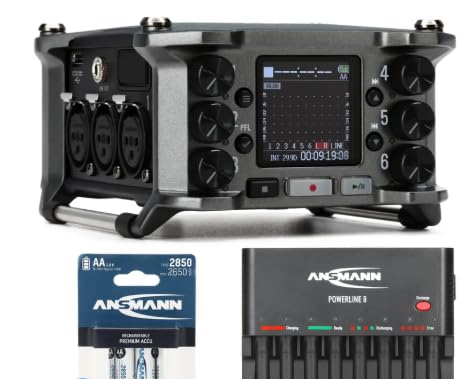
- Six XLR inputs and 14-track recording
- Time-code I/O and USB audio interface
- Includes rechargeable batteries and charger
Best For: Multi-microphone lecture productions
Best Compact Lecture Recorder
EVISTR L357 64GB Digital Voice Recorder

- 1536kbps WAV/MP3 recording with adjustable gain
- 64GB storage and up to 32 hours of recording
- Voice activation plus speed and A-B playback
Best For: Students needing a portable, high-capacity lecture recorder
Best True Multitrack Option
TASCAM DP-008EX 8-Track Pocketstudio

- Eight-track WAV recording for layered audio
- Built-in stereo microphones
- Portable four-AA battery operation
Best For: Users prioritizing multitrack recording over lecture automation
Best High-Capacity Lecture Recorder
EVIDA V618 128GB Voice Recorder
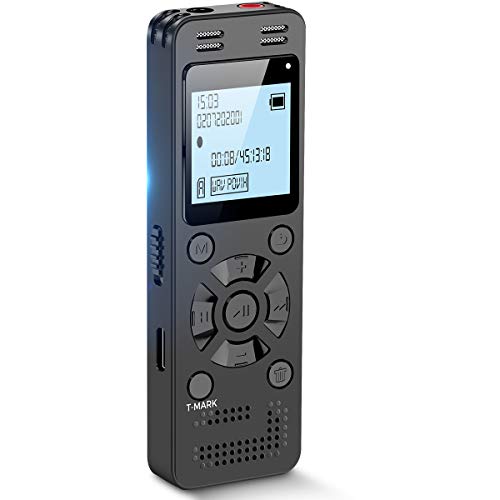
- 128GB capacity rated for 9,296 recording hours
- 1536kbps WAV and selectable MP3 formats
- Voice activation, folders, bookmarks, and password protection
Best For: Frequent lecture recording with extensive file storage needs
Simple Lecture Capture
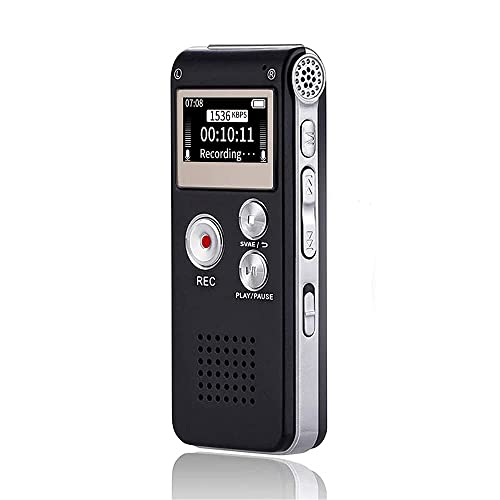
- One-button recording and A-B repeat playback
- Noise reduction and voice-activated recording
- 16GB storage with over 30 hours of recording
Best For: Students who want uncomplicated lecture recording and review
High-Capacity Lecture Archive
72GB Voice Recorder with DSP 6.0

- 72GB capacity rated for up to 10,860 hours
- DSP 6.0 noise reduction for clearer audio
- OTG transfers directly to phones and tablets
Best For: Heavy users storing and transferring many lecture recordings
Best All-Around Choice – Zoom H6
The Zoom H6 is a versatile option among multitrack recorders for lectures, especially when you need several external microphones, portable operation, or computer connectivity. It records to SD cards, supports up to 24-bit/96kHz WAV audio, and provides four XLR/TRS inputs with individual gain controls, pads, and phantom power.
Best For: Lecture teams, panel discussions, and users who need flexible microphone inputs plus USB audio interface capability.
Pros:
- Four XLR/TRS inputs with per-input gain, pads, and phantom power
- Records up to 24-bit/96kHz audio to SD cards up to 128GB
- Includes stereo microphone capsules and supports multichannel USB audio
- Battery powered and mountable to a DSLR or camcorder with an optional adapter
Cons:
- Requires four AA batteries
- External microphones may be needed for larger lecture rooms
The H6 is a strong general-purpose pick when a lecture setup may expand beyond a single built-in microphone. Its input flexibility and high-resolution recording make it suitable for both straightforward lectures and more involved multi-speaker sessions.
Best for On-the-Go Multitrack Work – Boss BR-600 Digital Multitrack Recorder
The Boss BR-600 is a compact multitrack recorder for lectures and other portable recording situations. It offers eight simultaneous playback tracks, 64 V-Tracks, a built-in stereo microphone, and battery operation, while its included 128MB CompactFlash card provides recording media to get started.
Best For: Users who want a self-contained, battery-powered recorder with track management and built-in processing.
Pros:
- Supports eight simultaneous playback tracks and 64 V-Tracks
- Built-in stereo microphone enables recording without an external mic
- Battery powered for portable use
- Includes vocal effects, pitch correction, guitar effects, and a drum machine
Cons:
- Included memory capacity is limited to 128MB
- Uses four 9V batteries
- Its effects and songwriting features may be unnecessary for basic lecture recording
The BR-600 is most appealing if portability and multitrack organization matter more than modern storage capacity. Its built-in microphone can simplify setup, while the track and effects features provide room for more creative projects.
Best Pocketstudio-Style Option – Tascam DP-006 Six-Track Pocketstudio
The Tascam DP-006 is a straightforward six-track pocketstudio for lectures, notes, and small recording projects. Its two built-in omnidirectional condenser microphones, battery operation, and two-track simultaneous recording make it convenient when you want a simple standalone setup.
Best For: Solo users and small recording sessions that need built-in microphones and uncomplicated CD-quality WAV recording.
Pros:
- Provides up to six tracks with two tracks recordable at once
- Includes two built-in omnidirectional condenser microphones
- Records CD-quality 16-bit/44.1kHz WAV audio
- Offers a dedicated stereo master track and six-track simultaneous playback
Cons:
- Only two tracks can be recorded simultaneously
- Uses four AA batteries
- Its 4GB storage is less expansive than the H6’s stated card support
The DP-006 suits buyers who value a compact, self-contained recorder over extensive input connectivity. For a single lecturer or small setup, its built-in microphones and simple track structure can keep recording practical and manageable.
Best for Professional Field Setups – Zoom F6 Multitrack Field Recorder
The Zoom F6 is a professional-oriented choice among multitrack recorders for lectures, offering six XLR microphone inputs, 14-track recording, time-code I/O, and USB audio interface functionality. This bundle also includes rechargeable AA batteries and a charger, making it practical for extended field use.
Best For: Larger lecture productions, multi-microphone recording, and field teams that need advanced connectivity and rechargeable power.
Pros:
- Combines six XLR inputs with 14-track recording
- Includes time-code I/O for more advanced production workflows
- Supports SD, SDHC, and SDXC cards
- Bundle includes eight rechargeable batteries, a charger, and additional AA batteries
Cons:
- More advanced than necessary for a basic single-microphone lecture
- Requires external microphones for recording a lecture
- The supplied details do not specify a built-in microphone
The F6 is the strongest fit for users building a serious multi-microphone field rig. Its six XLR inputs, high track count, time-code connections, and included rechargeable power accessories make it well suited to complex lecture and event workflows.
Best Compact Lecture Recorder – EVISTR L357 64GB Digital Voice Recorder
For shoppers comparing multitrack recorders for lectures, the EVISTR L357 is a compact voice recorder focused on straightforward lecture capture rather than musical multitrack production. Its noise-reduction microphone, adjustable gain, voice activation, and 64GB storage make it practical for classes, meetings, and interviews.
Best For: Students, teachers, and anyone who wants long recording capacity with simple controls and playback tools.
Pros:
- Records in WAV or MP3 with up to 1536kbps stereo quality and seven gain levels.
- 64GB storage can hold up to 4,660 hours at 32Kbps.
- Voice activation can reduce silent sections and conserve storage.
- Supports A-B repeat, variable-speed playback, scheduled recording, and USB-C file transfer.
Cons:
- This is a voice recorder, not a dedicated multitrack music recorder.
- Voice activation may omit quiet passages when sensitivity is set too low.
- The supplied details do not specify a multichannel input system.
The L357 is a sensible choice when lecture recording convenience, storage, and playback flexibility matter more than separate-track mixing. Its small metal body and stated 32-hour recording battery life also suit extended classroom use.
Best True Multitrack Option – TASCAM DP-008EX 8-Track Pocketstudio
The TASCAM DP-008EX is the closest fit here for buyers specifically seeking multitrack recorders for lectures, although it is designed primarily as an 8-track digital pocketstudio. Built-in stereo microphones, WAV recording, and battery operation give it flexibility for capturing ideas, sources, or spoken material in a more production-oriented format.
Best For: Users who want an actual multitrack workflow and do not mind a more involved recorder than a simple lecture dictaphone.
Pros:
- Provides eight-track digital recording for layered recordings and songwriting.
- Includes built-in stereo microphones and WAV format support.
- Runs on four AA batteries for portable use.
- Includes a 2GB SD card and USB cable.
Cons:
- Its 2GB storage and listed 6.5-hour recording time are more limited than the voice recorders here.
- It may be more complex than necessary for one-person lecture capture.
- The supplied information does not list voice activation or lecture-specific noise cancellation.
Choose the DP-008EX when separate tracks and a pocketstudio-style workflow are priorities. For simple, long classroom recordings, its shorter listed recording time and lack of lecture-focused automation may make a dedicated voice recorder more convenient.
Best High-Capacity Lecture Recorder – EVIDA V618 128GB Voice Recorder
For lecture-focused buyers comparing multitrack recorders for lectures, the EVIDA V618 emphasizes storage, voice activation, and organized file management instead of separate audio tracks. Its 128GB capacity, selectable recording formats, password protection, and computer compatibility make it useful for maintaining a large archive of classes and meetings.
Best For: Students, professionals, and frequent recorders who need substantial storage and voice-activated capture.
Pros:
- 128GB storage is rated for up to 9,296 hours of recording.
- Supports MP3 at 128 or 192kbps and WAV at 1536kbps.
- Six voice-activation sensitivity levels help reduce blank sections.
- Includes four-folder organization, password protection, bookmarks, and USB file transfer.
Cons:
- It is a mono voice recorder rather than a dedicated multitrack recorder.
- The listed battery life is up to 54 hours, not unlimited for extended recording schedules.
- The supplied details list no headphone jack.
The V618 is particularly compelling for high-volume lecture archives where storage and file organization matter. If your priority is mixing independently recorded tracks, the TASCAM is the more appropriate format; if it is reliable voice capture in a small device, the EVIDA is better aligned.
Simple Lecture Capture – Compact 16GB Voice Recorder
For shoppers comparing multitrack recorders for lectures, this compact Sunlan device emphasizes straightforward recording and playback rather than complex production features. Its one-button controls, built-in microphone, noise-reduction technology, and 16GB of storage make it practical for capturing classroom audio, meetings, and interviews.
Best For: Students and note-takers who want simple lecture recording with A-B repeat playback.
Pros:
- Simple REC, STOP, and PLAY controls for quick operation.
- Built-in microphone with noise reduction and voice-activated recording.
- 16GB storage and more than 30 hours of continuous recording.
- USB file transfer plus music-player and removable-storage functions.
Cons:
- Records in WAV format rather than offering listed MP3 recording.
- Mono microphone operation may be less suitable for wide stereo room capture.
- Its small one-inch screen may limit on-device navigation.
This is a sensible low-complexity choice when reliable lecture capture and easy review matter more than multichannel production controls. A-B repeat is particularly useful for revisiting important sections after class.
High-Capacity Lecture Archive – 72GB Voice Recorder with DSP 6.0
Among multitrack recorders for lectures, the NekSide 72GB model stands out for storage capacity and mobile-friendly file transfer. It uses DSP 6.0 noise reduction, records in WAV, and supports OTG connections to compatible smartphones or tablets, making it suited to people who archive many long recordings.
Best For: Frequent lecturers, students, and professionals who need extensive onboard storage and OTG transfers.
Pros:
- 72GB built-in memory rated for up to 10,860 hours of audio storage.
- DSP 6.0 noise reduction and high-definition audio capture.
- OTG support enables direct transfers to smartphones or tablets.
- Portable design with USB Type-C hardware interface and a two-year manufacturer warranty.
Cons:
- Default recordings are WAV; MP3 requires conversion on a computer.
- The supplied details do not specify voice-activated recording controls or battery life.
- The listed headphone connection is mini-USB rather than a standard 3.5mm jack.
This model is best viewed as a high-capacity audio archive rather than a full multitrack production recorder. Its large memory and OTG functionality are useful if you regularly record lectures and want to manage files from a mobile device.
Feature-Rich Study Recorder – 8GB Stereo Voice Recorder for Lectures
For multitrack recorders for lectures, the HoTiyan 8GB model is a practical study-focused option with stereo recording, voice activation, A-B repeat, and variable playback speed. It can record in MP3 or WAV, so it offers more format flexibility than models limited to WAV.
Best For: Students who want lecture recording plus playback tools for reviewing key material.
Pros:
- Higher-sensitivity microphone, noise reduction, and a professional recording chip.
- Stereo recording with MP3 and WAV format support.
- Voice activation can reduce silence and whispered sections.
- A-B repeat, variable playback speed, timestamps, and password protection support study workflows.
Cons:
- 8GB storage is substantially smaller than the 72GB alternative.
- Continuous recording is listed at 20 hours, so extended use may require recharging.
- File transfer uses a Micro USB cable rather than USB Type-C.
This recorder offers the strongest set of review-oriented features in the group, especially for replaying difficult lecture passages. Its smaller capacity is less suited to large archives, but MP3 support and stereo capture add everyday flexibility.
How We Picked These Multitrack Recorders for Lectures
We focused on practical lecture-recording needs: intelligible speech, dependable operation, portability, storage, and ease of transferring files. The selection includes true multitrack units with XLR or TRS inputs, pocket studios with built-in microphones, and straightforward voice recorders for users who need one-button capture rather than advanced mixing.
Because lecture environments vary, no single design is ideal for everyone. A recorder with multiple inputs can capture a lecturer and room microphone separately, while a compact dictaphone may be more convenient for a student sitting in a crowded classroom.
Quick Comparison
- Best for flexible microphones: Zoom H6 and Zoom F6 provide multiple inputs and more control over external microphones.
- Best for standalone multitrack work: Boss BR-600, Tascam DP-006, and TASCAM DP-008EX suit users who want onboard recording and track management.
- Best for simple lecture notes: EVISTR, EVIDA, and other digital voice recorders prioritize long recording times, playback, and easy operation.
Key Buying Factors for Multitrack Recorders for Lectures
Microphone and Input Options
Built-in microphones are convenient for a speaker seated near the front. For large rooms, external microphones can improve clarity. XLR/TRS inputs are the most adaptable, but they add cables, setup time, and microphone cost. Check whether the recorder supports the microphone type you plan to use, including phantom power if required.
Track Control and Recording Format
Multitrack recording lets you keep sound sources separate and adjust them later, which is useful when lecture audio competes with questions or room noise. Simpler voice recorders generally create a single file and may be faster to operate. Also check supported formats, recording quality, and whether files can be transferred directly by USB or removable storage.
Battery Life, Storage, and Portability
Long lectures call for dependable battery performance and sufficient storage. Rechargeable models reduce disposable-battery costs, while replaceable batteries can be easier to swap during fieldwork. A compact recorder is easier to position discreetly, but larger units often offer better controls and connectivity.
Usability and Audio Clarity
Look for a visible recording indicator, physical start and stop controls, headphone monitoring, and simple file navigation. Voice activation and noise reduction can help with basic note-taking, but they may not replace careful microphone placement in a noisy room.
Who Should Buy Which Multitrack Recorders for Lectures?
Choose a Zoom H6 or F6 if you record panels, seminars, interviews, or lectures requiring multiple external microphones. Pick a Boss or Tascam pocketstudio if you want hands-on multitrack control without a computer. For students who mainly need searchable or replayable spoken notes, a compact voice-activated recorder with ample storage is usually the simpler and more affordable choice.
Before recording, confirm that classroom or event policies permit it. Test levels, place the microphone as close to the main speaker as practical, and make a short trial recording so technical problems do not compromise the entire lecture.