The best multitrack recorders for field recording make it easier to capture interviews, music, sound effects, and location audio without carrying a full studio setup. The right model depends on your input requirements, portability, recording format, and how much editing or mixing you want to do on the device.
We compare 10 portable options, including handheld recorders, camera-focused units, multitrack songwriting tools, and 32-bit float field recorders, so you can choose a practical fit for your workflow and budget.
Best 10 Multitrack Recorders for Field Recording Picks for 2026
Flexible Field Kit
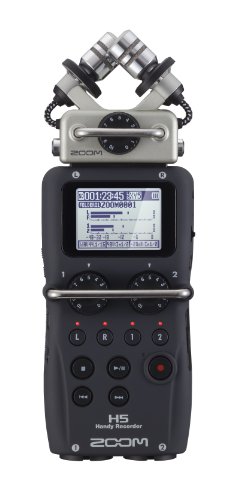
- Interchangeable microphone capsule system
- Four-track simultaneous recording
- Two XLR/TRS inputs with phantom power
Best For: Expandable field recording setups
Camera Sound Specialist
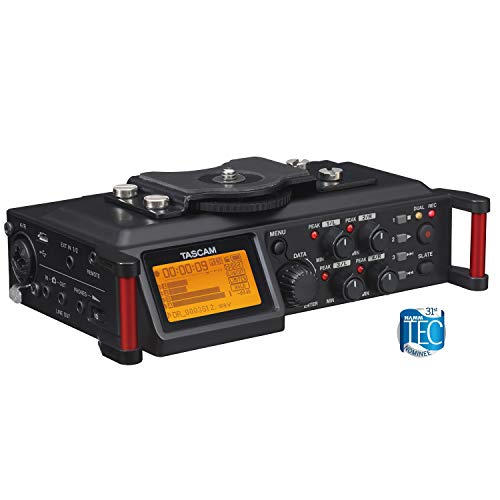
- Four balanced XLR inputs with phantom power
- Mounts above or below a camera
- Dual Recording safety copy mode
Best For: Multimicrophone video production
Clip-Free Essential

- 32-bit float recording
- Four-track capability with two XLR/TRS inputs
- USB-C recording plus SD-card backup
Best For: Flexible solo field recording
Pocket Multitrack Studio

- Up to six-track recording
- Two built-in omnidirectional microphones
- Battery-operated songwriting workflow
Best For: Portable songwriting and audio sketches
Top High-Headroom Pick

- Six tracks plus stereo mix with 32-bit float recording
- 19.4 mm mics handle up to 140 dB SPL
- Up to 15 hours on four AA batteries
Best For: Filmmakers and field recordists needing flexible multitrack capture
Best Complete Multitrack Kit

- Four tracks plus a stereo bounce track
- Two XLR/TS inputs and built-in effects
- Includes cables, batteries, and 64GB microSDXC card
Best For: Mobile musicians wanting an accessory-ready four-track setup
Best Compact Legacy Option

- Built-in X/Y mics with 90- or 120-degree stereo modes
- Four-channel simultaneous recording
- 24-bit/96 kHz Linear PCM capture
Best For: Portable stereo recording and straightforward four-channel work
Best All-Around Multitrack Recorder

- 32-bit float recording helps avoid clipping
- Four-track layering with bounce and undo
- Battery or USB-C operation with built-in rhythms
Best For: Portable musical recording and quick demos
Best Compact Field Recorder

- 32-bit float technology for forgiving levels
- Rugged metal body with locking XLR connectors
- Remote control from up to 30 feet via Bluetooth
Best For: Durable location recording and production work
Best High-Track Portable Studio

- Eight-track recording with touchscreen editing
- Built-in drum loops, synths, effects, and MIDI
- Up to five hours on four AA batteries
Best For: Portable multitrack songwriting and production
Flexible Field Kit – Zoom H5
The Zoom H5 is a versatile choice among multitrack recorders for field recording, combining interchangeable microphone capsules with four-track recording and two XLR/TRS inputs. Its compact, battery-powered design suits mobile recording for music, video, and interviews.
Best For: Field recordists who want expandable microphones and external input flexibility.
Pros:
- Interchangeable input capsules, including the included shock-mounted X/Y capsule.
- Records up to four tracks simultaneously.
- Two XLR/TRS combo inputs with phantom power and -20 dB pads.
- Can function as a multichannel or stereo USB audio interface.
Cons:
- Recording media support is limited to SD/SDHC cards up to 32GB.
- Requires two AA batteries for portable operation.
The H5 is a strong all-purpose option when capsule swapping and external microphone connectivity matter more than maximum storage capacity.
Camera Sound Specialist – TASCAM DR-70D
The TASCAM DR-70D is designed for production crews seeking multitrack recorders for field recording. It provides four balanced XLR inputs, camera-mounting flexibility, built-in microphones, and level-protection features for film and documentary work.
Best For: Videographers and production sound users recording multiple microphones around a camera.
Pros:
- Four balanced XLR inputs with phantom power and individual gain controls.
- Can mount above or below a camera.
- Built-in microphones provide an additional on-set recording option.
- Dual Recording mode creates a lower-level safety copy to help prevent distortion.
Cons:
- At 1.2 pounds, it is heavier than the handheld Zoom models listed here.
- Requires four AA batteries.
- Its feature set is oriented toward camera production rather than pocket-sized portability.
Choose the DR-70D when four XLR channels and camera integration are priorities for location production; its safety recording mode is particularly useful for unpredictable levels.
Clip-Free Essential – Zoom H4 Essential
The Zoom H4 Essential brings 32-bit float recording to a portable four-track design, making it a practical pick among multitrack recorders for field recording. It combines built-in stereo microphones, two XLR/TRS inputs, and USB-C connectivity for recording or streaming.
Best For: Creators who want a forgiving handheld recorder for changing sound levels in field, podcast, music, and video work.
Pros:
- 32-bit float recording helps provide clip-free audio for unpredictable levels.
- Built-in stereo microphones and two XLR/TRS inputs support several setups.
- Can record to a connected phone, tablet, or computer while saving to an SD card.
- Spoken menu guidance supports more accessible operation.
Cons:
- Requires two AA batteries for standalone operation.
- It has two external XLR/TRS inputs, rather than four.
The H4 Essential is compelling for solo creators and mobile crews who value level protection and straightforward USB-C connectivity alongside traditional handheld recording.
Pocket Multitrack Studio – TASCAM DP-006
The TASCAM DP-006 is a compact pocketstudio for songwriting and battery-powered multitrack work. As an option among multitrack recorders for field recording, it offers up to six tracks, two-track simultaneous recording, and built-in omnidirectional condenser microphones.
Best For: Songwriters and mobile creators who want a simple, self-contained multitrack sketchpad.
Pros:
- Supports up to six tracks with two tracks recording simultaneously.
- Provides two built-in omnidirectional condenser microphones.
- Offers CD-quality 16-bit/44.1kHz recording.
- Includes a dedicated stereo master track and supports six-track simultaneous playback.
Cons:
- Two tracks can be recorded simultaneously, rather than all six.
- The supplied notes do not list XLR inputs, phantom power, or 32-bit float recording.
- Its multitrack workflow is more songwriting-focused than production-oriented.
The DP-006 makes the most sense when track count and battery-powered songwriting convenience matter more than advanced microphone connectivity or modern clip-protection features.
Top High-Headroom Pick – Zoom H6 Studio
The Zoom H6 Studio is a strong choice for multitrack recorders for field recording when you need flexible track capacity, high dynamic range, and dependable operation in unpredictable environments. It records up to six individual tracks plus a stereo mix, with 32-bit float capture and look-ahead limiters to help prevent distortion.
Best For: Filmmakers, musicians, and field recordists handling everything from quiet dialogue to loud live sources.
Pros:
- Records six individual tracks plus a stereo mix with 32-bit float recording.
- 19.4 mm microphones handle sound levels up to 140 dB SPL.
- Supports recording from 44.1 to 192 kHz.
- Offers up to 15 hours of operation on four AA batteries.
Cons:
- At 1.05 pounds and 11 inches long, it is less compact than some portable recorders.
- Its advanced track capacity may be more than needed for simple stereo recordings.
Choose the H6 Studio if your field work benefits from multiple isolated tracks, loud-source handling, and long battery life. Its combination of 32-bit float recording and protective limiters makes it particularly practical for changing sound levels.
Best Complete Multitrack Kit – Zoom R4 Multitrak
The Zoom R4 Multitrak is a practical option among multitrack recorders for field recording when you want a four-track workflow with included accessories. It combines 32-bit float recording, two XLR/TS combo inputs, a built-in microphone, effects, and stereo bouncing in a portable package.
Best For: Musicians and creators layering vocals, instruments, or live performances without relying on external processors.
Pros:
- Provides four recording tracks plus a bounce track for layered arrangements.
- Dual XLR/TS inputs accommodate microphones, guitars, keys, and other sources.
- Includes EQ, reverb, compression, and guitar effects.
- Package includes two XLR cables, four AA batteries, and a 64GB microSDXC card.
Cons:
- At 2.4 pounds, it is the heaviest option in this selection.
- Its four-track limit is less expansive than a six-track recorder.
The R4 is appealing when you want a ready-to-use multitrack setup rather than a recorder alone. The bundled storage, cables, batteries, built-in effects, and two combo inputs make it well suited to mobile music production.
Best Compact Legacy Option – Zoom H4N Digital Recorder
The Zoom H4N is a straightforward choice among multitrack recorders for field recording, especially if you want built-in stereo microphones and four-channel simultaneous recording. Its X/Y microphone pair offers 90- or 120-degree positioning, while external microphones can be used alongside the built-in mics.
Best For: Portable stereo recording, interviews, rehearsals, and users who want a simple four-channel setup.
Pros:
- Built-in X/Y microphones offer 90- or 120-degree stereo recording.
- Supports four-channel simultaneous recording with built-in and external microphones.
- Records 24-bit/96 kHz Linear PCM audio.
- Includes a 1.9-inch LCD and digitally controlled microphone preamp.
Cons:
- It records at 24-bit/96 kHz rather than 32-bit float.
- Its listed digital recording time is 11 hours, less than the H6 Studio’s stated battery life.
- The 1.9-inch screen is relatively small for navigating recording functions.
The H4N remains a sensible pick for users who value built-in stereo capture and a compact 9.92-ounce body. It is best suited to conventional PCM recording workflows where four-channel capability is sufficient.
Best All-Around Multitrack Recorder – Zoom R4
The Zoom R4 is a flexible choice among multitrack recorders for field recording when you want to capture ideas, vocals, or instruments without adjusting gain constantly. It records up to four tracks, supports XLR/TS sources, and can run on four AA batteries or USB-C.
Best For: Musicians and creators who want portable, clip-resistant multitrack recording with built-in rhythm tools.
Pros:
- 32-bit float recording helps avoid clipping without manual gain adjustments.
- Two XLR/TS combo inputs accommodate microphones, instruments, and keyboards.
- Tracks can be layered, bounced, and undone to extend recording flexibility.
- Includes over 80 drum patterns and works as a 2-in/2-out USB audio interface.
Cons:
- Limited to four tracks before bouncing.
- Its feature set is geared toward musicians rather than a dedicated production field recorder.
The R4 stands out for straightforward, battery-powered multitracking and forgiving level management. Choose it when quick layering and musical accompaniment matter more than a higher track count.
Best Compact Field Recorder – Zoom F3
The Zoom F3 is a compact option for multitrack recorders for field recording, especially when durability and remote operation are priorities. Its metal casing, locking XLR connectors, tripod mount, and 32-bit float technology suit location work where equipment may need to be mounted or hidden.
Best For: Field and production crews needing a durable recorder with remote control and straightforward monitoring.
Pros:
- 32-bit float technology supports forgiving recording levels.
- Durable metal housing, locking XLR connectors, tripod mount, and rubber feet.
- Headphone monitoring and line output support cameras or other gear.
- Bluetooth adapter bundle enables app control from up to 30 feet.
Cons:
- The supplied notes do not specify the number of recording tracks or input count.
- Digital recording time is listed as eight hours.
The F3 is the focused choice for location capture rather than music-oriented arrangement. Its rugged construction and remote app control make it particularly useful when the recorder must stay out of the shot.
Best High-Track Portable Studio – Zoom R12
The Zoom R12 brings a larger, touchscreen-based workflow to multitrack recorders for field recording. It records up to eight tracks, provides onboard editing and effects, and runs on four AA batteries, making it useful for musicians who want a portable studio rather than a minimal capture device.
Best For: Musicians who need eight-track recording, hands-on editing, and built-in accompaniment away from a computer.
Pros:
- Records up to eight tracks with touchscreen editing and mixing.
- Both inputs offer 48V phantom power; input 1 also provides Hi-Z for guitar and bass.
- Includes 150 drum loops, 18 FM synth instruments, effects, and MIDI support.
- Works as a stereo USB-C audio interface and DAW control surface.
Cons:
- Battery life is listed as up to five hours on four AA batteries.
- Its 16-ounce, 12.44-inch-wide design is less compact than a minimalist field recorder.
The R12 is the strongest fit when track count and onboard production tools are central to the purchase. Its touchscreen and musical features make it more of a portable recording studio than a bare field-capture unit.
How We Picked These Multitrack Recorders for Field Recording
We focused on portable recorders that can capture more than a simple stereo file or provide a useful multitrack workflow in the field. Our selection considers input count, microphone options, track capacity, recording formats, battery operation, monitoring, and the type of work each model is designed to handle.
We also included products for different users: filmmakers recording camera audio, musicians sketching arrangements, podcasters capturing multiple sources, and sound recordists who prioritize compact size or 32-bit float recording. Features such as built-in microphones, XLR/TRS connectivity, limiters, high-pass filters, effects, bouncing, and drum loops were weighed according to their practical value rather than treated as standalone selling points.
Quick Comparison
| Best For | What to Prioritize | Suitable Options |
|---|---|---|
| Compact location recording | Low weight, built-in microphones, simple controls | Zoom H4 Essential, Zoom H5, Zoom H4N |
| Filmmaking and camera audio | Multiple XLR inputs, monitoring, limiter, filter controls | TASCAM DR-70D, Zoom H6 |
| Music and songwriting | Overdubbing, track management, effects, bouncing | TASCAM DP-006, Zoom R4, Zoom R12 |
| High-headroom field capture | 32-bit float recording and dependable external inputs | Zoom R4, Zoom F3 |
Key Buying Factors for Multitrack Recorders for Field Recording
Inputs and Track Capacity
Count the sources you normally record at once. Two combo inputs may be enough for a singer and instrument, while filmmaking or ensemble work can require four or more isolated inputs. Track capacity also matters if you plan to overdub, bounce parts, or build complete arrangements away from a computer.
Microphones and Connectivity
Built-in microphones are convenient for quick stereo ambience and spontaneous ideas, but XLR inputs provide more flexibility with professional microphones, mixers, and balanced sources. Check whether the recorder supports phantom power when using condenser microphones.
Recording Format and Gain Control
32-bit float models can provide extra protection against recording-level mistakes, which is useful when sound levels are unpredictable. Standard 24-bit recorders can still deliver excellent results when gain is set carefully. A limiter, high-pass filter, and clear headphone monitoring are valuable for reducing overloads and handling noise in the field.
Power, Storage, and Handling
Battery life, memory-card compatibility, wind protection, and physical controls often matter more outdoors than advanced studio features. Look for a design you can operate quickly, especially when recording one-time events or moving subjects.
Who Should Buy Which Multitrack Recorders for Field Recording?
Choose a compact handheld recorder if you want fast stereo capture, interviews, rehearsals, or ambient sound with minimal setup. A camera-oriented unit is the better choice when you need several isolated sources and reliable connections for video production. Musicians who want to arrange, overdub, and mix without a computer should consider a pocket multitrack recorder or a larger portable workstation with effects and rhythm tools.
For unpredictable sound levels, location work, or users who prefer not to constantly adjust gain, a 32-bit float recorder is especially appealing. Before buying, match the recorder’s input count and workflow to your typical sessions; extra features are useful only if they make setup, monitoring, and file management easier for the way you actually record.