A well-matched subwoofer can extend the low end of a home studio without making your mixes muddy or your room harder to manage. The right choice depends on your monitors, listening space, connection options, and how much headroom you need.
These 10 picks cover compact 8-inch models, flexible studio-focused options, and larger subwoofers suited to music production, home listening, and hybrid setups.
Best 10 Subwoofers for Home Studios Picks for 2026
Studio Precision

- 8-inch bass-reflex subwoofer with 150W amplification
- 22Hz–150Hz frequency response
- Adjustable crossover and phase controls
Best For: Home-studio recording and wired monitoring setups
Flexible Wireless Monitoring

- 8-inch front-firing subwoofer with 100W output
- Bluetooth 5.0 plus TRS, RCA, and aux inputs
- Adjustable highpass and lowpass crossover controls
Best For: Compact studios needing production and everyday listening flexibility
Deep Studio Extension
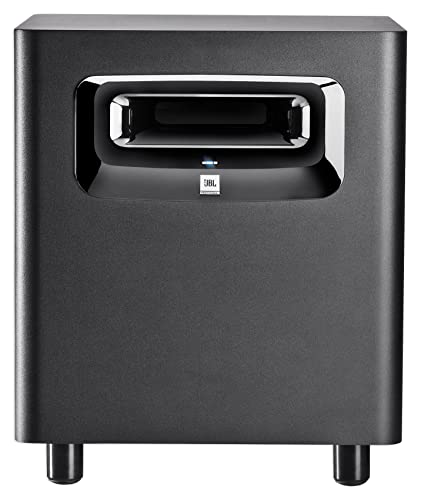
- 10-inch driver reaches into the 20Hz region
- 113dB peak output for high-level playback
- Balanced XLR and TRS inputs and outputs
Best For: Professional-style home studios and bass-heavy production
Large-Scale Bass

- 12-inch front-firing copper-spun woofer
- 400 watts of dynamic power
- Line/LFE inputs with crossover and phase control
Best For: Hybrid home-studio and home-theater rooms
Studio-Ready Low End

- 8-inch glass aramid woofer
- Bass extension to 30Hz
- Front port and footswitch control
Best For: Home-studio producers needing flexible, extended bass
Powerful Room-Filling Bass

- 10-inch front-firing woofer
- 300-watt peak amplifier
- Adjustable crossover and phase
Best For: Larger rooms and multipurpose listening setups
Connected Desktop Expansion

- Designed for CR Series monitors
- TRS, RCA, and Bluetooth input
- Desktop remote and adjustable crossover
Best For: CR monitor users wanting convenient desktop control
Powerful Precision

- 12-inch driver with 200W Class-D amplification
- Frequency response reaches down to 26Hz
- RCA, LFE, and speaker-level inputs
Best For: Large home studios needing deep, high-output bass
Compact Value

- 8-inch driver with 70W RMS output
- Low-pass filter reaches down to 38Hz
- MDF enclosure and automatic standby
Best For: RCA-equipped desktop and bookshelf-speaker systems
Flexible Low-End Control
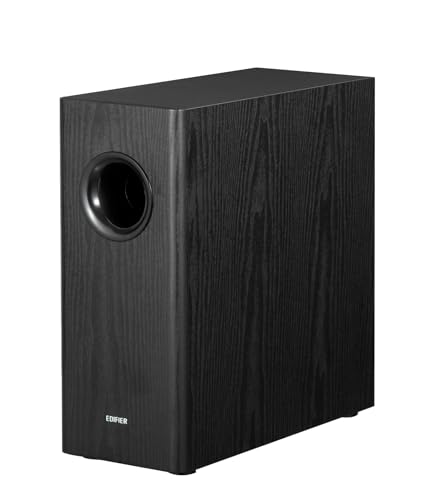
- 8-inch woofer with 70W RMS and 35Hz bass
- Adjustable low-pass filter and phase selector
- Slim cabinet with RCA and 3.5mm-to-RCA cables
Best For: Small studios needing easy, tunable speaker integration
Studio Precision – Yamaha HS8S
The Yamaha HS8S is a focused choice for home studios that need deeper low-end monitoring from a compact, 8-inch powered subwoofer. Its 150-watt amplifier, 22Hz–150Hz response, and adjustable crossover controls make it practical for recording and live-music applications.
Best For: Home-studio monitoring, recording, and live-music setups using wired XLR connections.
Pros:
- 8-inch bass-reflex design with a 22Hz–150Hz frequency response
- 150-watt amplifier provides substantial output for nearfield monitoring
- Adjustable low-cut, high-cut, and phase controls help integrate it with main monitors
Cons:
- Wired connectivity may be less convenient than Bluetooth-equipped alternatives
- Its 33.6-pound cabinet requires dedicated floor space
The HS8S is a sensible pick when control and integration matter more than wireless convenience. Its crossover and phase adjustments give you useful tools for tailoring bass response in a home-studio environment.
Flexible Wireless Monitoring – PreSonus Eris Sub 8BT
For home studios that also serve as listening or multimedia spaces, the PreSonus Eris Sub 8BT combines an 8-inch front-firing driver with Bluetooth 5.0 and professional wired inputs. Its 100-watt output reaches down to 30Hz, while adjustable filters help match it to your main monitors.
Best For: Compact home studios, music production, multimedia listening, and setups needing both Bluetooth and wired connectivity.
Pros:
- Bluetooth 5.0 complements balanced TRS, RCA, and front-panel aux connections
- 100-watt output and response down to 30Hz add extended low end
- Highpass and lowpass controls support cleaner monitor integration
- Front-panel headphone output and automatic power-saving mode add convenience
Cons:
- Its 30Hz lower limit does not extend as deeply as some larger studio subwoofers
- The compact 8-inch design may provide less output than a 10- or 12-inch model
The Eris Sub 8BT stands out among subwoofers for home studios when versatility is a priority. It offers enough control for production while remaining useful for Bluetooth listening, gaming, and general media playback.
Deep Studio Extension – JBL LSR310S
The JBL LSR310S is a 10-inch studio monitor subwoofer designed for home studios that need powerful, extended bass. Its custom driver reaches into the 20Hz region, while balanced XLR and TRS connectivity makes it suitable for integrating with professional monitor systems.
Best For: Music production, professional-style monitor systems, and bass-intensive work such as dance music.
Pros:
- 10-inch driver delivers deep low-frequency response into the 20Hz region
- 113dB peak output supports strong playback levels
- Balanced XLR and 1/4-inch TRS connections suit studio equipment
- Selectable XLF tuning can emulate a more club-oriented bass response
Cons:
- Larger 10-inch design may require more room than compact studio subs
- XLF tuning may be less appropriate when neutral monitoring is the priority
The LSR310S is a strong option for producers who want substantial low-end headroom and professional connections. Its XLF setting is especially useful as a creative reference for dance-oriented production, while the standard tuning supports broader studio use.
Large-Scale Bass – Klipsch R-12SW
The Klipsch R-12SW brings a large 12-inch, front-firing woofer and 400 watts of dynamic power to home-studio spaces that also support home theater. It includes line/LFE inputs, a low-pass crossover, and phase control for straightforward system integration.
Best For: Home studios that double as home-theater rooms and need powerful music and movie playback.
Pros:
- 12-inch copper-spun woofer provides a substantial bass foundation
- 400 watts of dynamic power supports energetic music and movie playback
- Line/LFE inputs accommodate many receivers and playback systems
- Low-pass crossover and phase control allow basic integration adjustments
Cons:
- Its home-theater-oriented design may be less neutral than a dedicated studio subwoofer
- The large cabinet requires considerable floor space
- It lacks wireless communication technology
The R-12SW is best considered when your home studio also functions as an entertainment room. It offers the largest driver and highest stated power in this group, but dedicated production monitoring may call for a more studio-specific model.
Studio-Ready Low End – KRK S8.4 Generation 4
For producers searching for subwoofers for home studios, the KRK S8.4 offers an 8-inch glass aramid composite woofer, bass extension down to 30Hz, and a front-firing port that gives you more placement flexibility. Its Class D amplification provides a practical balance of power and weight for music production and recording setups.
Best For: Home-studio producers and recording engineers who want extended low end with flexible placement.
Pros:
- Extends bass response down to 30Hz.
- Front-firing bass port supports flexible placement.
- Footswitch control can disable the subwoofer and crossover filter.
- Lightweight Class D amplification delivers up to 109 watts.
Cons:
- Footswitch is not included.
- Its 8-inch design may provide less output than a larger subwoofer.
- Wired XLR connectivity may require compatible studio equipment.
The S8.4 is a focused studio option when accurate low-frequency extension and positioning flexibility matter more than extra features. Its dedicated studio-oriented design makes it a natural match for desktop and recording environments.
Powerful Room-Filling Bass – Klipsch R-100SW 10-Inch
The Klipsch R-100SW is a practical choice among subwoofers for home studios when you want a larger 10-inch driver and substantial output. Its front-firing spun-copper IMG woofer, 300-watt peak amplifier, and adjustable crossover make it easy to integrate with compatible RCA-based systems.
Best For: Larger home studios or multipurpose rooms that need strong, deep bass for music, gaming, and media.
Pros:
- 10-inch front-firing woofer supports powerful low-end output.
- 300 watts of peak amplifier power.
- Adjustable volume, low-pass crossover, and phase controls.
- RCA line-level and LFE inputs offer broad receiver compatibility.
Cons:
- Its 16.4-inch height and floor-standing design require more space.
- RCA connectivity may be less convenient for balanced studio setups.
- The supplied frequency response begins at 32Hz rather than the deepest range in this group.
The R-100SW favors impact and versatility, making it suitable when your home studio also serves as a listening, gaming, or entertainment space. Check your interface or monitor chain for compatible RCA or LFE connections before choosing it.
Connected Desktop Expansion – Mackie CR8SBT 8-Inch
The Mackie CR8SBT is designed for CR Series monitors and adds bass to desktop systems through TRS or RCA connections. For home-studio users who want convenient control, it combines an adjustable crossover with Bluetooth input, a remote, and a desktop control for volume and subwoofer bypass.
Best For: Desktop producers using Mackie CR monitors who value convenient wired and Bluetooth connectivity.
Pros:
- Made to integrate with CR Series monitors through TRS or RCA.
- Bluetooth input supports smartphones, tablets, computers, and other devices.
- Desktop remote provides quick volume and subwoofer-bypass control.
- Adjustable crossover helps blend the subwoofer with monitors.
Cons:
- Its stated frequency response begins at 40Hz.
- Best suited to CR Series monitor setups rather than universally optimized studio systems.
- At 32.4 pounds, it is relatively heavy for an 8-inch desktop-oriented subwoofer.
The CR8SBT stands out for convenience rather than the lowest published bass extension. It is a sensible pick when your workflow centers on CR monitors and you want remote access, Bluetooth playback, and straightforward crossover adjustment.
Powerful Precision – Dayton Audio Classic CS1200
For home studios that need substantial low-end extension, the Dayton Audio Classic CS1200 adds a 12-inch driver and 200W Class-D amplification to a monitoring or entertainment setup. Its rigid, braced cabinet and flexible inputs make it a practical choice when you want deep bass without an overly boomy presentation.
Best For: Home studios and music systems needing powerful, adjustable wired bass with broad connectivity.
Pros:
- 12-inch woofer and 200W Class-D amplifier deliver bass down to 26Hz.
- Rigid, braced cabinet is designed for tight, accurate low end.
- RCA, LFE, and speaker-level inputs simplify integration with different systems.
- Includes auto-on operation and a five-year manufacturer warranty.
Cons:
- The 18-inch depth and larger cabinet require more floor space.
- Gray grille is sold separately; the included grille is black.
- It is wired rather than wireless.
The CS1200 is the strongest option here for users who prioritize deeper extension and higher output over compact dimensions. Its size makes placement worth planning, but the connection flexibility and long warranty add practical value.
Compact Value – Edifier T5 Powered Subwoofer
Edifier T5 Powered Subwoofer - 70w RMS Active Woofer with 8 inch Driver and Low Pass Filter
Check Price On AmazonThe Edifier T5 is a straightforward option among subwoofers for home studios, adding an 8-inch driver and 70W RMS output to compatible speakers. Its low-pass filter, MDF enclosure, and automatic standby make it suited to smaller setups where simple bass reinforcement matters.
Best For: Compact desktop or bookshelf-speaker systems with RCA connectivity and modest bass-extension needs.
Pros:
- 8-inch driver and 70W RMS output add weight to music and media.
- Low-pass filter helps direct low frequencies to the subwoofer.
- Dense MDF enclosure is designed to reduce acoustic resonance.
- Automatic standby helps avoid unnecessary power use when idle.
Cons:
- Its frequency response reaches 38Hz, less deeply than the T5s and CS1200.
- Connectivity is limited to RCA interfaces.
- The larger tabletop dimensions may still need dedicated placement.
The T5 is a sensible, uncomplicated pick for adding bass to an RCA-equipped studio or desktop system. Choose it when affordability and basic integration are more important than the deepest possible sub-bass.
Flexible Low-End Control – Edifier T5s Powered Subwoofer
The Edifier T5s adds useful tuning controls to a compact 8-inch powered design, making it a versatile choice for subwoofers for home studios. Its adjustable low-pass filter and phase selector help match the bass to active speakers or a stereo setup, while the slim cabinet is easier to place than many larger models.
Best For: Small home studios seeking adjustable bass integration, 35Hz extension, and flexible RCA connection options.
Pros:
- 70W RMS Class-D amplification and an 8-inch long-throw woofer reach 35Hz.
- Adjustable 30Hz–160Hz low-pass filter and 0°/180° phase selector improve setup control.
- Slim design, 18mm MDF cabinet, and front-firing driver support clean, space-conscious placement.
- Includes RCA and 3.5mm-to-RCA cables, plus automatic standby.
Cons:
- It uses wired RCA connectivity and has no wireless communication technology.
- Series connection without a sub-out requires the main speaker to have LINE IN.
- Its 70W output is less powerful than the Dayton Audio CS1200.
The T5s stands out for controllability rather than maximum output. Its filter and phase adjustments make it easier to blend with different speakers, while the slim profile and included cables keep installation approachable.
How We Picked These Subwoofers for Home Studios
We focused on powered subwoofers that can complement nearfield monitors in typical bedrooms, offices, project studios, and media rooms. The selection includes studio-specific models from Yamaha, JBL, KRK, PreSonus, and Mackie, along with versatile home-audio options from Klipsch, Dayton Audio, and Edifier.
We considered driver size, amplifier power, stated low-frequency extension, crossover and level controls, connectivity, placement flexibility, and overall suitability for music production. Because room acoustics vary substantially, specifications are a starting point rather than a guarantee of identical performance in every space.
Quick Comparison
| Best For | Typical Size | What to Prioritize |
|---|---|---|
| Small home studios | 8 inches | Compact cabinet, adjustable crossover, controlled output |
| Medium rooms | 8–10 inches | Balanced headroom and flexible connections |
| Larger rooms or hybrid use | 10–12 inches | Deeper output, higher power, placement control |
| Wireless or casual listening | 8–10 inches | Bluetooth or convenient remote controls |
Key Buying Factors for Subwoofers for Home Studios
Room Size and Driver Diameter
An 8-inch subwoofer is often the easiest fit for a compact room and small nearfield monitors. A 10-inch model can provide more output for a medium-sized space, while a 12-inch design may be better for larger rooms or music and home-theater crossover use. Bigger is not automatically better: excessive low-frequency energy can excite room modes and obscure detail.
Integration with Your Monitors
Look for adjustable crossover and volume controls so you can blend the subwoofer with your main speakers rather than simply adding more bass. Studio-oriented models commonly provide inputs and outputs designed for monitor integration. Check the connector types and signal path before buying, especially if your audio interface uses balanced outputs.
Frequency Response and Control
Published frequency ranges help indicate how low a subwoofer may reach, but placement and room acoustics matter just as much. Phase controls, polarity switching, and a bypass or footswitch option can make calibration easier. Set the subwoofer conservatively and verify bass on headphones, reference tracks, and other playback systems.
Power, Connectivity, and Placement
Power ratings should be viewed alongside cabinet size and intended room volume. Bluetooth can be useful for casual listening but is not always necessary for a dedicated production chain. Leave room around the cabinet as recommended by the manufacturer, avoid placing it tightly in a corner unless you have measured the result, and use isolation or stable flooring when appropriate.
Who Should Buy Which Subwoofers for Home Studios?
Choose a compact 8-inch model if you produce in a small room, use modest nearfield monitors, or want controlled low-end extension without overwhelming the space. Choose a 10-inch studio subwoofer if you need more headroom and have enough room to position and calibrate it properly.
Choose a 12-inch model for larger rooms, higher listening levels, or a setup that also serves home-theater duties. Choose a feature-rich wireless option if convenience and mixed music-listening use matter as much as strict studio monitoring. Whatever you select, measure or carefully audition the system after placement; the best subwoofer is the one that integrates cleanly with your monitors and room.