Passive speaker selector switches make it easier to route one amplifier or receiver to multiple speaker pairs while keeping your system organized. They are useful for switching between rooms, zones, or listening setups without relying on a powered distribution unit.
This roundup compares 10 options with different channel counts, switching layouts, terminal designs, and controls so you can choose a selector that matches your amplifier, speakers, and everyday listening needs.
Best 10 Passive Speaker Selector Switches Picks for 2026
Flexible A/B Switching
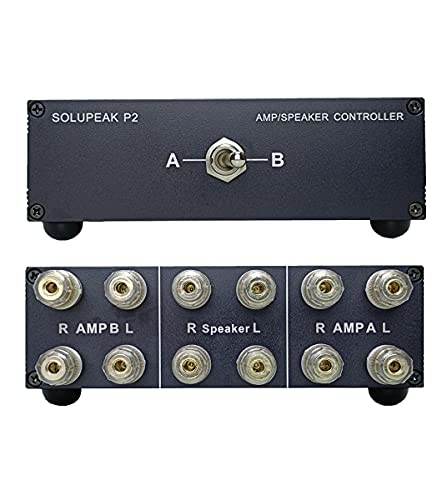
- Reversible 2-in/1-out or 1-in/2-out operation
- Passive, one-press A/B switching
- 100W RMS per channel with 12-gauge support
Best For: Amplifier comparisons and switching between two speaker pairs
Four-Zone Push-Button Control

- Supports up to four speaker pairs
- Push-button, plug-and-play operation
- Handles 100W per channel at 8 ohms minimum
Best For: Simple four-pair speaker distribution
Bidirectional Connectivity
LiNKFOR 2-Way Speaker Switcher

- Handles 2 amps to 1 pair or 1 amp to 2 pairs
- Passive A/B switching needs no power supply
- Supports 12-gauge wire and 100W RMS per channel
Best For: Flexible home audio switching between amplifiers or speakers
Independent Four-Zone Control
PROZOR 4-Zone Speaker Selector

- Selects up to four zones independently
- Supports 4–16-ohm speakers at 150W RMS per channel
- Includes master AMP switch and long-run support
Best For: Whole-home and multi-room passive speaker distribution
Flexible A/B Control
PROZOR Amp and Speaker Switcher

- Connect two amps to one speaker pair or one amp to two pairs
- No external power or cable swapping required
- 100W RMS per channel with banana-plug connections
Best For: A/B amplifier comparisons and single-zone speaker switching
Simple Two-Zone Switching

- Controls two speaker pairs from one stereo amplifier
- Front-panel ON/OFF buttons simplify zone selection
- Aluminum chassis operates without external power
Best For: Basic two-zone home audio control
Rugged Four-Pair Control

- Two rocker switches control speaker pairs independently
- Supports 4–16 ohm passive speakers
- 150W RMS per channel with a metal enclosure
Best For: Durable stereo installations with selectable speaker pairs
Most Flexible

- Switches between two zones or amplifiers
- 150W RMS per channel; 4–16-ohm support
- Passive setup with 50-meter cable support
Best For: Multi-room systems and DIY audio routing
Best With Volume Control

- Controls two speaker pairs independently
- Includes volume control with 4–8-ohm operation
- Compact metal enclosure; no external power
Best For: Simple residential or commercial distributed audio
Best Compact Option

- Controls two speaker pairs separately or together
- Supports 8–16-ohm speakers at up to 80W per channel
- Slim metal housing with no external power needed
Best For: Compact home theater A/B speaker switching
Flexible A/B Switching – P2 2-Way Amp/Speaker Selector
The P2 is a practical choice among passive speaker selector switches when you need either two amplifiers connected to one speaker pair or one amplifier connected to two speaker pairs. Its one-button operation and passive signal path keep setup simple, though only one speaker pair should operate at a time in the 1-in/2-out configuration.
Best For: Comparing two amplifiers or switching between two speaker pairs in a compact home audio setup.
Pros:
- Supports reversible 2-in/1-out and 1-in/2-out configurations.
- Requires no external power and offers simple one-press A/B switching.
- Gold-plated banana jacks accept speaker wire connections up to 12 gauge.
- Rated for 100W RMS and 200W peak per channel.
Cons:
- The two speaker pairs should not operate simultaneously in 1-in/2-out use.
- Banana-plug speaker connections are required rather than RCA cables.
- Tube amplifiers require standby or powered-off switching precautions.
Choose the P2 if flexibility and easy amplifier or speaker comparison matter most. Its passive design and heavy-duty internal wiring suit moderate-power systems, provided you follow the switching precautions.
Four-Zone Push-Button Control – Pyle PSS4 Speaker Selector
The Pyle PSS4 is one of the more straightforward passive speaker selector switches for distributing a stereo system to as many as four separate speaker pairs. Its push-button layout is designed for quick zone selection, but the connected speaker systems should have a minimum impedance of 8 ohms.
Best For: Basic multi-room or multi-speaker distribution from one stereo system.
Pros:
- Connects up to four separate speaker pairs.
- Offers simple push-button operation and plug-and-play setup.
- Handles up to 100 watts per channel with 8-ohm minimum speaker impedance.
- Compact 7.48-by-1.97-by-4.72-inch housing.
Cons:
- It is specified for speaker systems with a minimum impedance of 8 ohms.
- Its power handling is lower than some newer 150W selector options.
- The supplied notes do not specify independent impedance-matching controls.
The PSS4 makes sense when you want four selectable speaker outputs without adding complexity. Confirm your speakers meet the 8-ohm minimum and that the 100-watt-per-channel rating suits your amplifier.
Bidirectional Connectivity – LiNKFOR 2-Way Speaker Switcher
The LiNKFOR 2-Way Speaker Switcher is a versatile passive option for systems that alternate between two amplifiers and one speaker pair or one amplifier and two speaker pairs. With no power supply and a dedicated A/B button, it offers quick switching while keeping the connection arrangement flexible.
Best For: Audiophiles who need bidirectional amplifier-to-speaker switching in a compact setup.
Pros:
- Supports both 2-amp/1-speaker and 1-amp/2-speaker configurations.
- Uses unpowered A/B switching with no extra power supply.
- Gold-plated banana jacks accommodate speaker wire up to 12 gauge.
- Rated at 100W RMS and 200W peak per channel, with an 18-month warranty.
Cons:
- Only one input can play at a time.
- The notes do not indicate simultaneous operation of both speaker pairs.
- Correct port assignment is important because the two connection modes are different.
LiNKFOR is a strong fit when you want the flexibility of bidirectional switching without a powered control box. Its main limitation is that it is intended for one active input or switched output at a time, not concurrent playback.
Independent Four-Zone Control – PROZOR 4-Zone Speaker Selector
The PROZOR 4-Zone is built for distributing one amplifier to up to four pairs of passive speakers. Among passive speaker selector switches, it stands out for independent A/B/C/D zone buttons, a master AMP switch, support for 4–16-ohm speakers, and wiring distances up to 164 feet.
Best For: Whole-home, patio, shop, or studio audio with independently selectable speaker zones.
Pros:
- Controls up to four speaker pairs with independent zone buttons.
- Supports 4–16-ohm passive speakers and up to 150W RMS per channel.
- Includes a master AMP switch for turning all zones on or off.
- Passive operation, spring-clip terminals, and support for runs up to 164 feet.
Cons:
- It does not provide volume controls; volume remains controlled by the amplifier.
- Setup instructions require powering off the amplifier before wiring.
- It is intended for passive speakers rather than powered speaker systems.
The PROZOR is the most suitable option here for larger multi-room installations. Its zone-by-zone controls and broad impedance support offer useful flexibility, while the master switch and installation precautions help simplify everyday operation.
Flexible A/B Control – PROZOR Amp and Speaker Switcher
The PROZOR is a versatile choice among passive speaker selector switches, letting you connect two amplifiers to one speaker pair or one amplifier to two speaker pairs. Its A/B design requires no external power and supports quick source or speaker changes without cable swaps.
Best For: Audio enthusiasts comparing two amplifiers or switching one amplifier between two passive speaker pairs.
Pros:
- Supports two amps to one speaker pair or one amp to two speaker pairs.
- Requires no external power and is simple to operate.
- Gold-plated banana-plug connections accommodate up to 12-gauge wire.
- Rated for 100W RMS per channel and 200W peak.
Cons:
- Only one input or output position can be active at a time.
- It is not designed for simultaneous playback from both connected sources or speaker sets.
Choose the PROZOR when flexible A/B routing matters more than multi-zone simultaneous playback. Its broad connection options and passive operation make it a practical fit for straightforward home audio comparisons.
Simple Two-Zone Switching – SOLUPEAK SP2 Speaker Selector
The SOLUPEAK SP2 is a straightforward passive speaker selector switch for managing two speaker pairs from one stereo amplifier. Front-panel ON/OFF buttons make it easy to switch between zones without disconnecting speaker cables.
Best For: Home audio systems that need convenient control of two speaker pairs from a single amplifier.
Pros:
- Controls up to two pairs of speakers from one stereo amplifier.
- Does not require an external power supply.
- Front-panel buttons provide quick speaker selection.
- Sturdy aluminum construction and quality speaker posts support reliable connections.
Cons:
- Provides two-zone control rather than a larger multi-zone setup.
- The supplied notes do not specify a power-handling rating.
The SP2 favors simple installation and everyday zone selection. Its compact two-zone layout and no-power design suit listeners who want to alternate between speaker pairs from one stereo amplifier.
Rugged Four-Pair Control – XtremPro 61048 Speaker Switch
The XtremPro 61048 is a practical option among passive speaker selector switches when you need independent control of multiple speaker pairs. Its two rocker switches can operate pairs separately or together, while the metal enclosure and terminal clamps support a durable installation.
Best For: Home audio and stereo systems using up to four passive speakers or two selectable speaker pairs.
Pros:
- Two dedicated rocker switches allow separate or simultaneous pair control.
- Supports 4–16 ohm passive speakers.
- Handles up to 150W RMS per channel.
- Metal enclosure and heavy-duty terminal clamps provide a sturdy setup.
Cons:
- Terminal-clamp wiring may be less convenient than plug-based connections.
- The supplied details list HDMI cable compatibility, so connection requirements should be checked carefully before purchase.
Consider the 61048 if durability, independent switching, and higher stated power handling are priorities. It is especially suited to conventional stereo installations with passive speakers in the listed impedance range.
Most Flexible – YGiTK 2-Zone Speaker Selector
For shoppers comparing passive speaker selector switches, the YGiTK 2-Zone model stands out for flexible routing. It can switch between two zones or amplifiers, with independent on/off control and no external power required.
Best For: Multi-room audio setups and DIY systems needing flexible amplifier or speaker switching.
Pros:
- Supports one amplifier driving two speakers or two amplifiers driving one speaker.
- Handles up to 150W RMS per channel and 4–16-ohm speakers.
- Passive, plug-and-play setup with spring clip terminals and support for cable runs up to 50 meters.
Cons:
- Uses spring clip terminals rather than more specialized connection hardware.
- Its two-zone functionality may be more than needed for a simple single-pair setup.
With its higher power rating, broad impedance compatibility, and bidirectional switching, this is a strong choice when a passive selector needs to handle more involved home or commercial audio layouts.
Best With Volume Control – XtremPro 2-Way Speaker Switch
The XtremPro 61052 is a practical option among passive speaker selector switches for controlling two speaker pairs from one conventional amplifier or stereo receiver. It requires no extra power supply and adds individual control for each pair.
Best For: Residential or commercial distributed audio where simple pair-by-pair control and volume adjustment are useful.
Pros:
- Controls two-channel stereo speaker pairs independently.
- Includes volume control and maintains a 4–8-ohm impedance range.
- Metal non-slip enclosure with a 60W-per-channel, 120W maximum rating.
Cons:
- Its power handling is lower than some selector options in this roundup.
- The supplied notes identify the connector type as HDMI, so connection details should be checked carefully before purchase.
This model makes sense for straightforward two-pair distribution when convenient individual control matters more than high-power handling or advanced zone configuration.
Best Compact Option – TENEALAY P21 Speaker Selector
The TENEALAY P21 is a compact passive speaker selector switch for managing two speaker pairs from a stereo amplifier. Its parallel switches allow the pairs to be used separately or together, making it suitable for basic A/B home theater distribution.
Best For: Compact home theater setups using 8–16-ohm speakers and moderate amplifier power.
Pros:
- Controls up to two pairs of speakers individually or in combination.
- Supports up to 80W maximum per channel and 8–16-ohm speakers.
- Accepts speaker wire up to 14 AWG and needs no external power supply.
Cons:
- Its 80W-per-channel rating is lower than the highest-rated option here.
- It is specified for 8–16-ohm speakers, limiting compatibility compared with selectors supporting lower impedance.
The P21 is a sensible pick when tabletop size and uncomplicated A/B speaker control are priorities, provided your speakers and amplifier fit its impedance and power specifications.
How We Picked These Passive Speaker Selector Switches
We focused on selector boxes designed for straightforward speaker distribution and source switching. The comparison considers the number of zones or speaker pairs supported, input and output flexibility, independent channel controls, connection hardware, build quality, and whether the unit includes useful extras such as volume controls.
Because these are passive devices, we also considered how clearly each model communicates its intended power handling and wiring layout. A selector should make it easy to connect compatible equipment without introducing unnecessary complexity.
Quick Comparison
Two-way models are generally the simplest choice for switching between one amplifier and two speaker pairs, or between two sources and one speaker pair when the design supports bidirectional operation. Four-channel selectors are better suited to larger installations where several speaker pairs need independent on/off control.
Some models include separate A/B/C/D buttons, while others use a simpler two-zone layout. Units with terminal clamps can speed up installation, and models with volume controls may offer more convenient room-by-room adjustment. Always verify the product’s connection direction before wiring it, since not every selector supports both one-in/two-out and two-in/one-out operation.
Key Buying Factors for Passive Speaker Selector Switches
Configuration and Zone Count
Choose the number of outputs based on how many speaker pairs you need to manage now—not only how many you may add later. A two-zone switch is compact and easy to operate, while a four-zone unit provides more expansion room.
Power and Impedance Compatibility
Check the selector’s stated power rating against your amplifier and speakers. Confirm that the connected speaker impedance is appropriate, particularly when multiple pairs may play at the same time. If your receiver is not designed for a low combined impedance, avoid activating too many speaker pairs simultaneously.
Switching Direction
Some selector boxes are intended for one amplifier feeding multiple speaker pairs. Others can work in reverse, allowing two amplifiers or sources to feed one speaker pair. Select a bidirectional model only when its documentation explicitly supports your intended arrangement.
Connections and Controls
Binding posts, terminal clamps, or clearly labeled screw terminals can make installation easier and reduce wiring mistakes. Independent buttons are useful for multi-room systems, while built-in volume controls are worth considering when different rooms need separate level adjustment.
Build and Placement
A sturdy metal enclosure and non-slip feet are helpful for equipment racks, shelves, and desktops. Measure the available space and allow room for speaker cables, especially if the selector will sit behind a receiver or cabinet.
Who Should Buy Which Passive Speaker Selector Switches?
For a Simple Two-Room Setup
Choose a compact two-zone selector when you want to switch between two speaker pairs from one amplifier. This is usually the easiest and most affordable arrangement for living-room and patio, office, or bedroom use.
For Multiple Independent Speaker Pairs
A four-zone selector with separate A/B/C/D buttons is the better fit for several rooms or listening areas. It provides more direct control and avoids the need to chain multiple basic switches.
For Flexible Source or Amplifier Routing
Look for a clearly bidirectional model if you need to route two inputs to one output or one input to two outputs. Confirm the wiring diagram before purchase to ensure it supports the exact direction you need.
For Room-Level Convenience
A selector with volume controls can be useful when speakers are located in different rooms and listeners need independent adjustment. For larger or permanently installed systems, however, a powered distribution amplifier may be more appropriate than a passive switch alone.