Adding speakers to several rooms does not have to mean replacing your amplifier or managing a complicated matrix system. The best speaker selector switches for 4 pairs let one amplifier distribute audio to multiple speaker zones, often with independent on/off controls and volume adjustment.
We selected 10 four-zone models for different setups, from compact switch boxes to higher-power units with impedance protection and zone volume controls. Use the guide below to match each option to your amplifier, wiring, and listening habits.
Best 10 Speaker Selector Switches for 4 Pairs Picks for 2026
Best Value 4-Zone Pick
Monoprice 4-Channel Speaker Selector

- Four selectable speaker zones
- Up to 140W per channel without protection
- Optional impedance protection
Best For: Budget-conscious four-zone audio setups
Simple Push-Button Option
Pyle 4-Channel Speaker Selector

- A/B/C/D four-pair switching
- Push-button plug-and-play operation
- 100W per channel at 8 ohms
Best For: Straightforward four-pair speaker switching
Best Protected Multi-Room Design
OSD Audio ISS4 Speaker Selector
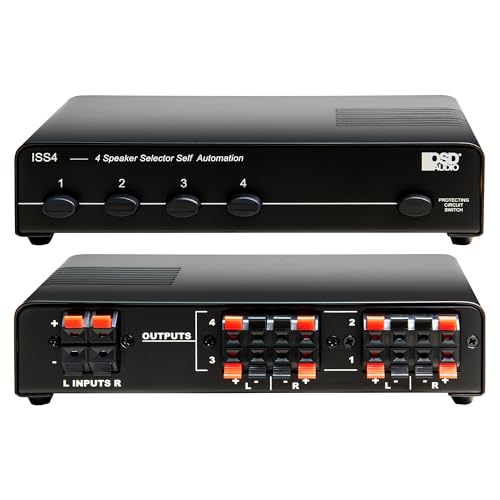
- Four-zone control with individual switches
- Selectable impedance protection
- Steel chassis with removable terminals
Best For: Protected multi-room speaker distribution
Heavy-Duty Switch Choice
A ADWITS 4-Channel Speaker Selector

- Switches two or four speaker pairs
- Heavy-duty individual rocker switches
- 200W RMS maximum rating listed
Best For: Tactile control over two- or four-pair setups
Best for Independent Zone Volume
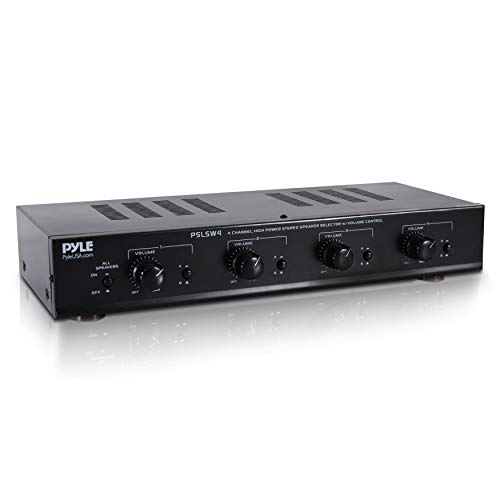
- Independent volume controls for four channels
- Supports four pairs of 8-ohm speakers
- Overload protection and 14 AWG connectors
Best For: Multi-zone home theater and stereo systems
Best for Impedance Protection
Monoprice SS-4 4-Channel Selector

- Automatic impedance protection circuitry
- Individual on/off buttons for four zones
- Supports 12-16 AWG wire and 100W RMS
Best For: Multi-zone systems using one amplifier
Best for Rugged High-Power Design

- Controls four speaker pairs individually or together
- Individual volume controls and push buttons
- Aluminum housing with cabinet heat sink
Best For: Dedicated home theater installations
Flexible 4-Zone Control
PROZOR 4-Zone Speaker Selector

- Four independent A/B/C/D zone buttons
- 150W RMS per channel; supports 4–16Ω speakers
- Passive design with AMP master switch
Best For: Whole-home and multi-room passive audio
Protected Multi-Room Switching

- Switches four speaker pairs independently
- 100W per channel with 8-ohm speaker support
- Built-in overload and short-circuit protection
Best For: Simple home or commercial multi-zone systems
Individual Volume Control
- Controls four speaker pairs from one stereo amplifier
- Independent volume knobs for each pair
- 100W maximum per channel with overload protection
Best For: Home theater systems needing separate zone volume
Best Value 4-Zone Pick – Monoprice 4-Channel Speaker Selector
For shoppers comparing speaker selector switches for 4 pairs, this Monoprice model offers four selectable zones and a choice of power-handling modes. Its optional impedance protection is designed to help maintain a consistent load for the amplifier when multiple speaker pairs are active.
Best For: Budget-conscious multi-room audio setups needing four zones and flexible impedance protection.
Pros:
- Supports up to four separate speaker zones.
- Handles up to 70 watts per channel with protection enabled or 140 watts without it.
- Optional impedance protection helps keep the amplifier load consistent.
Cons:
- Protection is optional rather than continuously engaged.
- Supplied specifications list HDMI cable terminology despite the product being a speaker selector.
The Monoprice selector is a practical value choice when four-zone distribution and selectable protection matter more than extra installation features.
Simple Push-Button Option – Pyle 4-Channel Speaker Selector
Among speaker selector switches for 4 pairs, the Pyle PSS4 focuses on straightforward A/B/C/D control. It accepts speaker wires up to 14-gauge and is rated for 100 watts per channel with speaker systems having a minimum impedance of 8 ohms.
Best For: Users who want a compact, easy-to-operate four-pair selector with push-button controls.
Pros:
- Connects up to four separate speaker pairs.
- Push-button operation supports simple plug-and-play setup.
- Accepts speaker wire up to 14-gauge.
- Rated for 100 watts per channel with 8-ohm minimum speaker systems.
Cons:
- The supplied notes specify an 8-ohm minimum impedance.
- The notes do not mention built-in impedance protection.
The Pyle is a sensible choice for a basic four-pair installation where simple controls and clearly stated 8-ohm compatibility are the main priorities.
Best Protected Multi-Room Design – OSD Audio ISS4 Speaker Selector
For speaker selector switches for 4 pairs in a multi-room system, the OSD Audio ISS4 combines four-zone control with selectable impedance matching. Individual on/off selectors let you manage each zone, while removable Phoenix connectors and screw-down terminals are intended to simplify wiring.
Best For: Multi-room installations that prioritize impedance protection, durable construction, and zone-by-zone control.
Pros:
- Distributes audio to four listening zones and can play any pair.
- Selectable impedance protection supports multiple speaker pairs from one amplifier.
- Individual on/off selectors provide control over each zone.
- 16-gauge steel construction and a low-profile design suit cabinet or rack placement.
Cons:
- Protection-enabled operation is limited to up to 70 watts per channel.
- The unit weighs 2.2 pounds, making it less lightweight than simpler selector boxes.
The ISS4 stands out when amplifier protection and installation-friendly construction are more important than the smallest possible enclosure.
Heavy-Duty Switch Choice – A ADWITS 4-Channel Speaker Selector
This A ADWITS unit is a straightforward contender among speaker selector switches for 4 pairs, allowing two or four speaker pairs to connect to an amplifier’s stereo output. Individual heavy-duty rocker switches let you select each pair, and screw terminals provide the connection points.
Best For: Buyers seeking individual rocker-switch control and a stated 200W RMS maximum rating.
Pros:
- Supports two or four connected speaker pairs.
- Individual heavy-duty rocker switches control the speaker pairs.
- Works with speakers listed in multiple sizes, including 4, 6, 8, and 12 inches.
- Includes a 12-month manufacturer warranty.
Cons:
- The supplied notes do not mention impedance protection.
- Power specifications distinguish between 200W RMS maximum and 100W switchable operation, so buyers should verify system matching.
The A ADWITS selector is appealing for installations where tactile rocker controls and flexible two- or four-pair switching are the key requirements.
Best for Independent Zone Volume – Compact 4-Channel Selector
The Pyle PSLSW4.5 is a practical choice among speaker selector switches for 4 pairs when you want separate volume adjustment for each listening zone. It supports up to four pairs of 8-ohm speakers, with screw-type connectors for speaker wire up to 14 AWG.
Best For: Home theater or stereo setups needing independent volume control in multiple zones.
Pros:
- Supports up to four pairs of 8-ohm speakers.
- Provides independent volume controls for each channel.
- Includes overload protection and a compact tabletop design.
- Accepts speaker wire up to 14 AWG through screw-type connectors.
Cons:
- Its stated 100W-per-channel capacity may not suit higher-powered systems.
- The supplied details emphasize compatibility with 8-ohm speakers.
Choose this model if straightforward installation and zone-by-zone volume adjustment matter most. Its compact design and front-panel controls make it convenient for smaller home audio systems.
Best for Impedance Protection – Monoprice SS-4 4-Channel Selector
The Monoprice SS-4 is one of the more protection-focused speaker selector switches for 4 pairs. It connects multiple speaker pairs to one amplifier, adds automatic impedance protection, and provides individual zone on/off buttons for simple system control.
Best For: Users who want automatic impedance protection and straightforward zone switching.
Pros:
- Controls multiple speaker pairs from a single amplifier.
- Automatic impedance protection circuitry helps manage connected loads.
- Offers individual on/off buttons for each zone.
- Supports 12-16 AWG speaker wire and 100W RMS per channel.
Cons:
- It provides zone on/off control rather than individual volume adjustment.
- Its listed impedance requirements should be checked against the amplifier and speakers.
This is a strong fit for installations where safe switching and simple zone selection are more important than per-zone volume control. Isolated left/right circuit grounds also support amplifiers with floating grounds or bridged configurations.
Best for Rugged High-Power Design – Pyle PLSHVC412 Selector
The Pyle PLSHVC412 combines four-channel speaker selection with individual volume controls, making it a useful option among speaker selector switches for 4 pairs. Its aluminum housing, cabinet heat sink, and push-button operation are designed for a substantial home cinema or stereo installation.
Best For: Home theater users who want individual speaker-pair volume adjustment and a rugged enclosure.
Pros:
- Operates up to four distinct speaker pairs individually or together.
- Includes individual volume controls and push-button activation.
- Rated at 4 x 100 watts maximum power for 8-ohm speakers.
- Accepts speaker wire up to 14 gauge and includes a power supply.
Cons:
- The unit is larger and heavier than a compact tabletop selector.
- The listed output specifications are lower than the maximum amplifier input rating.
- Its supplied details identify home theater as the compatible device category.
Consider this model when physical durability and hands-on control are priorities. The larger aluminum construction may be worthwhile for a dedicated setup, while the four independent controls help tailor sound across rooms.
Flexible 4-Zone Control – PROZOR 4-Zone Speaker Selector
The PROZOR is a practical choice among speaker selector switches for 4 pairs when you want one amplifier or receiver to manage up to four passive speaker zones. Independent A/B/C/D buttons, an AMP master switch, and passive operation keep multi-room control straightforward.
Best For: Whole-home audio, patios, shops, studios, and longer speaker-wire runs.
Pros:
- Controls four speaker pairs independently from one amplifier.
- Supports 4–16Ω passive speakers and up to 150W RMS per channel.
- Requires no external power and supports runs up to 164 feet.
- Metal housing and anti-slip feet provide stable placement.
Cons:
- Designed for passive speakers, not powered speaker systems.
- Volume remains controlled by the amplifier rather than the selector.
The PROZOR stands out for its higher stated power capacity, broad impedance support, and master AMP switch. It is a strong fit when simple zone switching and flexible installation matter more than built-in volume controls.
Protected Multi-Room Switching – Pyle PSS4.2 4-Zone Selector
The Pyle PSS4.2 is one of the speaker selector switches for 4 pairs built for simple multi-zone distribution from a single amplifier or receiver. Its four individual switches, spring-loaded terminals, and built-in protection circuitry suit home or commercial installations.
Best For: Users who want straightforward four-zone switching with added overload and short-circuit protection.
Pros:
- Controls up to four speaker pairs, or eight speakers.
- Independent on/off switches allow flexible zone combinations.
- Protection circuitry is designed to help guard against overload, short circuits, and burnout.
- Metal housing and terminals accepting up to 14-gauge wire support a sturdy installation.
Cons:
- Rated for 100 watts per channel, lower than the PROZOR’s stated capacity.
- The supplied specifications focus on 8-ohm speakers rather than a wider impedance range.
The PSS4.2 emphasizes accessible installation and basic system protection. Choose it when clearly marked terminals and individual zone switches are priorities for a conventional 8-ohm speaker setup.
Individual Volume Control – Pyle PSLSW4 Speaker Selector
The Pyle PSLSW4 adds independent volume adjustment to the basic function expected from speaker selector switches for 4 pairs. It can connect up to four pairs to a stereo amplifier, activate zones individually, and provide master switching from a compact tabletop unit.
Best For: Home theater and stereo users who want separate volume control for each connected speaker pair.
Pros:
- Controls four speaker pairs simultaneously or in combination.
- Independent rotary volume controls adjust each pair separately.
- Accepts speaker wire up to 14 AWG through screw-type terminals.
- Includes overload protection and a master speaker switch.
Cons:
- Rated at 100 watts maximum per channel and intended for 8-ohm speakers.
- Its corded-electric design is less minimal than a fully passive selector.
- The unit is wider than the other listed selectors at 16.9 inches.
The PSLSW4 is the most suitable option here when zone-specific volume control is essential. Its larger tabletop format is a reasonable tradeoff for users who want more hands-on control than simple on/off switching.
How We Picked the Best Speaker Selector Switches for 4 Pairs
We focused on four-zone selector boxes designed to connect one amplifier or receiver to up to four pairs of passive speakers. Our comparison considered power ratings, impedance protection, zone controls, speaker-wire compatibility, build quality, connection layout, and ease of installation. Because manufacturer power specifications are not always presented in the same way, treat wattage as a compatibility reference rather than a guarantee of identical performance.
We also looked for practical differences between basic A/B/C/D switchers and models with independent volume controls or built-in protection. A straightforward selector can be ideal for occasional use, while a more feature-rich unit may be better for permanent whole-home audio.
Quick Comparison
- Basic switching: Choose a simple four-zone box if you mainly need to turn speaker pairs on or off.
- Independent listening levels: Select a model with zone volume controls when rooms need different volume settings.
- Amplifier protection: Built-in impedance protection is useful when multiple speaker pairs may play simultaneously.
- Higher-power systems: Check the selector’s stated RMS or per-channel rating against your amplifier’s output and the speakers’ requirements.
- Permanent installations: Prioritize robust terminals, clear labeling, suitable wire support, and ventilation.
Key Buying Factors for Speaker Selector Switches for 4 Pairs
Impedance Protection
When several speaker pairs are active, the combined load can fall below what an amplifier safely supports. Impedance protection helps reduce this risk, but it does not replace checking your receiver’s minimum impedance rating. If you plan to run all four zones at once, protection should be a priority.
Power and Speaker Compatibility
Compare the selector’s stated power capacity with both the amplifier and speakers. Look for RMS figures where available, and avoid assuming that a higher advertised peak number means better continuous performance. Confirm that the terminals accept your speaker wire gauge, especially for longer runs or heavier 12- or 14-gauge cable.
Controls and Connection Layout
Independent A/B/C/D buttons make zone selection simple. Volume knobs add convenience for rooms with different listening levels, but they also create another adjustment point in the signal path. Front-panel controls are useful for accessible equipment racks; rear connections can provide a cleaner permanent installation.
Heat, Housing, and Installation
A selector should have a sturdy enclosure, clearly marked inputs and outputs, and enough ventilation around it. Do not place a high-power unit in a sealed, overheated cabinet. Before connecting equipment, turn the amplifier off and verify polarity so every positive and negative terminal is matched correctly.
Who Should Buy Which Speaker Selector Switches for 4 Pairs?
Choose a basic four-channel selector if you want affordable, uncomplicated control for occasional multi-room listening. Choose impedance protection if multiple zones will commonly play together or your amplifier has limited load tolerance. Choose independent volume controls if each room needs frequent level adjustment without returning to the amplifier. Choose a higher-capacity, rugged model for a permanent rack, larger rooms, or heavier speaker wiring.
Before buying, count your speaker pairs, confirm the amplifier’s supported impedance, measure the cable runs, and decide whether zone-by-zone volume control is genuinely necessary. Those checks will narrow the choices more reliably than headline wattage alone.