Moving beyond a beginner instrument calls for a flute that supports better control, clearer tone, and more confident technique. The right upgrade can make practice more rewarding without forcing you to pay for professional-level features you are not ready to use.
This roundup compares 10 options for developing players, from dependable closed-hole student flutes to open-hole concert models and intermediate-focused method books. Use the buying guide below to narrow the choices by fit, construction, features, and playing goals.
Best 10 Flutes for Intermediate Players Picks for 2026
Balanced Student Pick
Yamaha YFL-222 Intermediate Flute
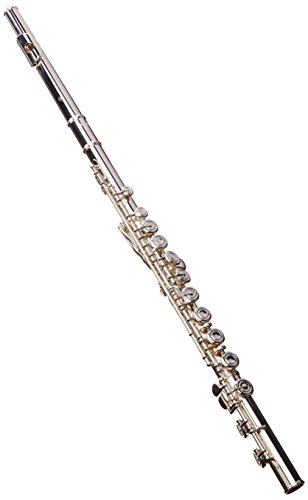
- Offset G key system for comfortable playing
- Warm, rich sound profile
- Includes case, cleaning supplies, and two-year warranty
Best For: Developing students seeking a reliable C flute
Easy-Playing Upgrade
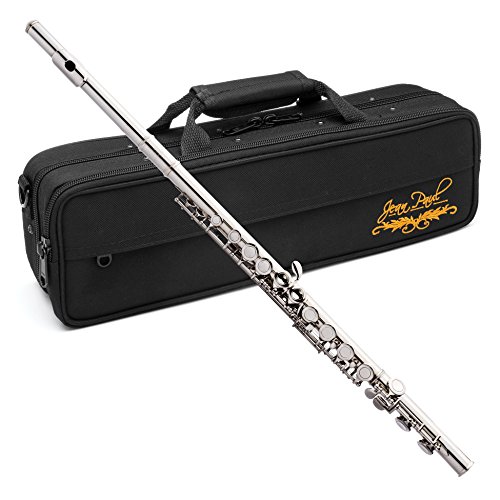
- Closed-hole design eases fundamental fingering
- Offset G key and split E mechanism
- Set up and play-tested by certified technicians
Best For: Progressing students who prioritize accessible playability
Accessory-Rich Value

- Closed-hole C flute with offset G and split E keys
- Includes case, stand, gloves, and cleaning supplies
- Pocketbook provides basic technique and care guidance
Best For: Budget-minded students needing a complete flute package
Repertoire Builder
Flute 102: Mastering the Basics

- Intermediate-focused method and solo collection
- Includes etudes, solos, excerpts, and technical exercises
- Adds practice and phrasing guidance
Best For: Flutists ready for structured intermediate study
Budget-Friendly Practice Pick

- 16-key closed-hole C-flute design
- Clear, focused sound profile
- Includes case and cleaning accessories
Best For: Students and developing players seeking an affordable practice flute
Progressive Repertoire Choice
50+ Greatest Intermediate Classics for Flute

- More than 50 recognizable classical melodies
- Progressive difficulty in accessible keys
- Range extends from low C to third-octave A
Best For: Intermediate players building sight-reading and recital repertoire
Upgrade-Ready Option

- Nickel and silver-plated options
- Pre-tuned with inspection and calibration
- Complete case and cleaning kit included
Best For: Players choosing between a value model and a warmer-sounding upgrade
Best Tunable Upgrade
Jean Paul FL-430 Open-Hole Flute

- Open holes include removable plugs
- Offset G and split E mechanisms
- Technician setup and semi-hard case included
Best For: Advancing students wanting adaptable playability
Best Simple Starter

- Beginner-friendly 16-key closed-hole layout
- Cupronickel body with leather pads
- Case and cleaning accessories included
Best For: Newer players seeking easy finger coverage
Best Feature Value

- 17-key open-hole C flute with B foot joint
- Offset G and silver-plated cupronickel body
- Leather pads, case, and cleaning supplies included
Best For: Intermediate students wanting more advanced features
Balanced Student Pick – Yamaha YFL-222 Intermediate Flute
The Yamaha YFL-222 is a practical choice for players comparing flutes for intermediate players who want a familiar student-oriented design with a warm, rich sound profile. Its offset G key system and silver-plated keys support comfortable everyday playing, while the included case and cleaning supplies simplify ownership.
Best For: Students moving beyond the basics who want a dependable C flute with useful accessories and a two-year warranty.
Pros:
- Offset G key system supports comfortable hand positioning.
- Silver-plated keys and a nickel silver body offer a polished student-flute design.
- Includes a flute case and cleaning supplies.
- Covered by a stated two-year warranty.
Cons:
- The supplied specifications describe it as a student flute, so advanced players may want more specialized features.
- The listed material details are somewhat inconsistent, identifying both nickel silver and stainless steel.
Overall, the YFL-222 is a sensible all-around option for developing players who value a warm sound, straightforward ergonomics, and included maintenance essentials.
Easy-Playing Upgrade – Jean Paul USA FL-220 Flute
The Jean Paul USA FL-220 stands out among flutes for intermediate players who still appreciate beginner-friendly playability. Its closed-hole design, offset G keys, and split E mechanism make fundamental fingerings approachable while supporting more comfortable playing and easier access to the third-octave E.
Best For: Students progressing from beginner technique who want accurate intonation, a ready-to-play setup, and a closed-hole C flute.
Pros:
- Designed for accurate intonation across the range.
- Play-tested and set up by NAPBIRT-certified technicians.
- Closed-hole keys simplify fundamental fingerings.
- Includes an offset G key system and split E mechanism.
Cons:
- The closed-hole design may offer less of a transition toward open-hole technique.
- Its one-year manufacturer’s warranty is shorter than some competing coverage periods.
With its combination of accessible keywork and technician preparation, the FL-220 is a strong fit for players who want a smooth transition into more demanding repertoire without abandoning beginner-friendly ergonomics.
Accessory-Rich Value – Cecilio Closed-Hole C Flute
The Cecilio Closed Hole C Flute is worth considering when shopping for flutes for intermediate players on a budget who also need a broad starter kit. Along with a closed-hole C flute, it includes a case, gloves, cleaning accessories, a foldable stand, and a pocketbook with basic technique and maintenance guidance.
Best For: Budget-conscious students and families who want an affordable closed-hole flute package with useful accessories.
Pros:
- Includes a closed-hole C flute with offset G and split E keys.
- Package includes a case, gloves, joint grease, cleaning cloth, and cleaning rod.
- Foldable stand and instructional pocketbook add practical value.
- Nickel/silver-plated finish with undercut beveled embouchure and double bladder pads.
Cons:
- The product is primarily described as a beginner flute, so experienced intermediate players may want a more advanced design.
- The supplied notes do not specify a warranty.
The Cecilio offers unusually comprehensive accessories for the price-focused buyer. Its closed-hole layout and included guidance make it especially convenient for students still building consistent technique and care habits.
Repertoire Builder – Flute 102: Mastering the Basics
Flute 102: Mastering The Basics - A Method and Solo Collection for the Intermediate Flutist
Check Price On AmazonAlthough it is not an instrument, Flute 102: Mastering the Basics is a useful companion for anyone researching flutes for intermediate players and planning the next stage of study. The 100-page method and solo collection builds on Flute 101 with etudes, solo repertoire, orchestral excerpts, scales, arpeggios, rhythm studies, and practice guidance.
Best For: Intermediate flutists who need structured exercises, phrasing guidance, and repertoire for continued development.
Pros:
- Designed specifically for students approaching the intermediate level.
- Combines method instruction with etudes, solo repertoire, and orchestral excerpts.
- Covers scales, thirds, arpeggios, seventh chords, rhythm studies, and contemporary technique solos.
- Includes practicing and phrasing guides for ongoing use.
Cons:
- It is a book rather than a flute, so it cannot replace an instrument or instructor.
- The supplied description indicates English-language content only.
For players who already have an instrument, this book can add structure and variety to practice. Its blend of technical work and musical selections makes it a practical next step after a beginner method.
Budget-Friendly Practice Pick – POGOLAB Closed-Hole C Flute
For shoppers comparing flutes for intermediate players, the POGOLAB offers a practical closed-hole C-flute setup with a polished nickel-plated finish, included accessories, and adjustable key screws. Its clear, focused sound profile and easy-blowing embouchure design make it suited to continued practice and developing technique.
Best For: Students and developing players who want an affordable practice or performance flute with a complete accessory kit.
Pros:
- Closed-hole 16-key C-flute design with adjustable key positioning.
- Undercut embouchure hole is designed for clear, focused tone production.
- Includes a case, gloves, cleaning supplies, strap, and probe rod.
- Nickel-plated body has an anti-oxidation finish and a one-year warranty.
Cons:
- The nickel-plated model is positioned toward beginner and student use rather than advanced concert performance.
- Closed-hole keys may offer less flexibility for players specifically seeking an open-hole upgrade.
This is a sensible value option for an intermediate learner who prioritizes dependable practice features, manageable playability, and included maintenance accessories over a more advanced open-hole or silver-plated design.
Progressive Repertoire Choice – 50+ Greatest Intermediate Classics for Flute
Although it is not an instrument, this collection belongs on a shortlist of useful resources for flutes for intermediate players. It provides more than 50 recognizable classical melodies arranged progressively, helping players build fluency through accessible keys, varied lengths, and gradually more demanding ranges.
Best For: Intermediate to advanced players working on sight-reading, recital material, or enjoyable classical practice.
Pros:
- Includes more than 50 familiar melodies by major composers.
- Arrangements progress from easier selections to more challenging pieces.
- Uses accessible keys and covers a range from low C to third-octave A.
- Offers both short, one-page tunes and longer arrangements.
Cons:
- Assumes a solid working knowledge of flute fingerings and music reading.
- It is sheet music, not a flute or an accessory kit.
This book is a useful next step after beginner material, particularly for players who want recognizable repertoire that supports upper-intermediate sight-reading, lessons, studio recitals, or relaxed home practice.
Upgrade-Ready Option – C Flute 16-Key Closed Hole
For flutes for intermediate players, this 16-key closed-hole C flute stands out because it offers nickel-plated and silver-plated versions for different playing goals. The nickel model emphasizes value and a bright tone, while the silver-plated option is described as providing warmer resonance for intermediate, advanced, and concert use.
Best For: Players who want a choice between an economical student model and a richer-sounding silver-plated upgrade.
Pros:
- Available in nickel-plated and silver-plated versions.
- Closed-hole keys provide approachable finger positioning while supporting practice and performance.
- Factory pre-tuned with hand-assembly inspection and pitch calibration.
- Includes a case, cleaning rod and cloth, gloves, and tuning rod.
Cons:
- The exact finish and sound depend on which of the two versions is selected.
- Its 16-key closed-hole layout may not suit players specifically seeking an open-hole professional flute.
The main advantage is flexibility: beginners can choose the economical nickel version, while advancing players can consider the silver-plated model for the warmer, richer response described by the manufacturer.
Best Tunable Upgrade – Jean Paul FL-430 Open-Hole Flute
For intermediate players looking for flutes with room to develop, the Jean Paul FL-430 combines an open-hole design with removable plugs. Its silver-plated C construction, offset G key, and split E mechanism focus on comfort, control, and reliable playability across the range.
Best For: Advancing students who want an adaptable open-hole flute with setup support.
Pros:
- Open-hole keys with removable plugs accommodate changing skill levels.
- Offset G key supports comfortable hand alignment.
- Split E mechanism helps simplify the third-octave E.
- Play-tested and set up by NAPBIRT-certified technicians; includes a semi-hard case and cleaning accessories.
Cons:
- Open-hole keys may require more technique than a fully closed-hole design.
- Its intermediate features may be more than a complete beginner needs.
The FL-430 is a practical step-up choice among flutes for intermediate players, particularly if you want to transition into open holes without giving up the option of using plugs.
Best Simple Starter – Glory Closed-Hole C Flute
Glory Closed Hole C Flute With Case, Tuning Rod,Joint Grease and Cloth, Gloves, Nickel Silver
Check Price On AmazonThe Glory Closed Hole C Flute offers a straightforward entry point for players who prefer easy finger coverage. Its 16-key closed-hole layout, cupronickel body, and included accessories make it a practical, ready-to-start package for students exploring flutes for intermediate players.
Best For: Newer players who value a forgiving closed-hole layout and a complete outfit.
Pros:
- Closed-hole keys are easier for new players to cover.
- Cupronickel construction is described as durable and tarnish-resistant.
- Airtight leather pads support responsive low notes.
- Includes a hard-shell case, tuning rod, cork grease, cleaning cloth, and gloves.
Cons:
- The closed-hole design offers less of the tonal-control flexibility associated with open-hole models.
- It is positioned as a beginner-friendly instrument, so advancing players may want more specialized features.
This Glory model is best viewed as an accessible, well-equipped option rather than a feature-heavy upgrade. It suits players prioritizing easy playability and included essentials.
Best Feature Value – Glory 17-Key Open-Hole Flute
For players ready to explore more advanced finger technique, the Glory GFL-05-SLA provides a 17-key open-hole C flute with a B foot joint and offset G. Its silver-plated cupronickel body, leather pads, and included maintenance accessories offer a feature-rich route into intermediate playing.
Best For: Intermediate students seeking open holes, a B foot joint, and offset-G ergonomics at a value-oriented price.
Pros:
- 17-key open-hole configuration supports more advanced technique.
- B foot joint adds a useful range-oriented feature.
- Offset G can support more comfortable hand positioning.
- Leather pads provide water resistance and airtightness; case and cleaning supplies are included.
Cons:
- Open holes can be less forgiving for players still developing finger placement.
- The supplied notes do not indicate technician setup or a warranty.
The GFL-05-SLA stands out among flutes for intermediate players who want several step-up specifications in one package. Consider it when open holes and the B foot joint matter more than a simplified layout.
How We Picked These Flutes for Intermediate Players
We selected products that suit musicians progressing beyond the basics, with attention to playability, key configuration, construction, included accessories, and likely value. The list includes closed-hole models for a smoother transition from beginner instruments, open-hole flutes for players developing more advanced technique, and resources that support intermediate practice.
Brand reputation and product positioning also mattered, but specifications should take priority over labels. Check the seller’s current details carefully, especially for materials, key count, foot-joint configuration, and whether a case or maintenance kit is included.
Quick Comparison
| Best For | Look For | Typical Choice |
|---|---|---|
| Reliable student upgrade | Closed holes, C foot, durable plating | Yamaha YFL-222 or Jean Paul FL-220 |
| Learning open-hole technique | Offset G, accessible open-hole keys, adjustment support | Jean Paul FL-430 |
| Feature-focused upgrade | 17 keys, open/closed-hole flexibility, B foot | Glory 17-key model |
| Budget-conscious practice | Complete accessory set and return coverage | Cecilio, POGOLAB, or Glory models |
| Technique and repertoire | Progressive exercises and recognizable solo pieces | Method or classics collections |
Key Buying Factors for Flutes for Intermediate Players
Closed Hole or Open Hole
Closed-hole keys are usually easier for players still refining finger placement and air control. Open-hole flutes can encourage more precise technique and allow advanced effects, but they may require plugs or additional adjustment while you adapt. Choose open holes because your teacher or playing goals support them—not simply because they sound more advanced.
Key Configuration and Foot Joint
Most student and intermediate instruments use a C foot joint. A B foot joint adds a low-B key and can expand the lower range, but it also adds weight and cost. An offset G may feel more comfortable for some hand shapes, while an inline design can suit players accustomed to a more traditional layout.
Materials, Pads, and Build Quality
Silver plating is common at this level and can offer a practical balance of appearance, durability, and price. More important than finish alone are securely fitted keys, responsive pads, smooth mechanisms, and a body that does not arrive with dents or alignment problems. A new flute should be professionally checked if possible.
Maintenance and Support
Cases, cleaning rods, cloths, and joint grease are useful, but included accessories should not outweigh instrument quality. Confirm the warranty, return policy, replacement-pad availability, and access to repair technicians. Regular swabbing and periodic servicing help preserve response and tuning.
Who Should Buy Which Flutes for Intermediate Players?
Choose a dependable closed-hole model if you want a straightforward upgrade for school band, lessons, or regular home practice. Choose an open-hole model if you already have stable fundamentals and are ready to work on more demanding repertoire with teacher guidance. Consider a B-foot model if low-register range is important and you are comfortable with the added size and cost.
Finally, pair the instrument with appropriate repertoire. A structured method book can strengthen technique, while an intermediate classics collection helps build musicality and confidence. For these Flutes for Intermediate Players, the best choice is the one that matches your current ability, hand comfort, maintenance budget, and next stage of development.