The best portable samplers put recording, chopping, sequencing, and effects in a compact format you can use anywhere. From pocket-sized grooveboxes to standalone production workstations, these instruments suit different creative workflows and budgets.
Our roundup compares 10 portable samplers for beatmakers, performers, sound designers, and beginners, with emphasis on portability, sampling flexibility, sequencing, controls, connectivity, and long-term usefulness.
Best 10 Portable Samplers Picks for 2026
Best All-Around Pick

- Standalone battery-powered sampler with speaker and microphone
- 16 pads, color display, chopping tools, and 60 effects
- USB-C, microSD, and broad studio/live connectivity
Best For: Beginners and DAWless beatmakers
Best for Performance

- 17 velocity-sensitive RGB pads and OLED waveform display
- 16 GB storage, 32-voice polyphony, and 160 samples per project
- Power from USB-C, AA batteries, mobile battery, or AC adapter
Best For: Live performers and hands-on sample artists
Best for Tracker Workflows
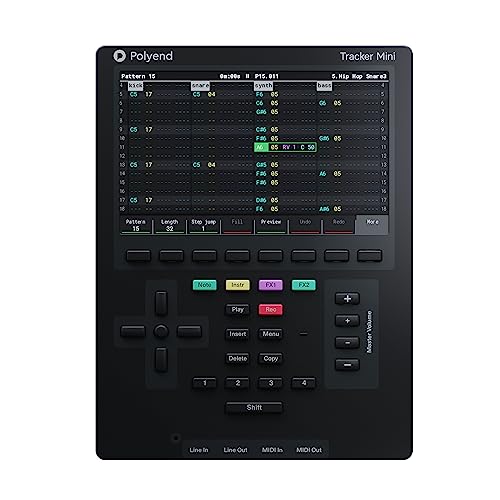
- Portable standalone workstation with 4,000 preloaded samples
- Adds wavetable and granular synthesis
- Includes microSD-to-USB-A and USB-A power adapters
Best For: Tracker-style producers and sample-based composers
Best Ultra-Portable Option
teenage engineering EP-133 K.O. II
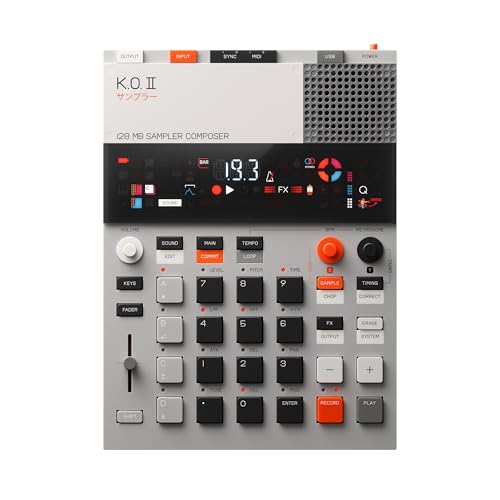
- Lightweight sampler with built-in microphone and speaker
- 128 MB memory, 999 sample slots, and four-track sequencing
- Battery or USB-C power with punch-in and master effects
Best For: Everyday-carry beatmakers and mobile performers
Best Pocket Studio

- Built-in mic for immediate sample capture
- Granular, chromatic, and resampling tools
- USB-C software integration for Mac and Windows
Best For: Mobile producers and detailed sound designers
Best Lightweight Beat Maker
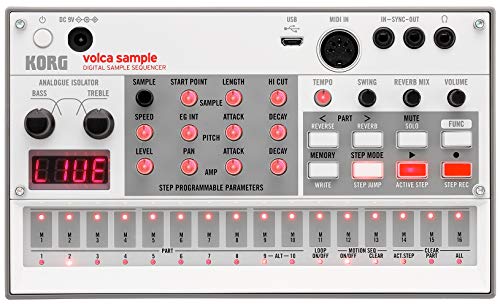
- 16-step sequencer with pattern chaining
- Battery-powered design with built-in speaker
- Eight-voice polyphony and expanded memory
Best For: Portable beat making and sample-based grooves
Best for Granular Performance

- Four parallel stereo sampling tracks
- Granular engine with up to 128 grains
- Scenes, macros, and modulation for live control
Best For: Experimental production and live sound sculpting
Pocket Sampling Pick

- Built-in mic and 3.5 mm line input
- Melodic, drum, sequencing, and effects modes
- Ultra-compact AAA-powered design
Best For: Quick beat-making and portable sound experiments
Beginner-Friendly Choice
CASIO SXC-1 Standalone Sampler

- Up to 15 minutes of sampling time
- 64 GB storage and multiple audio inputs
- 16-track step sequencer with 16 simultaneous sounds
Best For: Beginners seeking capacity and straightforward song creation
Advanced Performance Pick
OP–XY Portable Synthesizer and Sampler

- Eight synth engines with 64-step sequencing
- Built-in mic, audio input, and extensive I/O
- Controls external gear via MIDI, USB-C, and Bluetooth LE
Best For: Advanced portable production and live performance
Best All-Around Pick – Akai MPC Sample
The Akai MPC Sample is one of the most approachable portable samplers for beatmakers who want a standalone MPC workflow. Its rechargeable battery, speaker, microphone, built-in effects, and microSD storage support sampling and beatmaking without a computer.
Best For: Beginners, beatmakers, finger drummers, and DAWless creators who want an easy-to-use portable production hub.
Pros:
- Standalone, battery-powered operation with speaker and built-in microphone
- 16 responsive pads, color display, and quick sample-chopping workflow
- Over 100 factory kits and 60 internal effects across four FX processors
- USB-C audio/MIDI, MIDI connectivity, and flexible line I/O
Cons:
- MIDI DIN connection requires an adapter, which is not included
- Its 2.4-inch display is compact for detailed editing
The MPC Sample stands out as a flexible entry point into hardware sampling, combining portable convenience with enough sequencing, effects, and connectivity for home studios and live setups.
Best for Performance – Roland SP-404MKII
The Roland SP-404MKII is a performance-focused choice among portable samplers, with fast loading, expressive pads, extensive effects, and hands-on sample manipulation. Its multiple power options make it practical for mobile sessions and live beatmaking.
Best For: Performers and experienced producers who prioritize rapid sampling, resampling, effects, and live beat manipulation.
Pros:
- 17 velocity-sensitive RGB pads and a vivid OLED display for waveform editing
- 16 GB internal storage, 32-voice polyphony, and 160 samples per project
- Extensive effects suite includes Vinyl Simulator, DJFX Looper, lo-fi, and cassette effects
- Runs from USB-C, six AA batteries, a mobile battery, or an AC adapter
Cons:
- Its performance-oriented feature set may take time to master
- Heavier than ultra-compact sampler options at approximately 2.6 pounds
With its quick workflow, large internal storage, strong effects selection, and flexible power choices, the SP-404MKII is especially compelling for live, performance-based sampling.
Best for Tracker Workflows – Polyend Tracker Mini
The Polyend Tracker Mini is a portable standalone audio workstation built around tracker-style production. It includes 4,000 preloaded samples, microSD support, wavetable synthesis, and granular synthesis for producers who want a compact but feature-rich sampling environment.
Best For: Producers interested in tracker-based sequencing, sample-driven composition, and portable synthesis tools.
Pros:
- Standalone portable workstation with 4,000 preloaded samples
- Supports both wavetable and granular synthesis
- Includes microSD-to-USB-A adapter and USB-A power adapter
- Button, dial, and keyboard controls suit detailed tracker workflows
Cons:
- Tracker-style production may feel less familiar than pad-based workflows
- The supplied notes provide limited detail about battery-powered operation
The Tracker Mini is a specialized option rather than a conventional pad sampler, making it a strong fit for users who value deep sequencing and synthesis in a portable standalone format.
Best Ultra-Portable Option – teenage engineering EP-133 K.O. II
The teenage engineering EP-133 K.O. II is a lightweight sampler, drum machine, and sequencer designed for quick beatmaking on the move. It combines a built-in microphone, 128 MB of memory, punch-in effects, and battery operation in a compact format suited to everyday carry.
Best For: Mobile beatmakers who want fast pattern building, simple sampling, and live effects control.
Pros:
- Lightweight design with operation from four AAA batteries or USB-C
- Built-in microphone, line input, speaker, and line output support flexible sampling
- Four groups with 99 patterns, 999 sample slots, and a four-track sequencer
- Includes six master effects and 12 punch-in effects controlled by a multifunctional fader
Cons:
- 128 MB of memory is modest compared with larger standalone samplers
- Its compact controls may be less suitable for detailed editing than larger devices
The K.O. II favors immediacy and portability over expansive hardware, making it a practical choice for capturing ideas, building patterns, and performing beats away from a computer.
Best Pocket Studio – Roland AIRA Compact P-6
The Roland AIRA Compact P-6 is one of the most flexible portable samplers for creators who want hands-on sampling in a pocket-size format. Its built-in microphone, chopping tools, chromatic playback, resampling, and granular controls support both quick sketches and detailed sound design.
Best For: Mobile producers, sound designers, and performers who want advanced sampling features in a compact unit.
Pros:
- Built-in microphone enables quick sample capture without external equipment.
- Chop, step-sampling, resampling, and chromatic polyphonic playback offer versatile workflows.
- Granular controls, dedicated filters, and envelopes provide detailed sound shaping.
- USB-C connectivity and P-6 Sample Tool software support sample management on Mac and Windows.
Cons:
- The plastic body may feel less substantial than larger studio hardware.
- Advanced granular features may require more time to learn.
The P-6 stands out when portability and sound-design depth matter equally. It is especially appealing for users who want to capture sounds anywhere and transform them into playable, performance-ready material.
Best Lightweight Beat Maker – Korg Volca Sample 2
Korg Volca Sample 2 Digital Sample Sequencer Drum Machine w/Pattern Chain Mode and 16-step Sequencer
Check Price On AmazonThe Korg Volca Sample 2 is a lightweight option for portable samplers users who prioritize beat making and pattern sequencing. Its 16-step sequencer, pattern chaining, eight-voice polyphony, integrated speaker, and battery operation make it practical for creating rhythms away from a full setup.
Best For: Beat makers and electronic musicians working with sample-based grooves, loops, and pattern performance.
Pros:
- 16-step sequencing includes pattern chain and start-delay functions.
- Eight-voice polyphony and expanded memory support fuller sample-based arrangements.
- Integrated speaker, headphone output, and battery operation enable standalone use.
- Dedicated Mac and PC Librarian software simplifies sample and pattern management.
Cons:
- The 16-step workflow is more focused on pattern-based production than broad sound design.
- Sample transfers use Micro USB rather than USB-C.
- Its compact controls may be limiting for users seeking extensive real-time manipulation.
The Volca Sample 2 is a strong pick for portable groove construction. It offers a straightforward, lightweight workflow for sequencing drums and samples, with enough connectivity and memory for casual production and performance.
Best for Granular Performance – S4 Sculpting Sampler
The S4 Sculpting Sampler is a performance-focused choice among portable samplers, built around four parallel stereo tracks and deep sound transformation. It combines real-time recording, overdubbing, granular processing, modulation, scenes, macros, and effects for evolving textures and live manipulation.
Best For: Experimental producers and live performers who need multitrack sampling, granular processing, and extensive modulation.
Pros:
- Four parallel stereo tracks provide a substantial multitrack sampling setup.
- Granular processing offers up to 128 grains with detailed pitch, movement, and distribution controls.
- Each track includes five processing devices covering material, granular, filtering, color, and space.
- Scenes, macros, modulators, and the master mixer support expressive live performance.
Cons:
- Its 850 g weight and larger dimensions make it less pocket-friendly than compact samplers.
- The extensive processing and modulation options may be overwhelming for beginners.
- The supplied details list an auxiliary connector rather than a specific USB-C audio-interface connection.
The S4 is best viewed as a compact sculpting and performance workstation rather than a simple sample player. Its parallel tracks, deep granular engine, and scene-based controls make it particularly suited to evolving textures, experimental composition, and live sound shaping.
Pocket Sampling Pick – PO-33 K.O. Micro Sampler
The PO-33 K.O. is a genuinely pocketable option for anyone comparing portable samplers. It can capture sounds through its built-in microphone or 3.5 mm line input, then turn them into melodic parts or drum patterns with sequencing and effects.
Best For: Beginners, beat makers, and musicians who want an ultra-compact sampler for quick sound experiments.
Pros:
- Built-in microphone and 3.5 mm line input make sampling convenient.
- Offers melodic and drum modes, sequencing, and 16 onboard effects.
- Stores up to 40 seconds of samples across melodic and drum slots.
- Runs on two AAA batteries and includes a built-in speaker and headphone output.
Cons:
- Its 40-second sample memory is limited compared with larger samplers.
- The compact design may be less suitable for detailed, extended arrangements.
The PO-33 K.O. prioritizes portability and immediacy over extensive storage. It is a strong fit when you want to sample, sequence, and sketch ideas almost anywhere.
Beginner-Friendly Choice – CASIO SXC-1 Standalone Sampler
CASIO Portable STANDALONE Sampler SXC-1 Sampler for Beginners to Make and Play Songs Easily
Check Price On AmazonThe CASIO SXC-1 is a practical choice among portable samplers for beginners who want more room for recordings and song construction. It supports sampling from a built-in microphone, external analog input, or USB audio, with up to 15 minutes of sampling time.
Best For: New users who want a standalone sampler with substantial storage, step sequencing, and multiple input options.
Pros:
- Provides up to 15 minutes of sampling time and 64 GB of built-in storage.
- Supports microphone, external analog, and USB audio sampling.
- Offers up to 16 simultaneous stereo sounds and a 16-track step sequencer.
- Can run from USB-C power or four AAA batteries.
Cons:
- At 315 g, it is less pocket-sized than the smallest portable samplers.
- Imported audio through the smartphone app is limited to WAV, FLAC, and MP3 formats.
With generous storage, multiple recording routes, and a structured sequencer, the SXC-1 is aimed at accessible standalone production. Its larger body is a reasonable trade-off for users who value capacity and flexibility.
Advanced Performance Pick – OP–XY Portable Synthesizer and Sampler
The OP–XY is a premium, performance-focused entry in the portable samplers category. Alongside sampling through audio input or its built-in microphone, it combines eight synth engines, a 64-step sequencing workflow, extensive connectivity, and control for external hardware.
Best For: Experienced producers and live performers who need a deep portable sequencer, sampler, and external-gear control hub.
Pros:
- Combines sampler, synthesizer, and 64-step sequencer in one portable instrument.
- Includes eight individual instrument tracks and eight auxiliary tracks.
- Supports audio sampling, built-in microphone monitoring, MIDI over USB-C, and Bluetooth LE.
- Advanced sequencing features include punch-in effects, polyrhythms, variations, and automation.
Cons:
- Its broad feature set may be more than beginners need.
- At 0.82 kg, it is substantially heavier than ultra-compact samplers.
- Its extensive external connectivity may require additional compatible equipment to fully use.
The OP–XY is designed for users who want serious sequencing depth without giving up portability. It makes the most sense when live manipulation, external hardware control, and complex arrangements matter as much as sampling.
How We Picked the Best Portable Samplers
We evaluated these Portable Samplers by looking at the features that matter most away from a full studio setup: sample recording and editing, sequencing depth, built-in effects, hands-on controls, battery or portable operation, connectivity, storage, and overall workflow. We also considered whether each device is best suited to beatmaking, live performance, sound design, sketching ideas, or learning the basics.
Because these instruments vary widely, the most expensive option is not automatically the best choice. A compact sampler with a fast workflow may be more useful than a larger workstation if you want to capture ideas quickly or perform without a computer.
Quick Comparison
- Best for full standalone production: Choose a larger workstation-style sampler with extensive sequencing, effects, and arrangement tools.
- Best for live performance: Prioritize responsive pads, performance effects, pattern triggering, and reliable hands-on control.
- Best for portability: Pocket and compact samplers are ideal for travel, quick sketches, and battery-powered sessions.
- Best for sound design: Look for granular processing, modulation, resampling, and flexible sample manipulation.
- Best for beginners: A straightforward interface, built-in microphone, accessible sequencing, and clear controls can reduce the learning curve.
Key Buying Factors for Portable Samplers
Sampling and Editing
Check how samples are recorded, trimmed, sliced, tuned, and mapped. A built-in microphone is convenient for spontaneous recordings, while line and microphone inputs offer better control over external sources. Also consider memory capacity and whether storage can be expanded.
Sequencing and Workflow
Some devices focus on pattern-based beatmaking, while others provide deeper song arrangement and multitrack sequencing. If you create complete tracks, look for automation, pattern chaining, song mode, and easy project management. For live use, fast pattern switching and performance controls may matter more.
Effects, Connectivity, and Portability
Built-in effects can make a small sampler far more self-contained. Consider delay, reverb, filtering, compression, resampling, and performance-oriented effects. Check USB, MIDI, audio input and output, headphone connectivity, wireless features, speaker quality, power options, and computer integration before buying.
Controls and Learning Curve
Hands-on knobs, pads, buttons, and screens affect how quickly you can turn an idea into music. A highly capable device may require more study, while a simpler sampler can encourage experimentation. Choose the interface that matches your preferred balance of immediacy and control.
Who Should Buy Which Portable Samplers?
Beatmakers and producers should focus on sequencing depth, sample memory, sound shaping, and computer connectivity. Live performers should prioritize durable controls, reliable pattern triggering, quick effects access, and low-latency monitoring. Sound designers will benefit from granular processing, modulation, resampling, and flexible routing.
Traveling musicians and idea-capture users should choose the smallest device that still provides comfortable controls and suitable battery life. Beginners should look for an approachable workflow, built-in sounds or microphone input, and enough sequencing capability to grow with their skills. Before choosing, decide whether you value maximum production power, instant beatmaking, experimental sound design, or the smallest possible setup.