The best cajons for recording can add tight bass, crisp snare accents, and organic room character without taking up much space. The right model depends on your microphone technique, playing style, and whether you need acoustic simplicity or built-in amplification.
We selected 10 cajons spanning pickup-equipped, bass-focused, string-based, and compact designs to help you find a dependable instrument for home demos, professional sessions, and live acoustic work.
Best 10 Cajons for Recording Picks for 2026
Best for amplified recording

- Three internal Piezo pickups
- Built-in volume and tone controls
- Baltic birch body with fixed snares
Best For: Amplified recording and larger ensembles
Best for bass pedal parts

- Focused bass thump
- Compatible with common bass pedals
- Includes L-shaped foam beater
Best For: Kick-style recording accents
Best handcrafted choice
Meinl Artisan Edition String Cajon

- Hand-crafted in Spain
- Balanced Baltic birch tone
- Pre-tuned micro-coiled snare strings
Best For: Detailed acoustic recording
Best for deep low end
Meinl Jumbo Bass Subwoofer Cajon

- Subwoofer-style bass response
- Forward-facing sound ports
- Fixed snares and walnut playing surface
Best For: Bass-heavy acoustic recording
Deep-Bass Recording Pick

- Ported rear hole boosts deep bass
- Adjustable strings shape the snare effect
- Silicone feet reduce vibration
Best For: Recording players who prioritize low-end depth and tonal control
Lightweight Jam Pick

- Compact and lightweight for easy transport
- Internal guitar strings add rhythmic texture
- Rubber feet help reduce vibration
Best For: Beginners and mobile players seeking an accessible recording cajon
Compact European Pick

- Baltic birch body offers durable construction
- Rear port helps projection and mic placement
- Fixed snare wires deliver crisp tones
Best For: Compact recording spaces and players who want balanced bass and snare
Best Electric Pick
AKLOT Full-Size Electric Cajon
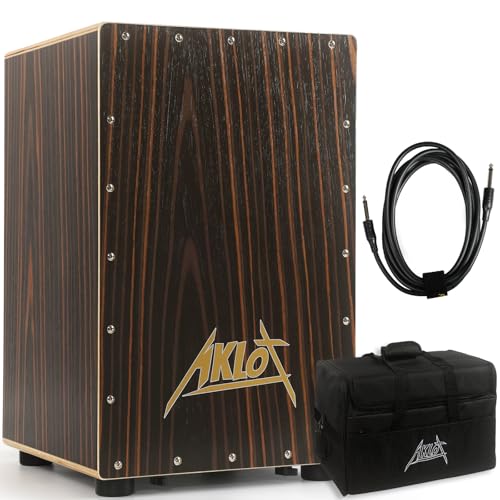
- Ebony wood offers a dense, balanced sound profile.
- Tool-free snare tuning supports quick adjustments.
- Includes a padded gig bag for transport.
Best For: Adult players wanting acoustic and electric versatility
Best Compact Option
VEVOR 10-Inch Birch Cajon with Snares

- Compact 10 x 10 x 15-inch design weighs 6.4 pounds.
- Internal snare wires provide clear rhythmic articulation.
- Silicone feet help keep the cajon stable.
Best For: Portable recording setups and beginners
Best Full-Size Value
VEVOR 12-Inch Birch Cajon with Guitar Strings
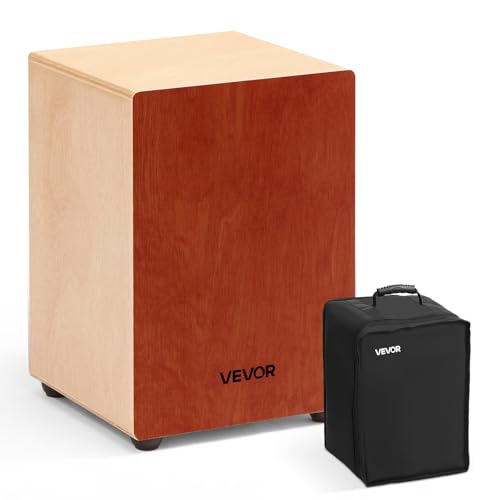
- Large body supports comfortable playing and seating.
- Adjustable guitar strings provide a smooth bass tone.
- Carry bag and seat cushion are included.
Best For: Mobile players seeking a versatile full-size cajon
Best for amplified recording – Meinl Pickup Snarecraft Cajon
For cajons for recording that need to work in louder setups, the Meinl Pickup Snarecraft adds three factory-installed Piezo pickups. Its Baltic birch body and adjustable volume and tone controls make it a practical choice when you want both acoustic playability and direct connection to an amp or PA.
Best For: Players recording or performing with amplified ensembles who need flexible output control.
Pros:
- Three internal pickups capture the snare and bass zones without batteries.
- Built-in volume and tone controls help shape the recorded or amplified signal.
- Baltic birch construction and fixed coiled steel snares provide a clear, precise sound.
- Includes two quarter-inch jacks for output and linking compatible Meinl instruments.
Cons:
- A quarter-inch cable is not included.
- The pickup system adds cost and complexity compared with a fully acoustic cajon.
This is the strongest fit for recording situations where a microphone-free or amplified signal path is useful. It can still be played acoustically, while the pickup controls provide added flexibility for tracking and larger sessions.
Best for bass pedal parts – Meinl BASSBOX Stomp Cajon
Meinl Percussion BASSBOX Acoustic Cajon Stomp Box with L-Shaped Beater, Black (VIDEO)
Check Price On AmazonThe Meinl BASSBOX is a specialized option among cajons for recording, designed to add a focused bass thump rather than provide a conventional sit-on cajon sound. Its forward-facing port, pedal attachment, and included L-shaped beater make it useful for building kick-style parts in a compact setup.
Best For: Recording bass drum-style accents with a standard bass drum pedal.
Pros:
- Produces a powerful bass hit from a compact stomp-box format.
- Works with common bass drum pedals.
- Includes a soft foam L-shaped beater for positioning the pedal strike.
- Rubber feet improve stability and help damp unwanted vibrations.
Cons:
- A bass drum pedal is not included.
- It is a bass-focused stomp box, not a full traditional cajon with snare tones.
Choose the BASSBOX when your recording arrangement needs a controllable low-end pulse while you play standing or sitting. It complements a regular cajon well, but it is less suitable as your only hand-played percussion instrument.
Best handcrafted choice – Meinl Artisan Edition String Cajon
Artisan Edition String Cajon, Baltic Birch — MADE IN SPAIN — Tango Line, 2-YEAR WARRANTY
Check Price On AmazonFor players prioritizing detailed acoustic tone in cajons for recording, the Meinl Artisan Edition String Cajon offers a handmade Spanish build and a balanced Baltic birch voice. Its fixed micro-coiled steel strings are pre-tuned, giving the instrument a responsive snare character without requiring setup adjustments.
Best For: Acoustic recording where refined response, balanced tone, and handmade construction matter.
Pros:
- Hand-crafted in Spain by luthier Jose “Pepote” Hernandez Diaz.
- Seven-ply Baltic birch construction delivers a rich, punchy, balanced tone.
- Two sets of pre-tuned micro-coiled steel strings provide a sensitive snare response.
- Rounded corners and thumb notches improve hand comfort during extended playing.
Cons:
- It has no integrated pickup or connector for direct output.
- The premium handcrafted design may be more than casual players need.
This is a strong choice for close-miked acoustic tracks and players who value feel as much as sound. The pre-tuned strings simplify ownership, while the Baltic birch body and frontplate support a focused, versatile recorded tone.
Best for deep low end – Meinl Jumbo Bass Subwoofer Cajon
The Meinl Jumbo Bass Subwoofer Cajon stands out among cajons for recording when the track needs substantial low-end weight. Its jumbo body, internal bass-reflex channels, forward-facing ports, and walnut playing surface are designed to produce deep bass while retaining crisp snare tones.
Best For: Recording acoustic grooves that need prominent bass, including worship, outdoor, and ensemble sessions.
Pros:
- Delivers deep, subwoofer-style bass with controlled highs.
- Internal bass-reflex channels and front sound ports project the low end forward.
- Two fixed steel snare sets add crisp, snappy contrast.
- Jumbo dimensions provide a larger playing surface and comfortable seating.
Cons:
- Its 17-pound jumbo design is less portable than a standard cajon.
- There is no connector or integrated pickup for direct recording output.
- The pronounced bass may require careful microphone placement and room management.
For recording setups that benefit from natural acoustic low end, this cajon offers a distinctive larger-than-standard voice. Select it when bass impact is a priority and you have room to accommodate its bigger body.
Deep-Bass Recording Pick – Backbeat Bass Cajon
For cajons for recording, the Backbeat Bass Cajon emphasizes low-end depth while retaining a crisp snare response. Its permanently secured rear port, adjustable internal strings, and stable silicone feet make it a flexible option for acoustic sessions and amplified microphone setups.
Best For: Players who want extra-deep bass and adjustable snare tension for recording, acoustic music, worship bands, or outdoor jams.
Pros:
- Ported rear sound hole delivers a deeper bass tone and does not require adjustment.
- Adjustable micro-coiled steel strings allow control over the snare effect.
- Hardwood playing surface and composite body provide warm tone with clear projection.
- Silicone feet help stabilize the cajon and reduce unwanted vibration.
Cons:
- At 11 pounds or more depending on the listed specification, it is less lightweight than some compact alternatives.
- The rear port is permanently secured, so its position and configuration cannot be changed.
This is the strongest choice here for recording setups that need a pronounced, thumpy low end alongside a tunable snare effect. The two-year warranty is an added benefit for regular use.
Lightweight Jam Pick – Pyle Stringed Jam Cajon
The Pyle Stringed Jam Cajon is a compact option for cajons for recording, especially when portability and straightforward handling matter. Its handcrafted birch-wood construction, internal guitar strings, and rubber-capped feet support a smooth rhythmic response with reduced vibration.
Best For: Beginners, families, and mobile players who want a lightweight cajon for basic recording, practice, or casual musical sessions.
Pros:
- Compact 12-by-12-by-18-inch design is easy to carry.
- Internal guitar strings provide a smooth rhythmic sound.
- Rubber-capped feet help buffer vibrations that could affect the sound.
- Birch-wood construction and an all-ages design suit accessible use.
Cons:
- The supplied notes do not mention an adjustable snare system for fine tonal control.
- Its compact, lightweight design may offer less low-end presence than the larger bass-focused option.
This Pyle model is a practical entry point when a recorder needs a portable instrument with internal strings and simple operation. It is less specialized than a cajon built around adjustable snare control, but its manageable size is useful for home or mobile setups.
Compact European Pick – Meinl Jam Cajon
For cajons for recording in tight spaces, the Meinl Jam Cajon combines a compact footprint with Baltic birch construction and fixed snare wires. Its four-inch rear sound port can strengthen projection and offers a practical location for microphone placement.
Best For: Beginners, home recordists, acoustic performers, and anyone who needs a small cajon with balanced bass and snare tones.
Pros:
- European-made Baltic birch construction is designed for a durable, solid feel.
- Two fixed sets of steel snare wires provide crisp, snappy tones.
- Rear sound port supports projection and convenient microphone placement.
- Compact 10.25-by-10.25-by-15-inch format is easy to transport and position.
Cons:
- The snare wires are fixed, so players cannot adjust their tension.
- Its small body may provide less bass depth than the Backbeat Bass Cajon.
This is a well-rounded recording choice when balanced tone, a compact size, and an accessible mic position matter more than adjustable snare tuning. Its 100% Baltic birch body and two-year warranty add confidence for ongoing use.
Best Electric Pick – AKLOT Full-Size Electric Cajon
For musicians seeking cajons for recording with electronic flexibility, the AKLOT Electric Cajon combines a full-size 12 x 12 x 18-inch design with adjustable internal snares and an electric configuration. Its ebony wood construction is designed for a rich, balanced response, while the included padded gig bag supports transport.
Best For: Adult players who want a full-size cajon for acoustic jams, stage performance, and electric setups.
Pros:
- Dense ebony wood is designed for durability and full-bodied resonance.
- Adjustable tuning button lets you modify the snare response without a wrench.
- Full-size body is comfortable for adult players and includes a 12mm padded bag.
Cons:
- Its full-size design is less compact than smaller recording-oriented cajons.
- The supplied notes do not specify recording outputs or additional electronic controls.
The AKLOT stands out when comfort, acoustic character, and easy snare adjustment matter. Consider it a versatile option for players who want an electric cajon that can also handle live acoustic sessions.
Best Compact Option – VEVOR 10-Inch Birch Cajon with Snares
For compact cajons for recording, the VEVOR SN10-A1 offers a 10 x 10 x 15-inch birch design with internal snare wires and a slightly bass-emphasized balanced profile. Its compact size and 6.4-pound weight make it practical for beginners, mobile sessions, and smaller setups.
Best For: Beginners and performers who need a lightweight cajon with responsive snare articulation.
Pros:
- Birch construction delivers warm bass and clear high tones.
- Internal snare wires suit styles ranging from rock and funk to hip-hop.
- Silicone feet provide a stable, scratch-free grip on varied surfaces.
- Includes a seat cushion and hex wrench for setup and adjustment.
Cons:
- The smaller body may offer less seating room than a full-size cajon.
- Snare adjustment requires the included hex wrench rather than tool-free tuning.
- No carrying bag is listed among the included components.
The SN10-A1 is a sensible choice when portability and clear snare definition are more important than maximum body size. Its compact footprint can also simplify placement in a recording space.
Best Full-Size Value – VEVOR 12-Inch Birch Cajon with Guitar Strings
For cajons for recording that offer a larger playing surface and adjustable string character, the VEVOR G12-A2 uses a 12 x 12 x 17-inch birch design with internal guitar strings. It provides a balanced sound, a natural bass response, silicone feet, and a carry bag for sessions away from home.
Best For: Players who want a full-size, portable cajon with a smooth guitar-string response for pop, jazz, or Latin rhythms.
Pros:
- Fuller 12-inch body provides a comfortable playing and seating area.
- Adjustable guitar strings create a smooth, natural bass tone.
- Includes a carrying bag, seat cushion, and hex wrench.
- Silicone feet help prevent movement and surface scratches.
Cons:
- At 10 pounds, it is heavier than the compact VEVOR model.
- String adjustments require a hex wrench.
- The supplied notes do not list a manufacturer warranty.
The G12-A2 is a strong fit for players who want the comfort of a larger cajon and a softer, string-based response. Its included bag also makes it practical for rehearsals, lessons, and mobile recording sessions.
How We Picked the Best Cajons for Recording
We evaluated these cajons by focusing on the features that matter most when an instrument is captured by microphones or a direct output. Our comparison considers shell and playing-surface materials, snare or string construction, bass response, portability, build origin where specified, and useful extras such as pickups, ports, adjustable strings, and included design features.
Because recording environments vary, there is no single ideal cajon. A bright, articulate instrument may suit layered percussion, while a larger bass cajon can anchor sparse acoustic arrangements. Pickup-equipped models offer flexible signal paths, but a well-built acoustic cajon can deliver a more natural result with a properly placed microphone.
Quick Comparison
- Best for direct recording: Choose a pickup cajon when you need a consistent amplified signal or easy connection to an audio interface, mixer, or amplifier.
- Best for natural studio tone: Look for a solid wooden body, responsive playing surface, and balanced separation between bass and snare zones.
- Best for strong low end: Bass cajons and models with larger chambers or ported sound holes can provide more depth for sparse arrangements.
- Best for portability: Compact, lightweight birch or Baltic birch designs are easier to carry to rehearsals and mobile recording sessions.
Key Buying Factors for Cajons for Recording
Tone and Frequency Balance
Listen for a bass note that is full rather than boomy and snare response that remains defined at moderate playing force. If possible, test both the center and upper playing areas, since recording benefits from clear tonal contrast between hits.
Snare, String, and Adjustment Design
Internal wires or guitar strings produce different textures. Snare wires often provide a sharper, more drum-like response, while strings can offer a looser, more sensitive buzz. Adjustable systems are useful for dialing in a cleaner or more resonant sound before tracking.
Recording and Connectivity
A pickup can simplify live capture and provide a useful safety track, but it does not replace microphone placement for natural room tone. Check whether the instrument requires a battery, what controls it provides, and whether its output suits your recording hardware.
Construction and Comfort
Check the stability of the box, the smoothness of the front plate, the security of the feet, and the comfort of the seat during long sessions. A cajon that stays stable and comfortable makes it easier to maintain consistent timing and dynamics.
Who Should Buy Which Cajons for Recording?
Choose a pickup model if you record frequently in changing locations, perform with amplified instruments, or want direct connectivity alongside microphone recording. Choose a bass-focused cajon if your arrangements need substantial low-end percussion without a full drum kit.
Choose a string cajon if expressive snare sensitivity and tonal shaping are priorities. Choose a standard acoustic cajon for a straightforward, versatile instrument that works well with one or two microphones. Compact budget-friendly models make sense for beginners, casual songwriters, and mobile setups, while European-built or more adjustable designs may appeal to players seeking refined consistency for repeated studio use.