The right guitar effects processor can simplify your live rig, replace multiple pedals, and give you consistent tones from rehearsal room to stage. The best choice depends on how much control, connectivity, modeling power, and portability you need.
We selected 10 standout processors for different playing styles and budgets, including compact multi-effects pedals, MIDI-ready floor units, and performance-focused systems with amp modeling, IR loading, looping, and USB audio.
Best 10 Guitar Effects Processors for Live Performances Picks for 2026
Best Hands-On Choice
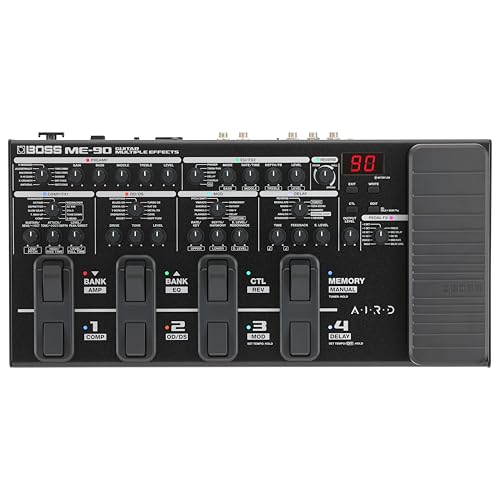
- 60 effects and 11 AIRD amp models
- Eight footswitches plus expression pedal
- Battery-capable, with effects loop and IR loading
Best For: Fast, hands-on live tone shaping
Best Feature-Rich Touchscreen Unit

- 460+ effects and 12 simultaneous modules
- Five scenes per patch for smooth transitions
- Touchscreen, MIDI, FX loop, and USB audio
Best For: Complex live rigs and scene-based control
Best Pedalboard Command Center

- 100+ HX effects with up to nine at once
- Includes extensive legacy effects library
- Capacitive switches with LED rings and scribble strips
Best For: Amp-based pedalboard rigs
Best I/O and Patch Flexibility

- 240+ effects and 256 total patches
- Balanced XLR, FX loop, MIDI, and USB-C audio
- Built-in expression pedal, looper, and drum patterns
Best For: Flexible live, studio, and practice setups
Flagship Compact Control

- 24 simultaneous effects blocks with 140+ amp and effect types
- Compact format for pedalboards or standalone use
- Looper, MIDI, USB, and external control support
Best For: Players needing advanced processing in a compact live rig
Touchscreen Performance Hub

- Guitar, vocal, amp-cloning, and NAM support
- Gapless preset changes with delay and reverb spillover
- Touchscreen, Wi-Fi, Bluetooth, MIDI, and stereo FX loop
Best For: Singer-guitarists and solo performers needing integrated stage tools
Stage-Ready Value Package

- 240+ effects with 140+ amp and cabinet models
- Expression pedal, looper, drums, tuner, and 256 patch slots
- USB-C audio interface and included protective gig bag
Best For: Gigging players wanting broad modeling and a complete portable package
Versatile Portable Pick
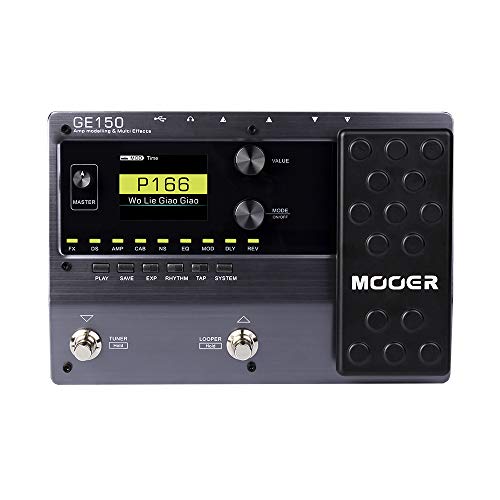
- 151 effects and 55 amp models
- 26 third-party IR slots and expression pedal
- Looper, rhythms, and USB-OTG streaming
Best For: Portable live rigs, practice, and streaming
Preset-Friendly Performance Pick

- 55 amp models and 151 built-in effects
- 200 presets with expression-pedal control
- Stereo outputs, IR loading, and OTG recording
Best For: Fast live tone changes across varied setups
Best Hands-On Choice – BOSS ME-90
BOSS ME-90 Guitar Multi-Effects Guitar Processor | All-In-One Guitar Processor
Check Price On AmazonThe BOSS ME-90 is a practical pick for guitarists who want guitar effects processors for live performances with familiar stompbox-style control. Its dedicated knobs, eight multifunction footswitches, expression pedal, amp models, effects loop, and battery capability make it straightforward to shape and change sounds onstage.
Best For: Performing guitarists who prioritize quick, hands-on editing and a compact all-in-one setup.
Pros:
- Offers 60 effects, 11 AIRD amp models, IR loading, and an effects loop.
- Eight multifunction footswitches and an expression pedal support live control.
- Battery-powered design, USB-C connectivity, and BOSS Tone Studio integration add flexibility.
Cons:
- Bluetooth audio and MIDI require an optional adaptor.
- Its 36 user-patch memory may feel limited for players needing extensive preset storage.
The ME-90 favors immediate, knob-based operation over a touchscreen workflow. It is especially appealing when fast adjustments during rehearsal or performance matter more than having the largest effects library.
Best Feature-Rich Touchscreen Unit – Hotone Ampero II Stage
The Hotone Ampero II Stage is designed for players seeking guitar effects processors for live performances with extensive routing and sound-shaping options. It supports up to 12 simultaneous effect modules, five scenes per patch, dual effect chains, MIDI, an effects loop, and a large touchscreen for navigating its deep feature set.
Best For: Gigging players who want many effects, scene-based transitions, and touchscreen control.
Pros:
- Includes more than 460 effects and supports up to 12 simultaneous modules.
- Five scenes per patch enable smooth sound changes during a performance.
- Provides MIDI I/O, an effects loop, stereo connectivity, USB audio, Bluetooth input support, and Celestion speaker IRs.
Cons:
- The extensive feature set may require more preparation than a knob-focused pedal.
- It uses corded power rather than battery operation.
With its 5-inch touchscreen, flexible operating modes, and high-capacity effects architecture, the Ampero II Stage is built for players who want detailed control over complex live rigs and transitions.
Best Pedalboard Command Center – Line 6 HX Effects
The Line 6 HX Effects is a strong option for guitarists comparing guitar effects processors for live performances who already use an amp and want a centralized pedalboard controller. It offers more than 100 HX effects, legacy effects libraries, capacitive footswitches with LED rings and scribble strips, and the ability to run up to nine effects simultaneously.
Best For: Amp-based pedalboard rigs that need flexible effect combinations and clear footswitch labeling.
Pros:
- Runs up to nine effects simultaneously from a library of more than 100 HX effects.
- Includes legacy effects from the M13, M9, M5, DL4, MM4, FM4, and DM4 families.
- Capacitive switches, LED rings, and scribble strips improve live navigation.
Cons:
- The supplied notes do not identify built-in amp modeling, so it is less suited to an all-in-one amp-and-effects setup.
- It requires a DC power supply and is heavier than some compact processors.
The HX Effects makes the most sense when your amplifier remains central to the rig. Its main advantage is organizing a broad effects palette and putting key changes under footswitch control.
Best I/O and Patch Flexibility – Valeton GP-200
Valeton GP-200 Multi-Effects Processor for Guitar & Bass, Expression Pedal, MIDI, USB Interface
Check Price On AmazonThe Valeton GP-200 suits players looking for guitar effects processors for live performances that also cover recording and practice needs. It combines more than 240 effects, amp and cab models, up to 11 movable modules, balanced XLR outputs, an effects loop, MIDI, an expression pedal, and USB-C audio with re-amping.
Best For: Guitarists and bassists who need broad connectivity, flexible patches, and integrated practice tools.
Pros:
- Provides 240+ effects, 256 patches, and up to 11 freely movable modules per patch.
- Stage-friendly I/O includes balanced XLR outputs, ground lift, effects loop, MIDI, aux, and headphones.
- Built-in expression pedal, looper, drum patterns, IR slots, and USB-C audio interface expand its usefulness.
Cons:
- It is not battery-powered and requires the included 9V power adapter.
- The supplied warranty information lists a 90-day free-return period.
The GP-200 is a versatile choice when one unit must handle live outputs, patch switching, practice features, and computer recording. Its combination of balanced connections and movable signal modules is particularly useful for varied setups.
Flagship Compact Control – GT-1000CORE
For guitarists seeking guitar effects processors for live performances without sacrificing pedalboard space, the BOSS GT-1000CORE combines extensive amp and effects modeling with a compact stompbox format. Its 24 simultaneous effects blocks, broad control options, and high-resolution processing make it suited to sophisticated live rigs.
Best For: Players who need flagship-level processing in a compact pedalboard-friendly unit.
Pros:
- Supports up to 24 simultaneous effects blocks and more than 140 amp and effect types.
- Works as a standalone processor or alongside an existing pedalboard.
- Offers external footswitch, expression pedal, USB, and TRS MIDI control options.
- Includes a looper and 32-bit AD/DA and floating-point processing.
Cons:
- The compact format may provide less hands-on control than larger floorboards.
- External controls may be needed for more expansive live foot control.
The GT-1000CORE is a strong choice when sound quality, routing flexibility, and pedalboard integration matter more than having a large built-in display or expansive chassis.
Touchscreen Performance Hub – HeadRush Core
The HeadRush Core is a versatile option among guitar effects processors for live performances, especially for musicians who also sing. It combines guitar modeling, vocal processing, amp cloning, a touchscreen interface, seamless preset changes, and extensive stage connectivity in a durable floor unit.
Best For: Guitarists and vocalists who want one performance hub for tones, vocals, looping, and live playback.
Pros:
- Includes guitar and vocal effects, amp modeling, Auto-Tune, and a seven-inch touchscreen.
- Supports Neural Amp Modeler captures, Smart Amp Cloner, and more than 350 impulse responses.
- Provides gapless preset switching with reverb and delay tail spillover.
- Offers XLR and 1/4-inch outputs, microphone input with phantom power, MIDI, and a stereo effects loop.
Cons:
- Its broad feature set and 3.9 kg chassis may be more than a guitar-only player needs.
- The touchscreen-centered workflow may appeal less to players who prefer simple knob-based operation.
With vocal tools, Wi-Fi tone access, Bluetooth, drums, looping, and detailed routing, the Core is particularly compelling for solo performers and singer-guitarists managing several stage roles.
Stage-Ready Value Package – Valeton GP-200
The Valeton GP-200 is built for musicians comparing guitar effects processors for live performances and wanting practical stage features in one package. It combines more than 240 effects, amp and cabinet modeling, flexible patch storage, an expression pedal, and a protective gig bag.
Best For: Gigging guitarists and bassists who want broad modeling, straightforward live control, and included transport protection.
Pros:
- Includes more than 240 effects, 140-plus amp and cabinet models, and up to 11 simultaneous modules.
- Provides 256 patch slots, 20 user cabinet IR slots, and a customizable footswitch layout.
- Built-in looper, drum patterns, tuner, expression pedal, and 4.3-inch color display support live use.
- Includes a cast-metal chassis, USB-C audio interface, and padded gig bag.
Cons:
- Its 11-module limit is lower than the GT-1000CORE’s stated 24-block capacity.
- The included gig bag adds value but the full bundle is less minimal than a pedal-only setup.
The GP-200 stands out as a practical all-in-one choice for performers who value accessible controls, extensive patch capacity, recording connectivity, and a ready-to-transport bundle.
Versatile Portable Pick – MOOER GE150
The MOOER GE150 is a flexible choice among guitar effects processors for live performances, offering 151 effects, 55 amp models, an expression pedal, and support for third-party IR files. Its compact design and USB-OTG connectivity also make it useful for practice, recording, and live streaming.
Best For: Guitarists who want broad tonal variety, built-in practice tools, and a portable setup for gigs or streaming.
Pros:
- Includes 151 effects and 55 MNRS amp models for diverse genres.
- Offers 26 user slots for third-party IR files.
- Built-in expression pedal, 80-second looper, drum rhythms, and metronome.
- USB-OTG supports smartphone recording and live streaming.
Cons:
- Its 9-volt power requirement means live users need a suitable power source.
- The unit has a micro-USB interface rather than USB-C.
The GE150 balances a large sound library with practical performance and practice features. It is especially appealing when portability and streaming connectivity matter as much as live tone shaping.
Stage-Ready Connectivity Pick – Donner Arena 2000
The Donner Arena 2000 stands out among guitar effects processors for live performances with 278 effect types, amp and cabinet simulations, XLR outputs, MIDI support, and flexible control options. Its stereo and direct-output features make it suitable for connecting to varied stage systems.
Best For: Performers who need extensive tone options, direct XLR connectivity, and hands-free control on stage.
Pros:
- Provides 278 effects, 80 amp simulations, and 50 cabinet simulations.
- Includes 50 built-in IRs plus 50 banks for third-party IRs.
- Offers customizable CTRL mode, dual expression support, and MIDI connectivity.
- XLR L/R, cabinet simulation, looper, drum machine, and OTG support suit live use.
Cons:
- It does not include a battery compartment.
- Headphone use is recommended with 32–64 ohm impedance.
With its broad routing and control options, the Arena 2000 is built for players who want to move from bedroom practice to direct-to-PA performance. Its XLR and MIDI features are particularly useful in more involved live setups.
Preset-Friendly Performance Pick – FLAMMA FX100
The FLAMMA FX100 is a practical option among guitar effects processors for live performances, combining 55 amp models, 151 effects, 200 presets, and a customizable expression pedal. Stereo outputs and selectable amp/cab configurations help it adapt to amps, mixers, power amps, and FRFR systems.
Best For: Guitarists who want quick preset changes, expression control, and one processor for live performance, practice, and recording.
Pros:
- Offers 55 amp models, 151 effects, and 26 factory IR cab models.
- Includes 10 third-party IR slots and 200 presets for fast tone changes.
- Expression pedal supports volume, wah, and effect-parameter control.
- Provides stereo outputs, headphone practice, USB recording, and OTG streaming.
Cons:
- It uses a micro-USB OTG port and a separate Type-B USB connection for computers.
- The unit requires corded 9-volt power for operation.
The FX100 focuses on accessible live control without sacrificing practice and recording features. Its large preset count and adaptable outputs make it a strong fit for players who need to switch tones efficiently across different setups.
How We Picked the Best Guitar Effects Processors for Live Performances
We focused on features that matter during real gigs: reliable foot control, fast patch changes, useful connectivity, convincing effects, flexible signal routing, and practical stage visibility. We also considered whether each unit supports amp modeling, impulse responses, expression control, MIDI, looping, direct outputs, and USB recording.
Because live setups vary widely, this list includes options for players who run into a traditional amplifier, go direct to a PA, or need one processor to handle guitar, vocals, and backing parts.
Quick Comparison
| Best For | What to Look For |
|---|---|
| Simple pedalboard replacement | Fast preset access, dedicated footswitches, and clear displays |
| Direct-to-PA performance | Amp modeling, cabinet simulation, IR loading, and balanced outputs |
| Advanced stage rigs | MIDI, flexible routing, dual signal chains, and scene or snapshot control |
| Solo performers | Looper, drum machine, vocal processing, and reliable preset organization |
| Home, rehearsal, and gig use | USB audio, headphone output, expression control, and compact construction |
Key Buying Factors for Guitar Effects Processors for Live Performances
Effects, Amp Models, and IR Support
Count the effects you will actually use rather than choosing by the largest specification number. Amp models and cabinet simulations are especially important when connecting directly to a mixer or powered speaker. Third-party IR support can provide more flexibility when refining your stage tone.
Foot Control and Preset Management
Dedicated switches make it easier to turn effects on and off without menu diving. Look for tap tempo, tuner access, expression pedal support, and scene, snapshot, or stompbox-style modes if you change sounds frequently during songs.
Connectivity and Signal Routing
Check for the outputs your rig requires, including stereo, XLR, effects loop, MIDI, USB, and headphone connections. An effects loop is useful with a physical amplifier, while MIDI and flexible routing help integrate external pedals, switchers, or stage equipment.
Reliability and Portability
A compact processor may be ideal for fly dates and small stages, while a larger floorboard can offer better visibility and hands-on control. Prioritize sturdy switches, dependable power requirements, and a layout you can operate under dim stage lighting.
Who Should Buy Which Guitar Effects Processors for Live Performances?
Choose the BOSS ME-90 or Line 6 HX Effects if you want straightforward access to a broad range of effects. The BOSS GT-1000CORE and HOTONE Ampero II Stage suit players building sophisticated, MIDI-enabled rigs with detailed routing.
The Valeton GP-200, Donner Arena 2000, MOOER GE150, and FLAMMA FX100 are strong fits for players seeking amp modeling and practical stage features at different price points. Consider the HeadRush Core if vocal processing and hands-on performance control are important. Before buying, map out your actual signal chain and confirm that the processor has enough switches, outputs, and preset capacity for your set.