Thick soundproofing mats can make a noticeable difference when unwanted vibration, road noise, or sound transfer is coming through floors, doors, panels, or equipment areas. The right material depends on whether you need mass-loaded blocking, vibration damping, or acoustic absorption.
This roundup compares 10 options spanning automotive butyl mats, mass-loaded vinyl barriers, and interlocking floor panels. Use the guide below to match thickness, coverage, installation method, and material to your project.
Best 10 Thick Soundproofing Mats Picks for 2026
Best Full-Car Coverage
VEVOR Noise Grabber Mass Barrier

- 200-mil foam construction
- 36 sq. ft. roll coverage
- Self-adhesive, cuttable design
Best For: Large DIY vehicle soundproofing projects
Best for Heat and Vibration Control
VOISEN Automotive Sound Deadening Mats
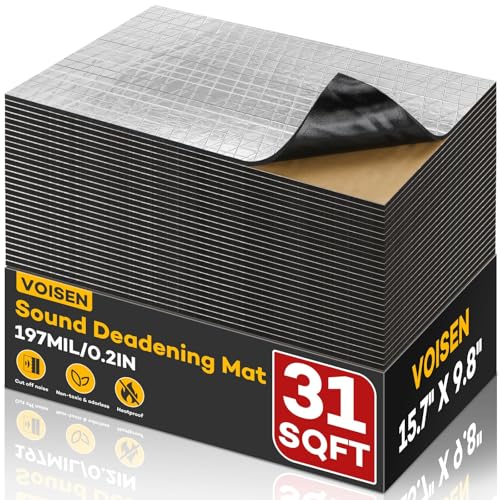
- 28 flexible foam panels
- 31 sq. ft. total coverage
- Designed for sound, heat, and vibration
Best For: Curved automotive components and heat-prone areas
Best Room and Instrument Flooring
TroyStudio Interlocking Acoustic Mats

- 0.4-inch dense polyester felt
- NRC rating of 0.87
- Interlocking, cuttable floor panels
Best For: Music studios, instruments, and hard floors
Best Lightweight Butyl Option
KILMAT 80 mil Car Sound Deadening Mat

- 80-mil butyl and foil sheets
- 36 sq. ft. coverage
- Embossed installation indicator
Best For: DIY car audio and automotive noise-control projects
Best Modular Pick
Interlocking Felt Soundproof Floor Mats

- 20 puzzle pieces cover up to 17 square feet
- High-density felt cushions impact and reduces echo
- Expandable, non-slip design for flexible floor layouts
Best For: Modular floor sound absorption in playrooms, gyms, and music spaces
Best Automotive Value
80mil Butyl Sound Deadening Mat

- 36 square feet for doors, trunks, and interiors
- Three-layer design absorbs vibration and reflects heat
- Peel-and-stick backing supports DIY installation
Best For: Vehicle road-noise and vibration reduction projects
Maximum Coverage Pick
394 Mil Automotive Sound Deadening Mat

- 16 sq. ft. across 15 sheets
- 394 mil thick closed-cell foam
- Targets noise, vibration, and heat
Best For: DIY projects needing broad vehicle coverage
Balanced Insulation Pick
Amazon Basics Car Sound Deadening Mat

- 10 sq. ft. in a 10-piece pack
- Butyl rubber with reflective foil
- Pliable, self-adhesive sheets
Best For: Smaller DIY car interior installations
Precision DIY Pick
KILMAT 80 Mil Butyl Sound Deadener

- 10 sq. ft. of 80-mil material
- Sticky butyl-and-foil construction
- Embossed foil aids installation
Best For: DIY audio and vehicle fitting projects
Best Full-Car Coverage – VEVOR Noise Grabber Mass Barrier
For shoppers comparing thick soundproofing mats for vehicle projects, the VEVOR Noise Grabber stands out as a large, roll-format option. Its 200-mil foam construction, aluminum foil surface, adhesive backing, and 36-square-foot coverage make it practical for insulating both small and large vehicles.
Best For: DIY vehicle soundproofing projects that need broad coverage from a single roll.
Pros:
- Thick 5.1 mm foam material is designed to reduce interior vehicle noise.
- Three-layer construction combines aluminum foil, high-density foam, and adhesive backing.
- Self-adhesive design can be cut or customized for irregular spaces.
- Surface is described as heat-resistant, waterproof, and fire-resistant.
Cons:
- A rolling tool is recommended for a secure, even fit but is not included.
- A large roll may be less convenient than pre-cut sheets for small repairs.
Choose this mat when coverage and thickness are more important than compact packaging. The odorless material and peel-and-stick installation also make it a straightforward option for a larger vehicle interior project.
Best for Heat and Vibration Control – VOISEN Automotive Sound Deadening Mats
VOISEN is a flexible choice for buyers seeking thick soundproofing mats in manageable pieces. The package includes 28 aluminum-foil foam panels with 31 square feet of coverage, allowing you to shape the material around curved automotive components while addressing sound, vibration, and heat.
Best For: Vehicle installations that require flexible panels and added heat insulation.
Pros:
- 197-mil, or 5 mm, closed-cell foam construction provides sound insulation and vibration absorption.
- Aluminum surface is waterproof and the material can be cut or shaped for DIY installation.
- Rated working temperature range is -40°F to 300°F.
- Designed to help block radiant, engine, exhaust, and summer heat.
Cons:
- The manufacturer recommends pairing it with butyl-based sound-deadening pads for optimal results.
- Installation requires careful contact with the vehicle to avoid trapped moisture or air.
This package is a practical fit when pre-cut sections are easier to handle than a continuous roll. Its heat-insulating focus adds versatility for doors, panels, and other automotive areas exposed to temperature and vibration.
Best Room and Instrument Flooring – TroyStudio Interlocking Acoustic Mats
For indoor spaces rather than vehicle panels, TroyStudio offers thick soundproofing mats in an interlocking floor-tile format. The 0.4-inch polyester felt panels are designed to absorb sound energy, reduce echo, and damp vibration beneath instruments, exercise equipment, or furniture.
Best For: Music rooms, home studios, instrument areas, and hard floors needing sound absorption and floor protection.
Pros:
- High-density felt has an NRC of 0.87 and an average absorption coefficient of 0.78.
- Interlocking edges create a flat, seamless surface over the target area.
- Can help isolate vibration from drums, pianos, and loudspeakers.
- Panels are cuttable, odorless, non-toxic, and supplied with removable double-sided tape.
Cons:
- The 16-piece pack covers less area than many automotive mat packages.
- These floor tiles are not intended as adhesive vehicle sound-deadening sheets.
Consider TroyStudio when your priority is room acoustics, vibration control, and a more comfortable floor surface. The interlocking design is easier to arrange and remove than permanently installed acoustic flooring.
Best Lightweight Butyl Option – KILMAT 80 mil Car Sound Deadening Mat
KILMAT is a practical option for shoppers who want thick soundproofing mats for a DIY car audio or noise-control installation without moving to an especially heavy material. Its 80-mil butyl-and-foil sheets provide 36 square feet of coverage in smaller panels that are easy to cut and position.
Best For: DIY automotive sound deadening where easy handling and installation feedback matter.
Pros:
- Self-adhesive butyl construction is designed for straightforward installation.
- Pre-sized 15.7-by-9.8-inch sheets simplify cutting and placement.
- Embossed foil acts as an installation indicator when rolled smooth.
- 36 square feet of coverage suits broad vehicle sound-deadening projects.
Cons:
- At 80 mil, it is thinner than the 197- and 200-mil options in this roundup.
- The product notes emphasize sound deadening rather than heat insulation.
KILMAT makes sense when you want a manageable sheet format and a clear way to check installation quality. It is a balanced choice for reducing automotive noise and vibration while keeping the material relatively lightweight.
Best Modular Pick – Interlocking Felt Soundproof Floor Mats
These thick soundproofing mats use high-density felt puzzle pieces to cushion hard floors, absorb impact, and help reduce echo and reverberation. The 20-piece set is easy to arrange, expand, and remove, making it practical for flexible home or studio setups.
Best For: Playrooms, gyms, music spaces, classrooms, and other areas needing modular floor cushioning and vibration dampening.
Pros:
- 20 interlocking pieces provide up to 17 square feet of coverage.
- 0.4-inch high-density felt helps absorb foot-traffic impact and reduce reverb.
- Non-slip puzzle construction includes removable double-sided tape for added stability.
- Lightweight pieces are easy to assemble, disassemble, and combine with additional sets.
Cons:
- Coverage is limited to approximately 17 square feet per set.
- Designed for floor use rather than wall or ceiling soundproofing.
This is a convenient choice when you want thick soundproofing mats that also protect floors and can be reconfigured as needed. Its felt construction is especially suited to reducing reflected sound and everyday floor noise.
Best Automotive Value – 80mil Butyl Sound Deadening Mat
For vehicle projects, this 80mil butyl mat combines a vibration-absorbing rubber core, reinforced aluminum foil, and adhesive backing. It offers 36 square feet of coverage for treating doors, trunks, and other areas where road, engine, or wind noise is a concern.
Best For: DIY automotive sound deadening and vibration control across doors, trunks, and vehicle interiors.
Pros:
- 36 square feet of 80mil, three-layer material supports larger vehicle projects.
- Butyl rubber absorbs vibrations while aluminum foil helps reflect heat.
- Waterproof construction and a stated working range of -50°F to 300°F improve versatility.
- Peel-and-stick backing is designed for cutting and pressing into place.
Cons:
- Made for automotive applications rather than general room soundproofing.
- Installation requires surface cleaning, accurate cutting, and firm application.
This is a strong fit for shoppers seeking thick soundproofing mats for a car without committing to a professional installation. The 80mil thickness balances noise and vibration reduction with manageable DIY handling.
Best Structural Barrier – TroyStudio Mass Loaded Vinyl Sheet
This dense mass loaded vinyl sheet adds substantial mass to sound-control assemblies while remaining flexible enough to cut and install. Its 1-pound-per-square-foot construction is intended for walls, ceilings, floors, doors, vehicles, and mechanical systems.
Best For: Structural soundproofing projects involving walls, ceilings, doors, HVAC systems, home theaters, and recording spaces.
Pros:
- 1/8-inch-thick sheet provides 8 square feet of coverage at 1 pound per square foot.
- High density and a stated STC rating of 28 support blocking sound when properly incorporated.
- Flexible, waterproof, flame-retardant, and suitable for indoor or outdoor applications.
- Fabric backing accepts construction adhesive, while nails and screws can also be used.
Cons:
- One sheet covers only 8 square feet, so larger projects may require multiple rolls or sheets.
- At 8 pounds per sheet, installation may require careful handling and secure attachment.
- Seams and joints need acoustic caulking or barrier tape for optimal results.
This option is better suited to assemblies that need a dense sound barrier than to simple surface padding. Choose it when you can install and seal the material properly behind or beneath a finished structure.
Maximum Coverage Pick – 394 Mil Automotive Sound Deadening Mat
If you need thick soundproofing mats for broad vehicle coverage, this 394-mil option provides 16 square feet across 15 peel-and-stick sheets. Its closed-cell foam construction is designed to reduce road and engine noise, dampen vibrations, and help limit heat transfer.
Best For: DIY vehicle projects covering doors, floors, or the firewall where generous coverage and thicker material are priorities.
Pros:
- Offers 16 square feet of total coverage in 15 sheets.
- 394-mil, 10 mm-thick material targets noise, vibration, and heat transfer.
- Peel-and-stick backing is designed for straightforward cutting and installation.
- Closed-cell foam construction is positioned as a durable, budget-friendly solution.
Cons:
- The supplied details recommend application to flat metal surfaces, which may limit placement options.
- The thicker construction may require more planning when cutting and fitting around vehicle contours.
Choose this mat when coverage and thickness matter more than having the smallest possible sheets. It is a practical option for a comprehensive DIY cabin treatment.
Balanced Insulation Pick – Amazon Basics Car Sound Deadening Mat
These thick soundproofing mats use a butyl rubber compound substrate with reflective aluminum foil to address vehicle vibration, road noise, and heat insulation. The 10-pack covers 10 square feet and includes self-adhesive backing for a manageable interior installation.
Best For: Car owners wanting a pliable, self-adhesive mat for cabin floors, trunks, or other interior areas.
Pros:
- Butyl rubber compound is designed to reduce vehicle and road vibrations and noise.
- Reflective aluminum foil adds a thermal-insulation feature.
- Self-adhesive backing supports secure placement without a separate adhesive.
- Pliable sheets are easy to cut, and instructions are included.
Cons:
- Total coverage is 10 square feet, less than some larger kits.
- The package contains 10 pieces, so larger projects may require multiple packs.
This is a straightforward middle-ground choice for smaller car sound-deadening jobs. Its combination of pliability, adhesive backing, and foil-facing insulation makes installation approachable.
Precision DIY Pick – KILMAT 80 Mil Butyl Sound Deadener
For shoppers comparing thick soundproofing mats by installation control and material efficiency, this KILMAT kit supplies 10 square feet of 80-mil butyl-and-foil deadener. Its sticky backing, manageable sheet size, and embossed installation indicator are designed to make DIY fitting easier.
Best For: DIY audio and vehicle projects where easy cutting, strong adhesion, and installation feedback are especially useful.
Pros:
- 80-mil butyl material with foil backing is designed for sound insulation and vibration dampening.
- Very sticky self-adhesive backing supports user-friendly installation.
- Embossing indicates when the foil has been rolled smooth for proper installation.
- Smaller sheets are convenient to cut and fit.
Cons:
- The kit provides 10 square feet of coverage, which may not suit larger vehicles without additional material.
- At 80 mil, it is thinner than the 394-mil option in this roundup.
This kit stands out for its installation-oriented design rather than maximum thickness. The embossed foil indicator and compact sheets can be helpful for first-time DIY users seeking a controlled fit.
How We Picked These Thick Soundproofing Mats
We selected products across the main sound-control categories represented in this roundup: automotive butyl damping mats, dense mass barriers, and thick interlocking acoustic floor mats. We considered listed thickness, coverage, material, installation style, intended application, and the practical demands of cutting, fitting, or securing each product.
Because “soundproofing” can mean different things, we also separated products designed primarily to reduce panel vibration from those intended to block airborne sound or absorb reflections. A thick mat is not automatically the best solution for every noise problem.
Quick Comparison
| Best suited for | Look for | Common product type |
|---|---|---|
| Vehicle doors, floors, and trunks | Butyl construction, adhesive backing, manageable roll or sheet size | Automotive sound-deadening mat |
| Blocking sound through walls, floors, or enclosures | High surface weight and flexible barrier material | Mass-loaded vinyl |
| Drums, exercise equipment, and hard floors | Dense absorbent foam or felt, interlocking edges, non-slip surface | Acoustic floor mat |
| Small repairs or targeted damping | Compact sheets, easy trimming, self-adhesive installation | Pre-cut automotive mat |
Key Buying Factors for Thick Soundproofing Mats
Thickness and Density
Thickness affects coverage, clearance, and handling, while density and surface weight are often more important for blocking low-frequency sound. A 200-mil barrier and a 400-mil damping mat may serve very different purposes, so compare the complete construction rather than thickness alone.
Material and Noise-Control Method
Butyl mats primarily damp vibrations in metal panels. Mass-loaded vinyl adds weight to help block airborne noise. Felt, carpet, and foam floor tiles absorb some reflected sound and reduce impact or equipment noise, but they generally do not replace a sealed wall or floor barrier.
Coverage and Installation
Calculate the surface area before buying, then allow extra material for overlaps, trimming, and mistakes. Self-adhesive sheets are convenient for clean, dry metal surfaces; heavier barriers may require mechanical support or a separate adhesive. Check whether the product can be safely cut and whether added thickness will interfere with trim, hinges, doors, or moving parts.
Heat, Moisture, and Durability
For vehicles, prioritize heat-resistant materials and secure adhesion. For basements, workshops, or garages, consider moisture exposure and whether the mat can be cleaned. Floor products should have enough grip and compression resistance for the equipment or foot traffic they will support.
Who Should Buy Which Thick Soundproofing Mats?
Choose Automotive Butyl Mats for Vehicle Noise
Options such as KILMAT, VOISEN, Amazon Basics, and the other automotive sheets are suited to doors, trunks, floors, wheel wells, and interior panels where vibration is the main problem. Choose smaller packs for spot treatment and larger rolls for whole-vehicle coverage.
Choose Mass-Loaded Vinyl for Sound Blocking
VEVOR’s mass barrier and TroyStudio’s MLV sheet are better candidates when you need added mass between a noise source and the listening area. Plan for their weight and use them as part of a sealed, layered assembly rather than leaving gaps around edges.
Choose Interlocking Mats for Equipment and Floor Noise
TroyStudio’s interlocking mats and the felt pad tiles make sense under drums, speakers, exercise equipment, or workshop machinery. They are the most convenient choices for temporary setups, impact reduction, and protecting hard floors, but they are not a complete substitute for structural soundproofing.