The right floor mat can make a music room more comfortable for practice, recording, and listening by limiting vibration between instruments, stands, speakers, and the floor. It can also protect hardwood, tile, and laminate from scratches and scuffs.
This roundup compares interlocking foam and felt mats, carpet-style piano pads, and thicker anti-vibration options to help you choose a practical setup for drums, pianos, keyboards, and other music equipment.
Best 10 Soundproofing Mats for Music Rooms Picks for 2026
Best for Drum Stability

- Dense felt helps reduce echo and vibration
- Interlocking design assembles without tools
- Protects floors beneath drums and pedals
Best For: Compact drum and music studio setups
Best for Wall Treatment

- Dampens echoes and reverberation
- 54 panels allow flexible layouts
- Includes adhesive pads for mounting
Best For: Wall or ceiling treatment in music rooms
Best for Custom Coverage
- High-density felt absorbs sound and impacts
- Panels can be cut and reconfigured
- Includes removable anti-slip adhesive strips
Best For: Flexible studio and multipurpose room layouts
Best for Large Floor Areas

- Covers up to approximately 24 square feet
- Dampens noise and protects hard floors
- Tool-free interlocking installation
Best For: Broad music-room practice and equipment areas
Piano Floor Protection
Soundproof Rug for Upright Piano

- Reduces piano percussion and pedal noise
- Non-slip, washable, water-resistant design
- 160 x 70 cm piano-focused format
Best For: Upright piano owners needing a stable, washable floor mat
Best Overall Coverage
TroyStudio Interlocking Acoustic Floor Mats

- 24 panels cover about 20.24 sq. ft.
- Stated NRC of 0.7 for sound absorption
- Cuttable felt with included double-sided tape
Best For: Larger music-studio areas and custom instrument zones
Best for Compact Instrument Areas
16-Piece Interlocking Drum Rug

- 0.4-inch-thick high-density felt
- Covers up to 17 sq. ft.
- Interlocking design with included tape
Best For: Compact drum, piano, or studio setups
Best Expandable Setup
20-Piece High-Density Felt Floor Mats

- 20 panels provide up to 17 sq. ft.
- Additional sets can expand coverage
- Includes 48 pieces of removable tape
Best For: Modular studios and growing instrument areas
Best for Drum Stability – Thick Interlocking Drum Mats
For shoppers comparing soundproofing mats for music rooms, this 16-piece felt set combines a low-profile surface with interlocking construction. Its dense polyester material is designed to absorb sound, reduce echo, and help keep drum stands and pedals stable while protecting hard flooring.
Best For: Drum kits, pianos, speakers, and compact music studio setups needing a stable, easy-to-assemble floor covering.
Pros:
- Dense polyester felt helps reduce echo, reverberation, and vibration.
- Interlocking panels create a flat, wrinkle-free surface without complicated installation.
- Thick fabric helps protect floors from drum kits, pedals, and stands.
- Odorless, non-toxic, colorfast, and easy to clean.
Cons:
- The 16-piece set covers approximately 15.5 square feet.
- At 0.35 inches thick, it provides less cushioning than a heavy rubber or foam mat.
- It is not water resistant and is intended for indoor use.
This is a practical choice when vibration control, floor protection, and drum stability matter more than covering a large room. The interlocking design also makes it convenient to remove or reconfigure.
Best for Wall Treatment – 54-Pack Acoustic Foam Panels
These acoustic foam panels are a wall- and ceiling-focused option for soundproofing mats for music rooms, particularly when the main issue is room echo rather than floor vibration. The wedge-cut polyurethane foam is lightweight, configurable, and supplied with adhesive pads for tool-free mounting.
Best For: Music rooms, recording spaces, and listening areas that need wall or ceiling treatment to dampen echoes and reverberation.
Pros:
- 54 one-foot square panels provide flexible coverage and arrangement options.
- Wedge-cut surfaces help dampen echoes and reverberation.
- Lightweight panels include adhesive pads for quick installation.
- High-density polyurethane foam is designed for long-term use.
Cons:
- These are wall and ceiling panels, not floor mats for instrument vibration isolation.
- Adhesive pads work best only on clean, dry, smooth surfaces.
- Uneven, dusty, damp, or peeling walls may require a more secure mounting method.
Choose this set when controlling reflected sound is your priority. It complements a floor mat well, but it should not be treated as a substitute for a vibration-damping surface beneath drums or other equipment.
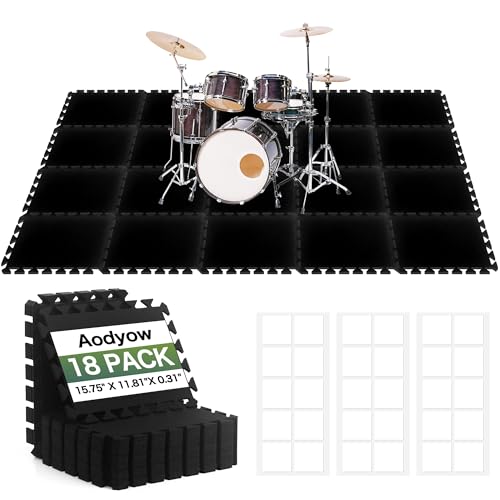
Best for Custom Coverage – 18-Piece Felt Floor Pads
For music rooms that need adaptable floor coverage, this 18-piece set uses high-density felt panels with interlocking edges. The mats are designed to absorb sound and impacts, reduce vibration from drums and pianos, and stay in place with included removable adhesive strips.
Best For: Drum kits, pianos, home studios, and multipurpose rooms where customizable, removable floor protection is useful.
Pros:
- High-density felt helps reduce echoes, reverberation, and instrument vibration.
- Interlocking panels provide a flat installation and can be cut with a utility knife.
- Includes 50 removable double-sided adhesive strips for added slip resistance.
- Panels can be removed, stacked, and stored conveniently.
Cons:
- The 0.3-inch thickness may offer less cushioning than thicker floor systems.
- Cutting panels for a custom fit requires a utility knife.
- The felt surface is designed for indoor use and may not suit wet areas.
This is one of the more flexible choices for renters or users who frequently rearrange their setup. Its larger panel format, cuttable construction, and removable strips make it useful for both permanent and temporary music-room layouts.
Best for Large Floor Areas – 24-Pack Carpet Tiles
This 24-pack is a strong floor-focused option among soundproofing mats for music rooms, covering up to 24 square feet with high-density polyester felt tiles. The interlocking design helps create a comfortable, protective surface for practice areas while dampening ambient noise and vibrations.
Best For: Larger music-room practice zones, home offices, light gyms, and setups requiring broad hardwood or tile floor coverage.
Pros:
- 24 tiles cover up to approximately 24 square feet.
- High-density felt helps absorb ambient noise and dampen vibrations.
- Soft, scratch-resistant surface protects hardwood and tile floors.
- Tool-free interlocking assembly allows easy installation and repositioning.
Cons:
- The 0.3-inch felt construction is intended for sound reduction and protection, not heavy impact cushioning.
- It is best suited to light home-gym use rather than high-impact training.
- Custom corner fitting requires cutting the tiles with a utility knife.
With the largest stated coverage of these floor options, this set suits buyers who want to cover a broader practice or equipment area. The dark grey finish and carpet-like surface also make it easier to integrate into a home interior.
Piano Floor Protection – Soundproof Rug for Upright Piano
For shoppers comparing soundproofing mats for music rooms, this piano-specific rug focuses on cushioning keyboard percussion and pedal operation while helping keep an upright piano stable. Its rectangular 160 x 70 cm format is suited to placement beneath a piano.
Best For: Upright piano owners who want a washable, non-slip mat for floor protection and reduced playing noise.
Pros:
- Designed to reduce sound and shock from keyboard percussion and pedal operation.
- Non-slip backing helps keep the rug in place.
- Machine washable, water resistant, and described as wear resistant.
- Formaldehyde-free polyester-blend construction.
Cons:
- The 160 x 70 cm size is tailored to piano placement rather than broad room coverage.
- A single rug may offer less flexibility than modular mats for irregular spaces.
This is a straightforward choice when your priority is a neat, piano-focused floor layer rather than full-room acoustic treatment. The non-slip backing and washable construction add practical everyday convenience.
Modular Studio Control – 20-Piece Interlocking Felt Mats
These modular soundproofing mats for music rooms combine high-density felt cushioning with a puzzle-style layout. The 20-piece set is useful when you need to cover a practice area, place mats beneath equipment, or trim sections around furniture and room corners.
Best For: Apartment musicians, home studios, and multipurpose rooms needing portable vibration and echo reduction.
Pros:
- High-density 150 kg/m³ felt helps absorb drum, piano, and equipment impacts.
- Interlocking design helps keep instruments, chairs, and equipment from shifting.
- 0.4-inch thickness is intended to reduce reverb and ringing.
- Can be trimmed, stacked for storage, and reinforced with included double-sided strips.
Cons:
- The modular pieces require assembly before use.
- Coverage depends on the arrangement and the 11 x 11-inch panel size.
This set stands out for flexible placement and easy storage. It is a practical option for renters or shared spaces where you want to target vibration under instruments and equipment without installing a permanent floor treatment.
Flexible Acoustic Coverage – 24-Piece Felt Floor Mats
For music rooms that need adjustable coverage, these soundproofing mats for music rooms use 24 interlocking high-density felt panels. Arrange the pieces around drums, pianos, or other equipment to create a flat floor layer, with the option to expand or reduce the layout as needed.
Best For: Music studios and multipurpose rooms that need configurable coverage for instruments and hard floors.
Pros:
- High-density felt cushions hard floors and isolates instrument vibrations.
- Interlocking construction creates a smooth, wrinkle-free surface when assembled correctly.
- 24 panels can cover up to 20.5 square feet and be rearranged as needed.
- Detaches and stacks neatly, with removable double-sided tape for added grip.
Cons:
- At 0.3 inches thick, it is thinner than some heavier cushioning options.
- It requires assembly and careful placement to achieve a flat surface.
This set offers more pieces than a small single mat, making it a useful compromise between targeted equipment pads and broad floor coverage. Its modular format is especially convenient when your room layout changes.
Best Overall Coverage – TroyStudio Interlocking Acoustic Floor Mats
For shoppers comparing soundproofing mats for music rooms, this 24-piece TroyStudio set offers broad coverage in a modular, easy-to-fit format. The high-density felt is designed to absorb room sound while helping dampen vibrations from drums, pianos, and speakers.
Best For: Covering a larger music-studio area or creating a custom drum and piano zone.
Pros:
- 24 interlocking 11-by-11-inch panels cover about 20.24 square feet.
- High-density polyester felt has a stated NRC of 0.7 and average absorption coefficient of 0.75.
- Includes removable double-sided tape and can be cut with a knife for a customized fit.
- Designed to help protect hardwood floors while providing a non-slip, cushioned surface.
Cons:
- Not water resistant, so it is intended for indoor dry areas.
- The individual panels may require assembly across the full coverage area.
This is a flexible choice when coverage and customization matter. Its interlocking design, cuttable felt, and included tape make it practical for building a dedicated instrument or studio-floor section.
Best for Compact Instrument Areas – 16-Piece Interlocking Drum Rug
These compact soundproofing mats for music rooms combine 0.4-inch-thick felt with an interlocking layout for a stable instrument area. The 16-piece set is sized for drums, pianos, or other equipment where vibration reduction and floor protection are priorities.
Best For: Small to medium instrument setups that need a thicker, defined floor mat.
Pros:
- Includes 16 panels measuring 11.8 by 11.8 inches and 0.4 inches thick.
- High-density felt is listed at 150 kg/m³ and can cover up to 17 square feet.
- Interlocking construction creates a flat surface intended to reduce wrinkles and movement.
- Includes double-sided tape and is described as non-toxic and odorless.
Cons:
- The 16-piece set provides less coverage than larger multi-panel options.
- It is not described as water resistant.
With its relatively thick 0.4-inch construction and focused coverage, this gray set suits musicians who want a dedicated, cushioned area without committing to a full-room installation.
Best Expandable Setup – 20-Piece High-Density Felt Floor Mats
If you want soundproofing mats for music rooms that can be expanded over time, this 20-piece puzzle-style set is easy to assemble and combine with additional sets. Its high-density felt cushions hard floors, absorbs some room sound, and helps dampen instrument-related vibration.
Best For: Modular studio layouts, drum areas, and buyers who may add coverage later.
Pros:
- 20 interlocking panels measure 11.8 by 11.8 inches and are 0.4 inches thick.
- Provides up to 17 square feet of coverage and can be combined with multiple sets.
- Includes 48 pieces of removable double-sided tape for added stability.
- Helps protect hardwood floors from scratches, knocks, sweat, and other fluids.
Cons:
- A single set covers less than 20 square feet.
- The black felt design may require regular cleaning to maintain its appearance.
- These mats are intended for floor cushioning and sound absorption rather than complete room sound isolation.
This set stands out for its expandable puzzle-piece format. It is a sensible option for a growing music room where you want to start with one instrument area and add more floor coverage later.
How We Picked the Best Soundproofing Mats for Music Rooms
We focused on mats designed for instruments and music equipment, prioritizing high-density construction, interlocking coverage, non-slip surfaces, and vibration-dampening materials. We also considered thickness, piece dimensions, ease of installation, floor protection, and how easily each option can be expanded or rearranged.
Because floor mats do not fully soundproof a room on their own, we treated them as one part of a broader noise-control setup. They are most useful for reducing impact noise, rattling, and vibration transmitted through floors and equipment contact points.
Quick Comparison
| Mat type | Best for | Main advantage | Watch for |
|---|---|---|---|
| Interlocking foam or felt tiles | Drums, keyboards, practice areas | Flexible coverage and easy installation | Edges may separate under heavy movement |
| Thicker high-density tiles | Heavier instruments and equipment | More cushioning and vibration control | Can cost more and take up more space |
| Piano or drum rugs | Single instruments | Simple, focused floor protection | Less adaptable than modular tiles |
| Carpet-style tiles | Shared music rooms and studios | Comfortable, finished appearance | May provide less impact absorption than thicker mats |
Key Buying Factors for Soundproofing Mats for Music Rooms
Thickness and Density
Thicker, denser mats generally provide better cushioning beneath drum kits, piano legs, speaker stands, and other vibration sources. Check the listed thickness rather than judging by appearance, and choose a denser design when supporting heavy equipment.
Coverage and Configuration
Measure the instrument footprint plus the space needed for pedals, stools, stands, and movement. Interlocking pieces work well when you want to build a custom-sized practice zone or extend coverage later.
Grip and Floor Compatibility
Look for non-slip backing or textured surfaces, especially beneath drum hardware and keyboards. Confirm that the material is suitable for your flooring and use a protective underlayer if the manufacturer recommends one.
Cleaning and Maintenance
Music rooms collect dust, fibers, and spilled drinks. Removable tiles and wipe-clean surfaces are easier to maintain than permanently installed carpet. Let mats dry fully before placing equipment back on them.
Who Should Buy Which Soundproofing Mats for Music Rooms?
Choose thick interlocking mats if you need flexible coverage beneath a drum kit, piano, or multiple pieces of equipment. A dedicated piano or drum rug is a better fit when you want a quick, focused solution for one instrument. Carpet tiles suit rooms where appearance and comfort matter as much as basic floor protection, while compact puzzle pieces work well for renters or anyone who frequently rearranges a practice space.
For the strongest results, combine a mat with wall panels, soft furnishings, careful speaker placement, and vibration isolation under individual equipment feet. This layered approach is more effective than relying on any single product to eliminate sound transmission.