A good podcast room needs more than a microphone and interface. Reflections from walls, footfall, equipment vibration, and noise passing through floors can all reduce recording quality.
These 10 options cover mass-loaded barriers, floor mats, interlocking pads, and acoustic foam panels, giving you practical ways to control room sound without treating every surface the same way.
Best 10 Soundproofing Mats for Podcast Rooms Picks for 2026
Heavy-Duty Barrier
VEVOR Mass-Loaded Soundproofing Mat

- 200-mil, three-layer construction
- Self-adhesive backing
- 36 sq. ft. cut-to-size roll
Best For: DIY builders creating targeted barrier layers
Modular Floor Control
Aodyow Interlocking Sound-Absorbing Mats
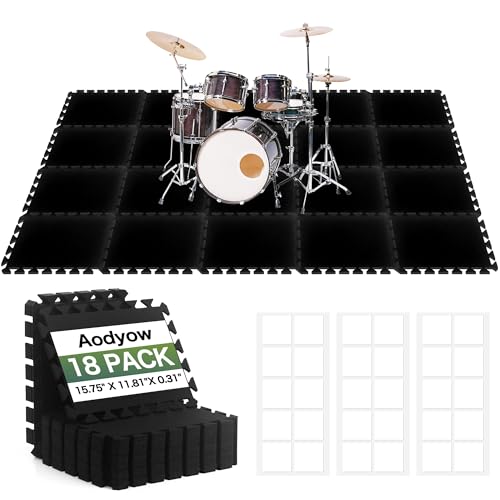
- 18 interlocking felt panels
- Damps equipment and floor vibration
- Cuttable and slip resistant
Best For: Studios needing portable floor and equipment isolation
Echo Reduction Pick
54-Pack Acoustic Foam Wall Panels

- 54 one-inch foam panels
- Wedge-cut layout flexibility
- Adhesive pads included
Best For: Reducing podcast-room echo and reverberation
Premium Drum Isolation
Auralex HOVERMAT Acoustic Barrier

- 4-by-6-foot portable mat
- Reduces mechanical vibration
- Non-slip vinyl construction
Best For: Podcast studios recording drums or percussion
Best Overall Acoustic Treatment
BXI High-Density Absorption Panels

- 200 kg/m³ polyester-fiber construction
- Listed NRC of 0.95 for echo reduction
- Covers 7.7 square feet per six-pack
Best For: Compact podcast rooms needing flexible wall or ceiling absorption
Best Self-Adhesive Mat
uxcell 6mm Audio Noise-Absorbing Mat
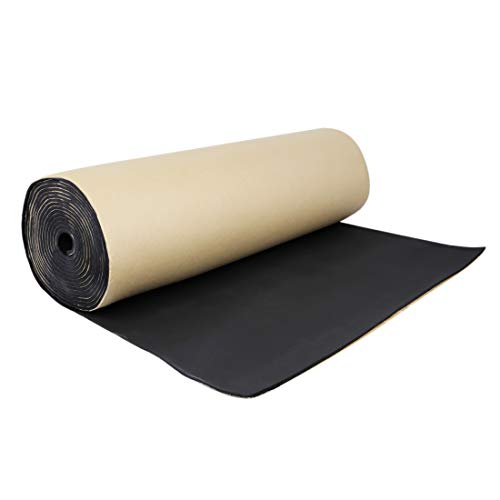
- 6mm closed-cell foam construction
- Waterproof and moisture-resistant
- Self-adhesive and easy to cut
Best For: Targeted lining on hard surfaces where thin, flexible installation is useful
Best Foam Panel Kit
1-Inch Wedge Acoustic Foam Panels

- Twelve 12-by-12-inch wedge panels
- Includes 60 pieces of mounting tape
- Designed to reduce echo and flutter echoes
Best For: Small podcast rooms needing quick, removable-style foam treatment
Flexible Floor Coverage
Interlocking Felt Soundproof Mats

- 20 puzzle pieces cover up to 17 square feet
- High-density felt absorbs impact and echo
- Includes removable tape for added grip
Best For: Modular floor treatment around podcast equipment
Wall-Mounted Acoustic Control
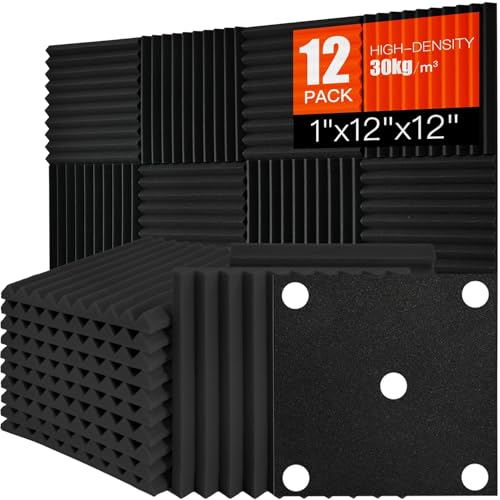
- Twelve panels cover 12 square feet
- Wedge foam reduces reflections and reverberation
- Works on walls, doors, or ceilings
Best For: Podcast booths and vocal recording spaces
Expanded Studio Floor Treatment
TroyStudio Felt Soundproof Mats

- Twenty-four tiles cover about 20.24 square feet
- NRC 0.7 supports sound absorption
- Cuttable, interlocking, and supplied with grip tape
Best For: Studio floors with podcast and music equipment
Heavy-Duty Barrier – VEVOR Mass-Loaded Soundproofing Mat
For podcast rooms that need a dense barrier layer, this VEVOR roll offers 36 square feet of 200-mil, three-layer material. Although listed for vehicle noise reduction, its cut-to-size format may suit DIY wall, door, or enclosure projects where a waterproof, fire-resistant layer is useful.
Best For: DIY builders seeking a dense, adhesive-backed barrier material for custom soundproofing projects.
Pros:
- 200-mil high-density foam construction in a three-layer design.
- Self-adhesive backing simplifies installation without separate adhesive.
- 36-square-foot roll can be cut for irregular spaces.
- Aluminum foil surface is described as heat-resistant, waterproof, and fire-resistant.
Cons:
- Designed and recommended for vehicle noise reduction rather than specifically for podcast rooms.
- A rolling tool is not included.
- A single roll may not cover a complete room.
This is a practical barrier layer for targeted DIY treatment, but podcast-room builders should plan coverage carefully and avoid treating it as a complete acoustic solution on its own.
Modular Floor Control – Aodyow Interlocking Sound-Absorbing Mats
These interlocking pads are a useful floor-focused option among soundproofing mats for podcast rooms, especially where footsteps, equipment movement, or instrument vibration could affect recordings. The 18-piece set uses dense felt panels that can be assembled, cut, stacked, or removed as needed.
Best For: Podcast rooms with drum kits, pianos, studio equipment, treadmills, or other vibration-producing gear.
Pros:
- 18 panels provide modular coverage and flexible layout options.
- High-density 150 kg/m³ felt is designed to absorb sound and damp vibration.
- Interlocking edges help create a flat, slip-resistant setup.
- Included adhesive strips can improve grip, while panels can be cut with a utility knife.
Cons:
- Each panel measures only 15.7 by 11.8 inches, so larger rooms require multiple sets.
- Its floor-mat format is not intended as a wall or ceiling treatment.
- The supplied information emphasizes absorption and vibration damping, not full room sound isolation.
Choose this set when floor vibration and equipment stability are the main concerns. Its modular design is convenient for small recording zones, though it will not replace broader wall and ceiling treatment.
Echo Reduction Pick – 54-Pack Acoustic Foam Wall Panels
For controlling reflections in a podcast room, this 54-pack of one-inch polyurethane foam panels provides broad wall coverage in a lightweight, wedge-cut format. It is aimed at reducing echoes and reverberation so spoken audio sounds clearer and more controlled.
Best For: Podcasters who need an easy wall or ceiling treatment for echo and reverberation control.
Pros:
- 54 panels offer substantial coverage for arranging treatment across a room.
- Wedge-cut surfaces can be configured for different room layouts.
- Included adhesive pads enable tool-free mounting.
- High-density polyurethane foam is designed for durable acoustic treatment.
Cons:
- Foam panels address echoes and reverberation rather than serving as a heavy sound-blocking barrier.
- Adhesive pads require clean, dry, smooth surfaces.
- Uneven, dusty, damp, or peeling walls may need a more secure mounting method.
This is the most straightforward choice for improving speech clarity inside a room. Use it to manage reflections, while pairing it with other measures if the goal is to block sound entering or leaving the podcast space.
Premium Drum Isolation – Auralex HOVERMAT Acoustic Barrier
Auralex Acoustics HOVERMAT HoverMat Portable Acoustic Barrier Non-Slip Drum Mat, 48" x 72"
Check Price On AmazonThe Auralex HOVERMAT is a 4-by-6-foot, one-inch portable barrier designed to reduce mechanical vibration beneath drums and percussion. For podcast rooms that also host musical equipment, it can help limit floor-borne transmission and sympathetic resonance while keeping the setup portable.
Best For: Recording spaces with drums or percussion where floor vibration and room resonance need to be reduced.
Pros:
- Provides sonic isolation between drums and the supporting floor.
- Non-slip vinyl construction helps keep equipment positioned.
- Designed to reduce sympathetic resonance and improve drum clarity.
- Portable 48-by-72-inch format is easy to place for targeted treatment.
Cons:
- Its specialized drum-focused design may be excessive for a voice-only podcast room.
- It is not water resistant and should be spot cleaned.
- One mat covers a targeted area rather than an entire room.
This is a focused floor-isolation solution rather than a general wall treatment. It makes the most sense when a podcast studio also records percussion or needs to control vibration from a large floor-based setup.
Best Overall Acoustic Treatment – BXI High-Density Absorption Panels
For podcast rooms that need less echo and reverb, the BXI panels are a practical choice among soundproofing mats for podcast rooms. Their polyester-fiber construction is designed to absorb sound energy, and the six-panel pack covers 7.7 square feet for wall or ceiling treatment.
Best For: Podcasters who want broad mid-to-high-frequency absorption with cuttable panels for flexible placement.
Pros:
- High-density 200 kg/m³ polyester fiber with a listed NRC of 0.95.
- Helps reduce echo, reverb, and mid-to-high-frequency noise.
- Odorless, non-toxic, formaldehyde-free, and Class B1 flame retardant.
- Can be cut and mounted with construction adhesive or double-sided tape.
Cons:
- The six-pack covers only 7.7 square feet.
- Mounting adhesive or tape is sold separately.
- At 0.4 inches thick, it is primarily suited to general absorption rather than substantial low-frequency control.
Choose this set when clean vocal recording and echo reduction are the priority. Its manageable size and cuttable fiber construction make it easy to arrange around a compact podcast setup.
Best Self-Adhesive Mat – uxcell 6mm Audio Noise-Absorbing Mat
uxcell 236mil 6mm Audio Stereo Sound Acoustic Noise Absorbing Mat Dampening Mat 19.7"x31.5"
Check Price On AmazonThe uxcell mat is a flexible, self-adhesive option among soundproofing mats for podcast rooms. Its 6mm closed-cell foam construction is waterproof and moisture-resistant, making it useful where a thin liner is preferred for walls, ceilings, or other hard surfaces.
Best For: Buyers seeking a cuttable, moisture-resistant foam mat for targeted acoustic lining and insulation.
Pros:
- 6mm-thick closed-cell foam with waterproof and moistureproof properties.
- Self-adhesive backing simplifies installation.
- Flexible, lightweight, and easy to handle and cut.
- Resists oil and petrol and provides insulation against heat and cold.
Cons:
- The single mat measures 19.7 by 31.5 inches, limiting total coverage.
- Its recommended use is automobiles, so podcast-room placement may require careful surface selection.
- The notes do not provide an NRC rating or specific podcast-room acoustic performance data.
This mat makes the most sense for small, targeted applications rather than covering an entire room. Consider it when moisture resistance and adhesive installation matter more than a complete acoustic-treatment system.
Best Foam Panel Kit – 1-Inch Wedge Acoustic Foam Panels
This 12-pack of wedge foam panels is a straightforward option for podcast rooms that need help with echoes, reverb, and flutter echoes. Each 12-by-12-inch panel is 1 inch thick, and the included 60 pieces of double-sided tape support quick installation in home studios, offices, or rental spaces.
Best For: Podcasters who want an easy-to-install foam treatment kit with flexible placement and multiple color options.
Pros:
- Wedge profile is designed to reduce echo, reverb, standing waves, and flutter echoes.
- Includes 60 pieces of double-sided adhesive tape.
- Panels are easy to cut and suitable for temporary or permanent setups.
- Foam is described as non-toxic, odor-free, and flame resistant.
Cons:
- The 12-pack covers 12 square feet total, so larger rooms may need multiple packs.
- At 1 inch thick, it may provide limited low-frequency control despite the product’s bass-trap claim.
- Vacuum-sealed panels require 24–48 hours to expand fully.
This kit is a convenient starting point for improving speech clarity in a small podcast room. Plan the layout before applying the included tape, and allow the panels to recover their full shape before installation.
Flexible Floor Coverage – Interlocking Felt Soundproof Mats
For shoppers comparing soundproofing mats for podcast rooms, this 20-piece high-density felt set offers a customizable floor-level option. The interlocking tiles can help absorb foot-traffic impact, reduce reverb, and protect hard flooring beneath a recording setup.
Best For: Podcast rooms needing flexible floor coverage, under-desk cushioning, or added vibration and impact dampening.
Pros:
- Twenty 11.8-by-11.8-inch tiles provide up to 17 square feet of coverage.
- Interlocking puzzle design is easy to assemble, remove, and expand with additional sets.
- High-density felt helps absorb shock, reduce echo, and protect floors from scratches and spills.
- Includes 48 pieces of removable double-sided tape for added stability.
Cons:
- Coverage is limited to about 17 square feet per set.
- These floor mats address room reflections and vibration, rather than providing structural sound isolation.
This is a practical choice when you want a low-profile, rearrangeable floor treatment around a podcast desk, microphone stand, or other equipment. Its modular design makes it easier to fit irregular spaces than a single large mat.
Wall-Mounted Acoustic Control – 1-Inch Acoustic Foam Panels
These 1-inch wedge foam panels are a wall-focused option for soundproofing mats for podcast rooms, helping manage reflections and reverberation around microphones. The lightweight 12-pack covers 12 square feet and can be installed on walls, doors, or ceilings.
Best For: Podcast booths, vocal recording spaces, streaming setups, and home offices where clearer speech and reduced room echo are priorities.
Pros:
- High-density polyurethane foam is designed to reduce reflections and reverberation.
- Twelve 12-by-12-inch panels provide 12 square feet of acoustic coverage.
- Suitable for podcasting, live streaming, broadcasting, offices, and music practice rooms.
- Lightweight panels install with included nano double-sided tape or construction adhesive.
Cons:
- Panels are vacuum packed and may require 24–48 hours to fully expand.
- Foam treatment improves room acoustics but does not replace structural soundproofing.
- Only 12 square feet of coverage is included, so larger rooms may require multiple packs.
For a podcast room with noticeable voice reflections, this set is the most direct wall-treatment option in the group. Plan the layout before installation, and allow the panels time to regain their full shape after unpacking.
Expanded Studio Floor Treatment – TroyStudio Felt Soundproof Mats
For podcast rooms that also contain stands, speakers, drums, or other vibration sources, these TroyStudio mats provide a larger interlocking floor surface. The 24 polyester-felt tiles are rated for sound absorption and vibration dampening while adding protection under equipment.
Best For: Music-oriented podcast rooms, studio floors, and setups needing coverage beneath instruments, speakers, chairs, or exercise equipment.
Pros:
- Twenty-four tiles fit an area of roughly 4 by 6 feet and provide 20.24 square feet of stated coverage.
- High-density polyester felt has an NRC of 0.7 and an average absorption coefficient of 0.75.
- Interlocking construction creates a flat, non-slip surface for equipment and foot traffic.
- Tiles can be cut with a knife and include 36 pieces of removable double-sided tape.
Cons:
- The mats are not water resistant and are intended for indoor use.
- At 0.32 inches thick, they provide less thickness than some heavier floor mats.
- Floor treatment reduces reflections and vibration but is not full structural sound isolation.
This set is a strong fit when floor coverage and equipment stability matter more than wall treatment. Its larger 24-piece layout and stated absorption ratings make it useful for combining a podcast workstation with music or studio gear.
How We Picked the Best Soundproofing Mats for Podcast Rooms
We compared these products by their intended acoustic role, construction, coverage, thickness, installation style, and suitability for typical home podcast rooms. The list includes both sound-absorbing products and sound-dampening barriers because they solve different problems. Foam and felt generally reduce reflections and reverberation inside a room, while dense mats and mass-loaded materials are better suited to limiting vibration or adding mass to a structure.
We also considered practical factors such as whether a product works on floors or walls, how easily it can be trimmed or repositioned, and whether its format makes sense for a small recording space. Product specifications can vary by seller, so confirm dimensions, coverage, and material details before ordering.
Quick Comparison
- Best for adding mass: VEVOR Noise Grabber Mass Barrier.
- Best for floor vibration control: TroyStudio or interlocking felt floor mats.
- Best for wall echo reduction: The 54-pack, 12-pack, and other acoustic foam panels.
- Best portable option: Auralex Acoustics HOVERMAT.
- Best for targeted equipment isolation: uxcell acoustic dampening mat.
Key Buying Factors for Soundproofing Mats for Podcast Rooms
Absorption Versus Blocking
Acoustic foam and felt panels absorb some reflected sound, helping voices sound less harsh and reducing flutter echo. They do not usually stop voices or traffic from passing through walls. For transmission problems, look for dense, heavy materials such as mass-loaded vinyl or other barrier mats, and use them as part of a properly sealed wall, door, or floor assembly.
Placement and Coverage
Identify the dominant problem before buying. Use wall panels at first-reflection points and behind or beside speakers, floor mats beneath stands or instruments, and dense barriers where sound leakage or structural vibration is the concern. A small number of thick, strategically placed products can be more useful than covering a room randomly.
Thickness, Density, and Fit
Thicker or denser material is not automatically better for every application. Check the product’s dimensions, total coverage, weight, and whether it can fit around furniture, stands, cables, and doors. Interlocking mats are convenient for flexible floor layouts, while rolls can provide broader continuous coverage but may require cutting and secure installation.
Safety and Installation
For wall-mounted foam, use an attachment method that will not damage the wall or cause panels to fall. Keep foam and mats away from heaters, electrical equipment, and blocked exits. If using a product in a permanent construction assembly, verify its fire-rating information and follow local building requirements.
Who Should Buy Which Soundproofing Mats for Podcast Rooms?
Choose acoustic foam panels if your main issue is a lively, echoing voice recording. Choose interlocking floor mats if footsteps, chair movement, drum pedals, microphone stands, or other equipment create vibration and impact noise. Choose a dense roll or dampening mat when you need to add mass or isolate a specific surface, but do not expect a loose mat alone to fully soundproof a room.
For a flexible setup, combine wall absorption with a floor mat beneath the desk, microphone stand, or instruments. Buyers recording in rented rooms may prefer portable panels and non-permanent mats, while dedicated studios can benefit from a more complete treatment plan that addresses walls, ceiling, doors, windows, and ventilation paths.