The right door seal can make a noticeable difference in a home studio, helping reduce sound leakage while also blocking drafts, dust, odors, and unwanted light. The options in this roundup include adhesive foam and rubber strips, silicone seals, and adjustable under-door sweeps.
Use the guide below to compare fit, material, installation, and gap coverage before choosing a seal for your recording, mixing, streaming, or practice space.
Best 10 Studio Door Seals for Home Studios Picks for 2026
Quiet-Room Door Sweep
Flexible PVC Noise-Reducing Seal

- Helps reduce bottom-door noise and drafts
- Flexible PVC construction
- Suitable for residential and office doors
Best For: Simple threshold sealing in home studios and quiet rooms
Clear Perimeter Seal
T-Shaped Silicone Weather Stripping

- 20-foot cut-to-fit roll
- Two adhesive faces for a secure hold
- Clear silicone helps reduce drafts and noise
Best For: Discreet sealing around door edges and frames
High-Coverage Gap Tape

- 33 feet for extensive sealing projects
- Cut-to-fit flexible foam construction
- Intended for insulation and sound insulation
Best For: DIY sealing of irregular or multiple studio-door gaps
Fast-Fit Door Sweep
Silicone Bottom Seal for Gaps up to 1.5 Inches

- 39-inch trim-to-fit silicone sweep
- Designed for quick adhesive installation
- Fills bottom gaps up to 1.5 inches
Best For: Large threshold gaps needing a quick draft and noise barrier
Large-Gap Draft Control

- Fits 5/16–15/32-inch gaps
- Flexible, rebound-resistant EPDM profile
- Helps reduce drafts, dust, light leaks, and some noise
Best For: Home studio doors with large or uneven frame gaps
Door-Bottom Noise Barrier
Adjustable Silicone Draft Stopper

- Seals bottom gaps from 0 to 1.5 inches
- Flexible over carpet and uneven floors
- Helps muffle noise and block drafts
Best For: Studio doors with substantial under-door gaps
Budget Under-Door Blocker
HomeProtect 36-Inch Draft Stopper

- Covers bottom gaps up to 1.5 inches
- Fits doors up to 36 inches
- Helps reduce drafts, light, odors, and noise
Best For: Large bottom-door gaps on a budget
Long-Run Frame Seal
Black D-Shape Weather Stripping
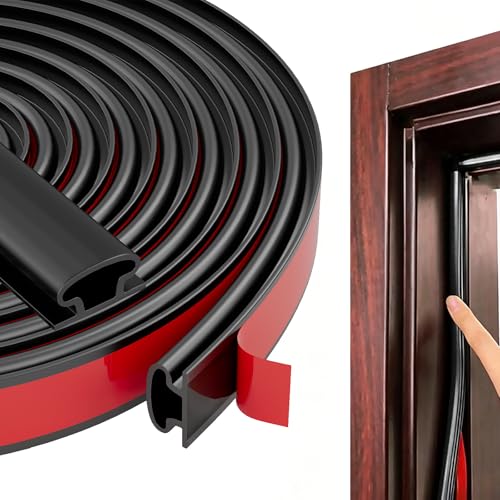
- Includes 50 feet of cut-to-size strip
- Fits 0.1- to 0.22-inch gaps
- Helps reduce drafts, noise, rattles, and light
Best For: Narrow frame gaps requiring extensive coverage
Wide Clear Gap Seal
Clear Silicone Door Frame Strip

- Fits gaps from 0 to 15mm
- Clear, flexible 25mm-wide silicone
- Includes corner pads, cloth, and scraper
Best For: Smooth frames needing discreet, wider sealing
Quiet-Room Door Sweep – Flexible PVC Noise-Reducing Seal
For shoppers comparing studio door seals for home studios, this PVC bottom-door draft stopper is a straightforward option for reducing noise, drafts, and air movement at the door threshold. Its flexible black seal is designed for residential, office, and similar indoor settings.
Best For: Bedrooms, offices, and home studios that need a simple bottom-of-door seal.
Pros:
- Designed to help reduce noise and drafts at the bottom of the door.
- Flexible PVC construction fits a practical range of indoor doors.
- Useful for residential, office, and hotel-style settings.
Cons:
- The supplied details do not specify dimensions or maximum gap coverage.
- Only one seal is included.
This is a basic threshold-focused choice rather than a full door-frame sealing system. Confirm the door width and gap before ordering, especially if your studio needs extensive perimeter coverage.
Clear Perimeter Seal – T-Shaped Silicone Weather Stripping
This clear T-shaped silicone strip is a useful candidate among studio door seals for home studios when you need to address gaps along the door edge or frame. It uses two adhesive faces for a more secure hold and comes in a 20-foot roll that can be cut to length.
Best For: Door-edge and frame gaps where a discreet, flexible seal is preferred.
Pros:
- Two adhesive surfaces are intended to provide a stable attachment.
- Clear silicone blends with different door colors.
- 20 feet of material can be measured and cut for multiple sections.
- Designed to help reduce drafts, dust, and outside noise.
Cons:
- Requires careful surface cleaning and preparation before installation.
- Adhesive may need warming in cold weather to improve adhesion.
- Fit depends on matching the strip to the door gap and mounting surface.
For a home-studio door with perimeter leaks, this is more adaptable than a bottom-only sweep. Measure the gap and verify the mounting surface before applying the adhesive.
High-Coverage Gap Tape – 33-Foot EVA Foam Door Seal
When a studio door has varied or oversized gaps, this 33-foot self-adhesive EVA foam strip offers plenty of material for a custom sealing job. It is marketed for doors and windows and is also intended to provide insulation and sound-insulation benefits.
Best For: Larger or irregular gaps requiring a cut-to-fit foam strip.
Pros:
- 33 feet of material supports multiple door or frame sections.
- Flexible foam can be cut for different gap sizes and applications.
- Mesh adhesive backing is designed for stronger attachment.
- Suitable for sealing, insulation, cushioning, and sound insulation.
Cons:
- Foam tape may be less visually discreet than clear silicone.
- Installation still depends on a clean, suitable surface.
- The supplied details do not specify an exact compression range or gap limit.
This is a versatile, high-coverage option for DIY studio treatment, particularly when one standard door seal will not cover every gap. Plan the layout before cutting to avoid waste.
Fast-Fit Door Sweep – Silicone Bottom Seal for Gaps up to 1.5 Inches
This silicone door sweep is a practical option among studio door seals for home studios when the main leak is beneath the door. The 39-inch adhesive strip is designed to install quickly, can be trimmed, and is rated to fill gaps up to 1.5 inches.
Best For: Doors with a substantial bottom gap where fast installation and broad coverage matter.
Pros:
- Designed to install in under one minute after cleaning the door surface.
- 39-inch length can be trimmed to fit.
- Silicone construction and thick chambers help reduce drafts and ambient noise.
- Specified maximum gap fill is up to 1.5 inches.
Cons:
- It addresses the bottom of the door rather than the full perimeter.
- The supplied dimensions indicate a 2-inch height, which may be visible on some doors.
- Only one strip is included.
Choose this sweep when the threshold is the primary sound and air pathway. For stronger studio isolation, pair a suitable bottom seal with separate perimeter weatherstripping if the door frame also has gaps.
Large-Gap Draft Control – Flexible D-Shaped EPDM Seal
For studio door seals for home studios with uneven or sizable frame gaps, this 20-foot D-shaped EPDM strip is a practical option. Its hollow profile is designed for closed gaps from 5/16 to 15/32 inch and may help reduce drafts, dust, light leaks, and some outside noise.
Best For: Home studio doors or windows with large, uneven gaps that need a flexible adhesive seal.
Pros:
- Fits relatively large 5/16–15/32-inch gaps.
- Flexible EPDM rubber compresses and rebounds through repeated use.
- Mesh-reinforced adhesive backing and a 20-foot length support a secure, customizable installation.
- May help reduce drafts, dust, light leaks, and some outside noise.
Cons:
- Requires careful gap measurement before installation.
- The surface must be clean and dry, and the adhesive may need warming in cold weather.
- It needs about 24 hours to bond fully.
This is the strongest fit of the three when your studio door has a noticeably wide or irregular perimeter gap. Measure the closed gap first, then allow the adhesive curing time before regular use.
Door-Bottom Noise Barrier – Adjustable Silicone Draft Stopper
When sound and airflow are entering beneath a studio door, this 39-inch silicone door sweep addresses the bottom gap rather than the frame sides. It adjusts to gaps from 0 to 1.5 inches and may help muffle outside noise while also limiting drafts, dust, and pests.
Best For: Interior or exterior studio doors with a noticeable bottom gap, including doors over carpet or uneven floors.
Pros:
- Adjustable design covers bottom gaps up to 1.5 inches.
- Flexible silicone can glide over carpet and uneven flooring.
- Hollow arc design helps muffle noise as well as block airflow.
- Wide adhesive backing is intended to resist lifting during door use.
Cons:
- It addresses the underside of the door, not perimeter gaps around the frame.
- Adhesion may be weaker on rough or textured surfaces.
- Requires pressing and a 24-hour wait; cold-weather installation may require a hair dryer.
This is a useful complement to frame-mounted studio door seals for home studios when the main leak is under the door. Measure twice and cut once, and avoid frequent opening and closing during the initial bonding period.
Everyday Frame Sealing – Compact TPE D-Profile Strip
For home studios with ordinary door-frame gaps, this 20-foot black TPE D-shaped strip offers a compact sealing profile measuring 3/8 inch wide by 1/4 inch thick. It is designed to reduce airflow, dust, noise, and light gaps around common door-frame areas.
Best For: Studio doors with relatively small, common-size perimeter gaps and smooth, clean mounting surfaces.
Pros:
- Compact 3/8-inch by 1/4-inch profile suits common frame gaps.
- Thickened TPE provides stable rebound and resists easy deformation.
- 20 feet of material can cover multiple frame sections or a larger door.
- Adhesive is intended for wood, metal, glass, and some plastic surfaces.
Cons:
- Its smaller profile is not intended for unusually wide gaps.
- Adhesion depends on a clean, dry, suitable surface and firm pressing.
- The supplied notes describe general reduction of noise and light gaps rather than complete soundproofing.
This is a straightforward choice for sealing modest frame leaks without adding a bulky profile. Confirm the gap dimensions and surface compatibility before applying the strip around your studio door.
Budget Under-Door Blocker – HomeProtect 36-Inch Draft Stopper
For home studios needing an affordable first line of defense, this under-door blocker is a practical option among studio door seals for home studios. Its one-sided design is intended to cover gaps below doors while helping reduce drafts, corridor noise, light, odors, dust, and smoke.
Best For: Interior or exterior doors with gaps up to 1.5 inches, especially when you want a low-cost, removable under-door seal.
Pros:
- Fits doors up to 36 inches wide.
- Designed to cover gaps below 1.5 inches.
- Helps reduce drafts, light, odors, and some outside noise.
- Can be cut to length and installed with adhesive; warming the glue with a hair dryer may improve adhesion.
Cons:
- Only seals the bottom of the door, not the frame sides or top.
- The one-sided design may provide less coverage than a double-sided door stopper.
- Adhesive installation requires accurate measurement and surface preparation.
This is a sensible choice when the main studio problem is a noticeable bottom-door gap and budget matters. For more complete acoustic sealing, pair it with frame weather stripping.
Long-Run Frame Seal – Black D-Shape Weather Stripping
This 50-foot self-adhesive strip offers flexible coverage for door frames and windows, making it useful among studio door seals for home studios. Its thickened TPE construction is designed to help close narrow gaps while reducing drafts, light, dust, odors, rattles, vibrations, and some noise.
Best For: Narrow, consistent gaps from 0.1 to 0.22 inches around door frames, particularly when you need enough material for multiple sections.
Pros:
- Provides a generous 50-foot roll that can be cut to size.
- Designed for gaps measuring 0.1 to 0.22 inches.
- Thickened TPE material is described as resistant to deformation.
- Self-adhesive installation can help reduce rattles, vibrations, and squeaks.
Cons:
- It is intended for relatively narrow gaps and will not suit larger openings.
- Requires a clean, dry surface and 24 hours for the adhesive to bond securely.
- Low temperatures can reduce adhesive performance during installation.
Choose this strip when the door frame has small, measurable gaps and you want a long roll for broad coverage. Measure first, since its narrow gap range is central to getting a good seal.
Wide Clear Gap Seal – Clear Silicone Door Frame Strip
For visible door-frame gaps, this clear silicone strip is a tidy option among studio door seals for home studios. The flexible 25mm-wide material is designed for gaps from 0 to 15mm and includes adhesive pads, a cleaning cloth, and a scraper to support installation on smooth surfaces.
Best For: Smooth door, window, or frame surfaces with gaps up to 15mm where a transparent finish and wider coverage are useful.
Pros:
- Designed to fit gaps from 0 to 15mm.
- Clear silicone is less visually conspicuous than a black seal.
- Includes 16 reinforcement pads for corners and cut ends.
- Comes with a cleaning cloth and yellow scraper for surface preparation and pressing.
Cons:
- The 16.4-foot length is shorter than the 50-foot alternative.
- Adhesive pads are best suited to smooth, clean, dry surfaces.
- It is a frame seal, so it does not directly address a large gap beneath the door.
This model makes sense when you want broad gap coverage without a prominent black strip. Its included installation accessories are helpful for corners and ends, but careful surface preparation remains important.
How We Picked the Best Studio Door Seals for Home Studios
We selected these products based on the needs most relevant to home studios: their ability to close common door gaps, the materials used, installation method, coverage length, and suitability for interior or exterior doors. The lineup includes seals for door frames as well as bottom-of-door draft stoppers, because effective isolation often requires addressing both areas.
These products are primarily intended to reduce air movement, rattling, dust, light, and high-frequency sound leakage. No adhesive strip or door sweep can fully soundproof a room on its own, but eliminating gaps can improve the performance of the rest of a studio’s acoustic treatment.
Quick Comparison
- Best for door bottoms: PVC sweeps, adjustable draft stoppers, and under-door blockers.
- Best for door frames: T-shaped silicone, D-shaped rubber, and self-adhesive foam seals.
- Best for larger gaps: Large-gap D-shaped weather stripping or a properly sized adjustable sweep.
- Best for subtle installations: Clear silicone seals that blend with the door and frame.
- Best for broad coverage: Longer rolls, such as 20- or 33-foot options, for multiple sides or doors.
Key Buying Factors for Studio Door Seals
Measure the Gap First
Measure the clearance around the closed door, including the bottom gap and the width and depth of the frame channels. A seal that is too thin may leave openings, while one that is too thick can prevent the door from closing or place unnecessary pressure on the hinges.
Choose the Right Seal Style
Frame-mounted adhesive strips work well for narrow, consistent gaps around the jamb and head. D-shaped and foam profiles are useful for compressible gaps, while silicone T-shaped seals may provide a cleaner, more durable fit where a compatible channel is available. Door sweeps and draft blockers are better for the larger opening beneath the door.
Consider Material and Durability
Silicone and rubber generally offer better resilience than inexpensive foam, especially in frequently used doors. Foam can be convenient and affordable, but compression and adhesive wear may reduce its effectiveness over time. For a studio door that opens constantly, prioritize a flexible seal with dependable bonding or mechanical attachment.
Check Installation and Removability
Clean and dry the surface before applying adhesive products, then allow the adhesive to set according to the manufacturer’s instructions. Renters or users who regularly reposition equipment may prefer removable or adjustable solutions, while permanent studio doors can justify a more robust installation.
Who Should Buy Which Studio Door Seals for Home Studios?
Choose a bottom-of-door sweep if the main problem is a visible gap beneath the door, cold air, hallway light, or dust entering from underneath. Choose adhesive frame weather stripping if gaps remain along the sides or top of the door. Choose a larger D-shaped profile when the gap is wider than standard foam tape can cover. Choose clear silicone when appearance matters or the seal will be installed on a visible frame. For the strongest overall result, combine a correctly fitted frame seal with a door-bottom sweep, provided the door still opens and latches smoothly.