Stage snakes can make a guitar rig easier to connect, route, and troubleshoot, especially when pedals, amplifiers, mixers, and stage boxes are spread across a live setup.
We selected 10 options covering compact drop snakes, modular systems, XLR breakouts, and multichannel 1/4-inch designs so you can match cable type, channel count, and length to your rig.
Best 10 Stage Snakes for Guitar Setups Picks for 2026
High-Capacity Pick
Seismic Audio 16-Channel XLR Snake

- 16 channels with a 50-foot cable
- Low-profile, rugged stage box
- Shielded conductors and labeled connections
Best For: Large live rigs and professional audio setups
Modular Setup Pick
D'Addario Modular Snake Stage Box
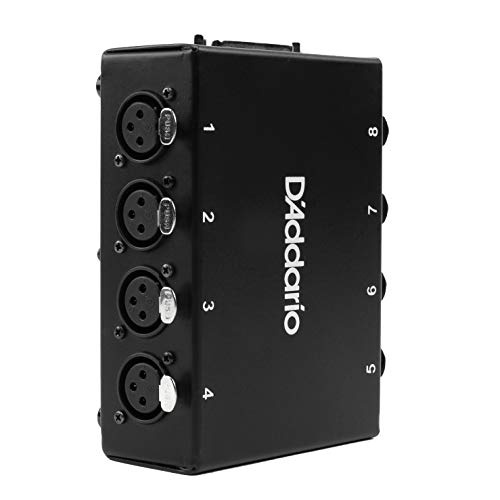
- Four XLR and four combo jacks
- Uses a DB25 modular connection
- Compact rugged enclosure
Best For: Custom stage and studio snake systems
Balanced Mid-Size Pick
Seismic Audio 12-Channel XLR Snake

- 12 channels with 50-foot reach
- Heavy-duty steel stage box
- Shielded conductors and color-coded ends
Best For: Mid-size live stages and studio setups
Compact Line-Level Pick

- Eight 1/4-inch TS channels
- Short 9.8-foot cable length
- Male-to-male unbalanced connections
Best For: Short multi-line audio connections
Low-Profile Choice

- 12 XLR channels
- 25-foot cable length
- Low-profile design
Best For: Multi-channel guitar and monitor setups
Customizable Breakout

- XLR male breakout
- Works with Planet Waves Modular Snake
- Oxygen-free copper conductors
Best For: Modular guitar cable configurations
Balanced Stage Workhorse

- Six channels
- 30-foot length
- Includes storage bag
Best For: Small stages needing balanced XLR runs
Compact 8-Channel Pick

- Eight numbered XLR send channels
- Circuit board helps reduce external noise
- Rugged 25-foot cable for stage or studio use
Best For: Compact live, recording, and guitar-stage setups
Extended-Coverage Pick

- 12 sends plus four returns
- 50-foot reach for larger stages
- Low-profile box with marked connections
Best For: Large live rigs requiring extended XLR routing
High-Count Compact Pick

- 12 sends and four returns
- Numbered connectors simplify routing
- Rugged 25-foot design for stage use
Best For: High-channel guitar rigs with moderate cable distance
High-Capacity Pick – Seismic Audio 16-Channel XLR Snake
For larger stage snakes for guitar setups, this 50-foot Seismic Audio model provides 16 channels with a low-profile stage box. Individually shielded conductors, circuit board technology, and labeled connections are designed to make professional audio connections and setup more manageable.
Best For: Larger live rigs, professional audio connections, and setups needing extended reach and 16 channels.
Pros:
- Offers 16 channels over a 50-foot cable length.
- Low-profile stage box helps reduce footprint.
- Individually shielded conductors help reject outside noise.
- Color-coded and numbered connections simplify setup and teardown.
Cons:
- At 11.5 pounds, it is relatively substantial to transport.
- Its 16-channel capacity may be more than smaller guitar setups require.
This is a strong choice when channel count and stage reach matter most. The labeled, color-coded layout is especially useful for repeatable live setups.
Modular Setup Pick – D'Addario Modular Snake Stage Box
This D’Addario stage box is a flexible option for stage snakes for guitar setups built around a modular system. It includes four XLR female jacks, four XLR-1/4-inch combo jacks, and a DB25 connector for stage or studio use.
Best For: Guitarists and audio technicians who want a compact, modular stage-box configuration for stage or studio work.
Pros:
- Combines four XLR inputs with four XLR-1/4-inch combo jacks.
- DB25 connector supports a modular snake-system design.
- Rugged enclosure is intended to be suitable for road use.
- Compact form is convenient for space-conscious setups.
Cons:
- This is a stage box rather than a complete cable snake.
- Required core cables and breakout components are not included in the supplied details.
Choose this model when you prefer to build a snake around specific cable lengths and connections. It is less of an all-in-one solution, but its modular format can adapt to changing setups.
Balanced Mid-Size Pick – Seismic Audio 12-Channel XLR Snake
For stage snakes for guitar setups that need substantial channel capacity without moving to a 16-channel model, this Seismic Audio snake offers 12 channels and 50 feet of reach. Its low-profile steel stage box, shielded conductors, and labeled ends support organized live or studio connections.
Best For: Mid-size live stages, studio recording, and professional setups requiring 12 XLR channels.
Pros:
- Provides 12 channels and a 50-foot cable length.
- Heavy-duty steel stage box is designed for road-ready use.
- Individually shielded conductor pairs help reduce outside noise.
- Numbered stage-box connections and a color-coded fantail aid setup.
Cons:
- Its 14-pound weight may be cumbersome for smaller mobile rigs.
- It may offer more channels than a simple guitar-only setup needs.
This model balances useful channel capacity with practical organization features. It is a sensible middle ground for players and crews who need more than a compact snake but not the full 16-channel layout.
Compact Line-Level Pick – Hosa 8-Channel 1/4-Inch Snake
For simpler stage snakes for guitar setups, the Hosa CPP-803 uses eight 1/4-inch TS male channels in a compact 9.8-foot cable. Its male-to-male unbalanced connections suit audio production applications where short 1/4-inch runs are more useful than long XLR stage-box systems.
Best For: Short, indoor or outdoor audio connections using multiple 1/4-inch TS lines.
Pros:
- Provides eight 1/4-inch TS channels in one cable.
- Compact 9.8-foot length works for shorter runs.
- Male-to-male connectors are straightforward for compatible audio gear.
- Includes a limited lifetime warranty.
Cons:
- It is much shorter than the 50-foot Seismic Audio snakes.
- Uses unbalanced 1/4-inch TS connections rather than XLR.
- It does not include a stage box.
This Hosa is best viewed as a compact multi-line cable rather than a full stage snake system. Its 1/4-inch TS format makes it practical for compatible short-run audio connections, but less suitable for larger XLR-based stages.
Low-Profile Choice – Whirlwind Mini 12
For stage snakes for guitar setups where space and channel count matter, the Whirlwind Mini 12 provides 12 XLR channels in a 25-foot low-profile design. Its XLR female-to-male configuration suits monitor and other audio connections.
Best For: Guitar rigs and stage systems needing 12 XLR channels over a 25-foot run.
Pros:
- Provides 12 audio channels in one snake.
- 25-foot length supports flexible stage placement.
- Low-profile design and stainless steel construction.
Cons:
- Uses XLR connectors, so it may not suit setups requiring other connector types.
- At 8.78 pounds, it is heavier than a compact breakout cable.
The Mini 12 is a practical pick when a guitar setup needs many balanced XLR runs without using multiple individual cables. Confirm that the 25-foot length and XLR format match your stage layout.
Customizable Breakout – D'Addario Modular Snake
For stage snakes for guitar setups built around the Planet Waves Modular Snake system, this D’Addario XLR male breakout offers a customizable way to configure connections. Oxygen-free copper conductors and gold-plated Amphenol connectors are designed for signal transfer and sound reproduction.
Best For: Modular guitar rigs that need a customizable XLR male breakout.
Pros:
- Designed for use with the Planet Waves Modular Snake system.
- Supports custom cable configurations without buying a full assortment of snakes.
- Uses oxygen-free copper conductors and gold-plated Amphenol connectors.
Cons:
- Its modular-system design may be less useful for standalone snake setups.
- The supplied notes identify it as a breakout component rather than a complete long snake.
This is best viewed as a flexible building block rather than an all-in-one stage snake. It makes the most sense when your guitar setup already uses, or is being assembled around, the compatible modular system.
Balanced Stage Workhorse – Elite Core 6-Channel 30'
For stage snakes for guitar setups that need a straightforward six-channel run, the Elite Core Pro Audio Stage Snake combines 30 feet of cable with fully balanced, shielded channels and returns. Its included storage bag also helps protect the stage box or fan during transport.
Best For: Guitarists and small stage systems needing six balanced XLR channels over 30 feet.
Pros:
- Provides six channels with a 30-foot length.
- Uses 24-gauge shielded lines with foil shielding and drain wires.
- Fully balanced and shielded channels and returns.
- Includes a bag for transport or storage.
Cons:
- Six channels may be limiting for larger multi-microphone setups.
- Uses XLR connectors throughout, so it is not a universal connector solution.
The Elite Core offers a focused balance of reach, channel capacity, and protection for smaller guitar stages. Choose it when six XLR channels are sufficient and the extra five feet over a 25-foot snake benefits your layout.
Compact 8-Channel Pick – 25-Foot XLR Send Snake
For stage snakes for guitar setups where you need several microphone or line connections without a large stage box, this 25-foot PRORECK model offers eight numbered send channels and a low-profile footprint. Its circuit-board construction is designed to support solid connections and help reduce external noise.
Best For: Live performances, recording sessions, stage setups, and studio applications needing eight XLR sends over a 25-foot run.
Pros:
- Eight XLR channels with four female box connectors and eight male fantail connectors.
- Numbered connections make setup and troubleshooting easier.
- Rugged cable material is intended to resist fraying during transport and use.
- Works directly with analog or digital consoles without converters.
Cons:
- The 25-foot length may be limiting for larger stages.
- It provides sends rather than the 12-send/4-return configuration of larger models.
This is a practical choice for compact guitar rigs and smaller stage systems that need organized XLR routing, though larger venues may call for more channels or additional length.
Extended-Coverage Pick – 50-Foot 12×4 XLR Snake
When stage snakes for guitar setups need to reach farther across a venue, this 50-foot model combines 12 send channels with four returns. The low-profile stage box helps reduce footprint, while clearly marked connections simplify routing between the stage and console.
Best For: Larger live, recording, stage, and studio systems that need a 50-foot run, 12 sends, and four return channels.
Pros:
- Provides 12 XLR sends and four XLR returns in a 50-foot configuration.
- Low-profile stage box helps conserve space.
- Clearly marked cable ends and box connections make identification easier.
- Durable construction is designed for repeated handling and transport.
Cons:
- The 50-foot cable may be more than needed for compact setups.
- Its larger channel count can add unnecessary bulk for simple rigs.
With the longest reach and most flexible send/return layout of these options, this snake suits guitar setups that need broad stage coverage and more extensive signal routing.
High-Count Compact Pick – 25-Foot 12×4 XLR Snake
For stage snakes for guitar setups that need more channels without moving to a 50-foot cable, this PRORECK model provides 12 sends and four returns across a 25-foot run. Numbered connectors and a circuit-board design help keep a compact stage system organized.
Best For: Live sound, recording, stage performances, and studio productions requiring 12 sends and four returns at moderate distances.
Pros:
- Offers 12 XLR send channels and four XLR return connectors.
- Numbered box and fantail connections help prevent routing confusion.
- Circuit-board construction is intended to provide solid connections and reduce external noise.
- Rugged materials support transport and regular stage use.
Cons:
- The 25-foot length may not cover widely spaced stage and console positions.
- Its 12-channel capacity may be excessive for smaller guitar setups.
This model balances high channel capacity with a shorter cable length, making it a useful middle ground for setups that need multiple sends and returns but do not require a long stage run.
How We Picked These Stage Snakes for Guitar Setups
We focused on practical fit rather than choosing products by channel count alone. The lineup includes XLR send snakes, 1/4-inch TS snakes, modular D’Addario components, compact low-profile boxes, and longer cables for larger stages. We considered connector format, channel capacity, cable length, portability, and how easily each design can integrate with guitar pedals, amplifiers, mixers, recording equipment, or a stage box.
Because guitar rigs vary widely, there is no single best snake for every player. A short drop snake may be ideal for connecting a pedalboard to nearby equipment, while a 12- or 16-channel model makes more sense when several instruments and microphones share a stage connection.
Quick Comparison
- Best for larger setups: 12- and 16-channel XLR snakes provide more connections for expanded live rigs.
- Best for compact routing: Low-profile XLR boxes take up less space around pedalboards and stage equipment.
- Best for quarter-inch connections: The Hosa 8-channel TS snake suits compatible guitar, instrument, and line-level connections.
- Best for modular systems: D’Addario’s separate stage box and breakout components allow more flexible system building.
- Best for shorter runs: 25- to 30-foot cables are easier to manage on smaller stages and rehearsal spaces.
Key Buying Factors for Stage Snakes for Guitar Setups
Connector Type
Check whether your equipment uses XLR or 1/4-inch TS connections. XLR snakes are common for balanced microphone and line-level routing, while TS models are designed for compatible unbalanced instrument or line connections. Do not assume the two formats are interchangeable.
Channel Count
Choose enough channels for your current rig plus reasonable expansion. A guitar, stereo pedalboard, amplifier return, and spare connection can use more channels than expected. Extra channels may also reduce the need to replace the snake when your setup grows.
Length and Routing
Measure the actual path from the stage box to the destination, including turns around stands, pedalboards, and amplifiers. A cable that is too short limits placement; one that is excessively long adds weight and cable-management work.
Construction and Footprint
Low-profile designs are useful where floor space is limited. Look for sturdy connectors, strain relief, and a stage box that can remain stable during setup and teardown. Modular systems can be convenient when you need to change connector arrangements later.
Who Should Buy Which Stage Snakes for Guitar Setups?
Choose a compact 8-channel or 25-foot model for a solo guitarist, small band, rehearsal room, or modest pedalboard. Move to a 12-channel snake when you need several guitar, amplifier, vocal, or auxiliary connections. A 16-channel option is better for larger bands, shared stage inputs, or users who want substantial room for future expansion.
Players with mixed or changing equipment should consider a modular system, while buyers who already know they need conventional XLR sends may prefer a fixed low-profile snake. Before ordering, verify every connector, channel direction, cable length, and compatibility with your mixer or stage box.