Video editing on a laptop becomes much easier when your timeline, preview window, media bin, and effects panels have room to stay open. A portable screen extender can add one or two displays without requiring a permanent desktop setup.
We selected 10 laptop screen extenders for video editing with a focus on resolution, panel size, connectivity, mounting flexibility, travel convenience, and compatibility with common laptops. Use the guide below to narrow the options based on your editing workflow and hardware.
Best 10 Laptop Screen Extenders for Video Editing Picks for 2026
Best Detachable Design
Wixzet 15.6-inch Triple-Screen Extender

- Detachable screens support 11+ configurations
- 120% sRGB gamut and HDR support listed
- Each detachable display weighs 1.5 pounds
Best For: Editors wanting flexible setups for work and travel
Best for Vertical Workspace
16-inch 1200p Triple Monitor Extender

- 1920×1200 resolution with a 16:10 aspect ratio
- 350-nit dual IPS displays
- Slim aluminum design with built-in speakers
Best For: Editors needing extra vertical room for timelines and documents
Travel-Ready Editing Station
15.6-inch Matte Triple Monitor

- Dual 15.6-inch FHD IPS panels
- Clip-free design avoids pressure on the laptop screen
- Includes cables, adapter, bag, and 365-day warranty
Best For: Traveling editors who need a portable triple-screen workflow
Best for Cable-Simple Triple-Screen Workflows
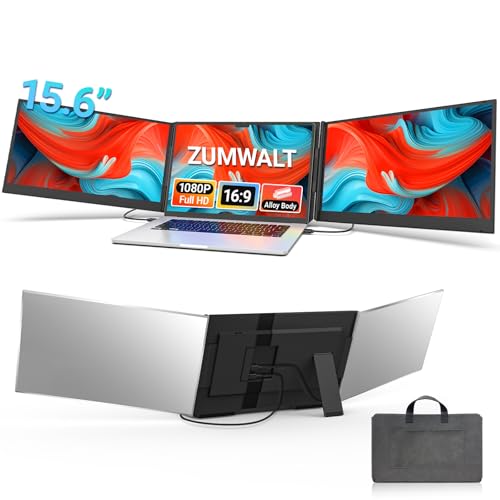
- Two 15.6-inch 1080p displays
- Two-cable USB-C setup on compatible laptops
- Includes carry bag and multiple display modes
Best For: Editors needing a large, portable triple-screen workspace
Best for Stable Standalone Setup
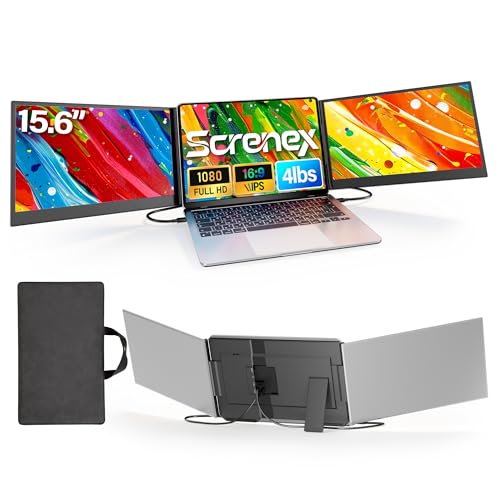
- Two 15.6-inch 1080p IPS panels
- Free-standing design avoids hanging on the laptop
- Matte finish and 178-degree viewing angle
Best For: Editors wanting a stable, spacious mobile workstation
Best Ultra-Thin Triple-Screen Extender – KEFEYA 15.6-inch FHD Triple Monitor
For video editors who need more room for timelines, bins, previews, and reference windows, the KEFEYA is one of the more portable laptop screen extenders for video editing. It adds two 15.6-inch 1080p IPS displays, supports landscape or portrait use, and folds into a travel-friendly setup.
Best For: Mobile editors and multitaskers who want a bright, three-screen workspace with flexible display modes.
Pros:
- Two 15.6-inch FHD IPS screens with 100% sRGB color coverage listed
- Very slim 0.16-inch design with included leather carrying bag
- Supports 180-degree rotation and mirror or extension modes
- Includes multiple USB-C, HDMI-to-USB-C, and power cables
Cons:
- Mac laptops with M1, M2, or M3 chips require a separate H6 adapter
- Its 3.9-pound weight may be noticeable in a travel bag
- USB-A to USB-C cable provides power only
The KEFEYA combines useful color coverage with a thin, foldable design. Confirm that your laptop has a full-featured USB-C port or suitable HDMI connectivity before buying, especially if you use a newer Mac.
Best Detachable Design – Wixzet 15.6-inch Triple-Screen Extender
The Wixzet stands out among laptop screen extenders for video editing because its displays can be detached and used independently. Its 15.6-inch FHD IPS screens, 120% sRGB gamut, and multiple viewing configurations suit editors who alternate between a full workstation and a lighter travel setup.
Best For: Editors who want flexible dual-, triple-, or standalone-monitor arrangements for creative work and travel.
Pros:
- Detachable screens support more than 11 configurations
- 15.6-inch FHD IPS displays offer 300-nit brightness and 120% sRGB coverage
- 235-degree folding and 90-degree rotation provide flexible positioning
- Each detachable screen weighs 1.5 pounds
Cons:
- Glossy finish may be less suitable for brightly lit editing spaces
- Two full-featured USB-C ports are needed for the simplest setup
- HDMI connections require additional USB-A power
Wixzet is a versatile choice when configuration flexibility matters as much as screen area. Its wider color-gamut specification is useful for previewing creative work, though serious color grading should still be checked on a calibrated reference display.
Best One-Cable Setup – KYY X90D 15.6-inch FHD Extender
For editors who prioritize a streamlined setup, the KYY X90D offers a one-cable USB-C connection for expanding a laptop into a triple-screen workspace. Its two 15.6-inch 1080p panels, matte finish, and adjustable stand can make timeline and preview management more comfortable during extended sessions.
Best For: Video editors and designers who want a portable triple-screen setup with minimal cable clutter.
Pros:
- One USB-C to USB-C cable can connect the extender to a compatible laptop
- Two 15.6-inch FHD IPS screens with 178-degree viewing angles
- Matte display, flicker-free features, and blue-light filtering are listed
- Built-in stand adjusts up to 90 degrees, while screens rotate 360 degrees
Cons:
- Drivers must be downloaded before use
- Not compatible with PS5, Xbox Series X, and other gaming consoles
- Compatibility depends on a full-function USB-C or supported USB-A connection
The KYY is appealing for desk-to-travel workflows where fast setup and screen positioning matter. Check your operating system and port capabilities first, since the one-cable benefit depends on compatible hardware and the required driver installation.
Best for Vertical Workspace – 16-inch 1200p Triple Monitor Extender
This 16-inch extender is a strong option among laptop screen extenders for video editing when vertical workspace is important. Its 1920×1200 resolution and 16:10 aspect ratio provide more height than standard 1080p panels, giving editors additional room for timelines, browser panels, documents, and bins.
Best For: Content creators and editors who value extra vertical space and a premium, travel-ready aluminum build.
Pros:
- Dual 16-inch IPS screens with 1920×1200 resolution and 16:10 aspect ratio
- 350-nit brightness offers a relatively bright viewing experience
- Two USB-C cables provide a driver-free setup on compatible laptops
- Ultra-slim aluminum construction includes built-in speakers and eye-care features
Cons:
- The two-cable setup requires two full-featured USB-C ports
- Glossy screens may reflect surrounding light
- At 4.6 pounds, it is less lightweight than some compact extenders
The extra vertical pixels are particularly useful for editing interfaces and long documents. Its open-frame design accommodates a wide range of laptop sizes, but verify your laptop has two compatible USB-C ports before relying on the simplest connection method.
Flexible Triple-Screen Editor – 15.6-inch Rotating FHD Extender
For video editors who need more timeline, preview, and asset space, this laptop screen extender for video editing adds two 15.6-inch 1080p IPS displays to create a flexible triple-screen setup. Its rotating, detachable design is useful when you want a desktop-style layout at home or a single portable display while traveling.
Best For: Editors who want a configurable triple-screen workspace with landscape, portrait, or stacked display options.
Pros:
- Two 15.6-inch 1080p IPS panels provide bright, vivid visuals for timelines and preview windows.
- 235-degree horizontal and 90-degree vertical rotation supports multiple editing layouts.
- Detachable panels can be used independently, with each side weighing 2.1 pounds.
- Supports USB-C, USB-A, and HDMI connections and includes built-in speakers.
Cons:
- HDMI use requires an additional USB-A-to-USB-C cable for power.
- Mac compatibility excludes standard M1, M2, and M3 chips according to the supplied notes.
- The glossy finish may reflect more light than a matte editing monitor.
This model stands out for layout flexibility and the ability to separate the displays when needed. Check your laptop’s ports and processor compatibility before buying, especially if you use a non-Pro or non-Max Apple Silicon Mac.
Travel-Ready Editing Station – 15.6-inch Matte Triple Monitor
This laptop screen extender for video editing is designed for creators who move between offices, studios, and travel locations. Its two matte 15.6-inch FHD IPS panels expand a laptop into a triple-screen workstation, giving you room for editing controls, source media, and a video preview.
Best For: Mobile editors and content creators who prioritize a slim, protective, plug-and-play setup.
Pros:
- Two 15.6-inch 1920×1080 IPS displays offer workspace expansion for editing tasks.
- Matte screens, 300 cd/m² brightness, and 178-degree viewing angles help in bright work areas.
- Clip-free mounting avoids clamping pressure on the laptop display.
- Includes multiple connection cables, a power adapter, carrying bag, and 365-day warranty.
Cons:
- The 63% sRGB gamut is less suited to color-critical finishing than a wider-gamut reference display.
- At 1.82 kg, the complete unit is heavier than many single portable monitors.
- M1-M4 MacBooks may require a separately provided H5 cable.
The matte finish and clip-free construction make this a practical travel choice, while the included accessories simplify setup. For professional color grading, treat its FHD panels as workspace monitors rather than a substitute for a dedicated wide-gamut display.
Compact Dual-Screen Editor – 14-inch Matte FHD Monitor
For a lighter, more compact approach to laptop screen extenders for video editing, this 14-inch FHD IPS model adds a second screen for bins, effects, notes, or conferencing. Expand, mirror, and second-screen modes make it adaptable for editing and other multitasking workflows.
Best For: Editors who want a compact dual-screen attachment for travel, presentations, and everyday multitasking.
Pros:
- 14-inch 1920×1080 IPS display provides a useful second workspace without the bulk of larger panels.
- Matte anti-glare coating, 300-nit brightness, and independent brightness controls support extended sessions.
- Adjustable telescopic stand fits 13- to 17.3-inch laptops and uses protective padding.
- Supports expand, mirror, and second-screen modes across Windows, Mac, Chrome, Android, Linux, Dex, and Switch.
Cons:
- Some laptops require both HDMI and USB-C or USB-A connections.
- Laptops lacking a full-featured USB-C or required HDMI port may need a special cable.
- A dual-screen design provides less workspace than a triple-screen extender.
This is a sensible option when portability matters more than maximum screen area. Its matte 14-inch panel and adjustable stand suit mobile editing, but confirm your laptop’s port capabilities before ordering.
Best for Cable-Simple Triple-Screen Workflows – 15.6-inch FHD Triple Monitor
For shoppers comparing laptop screen extenders for video editing, this 15.6-inch setup offers two FHD displays, a 60Hz refresh rate, and a spacious triple-screen workspace. Its two-cable USB-C connection can simplify editing timelines, media bins, and reference windows when paired with a laptop that supports full-function USB-C.
Best For: Video editors and multitaskers who want large 15.6-inch screens, a streamlined USB-C setup, and a portable triple-display workstation.
Pros:
- Two 15.6-inch 1080p displays provide substantial workspace for editing tools and reference material.
- Two USB-C-to-USB-C cables can provide a simpler setup on compatible laptops.
- Aluminum construction, a carry bag, and a 4-pound weight support mobile use.
- Supports extended, mirrored, and portrait display modes.
Cons:
- Laptops without full-featured USB-C ports may require an H5-T cable, HDMI, USB-A power, and driver installation.
- M1/M2/M3 MacBooks need the additional connection setup noted by the manufacturer.
- At 4 pounds, it is less lightweight than smaller portable monitor options.
This model is a strong fit when screen size and a clean cable arrangement matter most. Confirm your laptop’s ports before buying, especially if you use a MacBook or a system without full-featured USB-C.
Best for Stable Standalone Setup – 15.6-inch IPS Triple Monitor
For laptop screen extenders for video editing, this model emphasizes stable placement and a matte viewing surface. Its two 15.6-inch IPS panels deliver 1080p resolution, while the free-standing design avoids hanging from the laptop display and can make a temporary editing station easier to arrange.
Best For: Editors who prioritize a stable, non-clamp design, wide viewing angles, and quick setup in offices, hotels, or cafés.
Pros:
- Two 15.6-inch IPS 1080p screens offer a large workspace with 178-degree viewing angles.
- Free-standing design avoids hanging on the laptop screen and is designed to reduce hinge stress.
- Matte finish, aluminum construction, and a 3.9-pound weight suit extended mobile use.
- Supports mirror, extended, and portrait modes without a dock or driver on compatible USB-C systems.
Cons:
- Full plug-and-play operation requires two full-function USB-C ports.
- Laptops without full-function USB-C ports and M1–M3 MacBooks need an H5-T cable, HDMI, USB-A power, and driver installation.
- The 3.9-pound design may be substantial for ultralight travel.
The standalone base is the key differentiator for editors concerned about screen-hinge strain or clamp-style mounting. Check port compatibility before ordering to avoid needing the alternate cable setup.
Best for Lightweight Flexible Positioning – 14-inch FHD Triple Monitor
Among laptop screen extenders for video editing, this 14-inch option focuses on portability and flexible positioning. The dual 1080p IPS displays include HDR mode, blue-light filtering, anti-glare technology, and multiple orientation options for arranging an editing interface, preview, and supporting windows.
Best For: Mobile editors who want a lighter 3-pound extender with adjustable positioning, broad operating-system compatibility, and a compact travel profile.
Pros:
- Two 14-inch 1080p IPS screens provide extra editing workspace in a 3-pound design.
- Built-in stand adjusts up to 90 degrees and supports 180-degree rotation.
- Extended, mirrored, duplicate, portrait, and landscape modes accommodate different workflows.
- Anti-glare technology, blue-light filtering, and 178-degree viewing angles support comfortable collaboration.
Cons:
- The 14-inch displays provide less workspace than the 15.6-inch alternatives.
- Laptops without full-featured USB-C ports and M1/M2/M3 MacBooks require an H5-T cable.
- The product notes recommend direct external power if the display shows no signal or is not bright enough.
This is the most travel-oriented choice in the group, trading some screen size for lower weight and more positioning flexibility. Verify the required ports and plan for external power troubleshooting if needed.
How We Picked the Best Laptop Screen Extenders for Video Editing
We focused on portable monitors designed to attach to or travel with a laptop, prioritizing useful editing features rather than headline specifications alone. Our comparison considers Full HD or higher resolution, IPS viewing quality, screen size, USB-C and HDMI connectivity, installation requirements, adjustability, weight, thickness, and stated laptop-size compatibility.
For video work, a reliable connection and a practical layout matter as much as resolution. An extender that is bright, stable, and easy to position can be more useful than a larger model that is awkward to carry or requires several adapters.
Quick Comparison
The 15.6-inch models offer the most workspace and are generally the strongest choice for keeping a timeline, preview, and editing controls visible. The 14-inch options are easier to carry and may suit smaller laptops or frequent travel. The 16-inch model provides a little more screen area, but buyers should confirm that its physical dimensions fit their laptop.
Most selections use 1080p Full HD IPS panels, while the 1200p option offers additional vertical space. USB-C can simplify setup when a laptop supports video output through that port; HDMI models may need a separate cable for video and USB for power.
Key Buying Factors for Laptop Screen Extenders for Video Editing
Resolution and Panel Quality
Full HD is a practical minimum for a portable editing display. It provides enough workspace for bins, scopes, or controls without making interface text excessively small. IPS panels are preferable when viewing angles and consistent color matter. However, a screen extender should not automatically be treated as a color-critical grading monitor unless its calibration and color coverage are documented.
Screen Size and Physical Fit
Check both your laptop’s diagonal size and its chassis dimensions. A 15.6-inch extender may fit laptops from roughly 13 to 17.3 inches, but compatibility depends on bezel thickness, hinge design, weight distribution, and mounting clearance. Detachable designs can be more flexible when the laptop’s shape is unusual.
Ports, Power, and Operating System Support
Confirm whether your laptop’s USB-C port supports DisplayPort video output. A USB-C data-only port may not drive the display. HDMI versions typically require separate power, and some setups may need an adapter or hub. Also verify support for your operating system and whether multiple external displays are supported simultaneously.
Portability and Stability
Ultra-thin construction helps for commuting, but a lightweight extender still needs secure attachment and a stand or hinge that holds its position. Consider the added weight on the laptop lid, the folded thickness, included cables, and whether the extender can be used independently when you are away from the laptop.
Who Should Buy Which Laptop Screen Extenders for Video Editing?
For Maximum Editing Workspace
Choose a 15.6-inch or 16-inch triple-screen model if you regularly edit longer projects, manage large media libraries, or keep several panels visible. These are best for larger laptops and desk-based mobile editing.
For Frequent Travel
A 14-inch or especially slim 15.6-inch model is easier to pack and places less strain on a laptop bag. Prioritize low weight, detachable construction, and a simple USB-C setup if your computer supports it.
For Flexible Laptop Compatibility
Look for models with broad stated size ranges, adjustable mounting, and HDMI alongside USB-C. This combination is useful if you work across multiple laptops or use a computer whose USB-C ports do not carry video.
For a Simpler Setup
A plug-and-play extender with clearly labeled cables is the better choice for editors who want to connect quickly and start working. Before buying, confirm your laptop’s ports, graphics support, power requirements, and ability to run one or two external displays at the same time.