The right platter mat can do more than complete your turntable setup. It can help manage static, reduce unwanted resonance, protect records, and fine-tune the way your system handles vinyl playback.
We compared 10 turntable mats for sound quality across cork, acrylic, rubber, and blended materials so you can choose a practical upgrade for your turntable, cartridge, and listening preferences.
Best 10 Turntable Mats for Sound Quality Picks for 2026
Best for Tighter Bass
PRO SPIN Acrylic Turntable Mat

- 3mm construction helps damp rumble and humming
- Anti-static design targets static-related noise
- Smooth contact aims to improve bass and midrange definition
Best For: Listeners seeking a damped mat with tighter bass response
Best Artistic Cork Option

- 4mm Portuguese cork offers soft, natural damping
- Anti-static design targets rumble, pops, and crackle
- Mix-pattern artwork adds a distinctive turntable look
Best For: Listeners wanting cork damping with a decorative finish
Best for Clarity

- High-density acrylic helps damp unwanted resonance
- Designed for tighter bass and improved signal clarity
- Recessed center keeps records flat for accurate playback
Best For: Listeners seeking precision acrylic damping and clear playback
Best Non-Slip Replacement

- 3mm rubber-silicone surface provides stable contact
- Non-slip grooves and label recess help keep records flat
- 12-inch design fits most standard turntable platters
Best For: Owners needing a practical, secure replacement mat
Best Acrylic Upgrade

- 2.7mm acrylic construction
- Designed to reduce static and vibration
- Claims tighter bass response
Best For: Listeners wanting an acrylic mat with a modern look and static-reduction features
Best Resonance Control
Audio-Technica Cork-Rubber Mat

- Cork-rubber blend absorbs vibration
- 96g added mass supports stability
- Designed to reduce static discharge
Best For: Listeners prioritizing resonance control and stable record tracking
Best Silicone Isolation

- Durable non-scratch silicone rubber
- Helps isolate platter micro-vibrations
- Recessed center supports flat records
Best For: Vinyl owners wanting a simple, compatible mat focused on vibration isolation
Best Cork Sound Dampener

- 3mm cork helps reduce static, rumble, and humming.
- Improves record-to-platter contact and frequency definition.
- Vintage styling fits 33 1/3 and 45 RPM setups.
Best For: Listeners wanting cork-based damping and anti-static performance
Best Universal Cork Upgrade
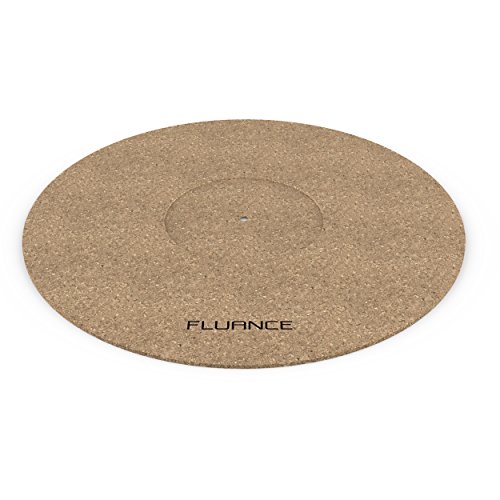
- Dampens micro-vibrations and reduces playback noise.
- 3mm cork helps lessen static and improve traction.
- Fits 12-inch platters and includes a label recess.
Best For: Owners replacing a basic felt mat on a 12-inch turntable
Best Acrylic Surface
Hudson Hi-Fi Acrylic Turntable Mat
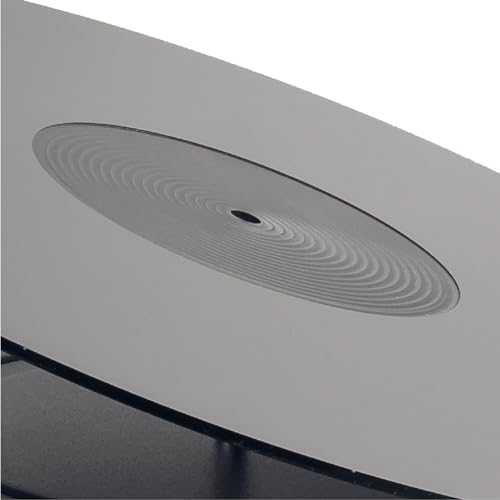
- 3mm acrylic supports close record-to-platter coupling.
- Helps reduce static and control micro-vibrations.
- Flat CNC-machined surface includes a label recess.
Best For: Listeners wanting a rigid acrylic mat for a modern setup
Best for Tighter Bass – PRO SPIN Acrylic Turntable Mat
For listeners comparing turntable mats for sound quality, the PRO SPIN mat combines a 3mm construction with anti-static material and damping intended to reduce rumble, humming, and static-related noise. Its black acrylic finish also gives a record player a clean, modern appearance.
Best For: Vinyl listeners who want a damped, anti-static mat with a tighter bass emphasis and vintage-inspired styling.
Pros:
- 3mm thickness helps reduce rumble and humming noise.
- Anti-static material is designed to reduce static-related noise and dust concerns.
- Smooth contact is intended to improve definition in the mid and lower frequencies.
- Works with 33 1/3 and 45 RPM records.
Cons:
- The supplied details describe it as an acrylic mat while also referring to cork construction, so buyers should verify the exact material configuration.
- Its sound benefits may vary depending on the turntable, cartridge, and existing platter setup.
The PRO SPIN is a practical choice when damping, static reduction, and bass definition are higher priorities than a purely decorative slipmat. Confirm the material and platter fit before ordering.
Best Artistic Cork Option – TAZstudio 4mm Mix Pattern Mat
This 4mm Portuguese cork mat is a strong contender among turntable mats for sound quality if you want natural damping with a distinctive visual design. Its anti-static construction is intended to reduce crackle, rumble, humming, and unwanted vibration while keeping records stable.
Best For: Home listeners and DJs who want a thicker cork mat with an artistic pattern and a warmer, less static-prone playback setup.
Pros:
- 4mm natural Portuguese cork provides soft contact and vibration reduction.
- Anti-static design is intended to reduce dust, popping, and crackling noise.
- Helps prevent records from slipping while maintaining smooth platter contact.
- Handmade, eco-friendly construction adds a distinctive appearance.
Cons:
- The artistic ink pattern may not suit minimalist turntable setups.
- At 4mm, it may alter platter height compared with a thinner stock mat.
Choose the TAZstudio when cork’s natural feel, extra thickness, and decorative finish appeal to you. Check your turntable’s available clearance and spindle fit before replacing the original mat.
Best for Clarity – Fluance Acrylic Platter Mat
The Fluance PM50 is designed for listeners evaluating turntable mats for sound quality who want acrylic’s controlled, precision-machined contact. Its 3mm frosted surface is intended to absorb unwanted resonance, improve tracking, and support tighter bass, richer midrange, and clearer playback.
Best For: Vinyl users seeking a precision-made acrylic upgrade with vibration control, reduced static, and a visually striking frosted finish.
Pros:
- High-density acrylic is designed to damp unwanted resonances.
- Supports tighter bass, richer midrange, and improved signal clarity.
- Recessed center helps records sit flat and evenly on the mat.
- Compatible with standard 12-inch turntable platters and 45 RPM playback.
Cons:
- The 3mm thickness may require checking platter-height or tonearm clearance.
- Its frosted appearance may not match every turntable aesthetic.
The PM50 is the most specification-focused option here, particularly for buyers prioritizing resonance control and tracking. It also includes a one-year manufacturer’s warranty and lifetime customer support according to the supplied details.
Best Non-Slip Replacement – Ywhomal Rubber Turntable Mat
If you need an affordable replacement among turntable mats for sound quality, this 3mm black rubber-silicone mat focuses on stability. Non-slip grooves and a label recess are designed to keep records flat and secure, helping support smoother playback with less scratchy white noise.
Best For: Owners of standard 12-inch turntables who want a straightforward, non-slip replacement mat for lighter or thinner records.
Pros:
- Universal 12-inch size fits most standard turntable platters.
- Soft rubber-silicone construction provides a stable, non-slip surface.
- Grooves and label recess help records stay flat during playback.
- Designed as a replacement for old felt, rubber, or original equipment mats.
Cons:
- The supplied information does not specify a warranty or advanced damping rating.
- Rubber may offer less distinctive styling than the acrylic and patterned cork alternatives.
- Fit is broadly described as universal, but platter clearance should still be checked.
The Ywhomal is a sensible utility pick when grip and broad compatibility matter most. It is especially useful for replacing a worn mat, though buyers seeking a more explicitly engineered resonance treatment may prefer the acrylic options.
Best Acrylic Upgrade – Black Acrylic Slipmat
If you want turntable mats for sound quality with a modern look, this 2.7mm acrylic mat is designed to reduce static and dampen unwanted vibration. Its claimed tighter bass response may appeal to listeners refining the sound of a standard 12-inch setup.
Best For: Vinyl listeners seeking an acrylic mat with static-reduction features, sound dampening, and a contemporary appearance.
Pros:
- Acrylic construction is durable and measures 2.7mm thick.
- Designed to reduce static buildup, pops, and unwanted vibration.
- May provide a tighter bass response and improved playback dynamics.
- Fits most standard 12-inch turntable platters.
Cons:
- The acrylic surface may be less suitable if you specifically prefer a traditional felt or rubber mat.
- Its sound results can vary depending on the turntable, cartridge, and record condition.
This is a practical choice when static control, a firm acrylic platform, and visual appeal matter as much as sound refinement. Confirm platter clearance before installing the 2.7mm mat.
Best Resonance Control – Audio-Technica Cork-Rubber Mat
For shoppers comparing turntable mats for sound quality, the Audio-Technica AT-SMCR2 uses a cork-and-rubber blend to absorb vibration and support clearer playback. Its added 96-gram mass is intended to create a more stable record platform.
Best For: Record listeners who want vibration absorption, improved tracking stability, and reduced static discharge in a versatile slipmat.
Pros:
- Cork and rubber blend is designed to absorb resonance, including lower-frequency vibration.
- Added 96g mass helps provide a stable platform for records.
- Designed to reduce static buildup, pops, and clicks from static discharge.
- Fits most standard turntables.
Cons:
- At 2mm thick, it may change platter height slightly on some setups.
- The heavier construction may not suit users looking for the lightest possible mat.
The AT-SMCR2 is a balanced option for listeners prioritizing resonance control and tracking stability over decorative styling. Its two-material construction gives it a practical audiophile-oriented profile.
Best Silicone Isolation – Fluance Rubber Platter Mat
This Fluance silicone rubber mat is a straightforward option for turntable mats for sound quality, using a non-scratch surface to isolate records from platter micro-vibrations. Its recessed center is designed to help records sit flat across different label thicknesses.
Best For: Vinyl owners seeking a durable black silicone mat with vibration isolation and broad standard-turntable compatibility.
Pros:
- Durable silicone rubber provides a flat, non-scratch playing surface.
- Dampening qualities help isolate records from unwanted platter micro-vibration.
- Recessed center helps LPs lay flat regardless of label thickness.
- Compatible with standard 12-inch turntable platters and spindles.
Cons:
- The 11.75-inch diameter is slightly smaller than a full 12 inches.
- It offers fewer material and styling choices than mats available in multiple finishes.
Choose this mat if you want a simple, audiophile-grade silicone design focused on isolation and record support. It is especially convenient for users seeking broad compatibility or pairing it with a Fluance RT80 or RT81.
Best Cork Sound Dampener – PRO SPIN Cork Turntable Mat
For listeners comparing turntable mats for sound quality, the PRO SPIN Cork Turntable Mat is a 3mm cork option designed to reduce static, pops, rumble, and humming while improving contact between the record and platter. Its vintage cork appearance also suits retro-focused setups.
Best For: Audiophiles seeking a cork mat with sound-dampening and anti-static features.
Pros:
- Helps reduce pop, static, rumble, and humming noise.
- Supports smoother contact for improved midrange and lower-frequency definition.
- 3mm cork construction helps prevent records from slipping.
- Compatible with 33 1/3 RPM and 45 RPM records.
Cons:
- Its cork construction and vintage styling may not suit modern minimalist turntables.
- Designed for 12-inch LP platters, so platter size should be checked before purchase.
The PRO SPIN is a practical upgrade for anyone replacing a basic mat with a thicker cork design. It emphasizes noise and static reduction while adding a distinctive retro look.
Best Universal Cork Upgrade – Fluance Cork Platter Mat
The Fluance TA21 is a 3mm audiophile-grade cork mat for shoppers evaluating turntable mats for sound quality. It is designed to dampen platter micro-vibrations, reduce noise and static, improve traction, and provide fuller record contact through its label recess.
Best For: Turntable owners upgrading from a standard felt mat across a wide range of 12-inch platters.
Pros:
- Helps dampen unwanted platter micro-vibrations and reduce noise.
- Cork construction reduces static when the turntable is properly grounded.
- Improves grip between the record and platter for stable playback.
- Fits all 12-inch diameter platters and includes a 0.5mm record-label recess.
Cons:
- Grounding is required for the stated static-reduction benefit.
- Its compatibility is specified for 12-inch platters, not smaller platter sizes.
The TA21 offers a balanced combination of vibration damping, traction, and fit. Its label recess is useful for maintaining broad record contact without stacking multiple mats.
Best Acrylic Surface – Hudson Hi-Fi Acrylic Turntable Mat
For those comparing turntable mats for sound quality, the Hudson Hi-Fi Acrylic Mat uses a precision-machined 3mm acrylic surface to couple records more effectively with the platter. The design aims to support clearer sound, tighter bass, reduced static, and steadier tracking.
Best For: Listeners who prefer a solid acrylic mat with a flat surface and modern black finish.
Pros:
- Acrylic construction is designed to improve record-to-platter coupling.
- Helps control micro-vibrations and static buildup.
- Precision CNC machining provides a flat surface with a label recess.
- Fits most standard 12-inch turntables and installs without stacking.
Cons:
- It must replace, rather than stack on top of, an existing rubber or felt mat.
- Compatibility is described as fitting most standard 12-inch platters, not every turntable.
The Hudson Hi-Fi is a distinct alternative to cork and felt, particularly for users wanting a rigid, precisely cut surface. Follow the installation orientation and verify platter dimensions before fitting.
How We Picked These Turntable Mats for Sound Quality
We focused on mats designed to influence the mechanical interface between the record and platter. Our comparison considers material behavior, thickness, static control, vibration management, fit, durability, and compatibility with common 12-inch vinyl records. We also included options at different price and performance levels, from straightforward rubber and cork mats to precision acrylic designs.
Claims such as “improved clarity” or “reduced resonance” depend on the turntable, cartridge, platter, room, and recording. A mat should be viewed as a system-matching accessory rather than a guaranteed upgrade for every setup.
Quick Comparison
| Material | Typical strengths | Best suited to |
|---|---|---|
| Cork | Natural grip, low static, balanced presentation | General upgrades and budget-conscious listeners |
| Acrylic | Rigid coupling, low static, clean appearance | Systems designed for acrylic platter interfaces |
| Rubber or silicone | Grip, damping, durability, and easy maintenance | Reducing movement and everyday use |
| Cork-rubber blend | Combines damping with a stable record surface | Listeners wanting a versatile compromise |
Key Buying Factors for Turntable Mats for Sound Quality
Material and Resonance Control
Cork can provide a slightly damped, natural interface and is often effective at limiting static buildup. Acrylic is rigid and may work particularly well when the platter and record are intended to couple closely. Rubber and silicone emphasize grip and damping, while hybrid materials aim to balance both properties.
Thickness and Vertical Tracking Angle
Mat thickness changes the record’s height relative to the cartridge. A significantly thicker or thinner mat can affect vertical tracking angle and tonearm geometry, especially on turntables without adjustable tonearms. Check the original mat thickness before replacing it.
Size, Center Hole, and Platter Fit
Most selections here target 12-inch records, but dimensions still vary. The mat should sit flat without extending beyond the platter or interfering with the spindle. A loose center hole can make installation inconvenient, while an overly tight one may not seat properly.
Static, Maintenance, and Durability
If records cling to the mat, prioritize antistatic materials and a surface that releases vinyl easily. Rubber and silicone are typically simple to wipe clean; cork and acrylic may need gentler handling to avoid surface damage or warping.
Who Should Buy Which Turntable Mats for Sound Quality?
- Choose cork for an affordable, versatile upgrade with good grip and natural static control.
- Choose acrylic if your turntable benefits from a rigid, low-static platter interface and the added thickness is compatible.
- Choose rubber or silicone if stability, damping, and everyday durability matter most.
- Choose a cork-rubber blend when you want a middle ground between grip, damping, and record release.
Before buying, compare the replacement mat’s thickness with your current setup and confirm that its diameter matches your platter. The best turntable mat for sound quality is the one that fits correctly and complements your turntable’s existing mechanical design.