The best wearable metronomes make steady timing easier to feel, whether you are practicing guitar, piano, drums, vocals, or athletic movement. Instead of relying only on an audible click, these devices use vibration, sound, or both to keep you on tempo.
We selected 10 options ranging from dedicated vibrating wrist metronomes to versatile clip-on models, swimming tempo trainers, and reliable traditional metronomes. Use the guide below to compare features and find the right fit for your practice routine.
Best 10 Wearable Metronomes Picks for 2026
Best Overall

- Strong vibration for silent beat tracking
- App supports accents, presets, and setlists
- Wear on wrist, arm, or ankle
Best For: Musicians wanting powerful haptics and app-based control
Best for Adjustable Vibration
Wearable Metronome Wrist Watch

- Adjustable tempo from 40 to 240 BPM
- Includes beat types and rhythm patterns
- Lightweight design with detachable strap
Best For: Users seeking a simple music and exercise vibration watch
Best Clip-On Alternative

- Clip to pockets, belts, and straps
- Switch between vibration and sound
- Includes 1–90 minute practice timer
Best For: Players wanting flexible placement and varied practice sounds
Best Traditional Practice Option

- Visual practice assistance and odd-time support
- Includes headphone jack and auto power-off
- Portable design with play-along patterns
Best For: Players preferring a conventional standalone metronome
Best Wearable Pick
Digital Vibrating Metronome Watch

- Vibrating timing for noisy environments
- 40–240 BPM with multiple rhythms
- Exercise mode and adjustable wristband
Best For: Beginners, musicians, and exercise pacing
Best Traditional Alternative

- Large display with beat visuals
- Tap tempo and eight rhythm types
- Up to 400 hours on alkaline batteries
Best For: Orchestral and conventional music practice
Best Simple Wearable
Adjustable Vibrating Metronome Watch
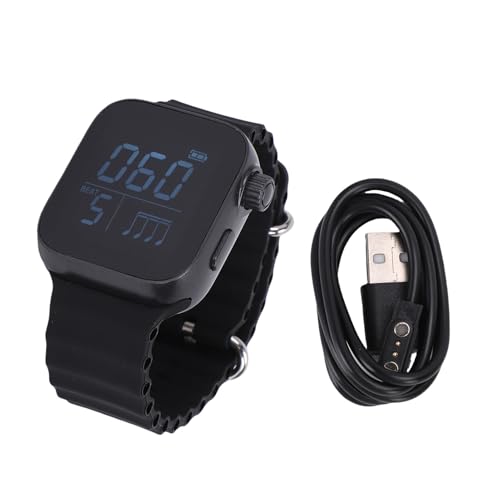
- Tactile timing for noisy settings
- 40–240 BPM with selectable rhythms
- Exercise mode and compact ABS design
Best For: Basic music practice and workout pacing
Waterproof Swim Pick

- IP68 waterproof design for swim training
- Tempo control down to 1/100th of a second
- Three modes plus a dryland-use clip
Best For: Swimmers needing precise audible pacing in the pool or open water
Portable Music Practice Pick

- Clip-on design with a color LCD screen
- 30–280 BPM range and 10 beat sounds
- Rechargeable battery and headphone output
Best For: Musicians seeking a compact metronome for versatile instrument practice
Silent Wrist Practice Pick
AKLOT Vibrating Metronome Watch

- Vibration-based cues for quieter practice
- App-adjustable tempo, rhythm, and intensity
- Metronome, sport, and 24-hour time modes
Best For: Musicians and athletes wanting customizable wrist vibration feedback
Best Overall – Soundbrenner Pulse
The Soundbrenner Pulse is a versatile choice for musicians seeking wearable metronomes with strong, silent vibration feedback. Its companion app adds tempo controls, subdivisions, accents, presets, and setlists, while the included bands support wrist, arm, or ankle placement.
Best For: Musicians who want powerful vibration, app control, and flexible wearing options.
Pros:
- Vibrations are designed to be seven times stronger than those of an average smartphone.
- Supports tempo adjustments, time signatures, subdivisions, accents, presets, and setlists through the app.
- Includes bands for wearing on the wrist, arm, or ankle.
- Can sync up to five wearables with one mobile device.
Cons:
- Requires a compatible smartphone for the companion app features.
- It is not waterproof or water resistant.
- Metronome playback is rated at 6+ hours.
With strong haptic feedback and extensive app functionality, the Pulse is the most feature-rich option here. It is especially practical for rehearsals, performances, and situations where an audible click would be distracting.
Best for Adjustable Vibration – Wearable Metronome Wrist Watch
This vibrating wrist watch offers a straightforward wearable metronome format with adjustable tempo from 40 to 240 BPM. It also includes selectable beat types and rhythm patterns, making it a practical option for musicians who want a compact, strap-based rhythm aid.
Best For: Musicians and fitness users who want adjustable vibration in a lightweight wrist-worn design.
Pros:
- Provides vibration feedback described as five times stronger than traditional devices.
- Offers a 40–240 BPM tempo range with multiple beat types and rhythm patterns.
- Detachable strap and lightweight ABS-and-silicone construction support portability.
- Includes an exercise mode with adjustable vibration frequencies.
Cons:
- Product details do not specify the number of included components beyond the watch, cable, and manual.
- The listed warranty is limited to 90 days.
- Specific battery life is not provided.
This watch keeps the core wearable metronome experience simple and portable. Its exercise mode is a useful extra, but buyers looking for extensive music-app integration may prefer a more connected model.
Best Clip-On Alternative – LEKATO Vibrating Metronome
The LEKATO is a useful alternative to wrist-based wearable metronomes because its clipable stand attaches to pockets, belts, straps, or even foot straps. It combines silent vibration with a broad range of audible voices and rhythm sounds, plus a built-in practice timer.
Best For: Players who want flexible clip-on placement and a metronome with both vibration and sound modes.
Pros:
- Supports vibration-only practice or audible operation with a simple switch.
- Offers a 40–260 BPM range, nine beats, and nine rhythm patterns.
- Includes male and female vocal counts, click, drum, clapping, and cowbell sounds.
- Built-in timer supports practice sessions from 1 to 90 minutes.
Cons:
- It is a clip-on unit rather than a dedicated wrist-worn device.
- Plastic construction may feel less rugged than metal-bodied alternatives.
- Its listed weight is 0.11 kg, heavier than the Soundbrenner Pulse specification.
The LEKATO stands out for practice flexibility: use vibration for quiet work, sound for conventional drills, and the timer to structure sessions. Its clip design suits players who do not want to wear a metronome on the wrist.
Best Traditional Practice Option – BOSS Dr. Beat DB-30
The BOSS Dr. Beat DB-30 is a portable electronic metronome for players who prefer a traditional standalone format. While it is not a wearable metronome, its visual practice assistance, odd-time support, play-along patterns, headphone jack, and rugged portable build make it a useful comparison option.
Best For: Musicians who prioritize visual guidance, odd time signatures, and a conventional portable metronome.
Pros:
- Provides visual practice assistance alongside audible rhythm guidance.
- Supports odd time signatures and play-along patterns.
- Includes a headphone jack for more private practice.
- Portable design includes auto power-off and a supplied lithium metal battery.
Cons:
- It is not a wearable device and does not provide vibration feedback.
- Its feature set is less focused on hands-free use than the wearable options.
- The product details do not specify a rechargeable battery system.
The DB-30 is best viewed as a dependable traditional alternative rather than a direct wearable competitor. Choose it if visual support, odd-meter practice, and headphone use matter more than haptic feedback.
Best Wearable Pick – Digital Vibrating Metronome Watch
For musicians who need wearable metronomes that remain noticeable in loud environments, this wristband delivers beat vibrations instead of relying only on sound. It also offers exercise pacing, adjustable tempos, and selectable time signatures in a compact watch-style design.
Best For: Beginners, musicians practicing around background noise, and users who want a metronome that can also guide exercise cadence.
Pros:
- Vibration intensity is designed to be substantially stronger than a regular smartphone.
- Offers 40–240 BPM, multiple beat types, and rock, jazz, and classical rhythm patterns.
- Includes exercise mode, LCD display, removable silicone strap, and simple controls.
Cons:
- Moisture-resistant rather than fully waterproof.
- Its casual ABS-and-silicone construction may feel less specialized than a dedicated music device.
This is a versatile choice among wearable metronomes, especially if you want silent tactile timing for practice plus a separate mode for regulating workout pace.
Best Traditional Alternative – Korg MA-2 Digital Metronome
The Korg MA-2 is not a wrist-worn device, but it is a practical comparison point for shoppers considering wearable metronomes. Its larger display, audible buzzer, tap tempo, and long alkaline-battery runtime make it suited to conventional music practice.
Best For: Orchestral players and musicians who prefer a compact handheld metronome with clear sound, visual beat information, and extended battery life.
Pros:
- Provides a 30% larger display with beat visuals and a louder electronic buzzer.
- Supports pendulum, full-step, and tap-tempo settings, plus 0–9 beats and eight rhythm types.
- Offers timer mode, sound-out mode, and approximately 400 hours of alkaline-battery use.
Cons:
- It is a handheld digital metronome, not a wearable vibrating model.
- Practice timing is delivered through sound and display rather than wrist vibrations.
Choose the MA-2 when audible feedback and battery endurance matter more than hands-free, tactile timing. It is a capable non-wearable alternative for structured instrument practice.
Best Simple Wearable – Adjustable Vibrating Metronome Watch
This compact watch is one of the simpler wearable metronomes for users who want tactile timing without depending on an audible click. It combines adjustable vibration settings with exercise mode and a lightweight ABS body for wrist use.
Best For: Musicians and beginners seeking a straightforward vibrating metronome for noisy practice spaces or a basic workout pacing aid.
Pros:
- Provides beat vibrations intended to remain perceptible in noisy surroundings.
- Adjusts from 40–240 BPM with several time signatures and rhythm styles.
- Includes exercise mode, LCD display, USB connector, and detachable silicone strap.
Cons:
- The supplied specifications do not identify a water-resistance rating.
- Compared with a conventional metronome, vibration-only feedback may not suit users who prefer an audible beat.
This model fits shoppers who want the core benefits of wearable metronomes in a compact format. Its exercise mode adds flexibility, while the straightforward controls keep the feature set focused.
Waterproof Swim Pick – Swim Tempo Trainer
For swimmers comparing wearable metronomes, this compact tempo trainer is designed to tuck under a swim cap and provide audible pace signals in real time. Its IP68 waterproof construction, fine tempo adjustments, and multiple training modes make it especially practical for structured pool or open-water sessions.
Best For: Swimmers who want precise auditory pacing and a versatile cadence tool for swim or dryland training.
Pros:
- IP68-rated waterproof design for depths up to 10 meters.
- Tempo adjustments as precise as 1/100th of a second.
- Three modes for stroke rate, lap pace, and strokes per minute.
- Includes a clip for use with running, cycling, and other sports.
Cons:
- Its specialized swim-focused design may be more than casual users need.
- Audible signaling may not suit swimmers who prefer silent feedback.
This is a strong choice when exact pacing matters in the water. The included clip adds flexibility, although its main advantage remains waterproof swim training.
Portable Music Practice Pick – LEKATO M65 Digital Metronome
Among wearable metronomes and compact practice tools, the LEKATO M65 stands out for its clip-on design and broad instrument compatibility. It combines adjustable tempo, multiple beat sounds, a color LCD screen, and rechargeable power in a small package that fits easily into a practice bag.
Best For: Musicians who want a compact, clip-on metronome for instruments such as piano, guitar, violin, flute, and drums.
Pros:
- Supports tempos from 30 to 280 BPM with tap functionality.
- Offers 10 beat sounds, including a human voice option.
- Rechargeable battery provides about 4–5 hours at medium volume.
- Adjustable volume and a 3.5mm headphone output enable quieter practice.
Cons:
- Battery life is limited to roughly 4–5 hours at medium volume.
- It uses audible feedback rather than vibration-only pacing.
The M65 is a practical, affordable-feeling practice companion for musicians who value portability and sound flexibility. Its clip and headphone connection are useful additions for everyday rehearsal.
Silent Wrist Practice Pick – AKLOT Vibrating Metronome Watch
This AKLOT watch is a compelling option for anyone seeking wearable metronomes with vibration-based feedback. Its companion app lets you adjust tempo, time signature, rhythm style, screen brightness, and vibration intensity, while dedicated metronome, sport, and time modes broaden its everyday usefulness.
Best For: Musicians and athletes who prefer wrist-based vibration cues over disruptive audible beats.
Pros:
- Metronome mode supports 40–240 BPM, up to nine beats, and six rhythm styles.
- Sport mode offers vibration frequencies from 10 to 240 BPM.
- App-adjustable vibration intensity can help tailor the feedback experience.
- Includes a 24-hour time display and beat loop function.
Cons:
- A slight vibration hum is unavoidable during operation.
- Using the companion app is required for the listed customization controls.
The AKLOT is a strong fit when silent-feeling, wrist-based guidance is more important than traditional sound. Its sport and time modes also make it more versatile than a music-only metronome.
How We Picked the Best Wearable Metronomes
We focused on the features that matter most during real practice sessions: tempo range, vibration strength, sound options, adjustability, comfort, battery or charging requirements, portability, and durability. We also considered whether each model is better suited to musicians, athletes, beginners, or users who need discreet timing without disturbing others.
Because “wearable” can mean different things, this roundup includes wrist-mounted devices as well as compact clip-on metronomes and specialized trainers. Product descriptions and intended uses were compared carefully so you can match each option to your routine.
Quick Comparison
| Best For | Look For |
|---|---|
| Silent music practice | Strong, adjustable vibration and a secure wrist fit |
| Multiple instruments | Wide tempo range, subdivisions, and clear controls |
| Beginners | Simple tempo adjustment, readable display, and audible guidance |
| Swimming or sports | Water resistance, interval modes, and reliable timers |
| Portable practice | Rechargeable battery or compact clip-on design |
Key Buying Factors for Wearable Metronomes
Vibration and Sound Control
Vibration is the main reason to choose a wearable metronome. Look for multiple intensity levels if you practice in noisy environments or need a subtle pulse. Audible clicks, voice counting, and adjustable volume are useful when silent feedback is not necessary.
Tempo Range and Adjustment
Check the supported beats per minute before buying. A broad range is helpful for gradually increasing speed, while fine adjustment controls make it easier to set exact tempos. Some models also provide subdivisions, accent patterns, or different beat sounds.
Comfort, Fit, and Visibility
A wrist metronome should stay secure without becoming distracting. Consider strap adjustability, weight, button placement, and whether the display is easy to read while moving. Clip-on designs may be preferable if you do not want to wear a device on your wrist.
Battery Life and Durability
Rechargeable models reduce the need for replacement batteries, but charging time and battery life still matter. For swimming or outdoor training, verify the water-resistance rating rather than assuming every sports-style watch is fully waterproof.
Who Should Buy Which Wearable Metronomes?
Musicians who need silent practice: Choose a dedicated vibrating wrist model with adjustable intensity and dependable tempo controls.
Players who want versatility: Look for a model with audible and vibration modes, subdivisions, a wide BPM range, and a clear screen.
Beginners and students: Prioritize simple controls, readable displays, voice or clear click sounds, and a timer for structured practice.
Swimmers and athletes: Choose a purpose-built waterproof trainer with sport-specific modes and a secure fit.
Traveling musicians: A compact rechargeable or clip-on metronome is usually the easiest option to carry and operate anywhere.