A reliable tuner makes learning guitar easier by helping beginners build good pitch habits from the first practice session. The best models are simple to read, quick to attach, and accurate enough for everyday playing.
This roundup compares 10 guitar tuners for beginners, from compact clip-on designs to traditional handheld chromatic tuners. We focus on visibility, ease of use, power options, tuning range, and versatility across guitars and other stringed instruments.
Best 10 Guitar Tuners for Beginners Picks for 2026
Best Value Pick

- Full-color display
- Guitar and bass frequency range
- Front- or back-of-headstock use
Best For: Beginners wanting a simple, readable clip-on tuner
Most Discreet Pick
D'Addario Micro Headstock Tuner
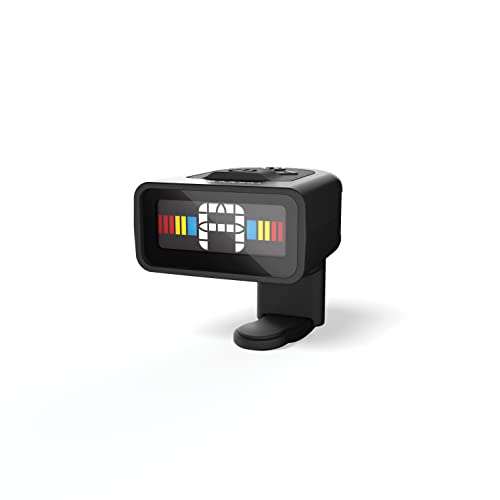
- Tiny 1.25-inch profile
- Vibration-sensing piezo transducer
- Tri-color backlit display
Best For: Players who prefer a compact tuner that blends into the headstock
Best Rechargeable Option
LEKATO Rechargeable Clip-On Tuner

- Over 10 hours per charge
- 360-degree rotatable clip
- Five instrument and alternate-tuning modes
Best For: Beginners wanting rechargeable power and tuning versatility
Best Traditional Display

- Large needle-style display
- Dedicated guitar and bass modes
- Up to 200 hours of battery life
Best For: Beginners who want a clear, conventional tuner display
Best for Easy Setup

- Rechargeable battery provides up to 24 hours per charge
- Bright display and 360-degree rotation
- Strong clip with 415–465 Hz calibration
Best For: Players seeking a rechargeable clip-on tuner
Best Traditional Meter

- Large, high-visibility needle-style display
- Compact and lightweight design
- 410–480 Hz adjustable calibration
Best For: Beginners who prefer a traditional chromatic meter
Best Color Display

- Full-color vertical display with flexible viewing angles
- Dual swivels suit left- or right-handed players
- Works with guitar, bass, and ukulele
Best For: Players wanting an adjustable color clip-on tuner
Reliable Starter Pick

- One-button operation
- Sensitive vibration detection
- Rotational display with six-month guarantee
Best For: Beginners wanting simple, portable tuning
Versatile Value Option

- Tunes multiple stringed instruments
- Vibration sensing handles noisy surroundings
- 360-degree screen with automatic shut-off
Best For: Beginners tuning guitar and other instruments
Rechargeable Feature Pick
New Bee GT30 Color-Screen Tuner

- Clear color display
- Supports open and multiple-instrument tuning
- USB-C rechargeable for up to 10 hours
Best For: Beginners wanting modern, rechargeable convenience
Best Value Pick – Snark SN5X Clip-On Tuner
For beginners comparing guitar tuners for beginners, the Snark SN5X offers a straightforward clip-on design with a full-color display and tuning support tailored to guitar and bass. Its headstock clip can be positioned on either side for convenient viewing.
Best For: New guitar or bass players who want a simple, easy-to-read chromatic tuner.
Pros:
- Full-color display is easy to read while tuning.
- Frequency range is tailored to guitar and bass.
- Can be used on the front or back of the headstock.
Cons:
- Uses a replaceable lithium battery rather than rechargeable power.
- The supplied notes do not specify automatic shutoff or calibration controls.
The SN5X keeps the essential beginner experience uncomplicated: clip it on, read the color display, and adjust the strings. It is a practical choice when accessible guitar and bass tuning features matter more than extra modes.
Most Discreet Pick – D'Addario Micro Headstock Tuner
Among guitar tuners for beginners, the D’Addario Micro Headstock Tuner stands out for its tiny, discreet profile. Its piezo transducer senses instrument vibration instead of relying on sound, while the tri-color screen gives clear out-of-tune, close, and in-tune feedback.
Best For: Guitarists who want an accurate tuner that can remain discreetly attached to the instrument.
Pros:
- Compact 1.25-inch design can stay on the instrument in its case.
- Piezo transducer provides vibration-based tuning.
- Tri-color backlit screen makes tuning status easy to interpret.
- 360-degree swivel and adjustable padded clamp support flexible positioning.
Cons:
- The very small display may be less prominent than larger tuner screens.
- Requires a CR2032 battery.
Its compact construction and vibration sensing make this a strong everyday option for beginners who want minimal visual clutter. The wide 410–480Hz calibration range and support for several stringed instruments add useful flexibility.
Best Rechargeable Option – LEKATO Rechargeable Clip-On Tuner
For beginners seeking guitar tuners for beginners with extra flexibility, the LEKATO combines a bright color display, a 360-degree rotatable clip, and rechargeable power. It supports guitar, bass, ukulele, violin, and chromatic modes, making it useful beyond a single instrument.
Best For: Beginners who want rechargeable operation, multiple tuning modes, and an adjustable viewing angle.
Pros:
- Rechargeable battery provides over 10 hours of continuous use per charge.
- Auto power-down activates after five minutes without a signal.
- 360-degree clip supports flexible screen positioning.
- Includes alternate guitar tunings such as Drop D and Open G.
Cons:
- Its feature set may be more than a beginner needs for basic standard tuning.
- Rechargeable operation requires USB Type-C charging.
- The supplied notes do not specify charging time.
The LEKATO is a versatile choice for learners who expect to experiment with alternate tunings or different stringed instruments. Its bright display, sensitive piezo sensor, and rechargeable battery make it especially convenient for regular practice.
Best Traditional Display – Korg GA2 Guitar Tuner
The Korg GA2 is a practical alternative for beginners comparing guitar tuners for beginners and preferring a larger, traditional needle-style readout. Dedicated guitar and bass modes keep operation focused, while the compact body is easy to carry.
Best For: Beginners who prefer a high-visibility needle-style display for guitar or bass.
Pros:
- Large, high-visibility display uses an easy-to-follow needle-style meter.
- Dedicated guitar and bass modes simplify selection.
- Offers quinta-flat tuning and adjustable 430–450Hz calibration.
- Provides up to 200 hours of battery life.
Cons:
- Batteries are not included.
- It is not described as a clip-on tuner, so it may be less convenient for silent headstock tuning.
- Its guitar and bass focus is less versatile than multi-instrument models.
The GA2 favors clear visual feedback and long battery life over a broad feature list. Its dedicated modes and needle display can make the tuning process feel familiar and approachable for a first-time guitarist.
Best for Easy Setup – Nexxus 360
For beginners comparing guitar tuners for beginners, the D’Addario Nexxus 360 is a convenient clip-on option with quick tuning, a bright display, and a rechargeable design. Its screen and clamp rotate 360 degrees, making it easy to position on the headstock.
Best For: Players who want a rechargeable tuner for acoustic or electric guitar and bass.
Pros:
- Provides up to 24 hours of tuning per charge.
- Bright, rotating display is easy to position in different lighting conditions.
- Strong clamp mounts securely anywhere on the headstock.
- Offers adjustable calibration from 415–465 Hz.
Cons:
- Requires recharging instead of using replaceable batteries.
- USB cable is needed for charging.
The Nexxus 360 stands out when convenience and flexible viewing matter most. Its rechargeable battery and rotating display make it especially practical for regular practice sessions.
Best Traditional Meter – Korg CA-2 Chromatic Tuner
The Korg CA-2 is a compact chromatic tuner for beginners who prefer a traditional needle-style readout. Its large, high-visibility display and broad calibration range make it suitable for guitar and a variety of other instruments.
Best For: Beginners who want a lightweight chromatic tuner with a clear needle-style meter.
Pros:
- Large display is designed for high visibility.
- Compact, slim, and lightweight for easy carrying.
- Supports adjustable calibration from 410–480 Hz.
- Includes pure major-third and minor-third indicators.
Cons:
- Uses two CR2 batteries.
- Does not offer a clip-on headstock design in the supplied details.
The CA-2 is a straightforward choice for players who value a familiar meter display and broad tuning flexibility. Its small body also makes it practical to keep in a practice bag.
Best Color Display – Eclipse Clip-On
The D’Addario Eclipse is a simple clip-on choice for guitar tuners for beginners, combining quick tuning with a full-color vertical display. Its dual swivels let players adjust the screen for left- or right-handed use and mount it in different positions on the headstock.
Best For: Guitarists and multi-instrumentalists who want an adjustable color display in a compact clip-on tuner.
Pros:
- Full-color screen offers flexible viewing angles.
- Dual swivels accommodate left- and right-handed players.
- Strong clamp is designed to stay mounted on the headstock.
- Works with acoustic guitar, electric guitar, bass, and ukulele.
Cons:
- Uses a CR2 battery rather than a rechargeable power source.
- Calibration range is narrower than the Nexxus 360 at 435–450 Hz.
The Eclipse is a good fit when screen visibility and mounting flexibility are priorities. Its color display and adjustable swivels make it easy to read from varied playing positions.
Reliable Starter Pick – Donner DT-2 Clip-On Tuner
Donner Guitar Tuner Clip on-Accurate Chromatic,Acoustic Guitar Bass Violin Ukulele Tuner DT-2
Check Price On AmazonFor beginners comparing guitar tuners for beginners, the Donner DT-2 keeps the setup straightforward: clip it onto the instrument, press the single control, and tune using its vibration-sensitive detection. Its rotating display also makes it easier to read from different playing positions.
Best For: Beginners who want a simple clip-on tuner for guitar and other stringed instruments.
Pros:
- One-button operation is easy to learn.
- Sensitive vibration clip supports quick, precise tuning.
- Rotational display and clip provide flexible viewing angles.
- Includes a six-month guarantee.
Cons:
- Requires a CR2032 battery.
- The mini design may offer fewer controls than more feature-rich tuners.
The DT-2 is a practical choice when ease of use matters most. Its compact design, simple control layout, and rotating screen make it well suited to a beginner’s practice setup.
Versatile Value Option – SH03 Clip-On Guitar Tuner
Guitar Tuner Clip On 1 Pack Tuners for Acoustic Electric Guitar Bass Ukulele Violin banjo Tuning
Check Price On AmazonIf you are choosing guitar tuners for beginners and want one tuner to cover several instruments, this SH03 clip-on model offers vibration-based tuning for guitar, bass, ukulele, violin, banjo, and more. Its rotatable screen and automatic shut-off add everyday convenience.
Best For: Beginners and multi-instrument households looking for an affordable, flexible clip-on tuner.
Pros:
- Quick, accurate vibration sensing works in noisy surroundings.
- Supports acoustic and electric guitar, bass, ukulele, violin, and banjo.
- 360-degree rotatable screen helps with viewing and adjustment.
- Automatic shut-off activates after three minutes without continued operation.
Cons:
- Uses a plastic body rather than a more substantial metal construction.
- Supplied as a single tuner with no rechargeable-battery feature noted.
The SH03 stands out for broad instrument compatibility and a flexible display. It is a sensible beginner option for players who may move beyond guitar or need tuning support in busier environments.
Rechargeable Feature Pick – New Bee GT30 Color-Screen Tuner
For beginners comparing guitar tuners for beginners, the New Bee GT30 adds a vivid color screen, rechargeable USB-C power, and support for several tuning modes. The adjustable display and padded clamp make it convenient for practice, studio use, or carrying in a guitar case.
Best For: Beginners who prefer a rechargeable tuner with a clear display and broader tuning options.
Pros:
- High-resolution color screen improves note visibility.
- Supports guitar, bass, ukulele, violin, cello, chromatic, and open tuning.
- 360-degree rotatable screen and silicone-padded clamp improve usability.
- USB-C rechargeable battery provides up to 10 hours of tuning.
Cons:
- Requires charging rather than a replaceable coin-cell battery.
- Its additional tuning modes may be more than a basic beginner setup needs.
The GT30 is a strong fit if you want beginner-friendly operation without giving up modern conveniences. Its color display, rechargeable battery, and broad instrument support make it especially useful for regular practice and multiple instruments.
How We Picked the Best Guitar Tuners for Beginners
We prioritized tuners that make the basic tuning process clear and repeatable. Each selected model was evaluated for display readability, note detection, attachment method, adjustment range, portability, and suitability for acoustic and electric guitars. Rechargeable and battery-powered options are included so beginners can choose between low-maintenance convenience and easy battery replacement.
We also considered whether a tuner supports additional instruments such as bass, ukulele, violin, or banjo. Extra compatibility can be useful as your playing develops, but it should not come at the expense of a simple interface or dependable tuning response.
Quick Comparison
| Type | Best For | Main Advantage | Potential Trade-Off |
|---|---|---|---|
| Clip-on chromatic | Most beginners | Fast, hands-free tuning | Requires a suitable headstock position |
| Rechargeable clip-on | Frequent players | No regular battery purchases | Needs charging |
| Handheld chromatic | Practice rooms and broad instrument use | Flexible placement and wide compatibility | Less convenient while holding a guitar |
| Guitar-focused handheld | Simple guitar tuning | Dedicated controls and compact size | May offer fewer tuning modes |
Key Buying Factors for Guitar Tuners for Beginners
Display and Readability
A bright color screen or high-contrast needle makes it easier to see whether a string is flat, sharp, or in tune. Look for a display that remains visible from your normal playing position and offers a clear center indicator.
Clip Stability and Rotation
Clip-on tuners should grip the headstock securely without scratching it. A rotating screen is helpful when the tuner sits at an awkward angle, especially on smaller instruments or crowded headstocks.
Chromatic Detection and Accuracy
Chromatic mode detects the note being played rather than limiting you to standard guitar tuning. This is valuable for alternate tunings and useful for beginners who are still learning string names. A responsive sensor also reduces the need to pluck a string repeatedly.
Power and Portability
Rechargeable models reduce disposable battery use, while replaceable batteries are convenient when you forget to charge. Check expected battery life, charging requirements, automatic shutoff, and overall size before buying.
Instrument Compatibility
If you may play bass, ukulele, violin, or banjo, choose a tuner that lists those instruments as supported. Bass notes can require stronger low-frequency detection, so compatibility claims matter.
Who Should Buy Which Guitar Tuners for Beginners?
Choose a basic clip-on chromatic tuner if you want the simplest, most affordable path to accurate guitar tuning. It is usually the best starting point for a new player. Pick a rechargeable clip-on model if you practice often and prefer not to keep spare batteries nearby.
A handheld Korg-style tuner is a good choice for players who want a flexible device for multiple instruments or prefer using a tuner away from the guitar headstock. Guitar-focused handheld models suit beginners who want straightforward controls and a compact practice-room tuner.
For most first-time guitarists, prioritize a stable clip, a readable screen, chromatic detection, and automatic shutoff over advanced features. Those essentials make tuning faster and help you spend more time practicing.