Great monitoring helps drummers lock in timing, hear cues, and play with confidence. The right setup depends on your stage volume, whether you prefer wedges or in-ears, and how much portability matters.
Below, we’ve narrowed the field to a balanced mix of powered, passive, and in-ear options so you can choose the stage monitoring solution that fits your kit, your venue, and your budget.
Best 10 Stage Monitors for Drummers Picks for 2026
Powered Stage Wedge
Samson RSXM10A 800W 10-Inch Active Monitor

- 800W active wedge with 10-inch driver
- FOH/Monitor selector for flexible use
- XLR-1/4" combo input and XLR link output
Best For: Drummers needing a loud powered wedge for rehearsal or live stages
Wireless Floor Monitor
ALTO TX410 350W Bluetooth Powered PA Speaker

- 350W powered wedge with 2-channel mixer
- Bluetooth and TWS for wireless playback
- Works as a floor monitor or pole-mounted speaker
Best For: Drummers who want a versatile powered monitor with Bluetooth
In-Ear Monitor Pair
UE 250 Universal Dual Driver IEMs
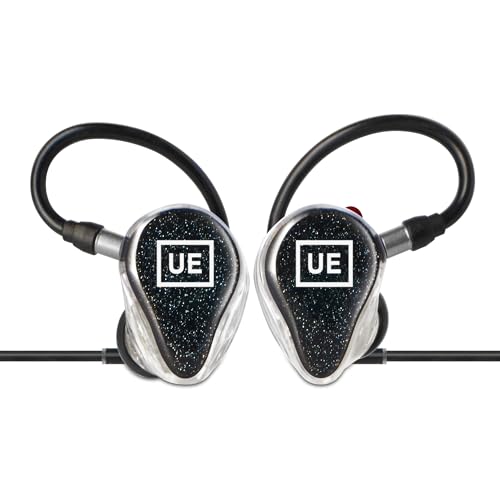
- Dual balanced armature drivers with crossover
- Enhanced low-end response for drummers and bassists
- Perform Fit design for extended wear
Best For: Drummers who prefer isolated in-ear monitoring over wedge monitors
Traditional Floor Wedge
Yamaha BR12M 12-Inch Floor Monitor

- 12-inch woofer with 1-inch compression driver
- 600W peak power handling for stage use
- Built-in pole socket adds placement flexibility
Best For: Drummers wanting a classic 12-inch wired floor monitor
Passive pair
Dual 10-inch passive floor wedges

- Two passive monitor speakers included
- 10" woofer and 1" compression tweeter
- Parallel 1/4" jacks for daisy chaining
Best For: Drummers needing a basic passive monitor pair
Rugged wedge
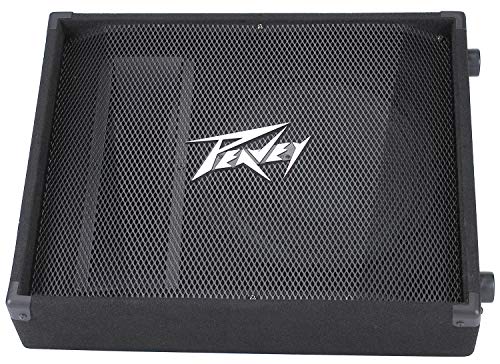
- 12" Sheffield Pro woofer
- 500W program power handling
- Heavy-duty grille and steel handle
Best For: Drummers wanting a durable larger passive wedge
Powered pair
Powered 10-inch wedge pair with EQ

- Integrated 300W amp in each speaker
- 3-band EQ for quick tone control
- XLR, aux, and MP3 inputs included
Best For: Drummers wanting powered wedges with easy setup
Portable IEM Amp
Bolanle P2 Portable In-Ear Monitor Amp

- XLR and TRS inputs for common live setups
- Stereo/mono switch for flexible monitoring
- AAA battery powered with all-metal build
Best For: drummers and other players wanting a compact personal monitor
Passive Stage Wedge
Grindhouse GH10M 10-Inch Passive Wedge Monitor
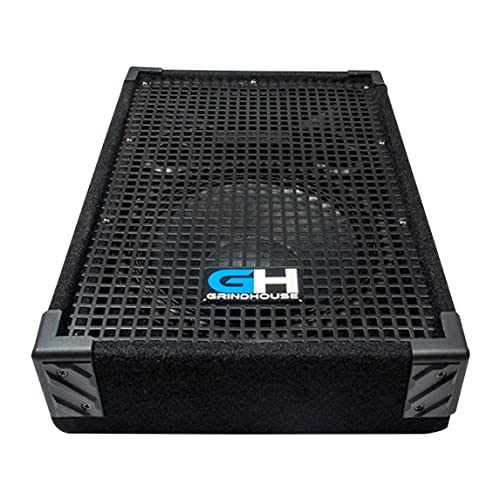
- 300W RMS passive wedge for live monitoring
- 10-inch 8-ohm design with wired connections
- Built for PA, DJ, stage, and studio use
Best For: drummers who already have an external amp and want a classic wedge monitor
Powered Wedge Pair
Seismic Audio SA-10MT-PW Powered 10-Inch Pair

- Powered pair of 10-inch wedge monitors
- XLR combo, 1/4-inch, 3.5 mm, and Speakon inputs
- 3-band EQ with gain and volume controls
Best For: drummers and live sound setups needing a powered two-monitor package
Powered Stage Wedge – Samson RSXM10A 800W 10-Inch Active Monitor
If you want stage monitors for drummers that can deliver serious volume without feeling cumbersome, the Samson RSXM10A is built for exactly that job. Its 800-watt output, 10-inch driver, and coaxial active design make it a practical pick for loud rehearsal rooms, stage wedges, and FOH/monitor switching setups.
Best For: Drummers who need a high-power active wedge for rehearsal spaces, live stages, or DJ-style monitoring.
Pros:
- 800W output gives it plenty of headroom for louder stage use.
- 10-inch woofer plus 1-inch tweeter for a full-range monitor sound.
- FOH/Monitor selector helps optimize the cabinet for different roles.
- Compact all-wood cabinet keeps it relatively easy to place on stage.
Cons:
- At 30 pounds, it is not the lightest option to move around.
- Wired only, so there is no Bluetooth or wireless convenience.
- More monitor than personal playback tool, so it may be more than some small setups need.
Overall, the RSXM10A suits players who want a loud, straightforward powered wedge with enough output to keep up with drums and a simple control layout for live use.
Wireless Floor Monitor – ALTO TX410 350W Bluetooth Powered PA Speaker
The ALTO TX410 is a flexible choice if you’re shopping for stage monitors for drummers who also need easy setup and modern connectivity. With a 350W bi-amplified design, wedge monitor support, and Bluetooth with TWS pairing, it works well when you want monitor sound plus simple playback options in one box.
Best For: Drummers, bands, and DJs who want a powered floor monitor with Bluetooth and mixer features.
Pros:
- 350W output is solid for practice rooms, venues, and events.
- Can be used as a floor monitor or mounted on a pole.
- Built-in 2-channel mixer supports mic, line, and Bluetooth inputs.
- Bluetooth and TWS make wireless streaming simple.
Cons:
- Not water resistant, so it needs normal indoor stage care.
- Less output than larger powered monitors if you need maximum stage volume.
- Best as a versatile PA/monitor hybrid, not a dedicated drum monitor specialist.
For drummers who want a monitor that is easy to run and useful beyond drum duty, the TX410 stands out for its combination of convenience, flexibility, and portable build.
In-Ear Monitor Pair – UE 250 Universal Dual Driver IEMs
If your priority is isolation and clarity instead of a floor wedge, these stage monitors for drummers take the form of universal in-ear monitors. The UE 250 uses dual balanced armature drivers with a crossover design to give drummers and bassists enhanced low-end response and detailed high frequencies in a lightweight wired package.
Best For: Drummers who want compact in-ear monitoring with strong bass response and sound isolation.
Pros:
- Dual Knowles balanced armature drivers provide detailed separation.
- Enhanced low-end response suits drummers and bass-heavy players.
- Perform Fit design is made for comfortable extended wear.
- Red dot marking makes right-side identification easier in dark settings.
Cons:
- Wired 3.5 mm connection means no wireless freedom.
- In-ear fit may not suit players who prefer a traditional wedge monitor.
- Best performance depends on getting a consistent seal.
The UE 250 is a strong pick when you want a cleaner on-stage mix and less spill around the kit, especially if you prefer in-ear monitoring over a floor monitor.
Traditional Floor Wedge – Yamaha BR12M 12-Inch Floor Monitor
The Yamaha BR12M is a straightforward option for players looking at stage monitors for drummers with a larger cabinet and a punchy, traditional wedge design. Its 12-inch woofer, 1-inch compression driver, and 600W peak power handling are aimed at live performances, stage monitoring, and general sound reinforcement.
Best For: Drummers and live bands that want a dependable, traditional 12-inch floor monitor.
Pros:
- 12-inch woofer delivers strong low-end presence for stage use.
- 600W peak handling gives it respectable power capacity.
- Built-in pole socket adds extra placement flexibility.
- Designed specifically for live performances and stage monitoring.
Cons:
- Wired-only design with no modern wireless features.
- Larger 12-inch cabinet may take up more floor space by the kit.
- At 15.6 kg, it is not the lightest monitor to carry.
For drummers who want a simple, proven wedge with a bigger driver and no extra complexity, the BR12M is a practical stage-monitoring solution.
Passive pair – Dual 10-inch passive floor wedges
If you need stage monitors for drummers that can cover a rehearsal room, bar gig, or church stage, this Sound Town pair keeps things simple. Each passive wedge uses a 10-inch woofer and 1-inch compression tweeter, with parallel 1/4-inch jacks for easy daisy chaining and a road-ready cabinet built for floor monitoring.
Best For: Drummers and bands wanting a straightforward passive monitor pair for live sound setups.
Pros:
- Pair of passive 2-way stage monitor speakers included
- 10″ woofer plus 1″ compression tweeter for fuller live sound
- Parallel 1/4″ jacks make daisy chaining easier
- Built-in handles, metal grille, and carpet finish suit touring use
Cons:
- Passive design means you need external amplification
- No wireless connectivity or onboard inputs
For drummers who already have amp power available, this is a practical wedge-style option with a durable build and a familiar passive setup. It is best suited to conventional live-sound rigs where simplicity and durability matter more than onboard features.
Rugged wedge – 12-inch passive floor monitor
The Peavey PV 12M is a traditional floor monitor option for drummers who want a larger 12-inch wedge on stage. Its 500W program power handling, Sheffield Pro woofer, and titanium-diaphragm compression driver are aimed at live monitoring, while the carpet covering and metal grille help it hold up in regular gig use.
Best For: Drummers who prefer a larger passive wedge with rugged construction and simple stage placement.
Pros:
- 12″ Sheffield Pro woofer for a bigger monitor format
- 500W program power handling for live sound use
- Titanium-diaphragm compression driver for clear highs
- Heavy-duty grille, steel handle, and carpet covering improve durability
Cons:
- No powered amplifier or onboard EQ
- Single monitor format, not a multi-speaker package
This is a solid pick if you want a straightforward 12-inch stage wedge and already have the rest of the monitoring chain in place. It favors ruggedness and familiar passive operation over extra features.
Powered pair – Powered 10-inch wedge pair with EQ
For drummers who want stage monitors for drummers with less setup hassle, this powered Sound Town pair adds onboard amplification and basic tone control. Each wedge combines a 10-inch woofer, 1-inch compression driver, XLR and aux-style inputs, and a 3-band EQ, making it easier to adapt to rehearsal or live-stage monitoring.
Best For: Drummers who want powered floor monitors with flexible inputs and quick tone shaping.
Pros:
- Powered pair with integrated 300W amplifier in each speaker
- 10″ woofer and 1″ compression driver for focused monitoring
- Built-in 3-band EQ for bass, mid, and treble adjustment
- XLR input/output plus 1/4″ aux and 1/8″ MP3 input for flexible connectivity
Cons:
- Not water resistant
- Still a wired setup, with no wireless option
This pair makes sense if you want powered wedges that reduce dependence on external amplification while keeping control at the speaker. The combination of inputs, EQ, and durable road-ready cabinets is useful for drummers who need fast, practical monitoring.
Portable IEM Amp – Bolanle P2 Portable In-Ear Monitor Amp
For drummers who need a simple way to hear the mix clearly on loud stages, this portable in-ear monitor amplifier keeps personal monitoring straightforward. The Bolanle P2 accepts XLR or 1/4" TRS inputs, lets you switch between stereo and mono, and runs on AAA batteries for cordless use during gigs.
Best For: Drummers, keyboardists, guitarists, and bass players who want a compact belt-clip IEM solution with flexible inputs.
Pros:
- XLR and TRS input compatibility for easy hookup to common stage setups
- Stereo/mono switch adds flexibility, including mono use with one ear free
- Battery-powered operation avoids charging cables and phantom power dependence
- All-metal chassis and belt-clip design suit regular gigging
Cons:
- Requires two AAA batteries, so you'll need spares on hand
- Single-channel output limits it to personal monitoring use
- Not a full stage monitor speaker if you want room-filling sound
This is a practical pick if you want stage monitors for drummers in a compact in-ear format rather than a floor wedge. It focuses on clean personal monitoring and simple connectivity instead of extra features, which makes it easy to slot into a live rig.
Passive Stage Wedge – Grindhouse GH10M 10-Inch Passive Wedge Monitor
If you want stage monitors for drummers that behave like a traditional floor wedge, the Grindhouse GH10M is built for that job. This passive 10-inch monitor is rated at 300 watts RMS per cabinet, uses an 8-ohm design, and is aimed at PA, DJ, live sound, and studio monitoring.
Best For: Drummers, bands, and live sound setups that need a passive wedge monitor with strong output and simple wired connection.
Pros:
- 300 watts RMS / 600 watts peak rating per monitor
- 10-inch wedge format suits floor monitoring on stage
- Passive 8-ohm design works with external amplification
- Wired 1/4-inch TS and speaker terminal connections keep it straightforward
Cons:
- Passive design means you'll need an external power amp
- Single-monitor listing may require buying additional units for stereo coverage
- No wireless options or onboard processing
This is a sensible option if your priority is a basic, rugged wedge rather than an all-in-one powered speaker. For drummers who already have amplification available, it offers a no-nonsense route to loud, stage-ready monitoring.
Powered Wedge Pair – Seismic Audio SA-10MT-PW Powered 10-Inch Pair
For drummers looking at stage monitors for drummers with more built-in control, this powered 10-inch wedge pair brings an active setup to live sound, stage, and studio use. Each monitor includes XLR combo inputs, 1/4-inch inputs, two Speakon inputs, a 3-band EQ, and power-select support for 110V or 220V operation.
Best For: Drummers, rehearsal spaces, and live sound rigs that want a powered two-monitor package with onboard EQ and multiple input choices.
Pros:
- Powered active design reduces the need for an external amp
- Multiple input options, including XLR combo, 1/4-inch, 3.5 mm, and Speakon
- 3-band EQ and gain/volume controls offer useful onboard adjustment
- Pair includes two 10-inch wedge monitors for a matched setup
Cons:
- Heavy at 70 pounds for the package
- Not a compact personal monitoring solution
- Basic feature set compared with more advanced DSP-equipped monitors
This pair makes sense if you want powered wedges that are ready for stage use without building a system around them. The combination of active amplification and flexible inputs makes them especially practical for drummers who need dependable monitor coverage in a wired setup.
How We Picked These Stage Monitors for Drummers
We focused on practical factors that matter most to drummers: clear midrange for click and vocals, enough output to cut through acoustic drums, useful low-end response, and stage-friendly construction. We also considered portability, power options, and whether each choice makes sense for rehearsals, clubs, churches, or larger live rigs.
Quick Comparison: Wedges Vs In-Ears Vs Powered Options
Wedge monitors are the most familiar choice and work well when you want a direct, room-feeling reference on stage. Powered wedges reduce setup time because amplification is built in, while passive wedges can be a good fit if you already own amps or want to build a flexible system. In-ear monitors offer the cleanest isolation and the lowest stage bleed, which can be a major advantage for drummers playing loud rooms or tight mixes.
Key Buying Factors for Stage Monitors for Drummers
Volume and Headroom
Drummers need monitors that stay clear at higher SPLs. Look for enough power and sensitivity to remain intelligible when the stage gets loud.
Sound Balance
Prioritize a monitor that handles vocals, click tracks, and snare/kick reference without sounding harsh. A controlled low end is helpful, but too much bass can mask timing details.
Form Factor and Placement
Check wedge angle, cabinet size, and weight. Compact monitors are easier to place around a drum riser, while larger cabinets may offer more full-range sound but take up more space.
Wired or In-Ear Monitoring
If you want isolation and consistency, in-ear systems can be the better choice. If you prefer air movement and a more natural stage feel, traditional floor wedges are usually the better fit.
Connectivity and Rig Compatibility
Make sure the inputs match your mixer, interface, or personal monitor setup. For drummers using click, tracks, or multiple cues, flexible input options can simplify routing.
Who Should Buy Which Stage Monitors for Drummers?
If you play frequent gigs and want fast setup, powered wedges are often the simplest option. If you already have a PA rack or want to keep costs controlled, passive wedges can deliver excellent value. Drummers who play loud stages, use click tracks, or need maximum isolation should strongly consider in-ear monitoring. For home practice, smaller powered speakers or personal headphone amps can be enough, especially when portability and simplicity matter more than stage coverage.
In short, the best choice depends on how much isolation you need, how loud your band gets, and whether you want a traditional wedge feel or a more controlled in-ear mix.