Choosing the right digital mixer for live band work can make setup faster, sound checks easier, and live audio far more consistent. The best models balance clean preamps, flexible routing, and enough channels for your stage.
Below, we focus on practical options for bands, venues, and mobile sound crews, from compact mixers to full-featured units with app control and built-in recording.
Best 10 Digital Mixer for Live Band Picks for 2026
Tablet-Controlled Live Sound Hub
Behringer XR18 18-Channel Digital Mixer
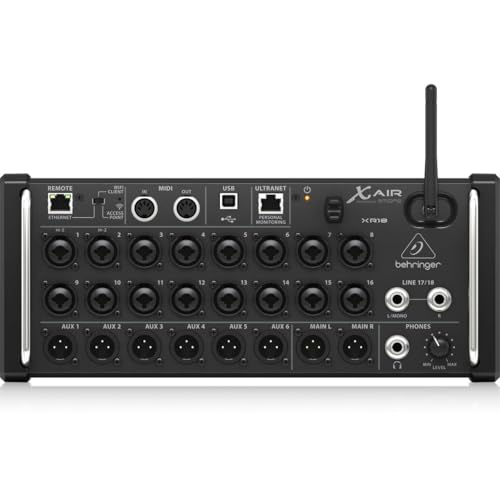
- 18-input, 12-bus digital mixer
- 16 programmable MIDAS preamps
- Built-in Wi-Fi and 18 x 18 USB audio
Best For: Bands and engineers who want tablet-based control and recording
Compact Analog-Plus-Effects Mixer

- 10-channel mixer with USB
- SPX digital effects included
- One-knob compressors and D-PRE preamps
Best For: Small bands and rehearsals that need simple, reliable mixing
Hands-On Digital Stage Mixer

- 16 channels with 10 digital mic preamps
- 7-inch display and capacitive touchfaders
- USB, Bluetooth, EQ, compression, and FX
Best For: Small venues and bands that want tactile digital mixing
Simple 12-Channel Live Desk

- 12-channel mixer with USB
- SPX effects and one-knob compressors
- Rugged powder-coated metal chassis
Best For: Small to mid-size bands needing simple mixing with effects
GF12 PRO Stage Performance Pick
12-Channel Mixer for Live Sets
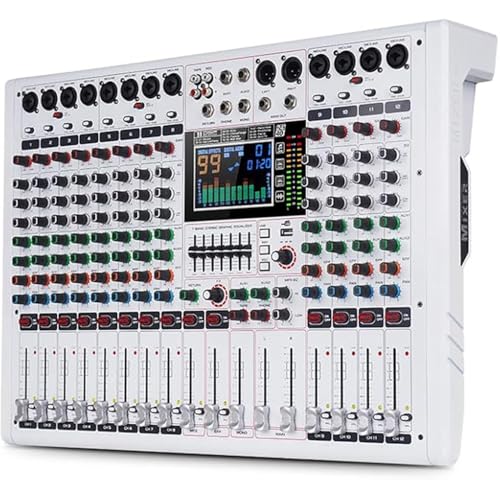
- 12 channels for multiple live sources
- 7-stage EQ and 99 DSP effects
- USB/Bluetooth playback with LCD display
Best For: Small bands and stage performances
Yamaha Live Sound Workhorse

- 20 inputs for larger live band setups
- SPX effects plus D-PRE preamps
- 3-band EQ, filters, and one-knob compression
Best For: Bands and venues needing a dependable higher-channel mixer
Zoom Portable Recording Performer
Battery-Powered 12-Channel Mixer

- 12 channels with 14-track SD recording
- 32-bit float audio and AI noise reduction
- Runs on AA batteries, USB, or battery pack
Best For: Mobile bands that want portable mixing and recording
Compact Live Band Mixer with USB & Bluetooth
8 Channel Professional Audio Mixer Console

- 8 channels with XLR and 1/4" input support
- USB, Bluetooth, and flash-drive playback/recording
- 3-band EQ plus reverb and delay effects
Best For: Small bands and simple live or streaming setups
Multitrack Band Recorder Mixer
Zoom LiveTrak L-12 Multitrack Recorder Mixer

- 14-track recording to SD at 24-bit/96kHz
- Five independent headphone monitor mixes
- USB audio interface for computer or iOS use
Best For: Bands that need live mixing plus multitrack recording
Feature-Rich Live Band Console
16 Channel Audio Mixer with 99 DSP Effects

- 16 channels with XLR and stereo line inputs
- 99 DSP effects plus 7-band main EQ
- Bluetooth and USB with MP3 playback/recording
Best For: Larger small-to-mid bands needing more channels and effects
Tablet-Controlled Live Sound Hub – Behringer XR18 18-Channel Digital Mixer
If you need a digital mixer for live band duties that can handle a full input list without a lot of extra hardware, the Behringer XR18 is built around tablet control and flexible routing. It gives you 18 channels, 12 buses, and 16 programmable MIDAS preamps, plus built-in Wi-Fi so you can run the mix directly from an iPad or Android tablet.
Best For: Bands, small venues, and engineers who want a compact digital mixer with tablet control and multi-channel recording.
Pros:
- 18-input, 12-bus layout suits live band setups
- 16 MIDAS-designed programmable preamps for mic-heavy sources
- Built-in Wi-Fi router supports direct operation without an external router
- 18 x 18 USB interface is useful for recording and playback
Cons:
- Control depends on an iPad or Android tablet
- Future Dugan-style auto-mixing is listed as a firmware update
- Less hands-on than mixers with physical faders and screens
The XR18 is a strong fit when you want digital flexibility in a small footprint, especially for live band mixing and simple recording workflows. It favors control, routing, and preamp count over a traditional analog surface.
Compact Analog-Plus-Effects Mixer – Yamaha MG10XU 10-Input Mixer
The Yamaha MG10XU is a practical choice if you want a simple mixer for live band use with built-in USB and onboard effects. It keeps the setup straightforward with 10 channels, D-PRE preamps, 3-band EQ, high-pass filters, and one-knob compressors for quick cleanup and control.
Best For: Smaller live bands, rehearsal rooms, and players who want an easy-to-use mixer with effects.
Pros:
- 10 channels are enough for smaller band or combo setups
- SPX digital effects add built-in processing
- One-knob compressors simplify vocal and instrument control
- Rugged metal chassis is suited to regular use
Cons:
- Not a digital mixer in the modern touchscreen/tablet sense
- Channel count is limited for larger bands
- Less routing flexibility than bigger digital live mixers
This model makes sense if your priority is reliable sound shaping without a steep learning curve. For straightforward live band mixing, it offers useful effects and clean signal control in a portable format.
Hands-On Digital Stage Mixer – ALTO TMD16 16-Channel Mixer
The ALTO TMD16 is aimed at live band users who want a digital mixer for live band setups but prefer physical control over menu-heavy operation. It combines 16 channels, 10 digital mic preamps, a 7-inch color display, and capacitive touchfaders, so you can mix directly on the unit without needing a tablet.
Best For: Small venues, practice spaces, and gigging bands that want tactile control and quick setup.
Pros:
- 16-channel digital layout with 10 digital mic preamps
- 100mm capacitive touchfaders and a 7-inch display reduce menu diving
- Built-in EQ, compression, and 16-preset FX engine
- USB and Bluetooth support recording, streaming, and app control
Cons:
- No tablet is required, but app control may still be part of the workflow
- Smaller than larger multi-bus mixers for more complex shows
- Best suited to small-venue and practice-space applications
If you want a road-ready digital mixer that feels more like a traditional console, the TMD16 stands out. Its combination of touchfaders, onboard processing, and scene recall makes it a practical live-sound tool for repeated gigs.
Simple 12-Channel Live Desk – Yamaha MG12XU 12-Input Mixer
The Yamaha MG12XU is a straightforward option for a digital mixer for live band workflows when you want clean analog-style control with USB and effects. It offers 12 channels, SPX digital effects, D-PRE preamps, high-pass filters, and one-knob compressors, giving you a useful mix of tone shaping and ease of use.
Best For: Small to mid-size bands that need a dependable mixer with USB connectivity and built-in effects.
Pros:
- 12 channels provide more room than smaller compact mixers
- USB connectivity supports direct computer integration
- SPX digital effects and one-knob compressors add quick processing
- Rugged metal chassis is built for regular transport and use
Cons:
- Does not offer the advanced routing of larger digital mixers
- Fewer channels than 16- or 18-channel live sound options
- More of a compact mixer with digital effects than a full digital console
For bands that want dependable sound control without jumping into a complex digital workflow, the MG12XU hits a practical middle ground. It is easy to place in a rehearsal rig or small-stage setup and still gives you useful processing and USB output.
GF12 PRO Stage Performance Pick – 12-Channel Mixer for Live Sets
If you need a digital mixer for live band use in a compact venue, the GF12 PRO gives you 12 channels, built-in effects, and a 7-stage EQ for more detailed live control. Its LCD color screen, isolated mute, and USB/Bluetooth playback make it a practical option for small to medium performances, karaoke, and similar events.
Best For: Small bands, stage performances, and event setups that want simple multi-channel mixing with onboard effects.
Pros:
- 12 separate channels for microphones, instruments, and other sources
- 7-stage equalizer for finer overall volume adjustment
- 99 DSP effects for different performance scenarios
- USB and Bluetooth support for playback convenience
Cons:
- Best suited to small to medium occasions rather than larger rigs
- No detailed pro-audio preamp or recorder specs are listed in the notes
- USB/Bluetooth features are focused on playback, not advanced networking
The GF12 PRO is a feature-rich stage mixer when you want basic flexibility without moving up to a larger console. For live band work where onboard effects and straightforward channel control matter, it covers the essentials well.
Yamaha Live Sound Workhorse – 20-Input Mixer with Effects
For buyers comparing a digital mixer for live band duties, the Yamaha MG20XU is a strong step up in channel count and processing control. It combines 20 inputs, SPX digital effects, D-PRE preamps, 3-band EQ, high-pass filters, and 1-knob compressors in a rugged metal chassis built for regular gig use.
Best For: Bands and venues that want a dependable, higher-channel-count mixer with straightforward tone shaping and onboard effects.
Pros:
- 20 channels provide room for larger live setups
- SPX digital effects add practical built-in processing
- D-PRE preamps are designed for natural-sounding bass and highs
- 1-knob compressors help tighten vocals and instruments quickly
Cons:
- Heavier than compact mixers at 7,590 grams
- USB is listed, but the notes do not mention recording detail or software features
- May be more mixer than a very small band needs
The MG20XU stands out when reliability and clean channel control matter more than flashy extras. If your live band setup needs more inputs and proven analog-style workflow with digital effects, this is the most substantial option here.
Zoom Portable Recording Performer – Battery-Powered 12-Channel Mixer
If portability matters as much as mixing, the Zoom LiveTrak L6max is a compact digital mixer for live band recording and performance. It offers 12 channels, up to 14-track SD recording, 32-bit float capture, AI noise reduction, sound pads, MIDI sync, and flexible power from AA batteries, USB, or a mobile battery pack.
Best For: Mobile performers and small bands that want a lightweight mixer with built-in recording and battery power.
Pros:
- 12 channels with four combo inputs and eight stereo inputs
- Records up to 14 tracks simultaneously to SD cards up to 2TB
- 32-bit float and dual AD converters help prevent clipping
- Battery, USB, or mobile battery pack power adds portability
Cons:
- Only four combo inputs are listed, so mic-heavy setups may need planning
- Smaller format may not suit larger live-band channel needs
- Focuses heavily on recording and portability rather than a full-size console layout
The L6max is the most travel-friendly choice in this group and makes sense when you want to capture multitrack audio at the same time you mix. For bands that move between rehearsals, gigs, and recordings, its battery-powered design is a major advantage.
Compact Live Band Mixer with USB & Bluetooth – 8 Channel Professional Audio Mixer Console
If you need a digital mixer for live band use without a lot of rack-space or setup complexity, this 8-channel board covers the basics well. It supports XLR and 1/4″ inputs across all channels, adds USB and Bluetooth playback/recording, and includes 3-band EQ plus onboard reverb and delay for straightforward live shaping.
Best For: Small bands, karaoke setups, live streaming, and simple stage rigs that need flexible input options.
Pros:
- 8 mic-capable channels with XLR and 1/4″ connectivity
- USB flash drive support plus computer, phone, tablet, and Bluetooth connectivity
- 3-band EQ, gain controls, reverb, and delay for basic tone shaping
- PFL monitoring and a headphone jack for private checking
Cons:
- Best suited to smaller live setups rather than larger stage productions
- Effects and channel control are practical, but not as advanced as higher-end consoles
Overall, this is a useful entry-level option if you want a digital mixer for live band performance, recording, or streaming with easy connectivity and enough control for compact gigs.
Multitrack Band Recorder Mixer – Zoom LiveTrak L-12 Multitrack Recorder Mixer
For bands that want more than a basic digital mixer for live band use, the Zoom LiveTrak L-12 brings multitrack recording and separate monitor mixes into one portable unit. It records up to 14 tracks at 24-bit/96kHz, works as a USB audio interface, and gives each performer a dedicated headphone mix for rehearsals and shows.
Best For: Bands, rehearsal rooms, and mobile recordists who want separate monitor mixes and true multitrack capture.
Pros:
- Records up to 14 tracks simultaneously to SD card at 24-bit/96kHz
- Five separate monitor mixes with powered headphone outputs
- USB interface supports direct connection to a computer or iOS device
- Clean preamps with up to +60dB gain and 16 onboard effects
Cons:
- More of a recording-focused mixer than a simple plug-and-play live board
- Fewer channels than larger stage consoles if your band has a bigger input count
As a practical live-band solution, the L-12 stands out when you need reliable monitoring and multitrack recording alongside everyday mixing. It is especially appealing if your band also wants to capture rehearsals or live sets without extra gear.
Feature-Rich Live Band Console – 16 Channel Audio Mixer with 99 DSP Effects
If your live band setup needs more inputs and more processing, this 16-channel digital mixer gives you a lot of room to build a flexible stage rig. It offers XLR and stereo line inputs, independent channel controls, 99 DSP effects, Bluetooth, USB, and a 7-band EQ on the main output for shaping the overall mix.
Best For: Larger small-to-mid band setups, DJs, and performers who want more channels and onboard processing.
Pros:
- 16 channels with XLR and stereo line input support
- 99 DSP effects for different performance and event needs
- 7-band EQ on the main output plus 3-band channel EQ
- Bluetooth and USB playback/recording with built-in MP3 features
Cons:
- More complex than a simple small-band mixer
- May be more than you need for very basic two- or four-piece setups
This is a strong choice if your priority is flexibility: more channels, more onboard control, and broader compatibility for instruments, microphones, and playback sources. For live band use, it gives you enough tools to handle fuller arrangements without needing extra outboard processing.
How We Picked the Best Digital Mixer for Live Band Use
We prioritized channel count, preamp quality, onboard processing, routing flexibility, monitoring options, and real-world ease of use. For live band applications, reliability and fast control matter just as much as features, so we favored mixers that can handle vocals, drums, keys, guitars, and playback without forcing constant menu diving.
Quick Comparison
Smaller mixers are best for rehearsal rooms, duo setups, and compact stages. Mid-size models offer a better balance for most cover bands, worship teams, and bar gigs. Larger mixers with more buses, apps, and multitrack recording are a stronger fit for full bands, frequent gigs, and users who also want live-streaming or studio capture.
Key Buying Factors for a Digital Mixer for Live Band
Channel Count and Input Flexibility
Count every source you may need at once: lead vocals, backing vocals, drum mics, stereo keys, DI guitars, playback, and spare inputs. Choose extra headroom rather than buying right at the limit.
EQ, Dynamics, and FX
Useful onboard processing helps shape vocals, tame feedback, and add polish without external gear. Look for usable EQ, compression, gate options, and effects that are simple enough to adjust during a set.
Monitoring and Routing
Separate monitor mixes are essential for live bands. Make sure the mixer supports enough aux sends, personal monitor mixes, or flexible buses for wedges and in-ear monitoring.
Control Style
App control, touch faders, and clear displays can speed up live adjustments, especially on crowded stages. Physical controls still matter if you want quick access in low-light conditions.
Recording and Streaming
If your band records rehearsals or streams shows, built-in USB audio, multitrack capture, or onboard recording can save time and simplify your rig.
Who Should Buy Which Digital Mixer for Live Band?
Choose a compact analog-style mixer if you need simple control and a smaller channel count. Pick a Digital Mixer for Live Band work if you want flexible routing, scene recall, and better monitor management. Go for a multitrack-capable model if you also need recording, streaming, or detailed post-show review. For the easiest path, match the mixer to your typical stage size, not your biggest dream setup.