Choosing podcast gear is easier when the interface is built in. The right setup can simplify recording, improve monitoring, and reduce the number of extra boxes on your desk.
This roundup focuses on podcast equipment with audio interface options for beginners, growing shows, and creators who want a cleaner workflow without sacrificing sound quality.
Best 10 Podcast Equipment with Audio Interface Picks for 2026
Portable Multitrack Podcast Hub

- 4 XLR inputs with phantom power
- 4 headphone outs with individual volume control
- USB interface mode plus phone/remote interview support
Best For: Podcasters needing multi-mic recording and remote guest handling
Compact Studio Interface
Focusrite Scarlett Solo 3rd Gen

- Single XLR mic input with high-performing preamp
- 24-bit/192kHz recording with Air mode
- Low-noise balanced outputs for monitoring
Best For: Solo podcasters and voice creators who want an easy two-input interface
Streaming Mixer with XLR Control

- One XLR input with 48V phantom power
- Independent volume control for four channels
- Mute, monitor, and sound-effect buttons
Best For: Solo streamers and podcasters who want tactile control and effects
Versatile Two-Channel Interface
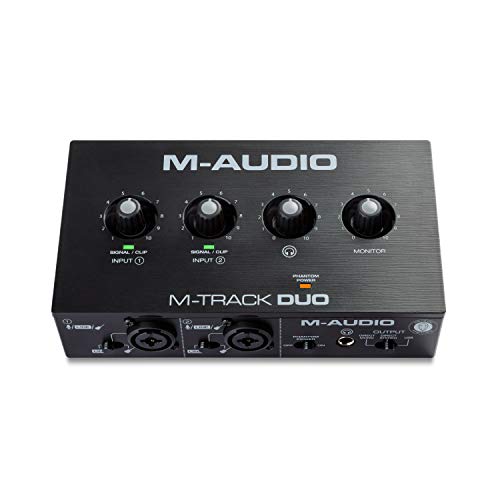
- Two combo XLR/line/instrument inputs
- 48kHz recording with phantom power
- USB/direct switch for zero-latency monitoring
Best For: Beginners needing a compact two-channel interface for podcasting
Starter All-in-One Podcast Kit
BM-800 Recording Studio Package with Voice Changer
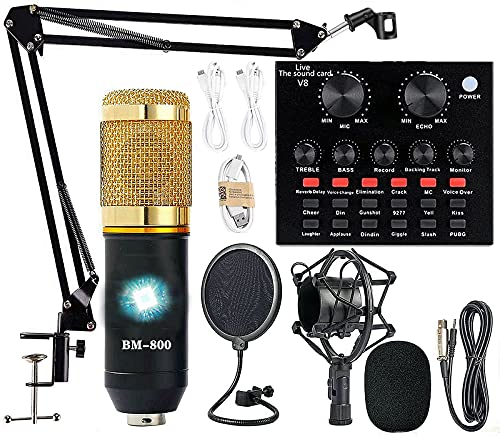
- Complete bundle with mic, arm, pop filter, and sound card
- Cardioid microphone suited to podcasting and voice work
- Works with Windows, Mac OS, phones, tablets, and game platforms
Best For: Beginners who want an all-in-one streaming and podcast starter kit
Compact Solo Interface
M-AUDIO M-Track Solo USB Audio Interface
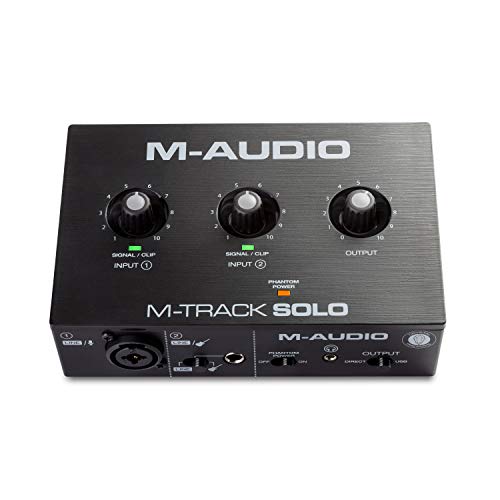
- 48kHz USB interface with XLR and instrument inputs
- USB/direct monitoring for low-latency tracking
- Includes headphone and RCA outputs for monitoring
Best For: Solo creators who already own a mic and want a compact interface
Feature-Rich Creator Mixer
MAONO MaonoCaster E2 Gen2 Bundle

- Dual XLR inputs with up to 60dB gain
- Built-in sound effects, pitch changes, and reverbs
- Loopback, mute, monitoring, and battery power for live use
Best For: Co-hosted podcasts and creators who want onboard effects and flexible routing
Hybrid Creator Pick
MAONO P2 USB Audio Interface for Podcast and Streaming

- Dual USB support for computer and mobile recording
- 56dB gain with 24-bit/192kHz audio
- Loopback, mute, and direct monitoring built in
Best For: Creators who switch between PC, phone, and iPad sessions
Four-Mic Group Setup
COMMANDER M100 3rd Podcast Equipment Bundle for 4

- Built for four-person podcast and streaming setups
- Includes four dynamic mics, stands, and accessories
- Plug-and-play mixer with effects, loopback, and mute
Best For: Groups that want an all-in-one podcast starter kit
Two-Person Starter Kit
V1 Podcast Equipment Bundle for 2 with Audio Interface

- Two condenser mics plus interface and accessories
- 48V phantom power with cardioid pickup pattern
- Plug-and-play for PC, phone, tablet, and laptop
Best For: Beginners building a two-host podcast or stream
Portable Multitrack Podcast Hub – Zoom PodTrak P4
If you want podcast equipment with audio interface features built in, the Zoom PodTrak P4 is designed to keep a small show running smoothly. It combines four XLR mic inputs, four headphone outs, phone and USB remote interview options, and multi-track recording in a compact recorder that can also act as a 2-in/2-out USB interface.
Best For: Podcasters who need multiple mics, remote guest support, and a battery-powered recorder in one unit.
Pros:
- Four XLR microphone inputs with phantom power for multi-host sessions.
- Four headphone outputs with individual volume control for separate monitoring.
- Automatic mix-minus supports call-in and remote interviews via TRRS jack or USB.
- Programmable sound pads and multi-track recording add flexibility for editing and live use.
Cons:
- Runs on 2 AA batteries for up to 3.5 hours, so long sessions may need power planning.
- Uses a small built-in screen, which may feel limited for more advanced workflows.
Overall, the P4 is a strong pick if your podcast setup needs more than a basic interface and you want recording, monitoring, and remote calling in one portable unit.
Compact Studio Interface – Focusrite Scarlett Solo 3rd Gen
The Focusrite Scarlett Solo 3rd Gen is a straightforward podcast equipment with audio interface choice if you only need one microphone and one instrument input. It delivers 24-bit/192kHz recording, a switchable Air mode for extra clarity, and low-noise balanced outputs for clean monitoring on a Mac, Windows PC, or iOS setup.
Best For: Solo podcasters, voice recording, and creators who want a simple two-input interface.
Pros:
- High-performing mic preamp helps capture brighter vocal recordings.
- Air mode adds extra clarity when you want a more open sound.
- 24-bit/192kHz converters support studio-quality recording and playback.
- Low-noise balanced outputs help with clean headphone or monitor listening.
Cons:
- Only one mic input, so it is not ideal for multi-host podcasting.
- Designed around a very compact input count, which limits expandability.
If your podcast is mostly voice-focused and you want dependable sound without a complicated setup, the Solo is a practical entry point with strong core audio performance.
Streaming Mixer with XLR Control – FIFINE AmpliGame SC3
If you want podcast equipment with audio interface controls plus streaming extras, the FIFINE AmpliGame SC3 is built around one XLR mic input, 48V phantom power, and hands-on channel control. It also adds mute and monitor buttons, four customizable sound buttons, voice-changing modes, auto-tune effects, and RGB lighting for creators who stream as well as record.
Best For: Streamers and solo podcasters who want tactile mixer control and fun effects in a compact unit.
Pros:
- One XLR mic input with 48V phantom power supports condenser microphones.
- Individual controls for microphone, line in, headphone, and line out channels.
- Mute and monitor buttons make live use easier during recording or streaming.
- Sound effects, voice modes, and RGB lighting add flexibility for content creation.
Cons:
- Only one XLR mic input, so it is not built for multi-person podcast sessions.
- USB mic support is not available.
- XLR cable is not included.
The SC3 makes sense when you want a simple interface that doubles as a creator mixer, especially if your workflow includes streaming features beyond basic recording.
Versatile Two-Channel Interface – M-AUDIO M-Track Duo
The M-AUDIO M-Track Duo is a practical podcast equipment with audio interface option for creators who want two mic channels and flexible monitoring in a portable design. It records at 48kHz, includes two combo XLR/line/instrument inputs with phantom power, and offers a USB/direct switch for zero-latency monitoring.
Best For: Podcasters, streamers, and beginners who need two-input recording with simple monitoring.
Pros:
- Two combo XLR/line/instrument inputs give you flexibility for mics or instruments.
- Phantom power supports condenser microphones.
- USB/direct monitoring switch helps avoid latency during live sessions.
- Includes MPC Beats software and a software suite to get started quickly.
Cons:
- 48kHz maximum sample rate is more modest than some higher-end interfaces.
- Only two channels, so it is best for small setups rather than larger panels.
For a compact two-input interface with clear monitoring and broad device compatibility, the M-Track Duo is an easy fit for entry-level podcast and recording setups.
Starter All-in-One Podcast Kit – BM-800 Recording Studio Package with Voice Changer
If you want podcast equipment with audio interface features in a ready-to-use bundle, this package covers the basics in one box. It includes the BM-800 condenser mic, adjustable arm, shock mount, pop filter, foam cap, cables, and a live sound card, making it a practical pick for beginners who want a simple setup for podcasting, streaming, and short-form video.
Best For: New creators who want a complete starter bundle for podcasting, livestreaming, and social content.
Pros:
- Includes the core accessories needed to start recording right away.
- Cardioid mic design is suited to voice-focused recording.
- Compatible with Windows, Mac OS, and mobile devices through the included interface setup.
- Voice changer and multiple sound effects add more creative options for live use.
Cons:
- Designed around a 1-channel setup, so it is more basic than multi-input mixers.
- Some setup and charging steps are required before first use.
This is a convenience-first bundle rather than a bare interface upgrade, so it makes the most sense if you want a packaged solution instead of buying each piece separately. The sound card and broad device support are helpful, but the overall focus is on easy content creation rather than advanced studio routing.
Compact Solo Interface – M-AUDIO M-Track Solo USB Audio Interface
The M-AUDIO M-Track Solo is a straightforward podcast equipment with audio interface option if you want a compact USB interface instead of an all-in-one bundle. It offers a combo XLR/line input with phantom power, a second line/instrument input, and direct monitoring, so it fits simple recording, streaming, and podcasting setups on Mac or PC.
Best For: Solo podcasters and streamers who want a small, simple interface with flexible input options.
Pros:
- 48kHz recording resolution for clean, practical capture.
- Combo XLR/line input with phantom power supports microphones that need it.
- USB/direct monitoring helps reduce latency while tracking.
- Includes headphone and RCA outputs for monitoring flexibility.
Cons:
- Only two channels, so it is not built for larger multi-mic setups.
- No bundled microphone or full podcast accessory kit.
This is the most focused interface in the group, and that simplicity is its strength. If you already have a mic and want a compact, dependable audio interface for recording and streaming, it covers the essentials without extra complexity.
Feature-Rich Creator Mixer – MAONO MaonoCaster E2 Gen2 Bundle
The MAONO MaonoCaster E2 Gen2 is a more advanced podcast equipment with audio interface option for creators who want extra control. With dual XLR inputs, 60dB gain, USB-C and 3.5mm connections, plus built-in sound effects and loopback, it is designed for podcasting, streaming, and mixed content setups that need more than a basic interface.
Best For: Co-host podcasts and streamers who want dual XLR inputs, onboard effects, and flexible connectivity.
Pros:
- Two XLR combo inputs are well suited for co-host recording.
- Up to 60dB gain helps support dynamic microphones.
- Built-in sound effects, pitch changes, and reverbs add creative control.
- Loopback, mute, monitoring, and battery power improve convenience for live use.
Cons:
- More feature-heavy than a basic interface, so it may be more than a solo starter needs.
- Its many controls can take longer to learn than a simple USB interface.
If you want one device that handles audio routing, effects, and live content features, this bundle stands out. It is especially appealing for shows with two voices or creators who want more on-device control without adding an external preamp.
Hybrid Creator Pick – MAONO P2 USB Audio Interface for Podcast and Streaming
If you want podcast equipment with audio interface support that can handle recording, streaming, and mobile workflows, the MAONO P2 is built around flexibility. Its dual USB ports let you connect a computer and a phone or iPad at the same time, while 56dB gain, ASIO support, loopback, and direct monitoring make it practical for solo creators and small studio setups.
Best For: Podcasters and streamers who want one interface for PC, phone, and tablet recording.
Pros:
- Dual USB connectivity for computer plus phone or iPad workflows
- 56dB gain and 24-bit/192kHz recording with low-noise performance
- Loopback, mute controls, and direct monitoring for cleaner sessions
- ProStudio 2 routing software for channel control and VST effects
Cons:
- Designed more for creators than for multi-person studio expansion
- Best features depend on using the included routing software
- Compact desk-friendly design may feel basic if you want a full mixer layout
The MAONO P2 stands out if your setup needs to move between podcasting, streaming, and mobile recording without changing hardware. It offers a strong mix of creator-focused controls and flexible connectivity in a compact package.
Four-Mic Group Setup – COMMANDER M100 3rd Podcast Equipment Bundle for 4
For podcast equipment with audio interface features built around group recording, this bundle is aimed at four-person shows and busy creator setups. It includes four dynamic microphones, four desktop stands, voice change effects, loopback, noise reduction, Bluetooth accompaniment, and a plug-and-play mixer that works with computers and smartphones.
Best For: Four-host podcasts, group streams, and beginner-friendly content creation.
Pros:
- Complete 4-person bundle with mics, stands, and accessories included
- Plug-and-play setup with no specialized software or driver downloads required
- Useful mixer features such as loopback, noise reduction, and one-click mute
- Built-in sound effects, voice change modes, and Bluetooth accompaniment
Cons:
- Large bundle is less practical for solo creators or tight desks
- Feature-rich interface may be more than some basic podcast users need
- Heavier, all-in-one kit is better suited to a permanent setup than travel use
This package makes sense when you want a ready-made group podcast station rather than piecing together separate gear. Its biggest strength is convenience: everything needed for a four-person recording session is bundled together.
Two-Person Starter Kit – V1 Podcast Equipment Bundle for 2 with Audio Interface
If you’re shopping for podcast equipment with audio interface functionality for two hosts, this bundle keeps the setup straightforward. It combines two condenser microphones, an all-metal interface, 48V phantom power, and beginner-friendly plug-and-play compatibility for PC, phone, tablet, and laptop use.
Best For: Two-person podcasts, beginner streams, and simple home recording.
Pros:
- Complete kit with two condenser mics, boom arms, shock mounts, and cables
- 48V phantom power and cardioid pickup pattern for focused vocal capture
- One-click mute and real-time monitoring for easier live sessions
- Includes noise reduction, loopback, Bluetooth accompaniment, and voice change features
Cons:
- Designed primarily for two-person use, not larger panel podcasts
- Sound effects and voice modes may be more than purely audio-focused users want
- Feature set is broad, so advanced creators may outgrow it over time
As a starter package, this bundle delivers a lot of recording hardware in one box without requiring extra purchases. It’s a practical choice if you want an easy way to launch a two-host show with basic mixer controls included.
How We Picked the Best Podcast Equipment with Audio Interface
We focused on Podcast Equipment with Audio Interface options that balance ease of use, microphone support, monitoring, and real-world flexibility. Priority went to setups with useful features such as XLR inputs, headphone outputs, gain control, phantom power, loopback, and mobile or computer compatibility.
Quick Comparison
For solo recording, a compact one-input interface can be enough. For interviews and co-hosted shows, dual-XLR or multi-input podcast gear makes tracking multiple voices much easier. If you plan to record remote guests, look for phone, USB, or loopback support so routing audio stays simple.
Key Buying Factors for Podcast Equipment with Audio Interface
Input Count
Match the number of mic inputs to your current show format, then allow for growth. One XLR input suits solo creators, two inputs cover most interviews, and four-input systems are better for panels or rotating co-hosts.
Mic Compatibility and Gain
Dynamic microphones often need more clean gain than condensers, so check preamp strength if you want a quiet noise floor. If you use condenser mics, make sure the unit includes 48V phantom power.
Monitoring and Control
Separate headphone outputs, mute buttons, and physical faders can make live recording much less stressful. These controls are especially useful when multiple people are on mic at the same time.
Connectivity and Workflow
Think about how you record. Some Podcast Equipment with Audio Interface is optimized for USB-C computer recording, while other models add phone, tablet, or hybrid routing options for remote guests and streaming.
Extras Vs. Core Performance
Bundles with microphones, stands, and sound effects can be attractive, but audio quality and interface stability matter more than accessories. If you already own mics, a stronger standalone interface is often the better long-term value.
Who Should Buy Which Podcast Equipment with Audio Interface?
Solo podcasters should lean toward simple single-channel or compact hybrid interfaces. Interview hosts will usually benefit from dual-XLR models with solid monitoring. Teams and panel-style shows should prioritize four-input recorders or bundles designed for multiple microphones. Streamers who also podcast may prefer models with loopback and routing tools. In short, the best choice depends on how many voices you record now and how much flexibility you want later.