A good standalone multitrack recorder lets you capture ideas, layer parts, and build full songs without relying on a computer. For songwriters, band rehearsals, and portable studios, it can be a fast, reliable way to keep creativity moving.
In this roundup, we focus on practical features that matter most: track count, inputs, portability, onboard editing, and how easy each unit is to use when inspiration strikes.
Best 10 Standalone Multitrack Recorder Picks for 2026
Portable Songwriting Starter
TASCAM DP-008EX 8-Track Pocketstudio

- Built-in mics for quick capture
- Runs on 4 AA batteries
- Includes 2GB SD card and USB cable
Best For: Solo songwriting and simple demo recording
Touchscreen Studio Hub
Zoom R20 Multi-Track Tabletop Recorder
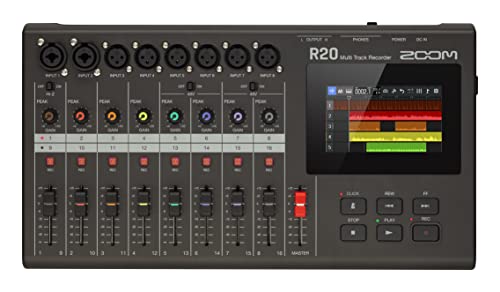
- Up to 16 tracks, 8 at once
- Touchscreen editing and mixing
- 6 XLR plus 2 combo inputs
Best For: Hands-on recording and editing without a computer
Classic Battery Recorder
BOSS BR-600 Digital Multitrack Recorder

- 8 playback tracks and 64 V-Tracks
- Built-in stereo mic and drum machine
- Battery powered for recording anywhere
Best For: Portable capture with onboard effects and rhythm tools
Portable Touchscreen Project Rig
Zoom R12 Multi-Track Portable Recorder

- 8-track recorder with touchscreen
- USB-C interface and DAW control
- 150 drum loops and 18 FM synths
Best For: Portable recording with modern editing and computer connection
Studio Multitrack Workhorse
Boss BR1200CD Digital Multitrack Recorder

- 12-track simultaneous playback with 192 V Tracks
- 80GB hard drive stores up to 120 hours of data
- CD burner, USB port, WAV export, and drum machine
Best For: Home recordists wanting a desktop multitrack studio with built-in production tools
Ultra-Portable Pocket Recorder
Tascam DP-006 6-Channel POCKETSTUDIO Portable Recorder
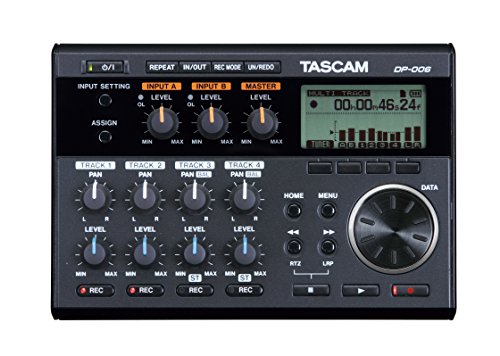
- Built-in microphones for fast, simple setup
- Very lightweight at 0.36 kg for true portability
- Records WAV files and connects by USB 2.0
Best For: Musicians who need a compact pocket recorder for basic multitrack ideas
Modern Portable Capture Tool
Zoom R4 Multi-Track Recorder for Musicians

- Captures up to 4 tracks with 32-bit float WAV recording
- 2 XLR/TRS combo inputs support versatile sources
- Works as a USB audio interface and includes 80+ drum patterns
Best For: Players who want clip-free portable recording with interface flexibility
Field-Ready Multitrack Choice
Tascam DR-70D 4-Channel Portable Recorder
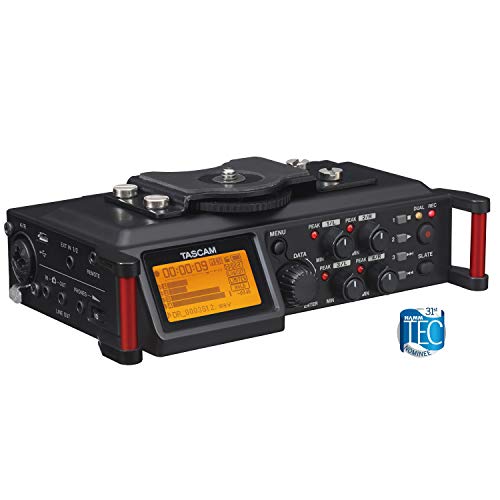
- Four XLR/TRS combo inputs with phantom power
- Built-in mics and compact camera-rig mounting
- Dual Recording mode helps protect takes
Best For: Filmmakers and videographers needing compact multitrack capture
Compact Songwriting Studio
Tascam DP-006 Pocketstudio Recorder

- Up to six tracks with two-track simultaneous recording
- Built-in stereo condenser microphones
- Battery-powered with USB 2.0 transfer
Best For: Songwriters and demo makers who want a simple portable recorder
Camera-Rig Recording Workhorse
Tascam DR-60DmkII 4-Channel Recorder

- Up to four channels at 96kHz/24-bit WAV
- Two XLR inputs plus dual 3.5mm inputs
- HDDA preamps and phantom power for field use
Best For: DSLR users and videographers recording multiple sources
Portable Songwriting Starter – TASCAM DP-008EX 8-Track Pocketstudio
If you want a standalone multitrack recorder that keeps the setup simple, the TASCAM DP-008EX is built for fast songwriting and basic project capture. It records to the included 2GB SD card, runs on AA batteries, and includes built-in mics so you can start sketching ideas without extra gear.
Best For: Solo writers and musicians who want a compact, battery-powered recorder for quick demo tracking.
Pros:
- Built-in microphones make it easy to record right away.
- Battery operation supports recording away from the studio.
- Includes USB cable and 2GB SD card for basic project setup.
- Compact format suits on-the-go songwriting.
Cons:
- Only 2GB of included storage is modest for larger projects.
- Designed around a simple workflow rather than advanced editing.
Overall, the DP-008EX is a practical entry point if your priority is portability and easy multitrack capture rather than a feature-heavy production system.
Touchscreen Studio Hub – Zoom R20 Multi-Track Tabletop Recorder
The Zoom R20 is a standalone multitrack recorder built for users who want DAW-style control without a computer. Its touchscreen workflow, 16-track capability, and multiple XLR and combo inputs make it a strong fit for recording full projects, then editing and mixing directly on the unit.
Best For: Musicians and producers who want an all-in-one tabletop recorder for multi-track recording and hands-on editing.
Pros:
- Records up to 16 tracks, with 8 simultaneously.
- Touchscreen editing supports drag, drop, swipe, and pinch controls.
- Includes built-in effects for shaping EQ and compression.
- Offers 150 rhythm patterns and an onboard synth for song building.
Cons:
- Requires more desk space than pocket-sized recorders.
- Designed around tabletop use, so it is less portable than battery-first units.
For creators who want a standalone multitrack recorder that feels closer to a compact DAW, the R20 delivers a lot of control in one device.
Classic Battery Recorder – BOSS BR-600 Digital Multitrack Recorder
The BOSS BR-600 is a compact standalone multitrack recorder aimed at musicians who want quick capture with built-in extras. It offers 8 simultaneous playback tracks, V-Tracks, a stereo mic, and battery power, making it useful for recording ideas anywhere.
Best For: Guitarists and singers who want a portable recorder with built-in effects and drum tools.
Pros:
- 8 simultaneous playback tracks and 64 V-Tracks add flexibility.
- Built-in stereo microphone supports quick field-style recording.
- Includes a guitar/effects processor with vocal FX and pitch correction.
- Built-in drum machine helps create backing rhythms.
Cons:
- Uses CompactFlash media, which is less common than newer storage formats.
- Included 128MB card and roughly 2 hours 16 minutes of recording time are limited.
The BR-600 is best viewed as a feature-rich older portable recorder: useful if you value onboard effects and convenience, but not the most storage-forward option.
Portable Touchscreen Project Rig – Zoom R12 Multi-Track Portable Recorder
If you want a standalone multitrack recorder that balances portability with modern workflow, the Zoom R12 is a strong choice. It records up to 8 tracks, offers a full-color touchscreen, and includes DAW-style editing plus built-in drum loops and synths for building songs on the go.
Best For: Musicians who want a battery-powered recorder with touchscreen editing and USB-C integration.
Pros:
- Records up to 8 tracks with two XLR/TRS combo inputs.
- Full-color touchscreen supports cutting, copying, looping, and mixing.
- Includes 150 drum loops and 18 FM synth instruments.
- Works as a USB-C audio interface and DAW control surface.
- Runs up to 5 hours on four AA batteries.
Cons:
- Limited to 2 recorded inputs at once despite the 8-track project workflow.
- Battery life is good for portable use but shorter than some all-day recording needs.
The R12 is a versatile fit if you want a compact recorder that can handle idea capture, editing, and computer integration in one device.
Studio Multitrack Workhorse – Boss BR1200CD Digital Multitrack Recorder
If you want a standalone multitrack recorder with a more full-featured desktop workflow, the Boss BR1200CD is built for serious song capture and editing. It offers 12-track simultaneous playback, 192 virtual tracks, an 80GB hard drive, and built-in tools that help you move from idea to finished demo without relying on a computer.
Best For: Home recordists and songwriters who want a hardware-based multitrack setup with plenty of storage and onboard production tools.
Pros:
- 12 tracks of simultaneous playback with 192 V Tracks for expanded project flexibility
- 80GB hard drive supports up to 120 hours of data storage
- Includes 2 XLR inputs with 48V phantom power for microphone recording
- Built-in CD burner, USB port, WAV export, drum machine, and mastering tools
Cons:
- Heavier and larger than pocket-sized portable recorders
- Older-style workflow may be more than casual users need
The BR1200CD stands out as a feature-packed standalone multitrack recorder for users who want depth over portability. Its combination of onboard effects, storage, and track count makes it a practical all-in-one studio unit.
Ultra-Portable Pocket Recorder – Tascam DP-006 6-Channel POCKETSTUDIO Portable Recorder
The Tascam DP-006 is a compact standalone multitrack recorder made for quick capture anywhere. With built-in microphones, WAV recording, USB 2.0 connectivity, and battery-powered operation, it suits simple songwriting, rehearsal sketches, and portable idea capture without adding much bulk.
Best For: Writers and musicians who want a lightweight pocket recorder for basic multitrack recording on the go.
Pros:
- Very lightweight at 0.36 kg and easy to carry
- Built-in microphones simplify fast setup
- Records in WAV format and connects via USB 2.0
- Runs on 2 AA batteries for portable use
Cons:
- Only about 9 hours of digital recording time is listed
- Basic 6-channel design is less expansive than larger studio recorders
If portability matters more than advanced features, the DP-006 is a straightforward choice. It keeps the essentials focused and compact, which is exactly what many users want from a standalone multitrack recorder for quick captures.
Modern Portable Capture Tool – Zoom R4 Multi-Track Recorder for Musicians
The Zoom R4 is a modern standalone multitrack recorder designed for quick tracking with minimal setup. It captures up to 4 tracks, includes 2 XLR/TRS combo inputs, records in 32-bit float WAV, and can also work as a USB audio interface for a computer or smartphone.
Best For: Musicians who want a portable recorder with clip-free recording, combo inputs, and USB audio interface support.
Pros:
- 32-bit float recording helps avoid clipping without gain adjustments
- 2 XLR/TRS combo inputs support microphones, instruments, and keyboards
- Built-in rhythms with 80+ drum patterns for practice and songwriting
- Works as a 2-in/2-out USB audio interface and runs on batteries or USB-C
Cons:
- Limited to 4 tracks, so it is not meant for larger productions
- Built-in mono mic is convenient, but it is not a full multi-mic setup
The R4 is a strong option if you want a compact recorder that feels current and flexible. Its 32-bit float workflow and interface mode make it especially appealing for musicians who split time between standalone recording and computer-based production.
Field-Ready Multitrack Choice – Tascam DR-70D 4-Channel Portable Recorder
The TASCAM DR-70D is a practical standalone multitrack recorder for filmmakers and videographers who need four-input capture in a compact, camera-friendly package. It combines four balanced XLR inputs with phantom power, built-in microphones, and onboard controls that make it easier to manage levels during production.
Best For: Filmmakers, DSLR shooters, documentarians, and small production teams needing a compact 4-channel field recorder.
Pros:
- Four balanced XLR mic inputs with phantom power support production sound needs.
- Built-in microphones add flexible on-set capture options.
- Dual Recording mode creates a safety copy at a lower level.
- HDDA mic preamps offer up to 64dB of gain for quieter sources.
Cons:
- Designed around video work, so it is less of a traditional songwriting pocket studio.
- Requires SD, SDHC, or SDXC media for recording.
If you want a standalone multitrack recorder built for camera rigs and field audio control, the DR-70D has the right mix of inputs, safety features, and compact mounting flexibility. It is especially appealing when you need serious recording options without moving up to a larger mixer-style unit.
Compact Songwriting Studio – Tascam DP-006 Pocketstudio Recorder
The Tascam DP-006 is a straightforward standalone multitrack recorder for songwriters who want a pocket-sized way to sketch ideas and build tracks. It offers up to six tracks, built-in stereo condenser microphones, and battery operation, making it easy to record without a computer.
Best For: Songwriters and musicians who want a portable, battery-powered multitrack recorder for demo work.
Pros:
- Records up to six tracks, including switchable mono/stereo tracks.
- Built-in stereo condenser mics simplify quick capture.
- Battery-powered design supports true grab-and-go use.
- USB 2.0 transfer makes it easy to move files to a computer.
Cons:
- CD-quality 16-bit/44.1kHz recording is more basic than higher-resolution options.
- Simultaneous recording is limited to two tracks at once.
For simple demos, songwriting, and portable track building, the DP-006 keeps the workflow easy and compact. It is not aimed at high-end production complexity, but it does cover the core needs of a dependable standalone multitrack recorder.
Camera-Rig Recording Workhorse – Tascam DR-60DmkII 4-Channel Recorder
The TASCAM DR-60DmkII is a standalone multitrack recorder made for DSLR setups and compact production rigs. It records up to four channels to an internal SD card, combines locking XLR inputs with 48V phantom power, and adds dual 3.5mm inputs for wireless or lavalier sources.
Best For: Videographers and content creators who need a compact 4-channel recorder under a DSLR camera rig.
Pros:
- Records up to four channels at up to 96kHz/24-bit WAV resolution.
- Two locking XLR mic inputs include 48V phantom power.
- Dual 3.5mm inputs work well for wireless and lav mics.
- Upgraded HDDA preamps provide up to 64dB of gain with low noise.
Cons:
- More specialized for camera rigs than general-purpose music tracking.
- Uses 4 AA batteries and internal SD media for operation.
For run-and-gun production sound, the DR-60DmkII offers a strong balance of input flexibility, recording quality, and mounting convenience. If your main priority is multitrack audio around a DSLR rig, it is built for exactly that workflow.
How We Picked These Standalone Multitrack Recorder Options
We prioritized models that balance sound quality, track flexibility, and real-world usability. That means strong input options, dependable storage or media handling, simple transport controls, and onboard tools that help you record without needing extra gear. We also looked for units suited to different users, from ultra-portable songwriting tools to more capable tabletop recorders for larger sessions.
Quick Comparison: What Matters Most
When comparing a Standalone Multitrack Recorder, the biggest differences usually come down to input count, track count, portability, and workflow. A compact pocket studio is ideal for sketching songs anywhere, while a tabletop unit with more inputs is better for recording multiple sources at once. If you want a faster workflow, touchscreen navigation and built-in editing can make a big difference.
Key Buying Factors for a Standalone Multitrack Recorder
Inputs and Track Count
Choose enough inputs for how you record now, plus some room to grow. Solo writers may only need a couple of inputs, but bands, drum machines, or multi-mic setups benefit from more channels and higher track counts.
Portability and Power
If you record on the go, battery operation, compact size, and rugged controls matter more than extra features. For home use, a larger unit can offer easier access and a better hands-on workflow.
Onboard Features
Many buyers prefer a Standalone Multitrack Recorder with built-in effects, metronomes, drum patterns, or editing tools. These features can speed up demo creation and reduce the need for external gear.
Recording Format and Workflow
Look for a recorder that matches your style of work. Touchscreen operation, stereo bouncing, and straightforward file management are helpful for fast songwriting, while higher-end input sections and better monitoring support more serious production.
Who Should Buy Which Standalone Multitrack Recorder?
Solo songwriters and mobile creators should lean toward smaller, battery-powered models that are quick to set up. Home recordists and collaboration-focused musicians will usually benefit from a larger Standalone Multitrack Recorder with more inputs and more tracks. If your main goal is video or location capture, a field-friendly recorder with strong preamps and limiter controls is the smarter choice.
In short, the best pick depends on whether you value portability, input flexibility, or speed. Match the recorder to your workflow first, and you’ll end up with a tool you actually use consistently.