A good monitor controller makes daily studio work faster, safer, and more accurate. It helps you manage volume, mute, mono, and source switching without reaching for your interface or software.
In this roundup, we focus on practical options for producers, engineers, and content creators who want cleaner control over their listening setup in 2026.
Best 10 Rackmount Studio Monitor Controller Picks for 2026
Passive desktop controller

- Passive signal path with no power required
- Two source and two speaker pair switching
- Mono, mute, and dim buttons
Best For: Small studios needing clean, simple monitor control
All-in-one control center

- Four stereo inputs plus S/PDIF digital input
- Three speaker pairs and four headphone amps
- Built-in talkback microphone and cue controls
Best For: Project studios needing monitoring, cueing, and talkback in one box
Compact passive controller
ESI MoCo Passive Monitor Controller

- Passive design with no external power
- Two stereo inputs and two stereo outputs
- Mono, mute, and left/right flip buttons
Best For: Compact studios wanting simple, clean monitor switching
USB control and talkback hub
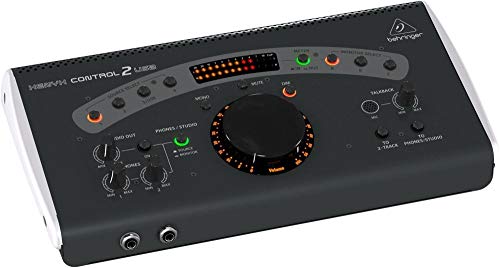
- VCA monitor controller with USB audio interface
- Built-in talkback mic with level control
- Source selector and monitor switcher in one unit
Best For: Studios needing monitor control plus USB and talkback
Compact Bluetooth Monitor Hub
PreSonus MicroStation BT 2.1 Monitor Controller with Bluetooth Connectivity

- Adds stereo Bluetooth to studio or media monitors
- Includes balanced TRS inputs and a headphone/aux output
- Compact tabletop unit with simple source switching
Best For: Small studios and home setups needing Bluetooth monitor control
Passive Volume Simplifier
Behringer STUDIO M Premium Passive Studio Controller

- Passive volume control with dual pair input/output
- Compact, simple design for easy desktop use
- Built for basic monitor level management
Best For: Minimalist setups that only need passive monitor volume control
All-in-One Studio Control Center
Mackie Big Knob Studio 3x2 Monitor Controller

- 3-source/2-monitor selection with classic Big Knob volume control
- Built-in 2x2 USB interface with 192kHz/24-bit audio
- Dual headphone outs and two Onyx mic preamps
Best For: Project studios needing monitor control plus USB audio and mic inputs
Passive Precision Monitor Controller
DYNASTY PROAUDIO PMC-2 Premium Passive 2 x 2 Studio Monitor Volume Controller
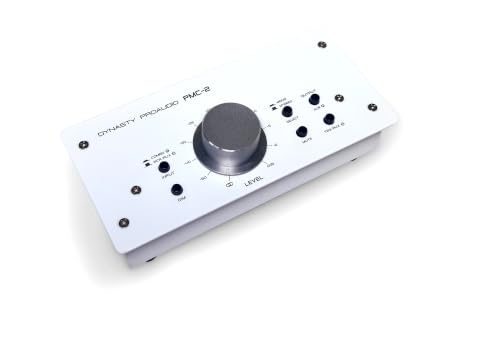
- Passive volume control with no power supply.
- Balanced XLR/phone jack, RCA, and 3.5mm connections.
- DIM and Mute/Mono switches in a metal chassis.
Best For: clean analog monitoring with flexible input options
Flexible Routing Monitor Controller
StudioMan M04 Passive Monitor Controller - 2 Input 4 Output

- 2 inputs and 4 outputs reduce cable swapping.
- Passive, no-power design keeps the signal path simple.
- Mute button and damped knob support quick control.
Best For: multi-speaker setups needing simple passive routing
Balanced Compact Monitor Controller
DYNASTY PROAUDIO PMC-1 Premium Passive Stereo Monitor Volume Controller
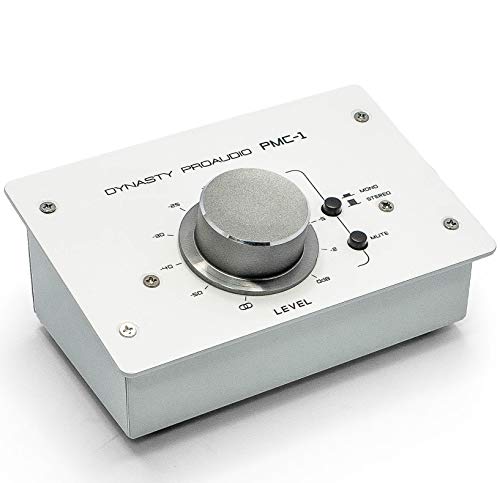
- Passive stereo controller with no power supply.
- Balanced XLR/TRS plus 3.5mm connections.
- Large knob and metal chassis for simple, durable control.
Best For: compact stereo setups that need transparent passive control
Passive desktop controller – Mackie Big Knob Passive
If you want a rackmount studio monitor controller alternative with a simple, transparent signal path, the Mackie Big Knob Passive is built for straightforward level control. It lets you choose between two sources and two monitor pairs while keeping the audio chain clean, with handy mono, mute, and dim buttons for quick session adjustments.
Best For: Small studios and editing suites that want passive monitor control with basic source switching and no added coloration.
Pros:
- Fully passive design for pristine audio quality
- Switches between two sources and two monitor pairs
- Mono, mute, and dim controls for fast monitoring changes
- Sturdy metal build designed for studio use
Cons:
- Tabletop design, not a true rackmount unit
- No built-in power or advanced communication features
- Limited to the core control functions listed in the specs
For buyers who value simplicity and transparency over features, this is a dependable monitor controller that focuses on the essentials. It is a strong fit if you mainly need clean source selection and reliable volume control.
All-in-one control center – PreSonus Monitor Station V2
The PreSonus Monitor Station V2 is a feature-rich studio monitor controller for users who need more than basic speaker switching. It combines multiple analog and digital inputs, three selectable speaker outputs, headphone amps, and talkback in one desktop control center, making it well suited to busy tracking and monitoring workflows.
Best For: Project studios and control rooms that want an all-in-one monitor controller with talkback, headphones, and multiple source options.
Pros:
- Four stereo input pairs plus one S/PDIF digital input
- Three selectable speaker outputs with level controls
- Four headphone amplifiers with independent source selection
- Built-in talkback microphone with gain control
Cons:
- Large desktop footprint
- More complex than a basic monitor controller
- Designed around TRS, RCA, and S/PDIF connectivity rather than rackmount installation
If your studio needs a central hub for monitoring, cueing, and communication, this model delivers a lot of functionality in one unit. It makes the most sense when workflow features matter as much as clean level control.
Compact passive controller – ESI MoCo Passive Monitor Controller
The ESI MoCo is a passive studio monitor controller for users who want clean, uncolored monitoring with simple switching. It offers two stereo inputs, two stereo outputs, and dedicated buttons for mono, mute, and left/right channel flip, giving you practical control in a compact desktop format.
Best For: Engineers and home recordists who want a no-power monitor controller with flexible I/O and straightforward controls.
Pros:
- Fully passive, so no external power is required
- Two stereo inputs and two stereo outputs for flexible routing
- Dedicated mono, mute, and channel-flip buttons
- Large knob for quick and precise volume changes
Cons:
- Plastic enclosure instead of metal
- Desktop unit rather than a rackmount design
- No advanced talkback or multi-room features
This is a practical pick if you want the core functions of a monitor controller without extra complexity. It keeps the setup simple while still covering the switching and mute functions most studios need.
USB control and talkback hub – Behringer XENYX CONTROL2USB
Behringer CONTROL2USB High-End Studio Control with VCA Control and USB Audio Interface
Check Price On AmazonThe Behringer XENYX CONTROL2USB is a studio monitor controller that also works as a communication center and USB audio interface. With VCA control, source selection, monitor switching, and built-in talkback, it is aimed at setups that need centralized control rather than a basic volume knob.
Best For: Studios that want monitor control, talkback, and USB audio connectivity in one desktop hub.
Pros:
- All-in-one master volume, source selector, and monitor switcher
- Built-in talkback microphone with level control
- USB audio interface with up to 192 kHz maximum sample rate
- Premium VCA-controlled studio communication center
Cons:
- Windows-focused support in the supplied details
- Desktop unit, not a rackmount controller
- More specialized than a simple passive monitor controller
If you need a more connected studio hub, this model stands out for combining monitoring and communication in one unit. It is especially useful when USB integration is part of the workflow.
Compact Bluetooth Monitor Hub – PreSonus MicroStation BT 2.1 Monitor Controller with Bluetooth Connectivity
If you want a rackmount studio monitor controller-style workflow in a tiny desktop footprint, the PreSonus MicroStation BT is a practical way to add Bluetooth and subwoofer integration to a pair of studio or media reference monitors. It keeps the control set simple with source switching, balanced and stereo TRS connections, and a headphone/aux output for flexible everyday use.
Best For: Small studios, home setups, and users who want Bluetooth input plus basic monitor control in a compact unit.
Pros:
- Stereo Bluetooth input adds wireless playback to compatible speakers.
- Balanced 1/4-inch TRS and stereo 1/8-inch TRS inputs support pro and consumer gear.
- Bluetooth on/off and pairing buttons make source switching straightforward.
- Stereo 1/8-inch headphone/aux output adds another practical connection option.
Cons:
- Tabletop design, so it is not a rackmount unit.
- Focused on basic monitor control rather than a large feature set.
This is a budget-friendly choice if you mainly need simple monitoring control with Bluetooth convenience and compact size. It is less about advanced studio routing and more about making a small monitoring setup easier to live with.
Passive Volume Simplifier – Behringer STUDIO M Premium Passive Studio Controller
The Behringer STUDIO M is a straightforward option if you want a rackmount studio monitor controller alternative focused on passive volume control and basic dual pair routing. Its simple design makes it useful when you want an easy way to manage monitor level without adding powered electronics to the signal path.
Best For: Minimalist studio setups that need passive volume control and dual input/output connectivity.
Pros:
- Passive studio volume controller with dual pair input/output support.
- Compact footprint for simple desktop placement.
- Clear, no-frills design keeps operation uncomplicated.
Cons:
- Uses a basic 1/8-inch stereo input according to the supplied notes.
- Fewer advanced features than a full monitor controller with source switching and headphone controls.
For buyers who value simplicity over extras, this model keeps monitoring control basic and accessible. It is a better fit for straightforward level management than for more complex studio routing needs.
All-in-One Studio Control Center – Mackie Big Knob Studio 3×2 Monitor Controller
Mackie Big Knob Series, 3x2 Studio Monitor Controller 192kHz USB I/O (BIG KNOB STUDIO)
Check Price On AmazonIf you are shopping for a rackmount studio monitor controller-style centerpiece with more routing and recording features, the Mackie Big Knob Studio offers a lot in one box. It combines source and monitor selection for three sources and two monitor pairs with a 2×2 USB interface, making it a useful control hub for a busy desktop studio.
Best For: Home and project studios that want monitor selection, USB recording, and dual headphone outputs in one unit.
Pros:
- Professional source and monitor selection for 3 sources and 2 monitor pairs.
- Built-in 2×2 USB interface with 192kHz/24-bit recording and playback.
- Two Onyx mic preamps plus phantom power for condenser microphones.
- Includes a 1/8-inch input and dual headphone outs with independent level control.
Cons:
- Large desktop unit rather than a true rackmount controller.
- More complex than a basic passive monitor controller.
This is the most feature-rich option in the group and suits users who want monitoring, interface, and headphone control in one workflow. It is especially appealing when you need flexible routing and recording support alongside speaker switching.
Passive Precision Monitor Controller – DYNASTY PROAUDIO PMC-2 Premium Passive 2 x 2 Studio Monitor Volume Controller
If you want a rackmount studio monitor controller style solution for straightforward analog level control, the DYNASTY PROAUDIO PMC-2 is built for clean, passive attenuation between your source and active speakers or amp. Its large rotary knob makes quick fingertip adjustments easy, while the balanced and unbalanced connection options help it fit into a range of desktop and studio setups.
Best For: Producers and home-studio users who want simple passive volume control with balanced I/O options.
Pros:
- Passive design needs no power supply.
- Balanced XLR/phone jack plus RCA and 3.5mm inputs expand hookup options.
- Includes DIM and Mute/Mono switches for monitoring control.
- Solid metal chassis is built for regular studio or mobile use.
Cons:
- No active features or built-in power.
- Best suited to analog signal chains.
- Only a 2 x 2 style layout, so it’s not meant for complex routing.
Overall, the PMC-2 keeps the signal path simple and transparent, which is exactly what many buyers want from a monitor controller. If your priority is precise analog level trimming without added coloration, this is an efficient pick.
Flexible Routing Monitor Controller – StudioMan M04 Passive Monitor Controller – 2 Input 4 Output
The StudioMan M04 is a practical rackmount studio monitor controller choice if you need simple passive switching across multiple monitor paths. With 2 inputs and 4 outputs on 1/4″ unbalanced connectors, it reduces cable swapping and gives you quick access to volume control and mute during mixing, recording, or live streaming.
Best For: Users who need passive 2-in/4-out routing for multiple monitor or amplifier connections.
Pros:
- 2 input and 4 output routing helps avoid constant unplugging.
- 100% passive design requires no power or battery.
- Independent mute button supports fast level management.
- Damped volume knob allows precise adjustment from 0 to full gain.
Cons:
- Uses 1/4″ unbalanced connectors only.
- Passive design means no powered processing features.
- Geared more toward straightforward routing than advanced monitor control.
For studios that value simplicity, the M04 focuses on low-loss signal handling and efficient source switching. It’s a good fit when you want transparent passive control without adding complexity to the monitoring chain.
Balanced Compact Monitor Controller – DYNASTY PROAUDIO PMC-1 Premium Passive Stereo Monitor Volume Controller
If you’re shopping for a rackmount studio monitor controller alternative that stays compact and transparent, the DYNASTY PROAUDIO PMC-1 is designed for precise analog level control between a source and active monitors or amplifiers. Its large knob makes adjustments easy, and the balanced XLR/TRS plus 3.5mm connections make it a flexible fit for PC, Mac, or DAW-based setups.
Best For: Small studios and desktop rigs that want passive, balanced monitor control in a compact unit.
Pros:
- Passive design provides attenuated signal control with no power needed.
- Balanced XLR/TRS inputs and TRS outputs help reduce noise on longer cable runs.
- 3.5mm mini-jack support adds extra connection flexibility.
- Solid metal enclosure improves durability for studio or travel use.
Cons:
- Compact 1×1 style layout limits routing complexity.
- Passive operation offers no active signal processing.
- Best for straightforward stereo monitoring rather than larger systems.
The PMC-1 keeps monitoring simple and clean, which is ideal if you just need reliable volume control without extra circuitry. For users who want a transparent passive controller with balanced connections, it’s a strong straightforward option.
How We Picked the Best Rackmount Studio Monitor Controller
We focused on controller design, signal path quality, routing flexibility, and real-world usability. That means prioritizing clean volume control, useful monitor functions, dependable input/output options, and form factors that fit small project rooms as well as more serious production spaces.
Because not every Rackmount Studio Monitor Controller is built the same, we also looked at whether a model is passive or powered, whether it adds USB or Bluetooth, and how well it supports simple stereo monitoring versus more advanced studio workflows.
Quick Comparison
If you want the simplest path to transparent monitor control, passive units are usually the most straightforward choice. If you need talkback, communication features, multiple sources, or integrated USB audio, a powered controller may be the better fit. For hybrid setups, desktop-style controllers can still work well even when the goal is rack-friendly studio organization.
Key Buying Factors for Rackmount Studio Monitor Controller
Signal Transparency
The best controllers preserve your mix without adding noise, color, or unwanted gain staging problems. Passive models are often preferred for purity, while active designs can offer more convenience and routing features.
Input and Output Needs
Match the controller to your setup. A simple 2-in/2-out unit may be enough for one pair of monitors, while more complex rooms may benefit from multiple speaker outputs, cue paths, or subwoofer support.
Workflow Controls
Look for the functions you use every day: mute, dim, mono, speaker select, and quick source switching. These features save time and help with mix checks.
Build Quality and Knob Feel
A large, precise volume knob matters more than it seems. Smooth channel tracking and sturdy switches make it easier to set consistent listening levels, especially during long sessions.
Added Connectivity
Some Rackmount Studio Monitor Controller models include USB audio, Bluetooth, or communication tools. Those extras are useful if you need playback convenience or client-facing studio features, but they are not essential for every buyer.
Who Should Buy Which Rackmount Studio Monitor Controller?
Choose a passive controller if you want the cleanest possible monitoring path and already have a capable audio interface. Pick an active or feature-rich model if you need talkback, multiple sources, or integrated connectivity in one box.
If you are building a compact studio and mostly need reliable volume control, a simpler unit is usually the best value. If your room doubles as a production and client review space, choose a controller with more switching and communication options so your monitoring setup can grow with you.