Choosing a synthesizer workstation for music production comes down to workflow, sound quality, and how much gear you want in one place. Some buyers need a full performance keyboard with deep sounds and hands-on control; others want a standalone beat-making center or a studio desk that keeps everything organized.
Below, we focus on practical options for producers, performers, and home-studio builders who want a smarter setup in 2026. Whether you are building tracks from scratch or streamlining an existing studio, the right workstation can speed up every step of the process.
Best 10 Synthesizer Workstation for Music Production Picks for 2026
Flagship workstation
Roland Fantom 8 EX 88-Key Workstation Bundle
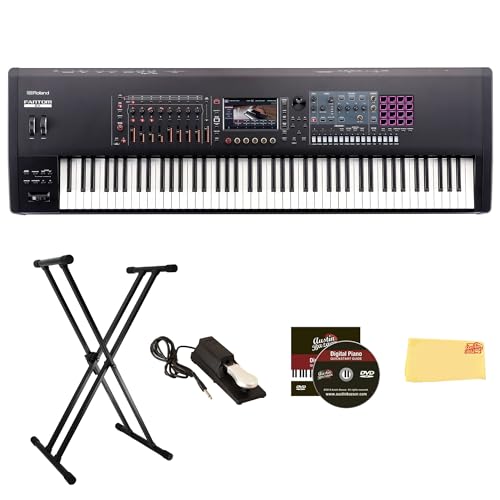
- Multiple engines: ACB, ZEN-Core, V-Piano, SuperNATURAL
- 7,000+ tones plus ACB expansions for classic synth sounds
- Sampling, clip-based workflow, and DAW integration
Best For: Producers wanting a premium all-in-one workstation
Standalone beat studio
Akai MPC X SE Standalone Production Workstation

- Standalone operation with no computer required
- 10.1-inch multi-touch screen and 16 RGB pads
- 128-track sequencer plus MIDI and CV/Gate connectivity
Best For: Beat makers who want a hardware production hub
Compact studio desk
Monoprice Stage Right Studio Desk

- 31.5-inch width with a small-room-friendly footprint
- Raised platform and pullout keyboard tray
- Supports up to 175 lbs and assembles quickly
Best For: Home studios needing a compact workstation desk
Compact performance synth
Novation MiniNova 37-Key Compact Synth

- Ultranova-derived engine with up to 18 voices
- 256 presets plus 128 user sound slots
- VocalTune mic input and performance controls
Best For: Portable sound design and vocal effects
Large Desk Workstation
63-Inch Music Production Workstation

- Wide 63-inch desktop for studio gear
- Sliding keyboard tray for synths and MIDI devices
- Steel frame with shelves, drawers, and accessory stands
Best For: Producers needing a spacious desk with a built-in keyboard tray
Portable Performance Synth
Roland JUNO-D6 61-Key Synthesizer

- 61 synth-action keys in a compact body
- 3800-plus onboard sounds with ZEN-Core engine
- USB-C audio/MIDI and battery power for mobility
Best For: Keyboard players who need a portable synth for studio and stage
Compact Power Desk

- Built-in USB ports and outlet plugs
- Raised monitor shelf with pull-out keyboard tray
- Compact 47-inch footprint for smaller studios
Best For: Small home studios that need charging and keyboard storage
Portable Retro Mini Synth
Stylophone Original Pocket Electronic Synthesizer

- Iconic analog-style sound with retro character
- Pocket-size, battery-powered, and easy to carry
- Stylus-controlled touch surface is beginner-friendly
Best For: Beginners and mobile producers needing a tiny retro synth
DAW-Ready Keyboard Controller
Novation Launchkey 61 MK3 MIDI Keyboard Controller

- Deep Ableton Live integration for hands-on control
- 61 velocity-sensitive keys plus 16 pads
- Chord, scale, and arpeggiator features aid songwriting
Best For: Ableton and DAW producers who want performance control
Standalone Production Hub
Akai Professional MPC Key 37 Standalone Production Synthesizer

- Standalone MPC workflow with no computer needed
- 37-key synth-action bed plus 16 RGB pads and touchscreen
- Wi-Fi, Bluetooth MIDI, and broad plug-in support
Best For: Producers wanting an all-in-one standalone workstation
Flagship workstation – Roland Fantom 8 EX 88-Key Workstation Bundle
If you want a synthesizer workstation for music production that can cover sound design, sequencing, and DAW integration in one flagship board, the Roland Fantom 8 EX is built for that role. It combines multiple sound engines, deep scene layering, and a production-focused workflow for fast composing and arranging.
Best For: Producers and performers who want a premium all-in-one workstation with broad sound design options and strong computer integration.
Pros:
- Includes multiple sound engines, including ACB, ZEN-Core, V-Piano, and SuperNATURAL.
- Over 7,000 onboard tones and three ACB instrument expansions for classic synth flavors.
- Designed as a production hub with deep DAW integration, sampling, clip-based workflow, and a TR-REC style step sequencer.
- Bundle includes an adjustable stand, sustain pedal, lessons, instructional DVD, and polishing cloth.
Cons:
- Very large 88-key instrument, so it is not a compact setup.
- Likely more workstation than casual users need if they only want simple sounds.
For producers who want one serious keyboard to handle sound creation and composition, the Fantom 8 EX stands out for its depth and workflow tools. The included bundle also makes it easier to get started right away.
Standalone beat studio – Akai MPC X SE Standalone Production Workstation
The Akai Professional MPC X SE is a strong synthesizer workstation for music production if your workflow centers on beat making, sampling, and hands-on sequencing. It runs standalone, adds a large touchscreen, and brings a deep MPC-style production environment without requiring a computer.
Best For: Beat makers and producers who want a standalone production center with touch control and classic MPC workflow.
Pros:
- Standalone design means no computer is required.
- 10.1-inch multi-touch display, 16 RGB pads, and 16 assignable Q-Links support fast hands-on control.
- Includes a 128-track sequencer, step sequencer, and MPC3 workflow features for arranging and editing.
- Works with MIDI I/O, USB host ports, CV/Gate outs, WiFi, and Bluetooth for studio integration.
Cons:
- It is focused more on sampling and beat production than traditional keyboard playing.
- Large tabletop unit may take up more desk space than compact gear.
If you want a hardware-first production station, the MPC X SE offers a lot of creative control in one box. It is especially compelling for producers who value sequencing, sampling, and modular connectivity.
Compact studio desk – Monoprice Stage Right Studio Desk
Monoprice Recording Studio Desk - with Raised Platform and Keyboard Tray, Black - Stage Right
Check Price On AmazonWhile not a synthesizer itself, the Monoprice Stage Right desk is a practical companion for a synthesizer workstation for music production in a home studio. Its raised platform and pullout keyboard tray make it easier to organize a controller, monitors, and recording gear in a small space.
Best For: Home producers who need a compact desk that can support a keyboard controller and basic studio setup.
Pros:
- Small footprint at 31.5 inches wide, suited to apartments and tighter rooms.
- Raised platform and pullout keyboard tray add flexibility for studio layouts.
- Lightweight but rated to support up to 175 lbs.
- Includes tools and hardware for quick assembly.
Cons:
- Designed for a typical 49-key MIDI keyboard controller, so larger workstations may not fit well.
- No built-in audio, control, or production features on its own.
This is a utility pick rather than a music instrument, but it can improve the workflow of a home production rig. If space is tight, the simple layout is its biggest advantage.
Compact performance synth – Novation MiniNova 37-Key Compact Synth
The Novation MiniNova is a compact synth option for music production when you want a small, hands-on instrument with vocal processing and performance features. It is not a full-size workstation, but it offers a strong sound engine, onboard presets, and quick sound shaping in a portable format.
Best For: Producers who want a compact synth for leads, bass, pads, and vocal effects.
Pros:
- Up to 18 voices with the Ultranova-derived sound engine and real-time performance controls.
- 256 factory presets plus space to save 128 more user sounds.
- Includes VocalTune and a mic for vocal processing through the keyboard and effects engine.
- Animate buttons, arpeggiator, and modulation/pitch controls make it performance-friendly.
Cons:
- 37 mini keys limit traditional keyboard technique and range.
- Smaller feature set than a full workstation for sequencing and production duties.
For players who value portability and creative sound shaping, the MiniNova offers a lot in a small package. It is best treated as a compact synth voice rather than a central production workstation.
Large Desk Workstation – 63-Inch Music Production Workstation
If you want a synthesizer workstation for music production that also functions as a full-size desk, this 63-inch studio table is built around that use case. It offers a sliding keyboard tray for digital pianos, MIDI devices, and keyboards, plus extra stands for monitors, speakers, microphones, or audio interfaces. The wide surface and sturdy build make it a practical option for a home studio setup where gear and workspace need to share the same footprint.
Best For: Producers who want a large, desk-style workstation with a keyboard tray and extra storage.
Pros:
- 63-inch wide workspace with a dedicated sliding keyboard tray
- Solid wood composite top and thick carbon steel frame for durability
- Two stands plus drawers and shelves for studio accessories
- Non-slip feet and rounded corners add everyday practicality
Cons:
- Assembly is required
- Risers are not included if you need to adjust the height
- Heavy at 99 pounds, so moving it may take effort
This is a strong fit if you want a workstation-style desk rather than a compact keyboard stand. It gives you room for a synth, computer, and studio essentials in one organized layout.
Portable Performance Synth – Roland JUNO-D6 61-Key Synthesizer
The Roland JUNO-D6 is a synthesizer workstation for music production when your priority is playable sounds, portability, and fast access to performance tools. Its 61 synth-action keys, ZEN-Core engine, and 3800-plus onboard sounds make it a capable option for writing, rehearsing, and gigging. USB-C audio/MIDI support and battery power also make it easier to use with computers and mobile setups.
Best For: Players who want a compact, gig-ready synth with a large sound library and modern connectivity.
Pros:
- 61 synth-action keys in a compact, lightweight design
- ZEN-Core engine with over 3800 ready-to-play sounds
- USB-C audio/MIDI interface support for computers and mobile devices
- Battery power adds flexibility for portable use
Cons:
- Includes the synthesizer only, so it is not a full workstation desk
- Designed for performance and sound playback rather than studio furniture storage
- May be more instrument-focused than users seeking an all-in-one production table
If you need the instrument itself instead of a furniture workstation, this model stands out for speed, portability, and a broad onboard sound set. It is a practical choice for sketching ideas, performing live, and connecting to a computer-based studio.
Compact Power Desk – Studio Desk with Power Outlet
This music studio desk is a practical pick if you want a synthesizer workstation for music production with built-in power and a compact footprint. It includes 3 USB ports, 2 outlet plugs, a raised monitor shelf, and a pull-out keyboard tray, which helps keep a small studio organized. The 47-inch width makes it easier to fit into a home studio, editing space, or music corner without taking over the room.
Best For: Home producers who want a space-saving desk with charging and a pull-out keyboard tray.
Pros:
- Built-in power strip with 3 USB ports and 2 outlet plugs
- Raised shelf keeps monitors at eye level
- Pull-out keyboard tray adds space for a controller or synth
- Compact 47-inch size suits smaller studio setups
Cons:
- Smaller surface than full-size production desks
- Best suited to little studio setups rather than large rigs
- Assembly is required
For creators who need efficiency more than maximum desk width, this model combines cable management, charging, and usable workspace in one unit. It is a solid fit for straightforward recording, mixing, and writing sessions.
Portable Retro Mini Synth – Stylophone Original Pocket Electronic Synthesizer
If you want a synthesizer workstation for music production that is ultra-portable and fun to sketch ideas on, the Stylophone Original is a simple way to capture retro-sounding parts quickly. Its touch-sensitive metal surface, stylus play, and built-in speaker make it easy to experiment anywhere, while the headphone jack and computer connection add basic recording flexibility.
Best For: Beginners, traveling musicians, and producers who want a pocket-sized analog-style synth for quick ideas and textures.
Pros:
- Iconic analog-style sound with a warm, vintage, retro organ-like character
- Very portable at less than 12cm wide and battery-powered
- Easy touch-and-slide stylus play is approachable for beginners
- Built-in speaker plus headphone socket for flexible practice
Cons:
- Mini format is better for simple parts than full workstation duties
- Only 3 octaves, so it has a limited playing range
- Computer connection is basic via 3.5mm stereo cable
The Stylophone is less of a full production hub and more of a compact creativity tool, but that is exactly what makes it appealing. For adding a quirky, retro voice to your setup, it is a lightweight and accessible option.
DAW-Ready Keyboard Controller – Novation Launchkey 61 MK3 MIDI Keyboard Controller
The Novation Launchkey 61 MK3 is a strong pick if your synthesizer workstation for music production lives inside Ableton Live or another supported DAW. With 61 velocity-sensitive keys, 16 pads, and deep transport and mixer control, it is built to speed up writing, recording, and clip launching without breaking your workflow.
Best For: Ableton Live users and DAW-based producers who want hands-on control, scale tools, and performance-oriented writing features.
Pros:
- Excellent Ableton Live integration for track, clip, scene, and transport control
- Velocity-sensitive keys and pads support expressive playing
- Chord mode, scale mode, and arpeggiator help with fast idea building
- Works with Logic Pro, Reason, and HUI-compatible DAWs as well
Cons:
- It is a controller, so it depends on a computer-based setup
- No standalone sound engine or onboard synth generation
- Best value shows most clearly inside supported software workflows
For producers who want a streamlined command center rather than a self-contained instrument, the Launchkey 61 MK3 is very capable. It is especially useful when your main goal is faster writing and tighter DAW control.
Standalone Production Hub – Akai Professional MPC Key 37 Standalone Production Synthesizer
If you want a true synthesizer workstation for music production, the Akai Professional MPC Key 37 is the most complete option in this group. It combines a 37-key synth-action keyboard, 16 RGB MPC pads, a 7-inch touchscreen, and standalone MPC workflow with Wi-Fi, Bluetooth MIDI, plugin support, and built-in audio interface features.
Best For: Producers who want a standalone, all-in-one music production center with sampling, sequencing, plug-ins, and broad connectivity.
Pros:
- Standalone operation with MPC3 workflow, so no computer is required
- 37 full-size keys, aftertouch, pads, touchscreen, and Q-Link controls
- Supports 128 audio tracks and third-party AU/VST plug-ins via MPC2 software
- Wi-Fi, Bluetooth MIDI, Ableton Link, and multiple audio/CV/MIDI connections
Cons:
- More complex and premium than a simple keyboard controller
- 37 keys may feel compact for players who want a larger keyboard
- Feature depth may be more than casual users need
The MPC Key 37 is built for producers who want one machine to handle composing, beat making, sampling, and performance. If you are looking for a serious workstation-style centerpiece, this is the strongest match here.
How We Picked the Best Synthesizer Workstation for Music Production
For this roundup, we prioritized versatility, workflow, sound engine quality, control layout, connectivity, and value for real-world production. Because a Synthesizer Workstation for Music Production can mean anything from a keyboard-based flagship to a standalone sampler or a studio desk, we also considered how each item fits into a broader setup.
Quick Comparison
If you want the most complete hands-on keyboard experience, look at the full-size workstation-style synths. If beat creation and sample-based production matter most, a standalone pad-and-touchscreen unit is the better fit. If your studio needs are more about organization and ergonomics, the desks in this roundup support a cleaner, more efficient workflow.
Key Buying Factors for a Synthesizer Workstation for Music Production
Keys, Pads, and Hands-On Control
Keyboard size matters. Full-size 61- or 88-key models suit players and composers, while compact units work better for portable setups. Producers who build beats may prefer velocity-sensitive pads, assignable controls, and a responsive touchscreen.
Sound Engine and Expansion
Look for a workstation that covers your main genres without constant menu diving. Internal sounds, synthesis depth, onboard effects, and expansion support all influence how long the instrument stays useful as your production needs grow.
Standalone Vs. Controller-Based Workflows
Standalone units are ideal if you want to make music without relying on a computer. MIDI controllers, on the other hand, are best when paired with a DAW and virtual instruments. Choose based on whether you want an all-in-one center or a control surface for your software.
Studio Space and Ergonomics
Desks and workstation furniture may not make sound, but they can transform productivity. Make sure your setup has enough tray space, cable management, and height clearance for your keyboard, monitors, and interface.
Who Should Buy Which Synthesizer Workstation for Music Production?
Keyboard players and composers should lean toward larger synth workstations with strong keybeds and broad sound libraries. Beatmakers and sample-driven producers will usually get more from standalone production workstations with pads and touchscreen control. Electronic musicians who travel or need a second instrument may prefer compact synths for portability. And if your current studio feels cramped, a dedicated production desk can be the best upgrade of all.
The best choice depends on how you make music today and how you want your studio to feel tomorrow. Focus on workflow first, then choose the model that removes friction from your creative process.