Choosing among the best accordions depends on more than key count. Button layout, reed response, bass capacity, weight, and included accessories all affect how comfortably an instrument plays and travels.
This roundup compares 10 accordions across beginner, folk, children’s, piano, and digital categories so you can match your budget and playing goals with the right format.
Best 10 Accordions Picks for 2026
Classic GCF Value

- 31-button, 12-bass G/C/F layout
- Includes straps, cloth, and method book
- No gig bag; 90-day limited warranty
Best For: Beginners and G/C/F diatonic players
Beginner Carry Kit

- 22 keys and 8 bass buttons
- Backpack, straps, gloves, and cloth included
- One-year warranty listed
Best For: Adult beginners wanting a complete starter package
Rich Conjunto Tone

- F/Bb/Eb diatonic tuning
- Two treble-reed sets for full tone
- Two-year warranty listed
Best For: Conjunto players needing F/Bb/Eb tuning
Complete GCF Performance Set

- 31 keys and 12 bass buttons
- Leather bellows and handcrafted frame
- Case, strap, gloves, and cloth included
Best For: G/C/F learners and amateur performers needing a complete kit
Best Kids' Starter
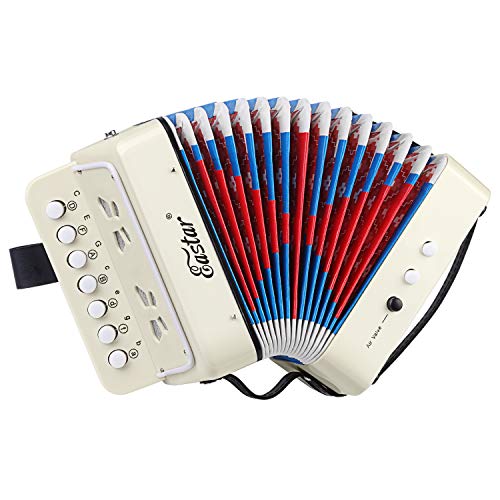
- Compact 1.9-pound design
- Includes learning guide
- Food-grade ABS construction
Best For: Young beginners and introductory music practice
Best Folk-Style Kit
31-Key 12-Bass Diatonic Accordion

- F/B/E folk tuning
- Airtight bellows
- Includes case and accessories
Best For: Adult folk musicians and practice-to-performance use
Best Digital Versatility

- Built-in stereo speakers
- Multiple accordion and orchestral sounds
- USB memory support
Best For: Performers wanting electronic sound flexibility
Top Entry-Level Pick
Hohner 72 Bass Piano Accordion

- 34 keys and 72 bass buttons
- Wood body with red finish
- 17-pound entry-level design
Best For: Beginners wanting a larger piano accordion with extensive bass range
Best Portable Package
25-Key 16-Bass Piano Accordion
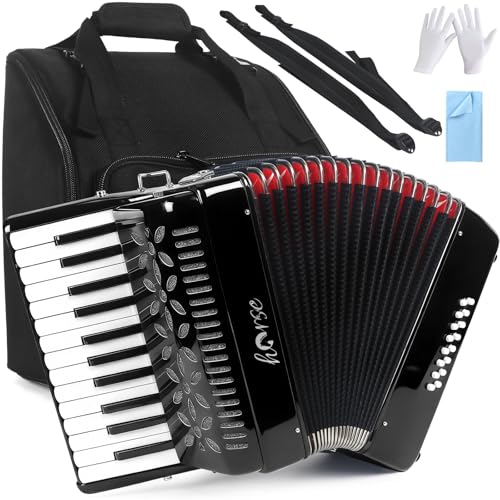
- 25 keys and 16 bass keys
- Leather windbox for an airtight seal
- Includes bag, straps, cloth, and gloves
Best For: Adults and beginners who prioritize portability and included accessories
Best Compact Design
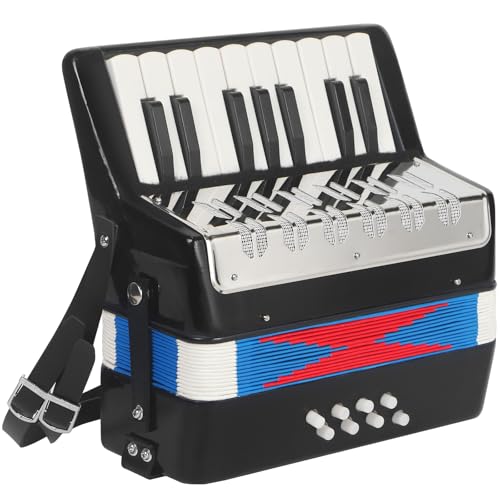
- Weighs three pounds
- Celluloid body with metal cover
- Includes straps and manual
Best For: Beginners seeking a lightweight, compact accordion for practice
Classic GCF Value – Hohner Panther 3-Row
The Hohner Panther G/C/F is a practical choice for players seeking durable, traditional accordions with a straightforward 3-row diatonic layout. Its 31 buttons, 12 bass buttons, included straps, and method book make it a useful package for learning and performing.
Best For: Beginners and players seeking a G/C/F diatonic accordion with useful starter accessories.
Pros:
- 31 buttons and 12 bass buttons in a G/C/F 3-row configuration
- Includes straps, cleaning cloth, and Hohner Diatonic Method Book
- Bass wood construction with matte-black finish
- Includes a 1/4-inch jack and XLR connector
Cons:
- Available only in G/C/F tuning and matte black
- No gig bag is included
- Limited 90-day warranty for manufacturer-defect repairs
This Hohner offers strong accessory value and a familiar diatonic format, but buyers should plan for separate case protection and note the shorter warranty period.
Beginner Carry Kit – 22-Key Red Accordion
This 22-key, 8-bass accordion is designed as an accessible option for adult beginners. Its responsive black-and-white buttons, adjustable voice changers, backpack, and included accessories give new players a ready-to-use setup.
Best For: Adult beginners who want an accordion package with a bag and basic maintenance accessories.
Pros:
- 22 keys and 8 bass buttons with sensitive, non-slip controls
- ABS, wood, and metal construction with a hand-polished finish
- Includes backpack, two straps, gloves, and cleaning cloth
- One-year warranty is listed
Cons:
- At 4.63 kg, it is not especially lightweight for carrying
- The supplied notes do not specify the accordion’s key tuning
For shoppers comparing beginner accordions, this model stands out for its bundled carrying solution and approachable controls. Confirm the tuning you need before ordering, especially if you plan to play with other musicians.
Rich Conjunto Tone – Hohner Panther FBbEb
The Hohner Panther FBbEb is built for players who want a comfortable diatonic accordion with a rich, robust sound. Its F, Bb, and Eb tuning and two sets of treble reeds suit conjunto and related musical styles.
Best For: Players performing conjunto and other styles that use F/Bb/Eb tuning.
Pros:
- F, Bb, and Eb diatonic tuning
- Two sets of treble reeds for a rich, full-bodied tone
- Includes straps for playing support
- Two-year warranty is listed
Cons:
- No gig bag or cleaning accessories are listed
- Its FBbEb tuning is less suitable for players who specifically need G/C/F
- Weighs approximately 6.1 kg
This Panther is a focused choice rather than a general-purpose accordion: its strongest appeal is the full sound and FBbEb layout. Verify your preferred key system before purchase.
Complete GCF Performance Set – 31-Key G/C/F Accordion
This 31-key, 12-bass G/C/F accordion combines a traditional push-pull layout with a case and playing accessories. Its handcrafted construction, leather bellows, and polished keys make it a practical option for practice, ensemble work, stage use, and travel.
Best For: Beginners, teachers, and amateur performers wanting a G/C/F accordion with a complete accessory kit.
Pros:
- 31 keys and 12 bass buttons in G/C/F tuning
- Airtight thick leather bellows are designed for stable air pressure
- Handcrafted reinforced frame and responsive polished keys
- Includes protective case, adjustable strap, gloves, and polishing cloth
Cons:
- At 13.9 pounds, it may feel heavy during extended carrying
- The supplied notes do not identify the case type or interior protection
Among these accordions, this model is especially convenient for new players who need a ready-to-use kit. Its G/C/F tuning and included case reduce the need for immediate accessory purchases, while the weight is worth considering for frequent travel.
Best Kids' Starter – Eastar 10-Key Kids Accordion
The Eastar kids accordion is a compact, approachable option for introducing children to accordions. Its 10 keys, included learning guide, secure straps, and lightweight design make it practical for early musical exploration and supervised practice.
Best For: Children ages three and up, beginners, and families seeking a portable introductory instrument.
Pros:
- Food-grade ABS resin and durable bellows are designed for safe, regular play.
- Compact 7.5-by-7.2-by-4-inch design weighs 1.9 pounds for easier carrying.
- Includes a learning guide and uses belt buckles to help hold the instrument securely.
- Phosphorus-bronze reeds are intended to provide durable, pleasant tone.
Cons:
- The 10-key layout is intended for children and beginners rather than advanced playing.
- Its small size and beginner-focused design may limit musical range as skills develop.
This Eastar model is a sensible first step for young players who need a manageable instrument. Buyers looking for broader range, more bass controls, or performance-oriented features should consider a full-size accordion instead.
Best Folk-Style Kit – 31-Key 12-Bass Diatonic Accordion
This 31-key, 12-bass diatonic accordion is built for folk-focused playing in F/B/E. Airtight bellows, responsive controls, hand-tuned reeds, and a travel-ready accessory kit make it a practical choice for practice, lessons, and performances.
Best For: Adult beginners and folk musicians playing Irish, polka, bluegrass, or country music.
Pros:
- F/B/E diatonic tuning supports a warm folk-oriented sound.
- Airtight bellows are designed to maintain steady airflow and consistent intonation.
- Responsive 31 treble keys and 12 bass buttons are designed for low-effort playing.
- Includes a carry case, shoulder straps, gloves, and polishing cloth.
Cons:
- At 7.99 kg, it is substantially heavier than a small beginner instrument.
- Diatonic F/B/E tuning may be less versatile for players needing chromatic coverage.
- The supplied notes do not specify a dedicated electronic output or onboard speaker system.
With its folk-specific tuning and complete carry kit, this accordion offers a focused package for players who value traditional tone and portability accessories. Its weight and diatonic layout are the main factors to consider before buying.
Best Digital Versatility – Roland FR-1XB V-Accordion
The Roland FR-1XB brings electronic flexibility to accordions with 62 buttons, onboard speakers, multiple accordion sets, orchestral sounds, and USB support. It suits players who want varied sounds and convenient digital features in a professional-looking instrument.
Best For: Performers and experienced players seeking built-in sounds, speakers, and USB-based file features.
Pros:
- Onboard 7 W x 2 speakers in a bass-reflex box support self-contained playing.
- Offers 16 accordion sets, 16 orchestral sounds, and four virtual tone wheel presets.
- USB memory supports Wave/MP3 playback, sound uploads, and data loading or saving.
- Includes Standard and Free Bass modes plus eight user programs.
Cons:
- At 21 pounds, it may be less convenient to carry than a compact acoustic model.
- Its electronic features may be more than a traditional folk player needs.
- The supplied specifications identify a USB connector but do not list a carrying case or straps.
This V-Accordion is the strongest fit for players who prioritize sound variety and digital control over a purely acoustic setup. Its speaker system and USB functions add performance flexibility, while the heavier body may affect transport decisions.
Top Entry-Level Pick – Hohner 72 Bass Piano Accordion
For shoppers comparing accordions for a first instrument, the Hohner Hohnica 1305-RED offers a traditional piano-style layout with 34 keys and 72 bass buttons. Its red wood body and broad G-E range make it a substantial entry-level option, though its 17-pound weight is worth considering.
Best For: Beginners who want a full-size-feeling entry-level piano accordion with extensive bass-button range.
Pros:
- 34-key piano accordion design with 72 bass buttons
- Wood and basswood body construction
- Distinctive red finish
- Warranty covers parts and labor for manufacturer defects for 90 days
Cons:
- At 17 pounds, it is heavier than compact beginner models
- The 90-day warranty is relatively brief
This Hohner is a practical choice when a beginner wants more bass-button capacity than smaller accordions provide. Choose it over a compact model if its larger format and weight fit your practice setup.
Best Portable Package – 25-Key 16-Bass Piano Accordion
This 25-key, 16-bass accordion is a flexible option for adults and beginners who want a portable instrument package. It combines piano-style black and white keys with a leather windbox, adjustable straps, and carrying accessories for practice and transport.
Best For: Adult beginners and musicians seeking a portable accordion with useful accessories included.
Pros:
- 25 piano-style keys and 16 bass keys
- Premium leather windbox designed for an airtight seal
- Includes backpack, adjustable straps, cleaning cloth, gloves, and padded suitcase box
- One-year warranty
Cons:
- Its 25-key and 16-bass layout is smaller than full-size accordion configurations
- The supplied notes do not specify the instrument’s weight
The included carrying and care accessories add practical value for learners who need an all-in-one setup. Its reduced key and bass count makes it easier to transport, but shoppers wanting a broader range may prefer a larger accordion.
Best Compact Design – AKLOT 17-Key Piano Accordion
Among compact accordions, the AKLOT 17-key model stands out for its lightweight three-pound design and beginner-friendly piano keyboard. Its celluloid body, stainless-steel bellows cover, and bright sound profile make it suited to practice, gifting, and easy transport.
Best For: Adult beginners and learners who want a lightweight, compact accordion for practice or travel.
Pros:
- Lightweight three-pound construction
- 17 piano keys and 8 bass buttons
- Celluloid body intended to be stronger and more resilient than ordinary plastic
- Includes straps and a manual
Cons:
- The 17-key, 8-bass layout offers less range than larger accordions
- The compact design may be limiting for advanced arrangements
The AKLOT is a sensible starting point when low weight and compact dimensions matter most. Its smaller keyboard and bass section favor learning and portability rather than the broader capabilities of a full-size instrument.
How We Picked These Accordions
We organized this selection around the needs most likely to influence a purchase: playing system, range, bass capacity, portability, construction, and intended user. The lineup includes diatonic button Accordions in several tunings, piano Accordions for more familiar keyboard technique, a compact children’s model, and a digital V-Accordion for players who want electronic versatility.
We also considered practical ownership details such as straps, cases, gloves, carry kits, speaker support, and overall size. Product specifications can vary by seller, so confirm the exact tuning, key count, bass layout, included accessories, and current dimensions before ordering.
Quick Comparison
| Type | Best suited to | What to prioritize |
|---|---|---|
| Small diatonic button | Folk, conjunto, beginners | Tuning, button feel, weight |
| Larger diatonic button | Developing players and traditional styles | Range, bass buttons, straps |
| Piano accordion | Keyboard players and broad repertoire | Keyboard size, bass system, bellows control |
| Kids’ accordion | Early exploration | Safe sizing, simple controls, durability |
| Digital accordion | Stage, practice, and sound flexibility | Voices, amplification, battery and connectivity |
Key Buying Factors for Accordions
Button or Piano Layout
Diatonic button Accordions are compact and well suited to specific musical traditions, but their notes depend on the instrument’s tuning and button system. Piano Accordions use a keyboard layout that may feel more intuitive to piano players and can support a wider range of repertoire.
Key and Bass Count
More treble keys or buttons and additional bass buttons can expand your range and accompaniment options, but they typically increase size, weight, and learning complexity. Beginners should not choose extra range at the expense of an instrument they can comfortably hold.
Weight and Ergonomics
Check the listed weight, dimensions, strap adjustment, and bellows clearance. A lighter model can be easier for younger players, commuters, and long practice sessions, while larger instruments may offer fuller capabilities for advanced playing.
Tuning and Sound
Match the tuning to your style, ensemble, or instructor. Reed quality and construction influence projection, response, and tonal character. Digital models add selectable sounds and volume control but produce a different playing experience from acoustic reeds.
Included Accessories
A case, straps, gloves, or cloth can make an instrument easier to transport and maintain. Treat included accessories as convenience items, and verify whether they are sized appropriately and whether the product includes any required power equipment.
Who Should Buy Which Accordions?
First-time adult players: Start with a manageable 22- or 25-key instrument, or a modest diatonic model matched to your preferred style. Prioritize comfortable straps and reliable button or keyboard action.
Folk and traditional players: Choose a diatonic accordion in the tuning used by your repertoire or local ensemble. Three-row models can provide more note options, but they may require greater familiarity with button systems.
Children and very young beginners: A compact toy-style accordion is appropriate for basic exploration, rhythm, and interest-building, not necessarily for long-term serious study.
Developing and performing musicians: Consider a larger 31-key diatonic or 72-bass piano accordion when you need expanded range and accompaniment. Make sure the player can manage the additional weight.
Players needing flexible volume and sounds: A digital V-Accordion can be a strong choice for apartments, rehearsals, and stage setups where amplification, headphone practice, or multiple instrument voices are useful.