Choosing the right equalizer can make a home studio sound clearer, tighter, and easier to mix. Whether you need simple tone shaping or precise room correction, the right unit depends on your setup and workflow.
Below, we’ve focused on practical audio equalizers for home studios that fit everything from desktop rigs to rack-mounted systems, so you can narrow down the best option for your space and budget.
Best 10 Audio Equalizers for Home Studios Picks for 2026
Rack-Ready 31-Band Control
dbx 231s Dual Channel 31-Band Equalizer

- Dual 31-band, 1/3-octave constant Q layout
- Switchable 6 dB or 12 dB boost/cut ranges
- Balanced TRS and XLR inputs/outputs
Best For: Studio users needing detailed rack EQ control
Feature-Packed Visual EQ
Decibelvibe TNZ SGE6 Graphic Equalizer

- 31-band spectrum display with 15-band two-channel EQ
- RCA and 3.5 mm aux inputs/outputs plus USB/Bluetooth
- Built-in microphone for no-cable spectrum display
Best For: Mixed home audio setups that need flexible inputs
Studio-Friendly Subwoofer EQ
15-Band Stereo EQ Rack Sub Out Noise Reduction Home/Studio/Live
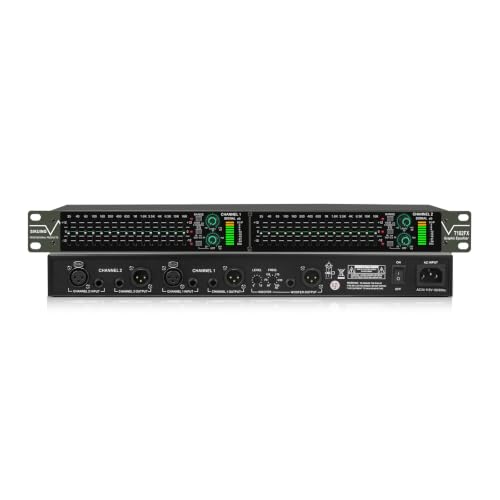
- 15-band dual-channel EQ from 25 Hz to 16 kHz
- Dedicated adjustable subwoofer output
- Bypass switch, low-cut filter, and LED metering
Best For: Rooms that need bass control and rack EQ
Compact Balanced Preamp EQ
Douk Audio T7 7 Band Equalizer

- 7-band EQ with fixed bands from 64 Hz to 8 kHz
- XLR and RCA input/output support
- 104 dB+ SNR and 0.003% distortion spec
Best For: Simple, compact tone shaping with balanced connections
Rack-Mount Stereo Precision
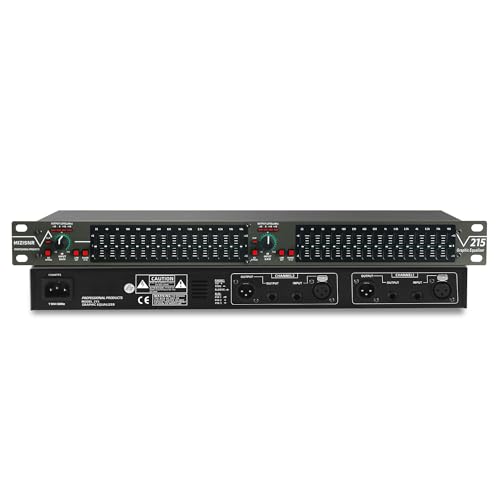
- 15 bands per channel with ±12dB adjustment
- LOW-CUT and BYPASS switches for cleaner comparisons
- XLR and 1/4" TRS inputs/outputs for flexible setup
Best For: Home studios and fixed racks needing simple dual-channel EQ control
Compact Bluetooth Tone Shaping

- 5-band tuning with independent op-amp processing
- Bluetooth 5.0 and compact DC 5V design
- Dual VU meters plus bypass and balance controls
Best For: Small home systems that need wireless playback and easy tone shaping
Deep Digital Control

- 31-band dual-channel design for detailed shaping
- PC software, presets, and bypass mode included
- DSP noise reduction and large LED display
Best For: Studio users wanting maximum EQ detail and software-assisted tuning
Compact 7-Band EQ
7-Band Stereo Equalizer for Home and Desktop Audio

- 7-band control from 60Hz to 15KHz
- 5x gain boost with 4580 op-amp
- TRS/TRRS support plus RCA and 3.5mm outputs
Best For: Simple home studio, streaming, and headphone setups
Rack-Mount 31-Band EQ
31-Band Graphic Equalizer with Spectrum Display

- 31-band DSP EQ with LED spectrum display
- 10 presets, noise reduction, and bypass switch
- Bluetooth 5.2, USB playback, and subwoofer output
Best For: Rack-based studio and home audio systems
Digital 31-Band EQ
31-Band Digital Equalizer with Presets and Bluetooth

- 31-band EQ with LED spectrum indication
- 10 presets, bypass, and noise reduction
- Bluetooth 5.2, USB playback, and XLR/TRS I/O
Best For: Installed audio setups that need presets and flexible I/O
Rack-Ready 31-Band Control – dbx 231s Dual Channel 31-Band Equalizer
For audio equalizers for home studios, the dbx 231s is a straightforward rack option when you want detailed frequency shaping with familiar pro-style connections. Its dual 31-band, 1/3-octave constant Q layout gives you fine control, while the front-panel bypass switch makes A/B comparison easy during setup and troubleshooting.
Best For: Home studio owners who want a dual-channel 31-band rack equalizer with balanced XLR/TRS connectivity.
Pros:
- Dual 31-band, 1/3-octave constant Q control for detailed adjustment
- Switchable boost/cut ranges of 6 dB or 12 dB
- Front panel bypass switch for quick comparison
- LED ladders help monitor output levels
Cons:
- Uses rack-style wiring and mounting, so it’s less convenient than desktop gear
- No extra DSP or wireless features
- May be more EQ than you need for simple fixes
The dbx 231s is a practical choice if your studio setup benefits from precise, hands-on analog control and standard balanced connections. It’s built for users who value direct signal management over extra features.
Feature-Packed Visual EQ – Decibelvibe TNZ SGE6 Graphic Equalizer
If you want audio equalizers for home studios that also double as a visual centerpiece, the Decibelvibe TNZ SGE6 adds a 31-band spectrum display and flexible connectivity. It supports rear RCA and 3.5 mm auxiliary connections, plus USB and Bluetooth 5.0 inputs, so it can fit into a range of home audio and studio-style setups.
Best For: Users who want a graphic equalizer with display features and multiple input options for mixed home audio setups.
Pros:
- 31-band music spectrum display with 15-band EQ for two channels
- Rear RCA and 3.5 mm auxiliary inputs/outputs for broad compatibility
- USB and Bluetooth 5.0 inputs for wireless and digital sources
- Built-in microphone can show spectrum activity without audio cables
Cons:
- More focused on home audio and visual display than pure studio precision
- Requires a battery for the included microphone feature
- Built-in preamp/amplifier functions may be unnecessary in some studio chains
The TNZ SGE6 stands out if you want versatility and presentation as much as EQ control. It’s a flexible option for users who connect different source types and want a lively visual component in the system.
Studio-Friendly Subwoofer EQ – 15-Band Stereo EQ Rack Sub Out Noise Reduction Home/Studio/Live
For audio equalizers for home studios, this 15-band stereo rack unit is aimed at users who want precise shaping plus low-end management. It combines dual independent channels, a bypass switch, a low-cut filter, and a dedicated adjustable subwoofer output, making it useful when you need tighter control over bass and feedback.
Best For: Studio or home audio users who want a rack equalizer with subwoofer output and low-cut filtering.
Pros:
- 15-band precision EQ across 25 Hz to 16 kHz
- Dedicated adjustable subwoofer output from 50 Hz to 250 Hz
- EQ bypass and adjustable low-cut filter for quick comparison and cleanup
- Multi-segment LED signal metering with clip light
Cons:
- Rack-mount design may not suit compact desktop setups
- Wired pro connections may be more than casual users need
- No wireless or USB playback features
This model makes sense if bass control is a priority in your room or monitoring chain. It’s a practical, rack-mounted tool for shaping sound and keeping low-end buildup under control.
Compact Balanced Preamp EQ – Douk Audio T7 7 Band Equalizer
If you’re comparing audio equalizers for home studios and want something compact, the Douk Audio T7 keeps the layout simple with seven fixed bands and balanced connectivity. Its XLR and RCA inputs and outputs, plus simultaneous output through both, make it easy to insert into a home stereo, amplifier, or computer speaker setup.
Best For: Users who want a compact, balanced 7-band EQ preamp for straightforward tone shaping.
Pros:
- 7-band EQ with bands at 64 Hz, 125 Hz, 250 Hz, 500 Hz, 2 kHz, 4 kHz, and 8 kHz
- XLR and RCA inputs and outputs for flexible compatibility
- High SNR over 104 dB and 0.003% distortion specification
- Compact aluminum alloy case with shielding against interference
Cons:
- Only 7 bands, so it offers less granular control than 15- or 31-band units
- No volume control knob
- Not intended for users who want lots of onboard features
The T7 is a good fit when you want a clean, simple EQ path instead of a feature-heavy box. It favors quick setup and balanced signal routing over deep editing flexibility.
Rack-Mount Stereo Precision – 15-Band Dual Channel EQ
If you need audio equalizers for home studios that also work well in live or installed setups, this 15-band stereo graphic EQ gives you a straightforward way to shape each channel independently. With ±12dB adjustment per band, a LOW-CUT switch for rumble control, and a BYPASS switch for quick comparison, it focuses on practical correction rather than flashy extras.
Best For: Studio users who want a rack-mount dual-channel EQ with simple controls, balanced/unbalanced connectivity, and low-frequency cleanup.
Pros:
- 15 bands per channel with adjustable gain/decay range for detailed tonal shaping
- LOW-CUT switch helps reduce wind noise, floor rumble, electrical hum, and other low-end noise
- BYPASS switch makes A/B checks and troubleshooting easier
- XLR balanced and 1/4" TRS unbalanced input/output support adds flexibility
Cons:
- 1U rack-mount format is best suited to fixed setups, not portable use
- Graphic EQ design is less granular than a higher-band digital processor
Overall, this model is a solid fit if you want a hands-on stereo equalizer for a home studio rack and value direct control over bass cleanup and channel balance.
Compact Bluetooth Tone Shaping – 5-Band EQ with VU Meters
For audio equalizers for home studios where convenience matters as much as tuning, this compact 5-band preamp adds Bluetooth 5.0, bypass, balance control, and dual VU meters. It is built for quick sound adjustments on home stereo, computer speaker, or amplifier setups, with each frequency band handled independently for more targeted correction.
Best For: Small home setups that want wireless playback, visible level monitoring, and easy tone adjustment in one compact unit.
Pros:
- 5-band EQ covers 75Hz, 400Hz, 800Hz, 4KHz, and 10KHz for focused adjustments
- Bluetooth 5.0 adds wireless listening convenience
- Dual large VU meters provide real-time signal feedback
- Bypass and balance controls make quick A/B checks and channel matching simple
Cons:
- Only 5 bands, so it is less detailed than multi-band studio processors
- DC 5V portable design is better for compact systems than larger rack rigs
This is a practical pick if you want a small, visually engaging EQ preamp that can fine-tune everyday listening gear without taking over your desk or shelf.
Deep Digital Control – 31-Band EQ with PC Tuning
If you are comparing audio equalizers for home studios and want the most detailed control in this group, this 31-band digital model offers dual-channel shaping with PC software support, 10 presets, and a bypass mode. It also includes a large LED display and DSP noise reduction, making it a strong option when you want precise adjustment and cleaner output from a flexible digital unit.
Best For: Users who want detailed digital EQ control, preset-based workflows, and PC-assisted tuning for studio or home audio.
Pros:
- 31-band dual-channel EQ allows highly detailed frequency shaping
- PC software support makes fine-tuning easier
- 10 presets and bypass mode help with fast sound comparisons
- DSP noise reduction aims to reduce background noise while keeping the main signal clear
Cons:
- Digital workflow may be more involved than a simple hardware graphic EQ
- Best value is likely for users who will use the PC software and presets
For a home studio where precision matters more than simplicity, this EQ stands out for its dense band layout, software assistance, and useful display-driven workflow.
Compact 7-Band EQ – 7-Band Stereo Equalizer for Home and Desktop Audio
If you want a simple way to shape sound in a small setup, this option fits the audio equalizers for home studios keyword well. Its 7-band layout gives you practical control over bass, mids, and treble, while the 4580 op-amp adds gain for low-output sources feeding powered speakers or an amplifier.
Best For: Home studio users who want straightforward tone shaping, headphone use, and flexible routing in a compact unit.
Pros:
- 7-band EQ with ±12dB adjustment across 60Hz to 15KHz
- 5x gain boost from the 4580 operational amplifier
- Supports TRS and TRRS 3.5mm plugs for headset use with mic support
- RCA and 3.5mm outputs can be used simultaneously
Cons:
- You must choose either RCA or 3.5mm input, not both at once
- Fewer bands than a full studio graphic equalizer
- Best suited to simpler setups rather than advanced room correction
For basic monitoring, streaming, or desktop audio control, this EQ offers useful flexibility without adding much complexity. It is a practical pick when you mainly need quick tone adjustment and multi-device routing in a compact footprint.
Rack-Mount 31-Band EQ – 31-Band Graphic Equalizer with Spectrum Display
For more detailed shaping, this is a stronger fit for audio equalizers for home studios that need finer control. The 31-band DSP design, LED spectrum display, and dedicated subwoofer output make it useful when you want precise adjustments, visual feedback, and broader system integration.
Best For: Studio, home theater, or rack-based audio setups that need detailed EQ control and flexible connectivity.
Pros:
- 31-band DSP equalizer with real-time LED spectrum monitoring
- 10 custom presets with intelligent noise reduction
- Bluetooth 5.2 and USB playback support
- Dedicated subwoofer output with adjustable 50Hz to 250Hz range
Cons:
- Rack-mount format is less convenient for casual desktop use
- More complex than a basic equalizer if you only need simple tone shaping
- Designed around system integration, so it may be overkill for small headphone-only setups
This model stands out when you want a more professional-style control surface and more bands to work with. It is a good choice for users who expect to store presets, route multiple sources, and monitor changes visually while tuning sound.
Digital 31-Band EQ – 31-Band Digital Equalizer with Presets and Bluetooth
This digital rack-mount model is another strong option among audio equalizers for home studios, especially if you want visual feedback and easy recall of settings. It combines 31 frequency segments, preset storage, and Bluetooth/USB playback in a format that works for a range of audio installations.
Best For: Users who want a feature-rich digital EQ for home theater, studio, DJ, or KTV-style systems.
Pros:
- 31-band graphic EQ with real-time LED frequency display
- 10 preset modes plus EQ bypass for quick switching
- Built-in Bluetooth 5.2 and USB playback
- XLR balanced and 1/4" TRS input/output support with adjustable bass output
Cons:
- Rack-mount design is better suited to installed setups than portable use
- Feature set may be more than needed for very small home studio rigs
- Advanced controls can take more time to learn than a basic EQ
Overall, this EQ is aimed at users who want a more capable control center with flexible I/O and saved settings. If your setup includes multiple audio sources and you value quick recall, it is a practical rack-mounted choice.
How We Picked These Audio Equalizers for Home Studios
We looked for models that make sense in real home-studio setups: balanced connectivity where possible, enough bands for meaningful control, and formats that suit both desktop and rack-based systems. We also considered noise performance, channel count, and whether the unit is better for creative tone shaping or more detailed corrective EQ.
Quick Comparison: Which Type Fits Your Setup?
If you want broad, hands-on control, a 31-band graphic EQ gives the most flexibility for fine adjustments. A 5-band or 7-band unit is usually easier to use for quick tone tweaks. For stereo systems and mixed-use rooms, dual-channel models are often the best fit, while digital EQ designs can offer a more modern workflow for users who want precise control and display features.
Key Buying Factors for Audio Equalizers for Home Studios
Band Count
More bands generally means finer control, which helps when correcting room issues or dialing in monitors. Fewer bands are simpler and faster for broad tonal shaping.
Connectivity
Check for RCA, XLR, and auxiliary inputs and outputs based on your gear. Balanced connections are a plus if you want to reduce hum and interference in a studio environment.
Stereo Vs. Dual Channel
Stereo EQ is important if you are working with a full monitoring chain. Dual-channel designs help you treat left and right paths consistently, which matters in home mixing rooms.
Noise and Build Quality
For Audio Equalizers for Home Studios, low-noise operation is essential. Rack-mount units often integrate better with studio gear, while desktop models can be more convenient near a computer or speaker setup.
Ease of Use
Some users want immediate control with sliders and knobs, while others prefer digital adjustment and display feedback. Choose the interface that matches how often you’ll use the EQ and how quickly you need to make changes.
Who Should Buy Which Audio Equalizers for Home Studios?
If you are a beginner, start with a simple 5-band or 7-band equalizer for easy tone shaping. If you are treating a room, mixing more seriously, or managing a stereo monitor chain, a 15-band or 31-band model is usually the smarter choice. For users with broader stereo systems or hybrid home setups, a dual-channel rack EQ offers the best balance of control, flexibility, and compatibility.
In short, the best choice depends on whether you want quick tonal cleanup, detailed corrective work, or a versatile control center for your home studio audio chain.