If your podcast sounds muddy, harsh, or inconsistent, the right equalizer can make a bigger difference than you might expect. Audio equalizers for podcasting help shape voices, reduce problem frequencies, and make your mix easier to manage.
Below, we’ve selected ten options for creators who want better clarity, smoother tone, and more control across home studios, livestream setups, and professional recording rigs.
Best 10 Audio Equalizers for Podcasting Picks for 2026
Streaming Control Mixer
FIFINE Ampligame SC3 Gaming Audio Mixer with Indi-Fader

- Single XLR mic input with 48V phantom power
- Independent control for mic, line in, headphones, and line out
- Front mute/monitor buttons plus built-in voice effects
Best For: Podcasters and streamers wanting tactile control and XLR support
Rack-Mount Stereo EQ
EQX-215S 15-Band Dual Channel Equalizer

- 15-band EQ per channel with ±12dB adjustment
- Low-cut control helps remove unwanted low-end noise
- XLR balanced and 1/4-inch TRS connectivity
Best For: Podcast studios needing a dedicated hardware EQ
Compact Podcast Mixer
4-Channel Bluetooth Audio Mixer with 7-Band EQ

- 7-band EQ for more detailed vocal shaping
- 48V phantom power and XLR/1/4-inch inputs
- Bluetooth input, USB interface, and 99 DSP effects
Best For: Creators who want EQ, effects, and wireless input in one mixer
Balanced Home EQ
Douk Audio T7 7-Band Balanced Equalizer

- 7-band EQ for frequency tuning across low, mid, and high ranges
- XLR and RCA input/output options
- High SNR and low distortion for clean audio
Best For: Home audio and podcast users needing simple hardware EQ
Pro DJ/Studio Hybrid
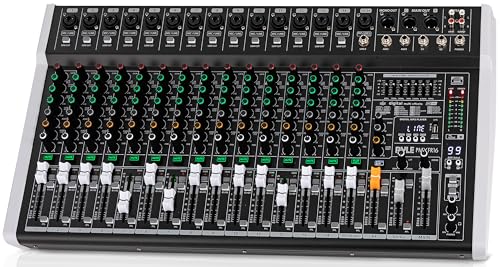
- 7-band stereo graphic EQ for detailed tone shaping
- Low cut filters help reduce rumble and noise
- Bluetooth and USB recording support content workflows
Best For: Podcasters and small studios needing mixer-style EQ control
Compact Voice EQ

- 7-band EQ covers 60Hz to 15kHz adjustments
- Small 2-channel design for simple setups
- 3.5mm interface supports easy connections
Best For: Budget creators needing basic EQ in a compact unit
Rack-Mount Precision
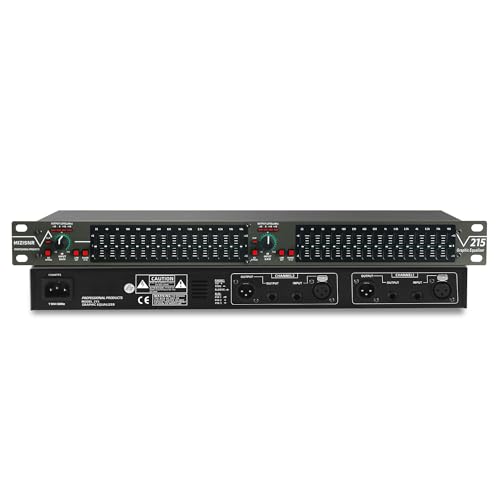
- 15-band dual-channel EQ with ±12dB control
- Low-cut and bypass switches support cleanup and testing
- XLR and 1/4-inch TRS I/O fit studio setups
Best For: Podcasters and studios wanting detailed rack-mounted EQ control
Flexible Visual EQ
Decibelvibe TNZ SGE6 Graphic Equalizer

- RCA and 3.5mm I/O plus USB and Bluetooth 5.0
- Built-in microphone for spectrum display without cables
- 15-band EQ with 16 color options and output adjustment
Best For: podcasters and home-audio users who want flexible connections and a visual display
Studio Tuning EQ
31-Band Digital Equalizer with PC Tuning

- Dual-channel 31-band EQ with PC software tuning
- XLR, TRS, and stereo L/R connectivity
- Noise reduction, presets, and bypass mode for cleaner comparisons
Best For: podcasters and studio users who need detailed control and flexible inputs
Rack-Mount Cleanup EQ
EQ-215S 15-Band Stereo Equalizer

- Dual-channel 15-band design with adjustable gain/decay
- LOW-CUT switch reduces rumble, hum, and wind noise
- XLR balanced and 1/4" TRS connections for pro setups
Best For: users who want a rack-mount EQ for straightforward noise cleanup
Streaming Control Mixer – FIFINE Ampligame SC3 Gaming Audio Mixer with Indi-Fader
If you’re comparing audio equalizers for podcasting and want hands-on control, this FIFINE mixer leans more toward live mixing and voice shaping than traditional studio EQ. It gives you a single XLR mic input, individual channel control, and onboard sound effects, making it a practical pick for creators who want to manage levels directly instead of relying only on software.
Best For: Podcasters and streamers who want a compact mixer with direct physical control, XLR mic support, and built-in effects.
Pros:
- Single XLR mic input with built-in 48V phantom power for condenser mics
- Independent control for microphone, line in, headphone, and line out channels
- Front mute and monitor buttons for easier live use
- Includes sound effects, voice modes, and customizable button recordings
Cons:
- Not compatible with USB microphones
- XLR cable is not included
- More of a mixer than a dedicated graphic equalizer
Overall, this is a versatile entry-point mixer for creators who want tactile control and podcast-friendly features in one desktop unit. It is especially appealing if you value quick adjustments, monitoring, and built-in effects over a standalone EQ layout.
Rack-Mount Stereo EQ – EQX-215S 15-Band Dual Channel Equalizer
For buyers focused on audio equalizers for podcasting, this rack-mount unit is built for precise tonal shaping rather than mixing extras. Its 15-band dual-channel design, low-cut control, and XLR/TRS connectivity make it a strong fit when you need detailed frequency adjustment in a home studio or production rack.
Best For: Podcast studios and audio setups that need a dedicated, hardware graphic equalizer with dual-channel control.
Pros:
- 15-band equalizer per channel with up to ±12dB adjustment
- Low-cut feature helps reduce unwanted low-end noise
- XLR balanced and 1/4" TRS connections for flexible integration
- 1U rack-mount design with bypass mode for easy setup
Cons:
- No mixer functions or microphone inputs
- More suited to installed audio chains than portable use
- Likely overkill if you only need basic podcast tone shaping
This is the most traditional equalizer in the group, and it makes sense when your priority is fine control over the sound chain. If your podcast setup already has a mixer or interface, this unit can add the detailed EQ adjustment that software-only setups sometimes lack.
Compact Podcast Mixer – 4-Channel Bluetooth Audio Mixer with 7-Band EQ
If you want audio equalizers for podcasting with more flexibility than a basic interface, this 4-channel mixer gives you built-in EQ, phantom power, Bluetooth input, and USB recording support. The 7-band EQ is the headline feature for shaping vocals and background audio, while the onboard DSP effects add extra polish for recording and streaming.
Best For: Podcasters and content creators who want a compact mixer with EQ, effects, and wireless audio input.
Pros:
- 7-band EQ offers more precise tone shaping than basic 2- or 3-band mixers
- 48V phantom power supports condenser microphones
- Bluetooth input and USB audio interface add flexible connectivity
- 99 DSP effects can add reverb, delay, and other vocal enhancements
Cons:
- Bluetooth works for input only, not output
- More features than some simple podcast setups need
- Mini form factor may not suit users who want larger controls
As a podcasting mixer, this model stands out for combining EQ with effects and multiple input options in a portable metal chassis. It is a good fit if you want one box to handle recording, monitoring, and quick sound shaping without a more complex studio rack.
Balanced Home EQ – Douk Audio T7 7-Band Balanced Equalizer
When comparing audio equalizers for podcasting, the Douk Audio T7 is more of a straightforward hardware tone shaper than a mixer or recording hub. Its 7-band layout, balanced XLR/RCA connectivity, and clean signal specs make it useful if you want to correct or refine audio in a playback or desktop monitoring chain.
Best For: Home audio users and podcasters who want a simple, high-fidelity hardware EQ with balanced connectivity.
Pros:
- 7-band equalizer covers low, mid, and high frequency tuning
- XLR and RCA inputs/outputs support a range of audio setups
- High SNR and low distortion are suited to clean signal paths
- Compact aluminum alloy case offers shielding and durability
Cons:
- No volume control knob
- Not designed as a mixer or podcast interface
- More suited to playback and system tuning than live production controls
This is a solid choice if your priority is simple, predictable equalization rather than multiple recording features. It fits best in systems where you already have a source and just need to shape the audio cleanly and consistently.
Pro DJ/Studio Hybrid – Pyle 16-Channel 7-Band Mixer
If you want audio equalizers for podcasting that give you more than basic tone control, the Pyle PMXFR16 is built around a 7-band stereo graphic EQ with low cut filters and a full mixer layout. It is a practical choice when you need to shape voice, remove rumble, and keep recording or live-stream setups flexible.
Best For: Podcasters, creators, and small studios that want a mixer with built-in EQ, phantom power, and recording options.
Pros:
- 7-band stereo graphic equalizer offers more precise sound shaping than basic EQs.
- Low cut filters help reduce rumble and unwanted low-frequency noise.
- Bluetooth, USB recording, and built-in MP3 playback add flexibility for content creation.
- Includes XLR/mic/line combo inputs with +48V phantom power.
Cons:
- Designed as a full mixer, so it may be more than some podcast-only setups need.
- 99 DSP effects are useful, but they add complexity if you only want simple EQ control.
This is a strong fit if you want one device that handles EQ, routing, and recording in a single desktop unit. For podcasting, its main advantage is giving you granular control plus practical noise-reduction tools.
Compact Voice EQ – 7-Band Digital Equalizer
For compact audio equalizers for podcasting, this 7-band digital equalizer is aimed at simple two-channel tone control in a small format. Its 3.5mm interface and adjustable 7-band range make it a straightforward option when you want basic voice shaping for recording or streaming without a large rack unit.
Best For: Budget-conscious creators who want a small 7-band equalizer for basic podcast or streaming use.
Pros:
- 7-band control gives you adjustment points from 60Hz to 15kHz.
- Compact 2-channel design suits simple recording and streaming setups.
- 3.5mm interface supports mobile phone voice-call style connections.
- Aluminum alloy construction and dual-channel sound are built for practical use.
Cons:
- It uses a 3.5mm-focused interface rather than studio-style XLR or TRS connections.
- The product notes emphasize general voice calls and car audio use alongside podcasting.
If you need a small, straightforward equalizer rather than a full mixer, this model keeps the feature set focused. It works best when you value simple band adjustments and compact connectivity over advanced studio routing.
Rack-Mount Precision – EQ-215 15-Band Stereo EQ
This 15-band stereo graphic equalizer is a stronger option for audio equalizers for podcasting when you want more detailed control and a rack-mounted setup. With dual-channel EQ, low-cut filtering, and bypass switching, it is built for users who want clear adjustment and straightforward integration into a studio or live audio chain.
Best For: Studios, installations, and podcasters who want a 1U rack EQ with broad control and flexible I/O.
Pros:
- 15-band dual-channel design offers very fine control with a ±12dB range per band.
- LOW-CUT switch helps reduce wind noise, rumble, and hum.
- Bypass switch makes comparison and debugging easier.
- XLR balanced and 1/4" TRS input/output support flexible setups.
Cons:
- Rack-mount format is less portable than compact desktop EQ options.
- Primarily aimed at studio, live, and installation use rather than casual plug-and-play podcasting.
If your podcast workflow benefits from a more traditional rack unit, this EQ-215 delivers the most detailed band control in this group. It stands out for users who want tighter tuning, better noise management, and studio-friendly connectivity.
Flexible Visual EQ – Decibelvibe TNZ SGE6 Graphic Equalizer
If you want audio equalizers for podcasting that can also double as a visual centerpiece, the Decibelvibe TNZ SGE6 offers a flexible mix of EQ control and display features. It includes RCA and 3.5mm inputs/outputs, plus USB and Bluetooth 5.0 input support, so it can fit into a range of home audio or content-creation setups. The built-in microphone is especially useful for showing the spectrum without needing a direct audio cable connection.
Best For: Creators and home-audio users who want flexible input options, spectrum display, and preamp-style output control.
Pros:
- Rear RCA and 3.5mm auxiliary inputs/outputs for broad compatibility
- USB and Bluetooth 5.0 inputs add wireless and direct playback options
- Built-in microphone can display the sound spectrum without audio cables
- Adjustable brightness, speed, gain, and up to 16 color options
Cons:
- Uses a 15-band EQ for two channels rather than a full 31-band audio control section
- Emphasis is on visualizer and preamp features as well as EQ
- May be more than needed if you only want a simple podcast equalizer
Overall, the TNZ SGE6 is a strong pick if you want a podcasting-friendly equalizer with lots of connection choices and a clear visual display. Its feature set is geared toward flexible signal handling and presentation, not just basic tone shaping.
Studio Tuning EQ – 31-Band Digital Equalizer with PC Tuning
For audio equalizers for podcasting where fine control matters, this 31-band digital equalizer stands out for its dual-channel layout and PC software tuning. It supports balanced XLR, stereo L/R, and TRS connections, making it easy to integrate with studio gear, mixers, and home audio systems. The large LED display, presets, bypass mode, and noise reduction features add practical control for cleaner spoken-word output.
Best For: Podcasters and studio users who want detailed EQ shaping, software tuning, and flexible connectivity.
Pros:
- Dual-channel 31-band EQ with PC software for detailed tuning
- Balanced XLR, stereo L/R, and TRS ports support many setups
- 10 presets and bypass mode make comparison and setup easier
- Integrated noise reduction helps clean up unwanted background sound
Cons:
- More complex than a basic EQ for simple podcast chains
- Requires corded power and setup time for full use
- Best suited to users who want hands-on control rather than plug-and-play simplicity
This model makes sense if your podcast workflow benefits from precise shaping and multiple connection paths. The combination of 31-band control, software tuning, and noise reduction gives it a more studio-focused profile than simpler rack units.
Rack-Mount Cleanup EQ – EQ-215S 15-Band Stereo Equalizer
If you need audio equalizers for podcasting that focus on straightforward cleanup and rack integration, the EQ-215S is built around dual-channel 15-band control. Its low-cut switch helps reduce wind noise, floor rumble, and electrical hum, which can be useful when refining spoken audio. With XLR balanced and 1/4″ TRS inputs and outputs, it fits into studio, live, and installed systems.
Best For: Users who want a rack-mount stereo EQ with simple noise cleanup and standard pro connections.
Pros:
- Dual-channel 15-band EQ with adjustable gain and decay ranges
- LOW-CUT switch helps reduce rumble, hum, and other low-frequency noise
- BYPASS switch supports quick debugging and A/B checks
- XLR balanced and 1/4″ TRS I/O suit many pro audio setups
Cons:
- Only 15 bands per channel, so it is less detailed than 31-band options
- No software tuning or digital display features listed
- Rack-mount format may be more than some podcast setups require
The EQ-215S is a practical choice when your priority is clean signal handling rather than flashy extras. It keeps the feature set focused on noise reduction, bypass control, and compatibility with standard studio connections.
How We Picked These Audio Equalizers for Podcasting
We focused on products that fit real podcasting workflows, not just general music playback. Priority went to models with useful EQ range, practical inputs and outputs, low-noise operation, and formats that make sense for voice recording, streaming, and small studio monitoring.
We also considered setup flexibility. Some podcasters need compact desktop control for a single mic chain, while others need rack-mount equalizers for a more permanent studio installation.
Quick Comparison
For simple voice shaping, smaller 3.5mm or desktop mixers can be enough. For more precise tone control, 7-band and 15-band units are a better middle ground. If you want the most detailed frequency control, a 31-band equalizer offers the finest adjustment, though it may be more than casual creators need.
Bluetooth, USB, phantom power, and XLR support can be useful, but only if they match your recording chain. The best choice is the one that integrates cleanly with your microphones, interface, and monitoring setup.
Key Buying Factors for Audio Equalizers for Podcasting
Band Count
More bands mean more precise control. A 7-band EQ is usually straightforward and easy to use, while 15-band or 31-band models allow finer corrections for vocal harshness, boominess, or room issues.
Connection Type
Check whether the equalizer supports XLR, RCA, USB, 3.5mm, or Bluetooth. For podcasting, the right input and output options matter more than extra features you may never use.
Noise and Signal Quality
Look for low-noise designs and stable signal handling. Poorly designed EQ units can add hiss or color the sound in ways that work against voice clarity.
Workflow Fit
Think about whether you need a desktop unit, a mixer with built-in EQ, or a rack-mount processor. Audio Equalizers for Podcasting should simplify your production, not complicate it.
Who Should Buy Which Audio Equalizers for Podcasting?
New podcasters and solo creators usually do best with simpler desktop or mixer-based options that offer fast control and minimal setup. Creators who want more detailed shaping, live monitoring, or room correction should lean toward 15-band or 31-band units.
If you run a multi-mic show, stream regularly, or need a more permanent studio chain, a mixer with EQ, phantom power, and balanced connections may be the most practical choice. For budget-conscious users, a compact equalizer with the right inputs can still deliver a noticeable upgrade in vocal polish.