Choosing the right interface can make a bigger difference than many singers expect. For an audio interface for professional vocals, you want clean gain, low noise, and a stable connection that lets your mic sound its best.
Below, we’ve narrowed the field to 10 strong options for vocal recording, streaming, and hybrid creator workflows, with picks that balance sound quality, features, and value.
Best 10 Audio Interface for Professional Vocals Picks for 2026
Compact Starter Pick
Focusrite Scarlett Solo 3rd Gen for Vocal Recording

- 1 XLR mic preamp with 56 dB gain
- 24-bit/192kHz recording and Air mode
- Low-noise balanced outputs
Best For: Solo vocal recording and simple home studio setups
Analog Flavor Pick
Universal Audio Volt 276 for Vocal Warmth

- UA 610-style Vintage mode
- 1176-based analog compressor
- Mac, Windows, iPad, and iPhone support
Best For: Vocals that need warm, polished tone on the way in
Streaming and Routing Pick
MAONO PS22 Lite for Vocal Content

- 24-bit/192kHz recording with 106 dB dynamic range
- Up to 56 dB gain and 48V phantom power
- Loopback-capable routing software with ASIO
Best For: Creators who record vocals and stream from the same setup
Audio Quality Pick
MOTU M2 for Clean Vocal Capture

- ESS Sabre32 Ultra DAC technology
- 120 dB output dynamic range
- -129 dBu EIN mic inputs
Best For: Clean, detailed vocal recording with low-noise performance
Premium Desktop Recording
SSL 2 MKII Plus USB-C Audio Interface
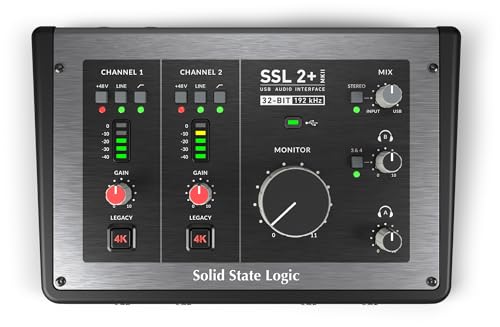
- Two SSL mic preamps for vocal recording
- 32-bit / 192 kHz conversion and zero-latency monitoring
- Four balanced outputs plus dual headphone outs
Best For: Singers and creators wanting a polished desktop vocal interface
Creator Flexibility
MAONO P2 Hybrid USB Audio Interface

- Dual XLR inputs with 56 dB gain
- 24-bit/192 kHz audio plus ASIO and loopback
- Works with computer, phone, iPad, and more
Best For: Podcasters and mobile creators needing flexible vocal routing
Value Starter Kit
PreSonus AudioBox 96 USB Interface
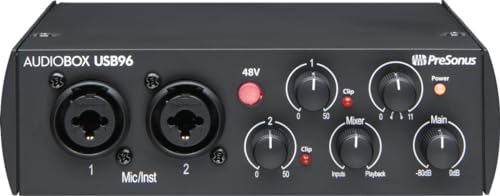
- Two Class-A mic preamps with +48V phantom power
- 24-bit/96 kHz recording with zero-latency mixer control
- Includes Studio One Artist, Ableton Live Lite, and plug-ins
Best For: Home recordists wanting an affordable vocal interface with software
Portable Vocal Interface
Shure MVX2U Gen 2 XLR-to-USB-C Audio Interface

- Up to +60 dB clean gain with 48V phantom power
- Auto Level, denoiser, and pop reduction built in
- Works with desktop, smartphone, and tablet
Best For: Vocalists and creators who want a portable XLR-to-USB-C interface with onboard processing
Dual-Input Starter Interface
M-AUDIO M-Track Duo USB Audio Interface

- Two combo XLR/line/instrument inputs with phantom power
- 48kHz recording and Crystal Preamps for clean vocals
- USB/direct monitoring plus headphone and main outputs
Best For: Beginner and intermediate users who want a simple two-input vocal interface
Compact Solo Interface
M-AUDIO M-Track Solo USB Audio Interface
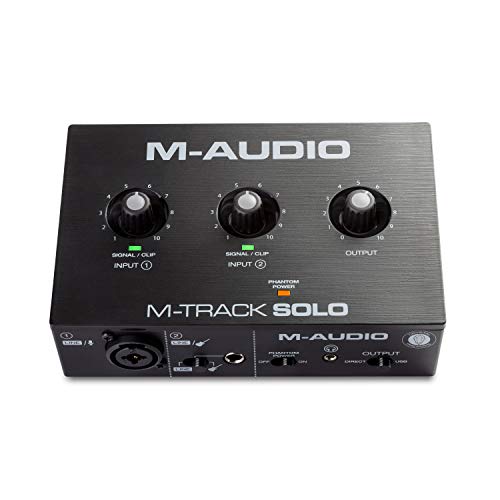
- Single combo XLR/line input with phantom power
- 48kHz capture with transparent Crystal Preamp
- Compact design with USB/direct zero-latency monitoring
Best For: Solo vocalists and streamers who want a small, no-fuss interface
Compact Starter Pick – Focusrite Scarlett Solo 3rd Gen for Vocal Recording
If you want an audio interface for professional vocals that keeps the setup simple, the Scarlett Solo 3rd Gen is a practical place to start. It gives you one XLR mic preamp with up to 56 dB of gain, 24-bit/192kHz recording, and Focusrite’s Air mode for a brighter vocal sound.
Best For: Solo singers, singer-songwriters, and anyone who wants an easy vocal-recording interface with clean conversion and simple controls.
Pros:
- 1 XLR mic preamp with 56 dB gain range for vocal recording
- 24-bit/192kHz converters for studio-quality capture
- Air mode adds extra clarity and brightness
- Low-noise balanced outputs for clean monitoring
Cons:
- Only one mic input, so it is not built for multi-mic sessions
- Fewer advanced studio features than larger interfaces
For straightforward home vocal tracking, this interface focuses on the essentials and does them well. The bundled software and broad OS compatibility make it a solid entry-level choice for recording vocals without a complicated learning curve.
Analog Flavor Pick – Universal Audio Volt 276 for Vocal Warmth
For an audio interface for professional vocals with a more polished, analog-style character, the Volt 276 stands out. It pairs UA 610 preamp modeling in Vintage mode with an 1176-based analog compressor, which can help vocals come through with added clarity and punch.
Best For: Vocalists and small-studio creators who want easy analog-style tone shaping while recording and mixing.
Pros:
- Vintage mode emulates classic UA 610 preamp tone
- Built-in analog compressor based on the 1176
- Includes LUNA DAW for an analog-studio workflow
- Works with Mac, Windows, iPad, and iPhone
Cons:
- Requires an external Volt power supply for mobile use
- iPad/iPhone use needs an Apple Lightning to USB Camera Adapter in some cases
If you want vocals to feel more finished on the way in, this interface gives you processing that is useful without being overly complex. The added software bundle also makes it appealing for users building a more production-ready vocal setup.
Streaming and Routing Pick – MAONO PS22 Lite for Vocal Content
The MAONO PS22 Lite is a flexible audio interface for professional vocals if you also stream, record, or manage different input sources. It offers 24-bit/192kHz recording, a low-noise preamp with up to 56 dB gain, and ProStudio routing software with loopback and ASIO support.
Best For: Creators who want one compact interface for vocal recording, streaming, and easy source switching.
Pros:
- 24-bit/192kHz recording with 106 dB dynamic range
- Up to 56 dB preamp gain with 48V phantom power
- ProStudio routing software with loopback support
- Compact design with direct monitoring and status light ring
Cons:
- Best suited to single-user or compact setups rather than larger studio rigs
- Advanced routing may be more than a beginner needs
This model is especially useful if vocals are only part of a bigger creator workflow. Its built-in routing tools and simple modes make it easier to move between recording, streaming, and instrument use without adding extra hardware.
Audio Quality Pick – MOTU M2 for Clean Vocal Capture
For an audio interface for professional vocals where clean conversion matters most, the MOTU M2 is a strong technical pick. It uses ESS Sabre32 Ultra DAC technology, delivers a measured 120 dB dynamic range on outputs, and reports -129 dBu EIN on mic inputs.
Best For: Vocalists and home-studio users who prioritize low-noise input performance and high-quality conversion.
Pros:
- ESS Sabre32 Ultra DAC technology for high-end analog sound
- Measured 120 dB dynamic range on outputs
- Measured -129 dBu EIN on mic inputs for low-noise recording
- ESS-driven headphone output for monitoring
Cons:
- Windows support is listed, so compatibility may be more limited than cross-platform rivals
- More focused on audio performance than built-in vocal processing features
If you want the interface itself to stay out of the way and preserve detail, the M2 is built around strong conversion and low-noise specs. That makes it an appealing choice for vocal tracking when accuracy and monitoring quality are the priority.
Premium Desktop Recording – SSL 2 MKII Plus USB-C Audio Interface
If you want an audio interface for professional vocals with a polished desktop workflow, the SSL 2 MKII Plus is built to deliver. It combines two SSL mic preamps, 32-bit/192 kHz conversion, and zero-latency monitoring, making it a strong fit for clean vocal capture in a home or project studio.
Best For: Singers, producers, and podcasters who want high-quality vocal recording with balanced outputs and flexible monitoring.
Pros:
- Two XLR mic preamps for dual-vocal or vocal-plus-instrument recording.
- 32-bit / 192 kHz AD/DA converters for high-resolution tracking.
- Zero-latency monitoring, plus two discrete headphone outputs and four line outs.
- Useful extras like Legacy 4K analog enhancement, high-pass filters, MIDI I/O, and loopback.
Cons:
- Only 2-in/4-out, so it’s not aimed at larger multi-source sessions.
- Best suited to desktop studio setups rather than ultra-portable field recording.
Overall, this is a capable vocal interface if you want SSL-style preamps, strong monitoring options, and a feature set that supports serious recording and streaming work.
Creator Flexibility – MAONO P2 Hybrid USB Audio Interface
The MAONO P2 is an audio interface for professional vocals if your workflow spans computer, phone, and tablet recording. With dual XLR inputs, 56 dB gain, 24-bit/192 kHz audio, and routing tools, it’s designed for creators who need flexible vocal capture and streaming support in one compact box.
Best For: Podcasters, streamers, and mobile creators who want versatile vocal recording and loopback routing.
Pros:
- Dual USB ports with MFi-certified connectivity for computer and phone/iPad use.
- 56 dB dual XLR gain and 24-bit/192 kHz recording for detailed vocal capture.
- ASIO support, direct monitoring, loopback, and routing software for creator workflows.
- Independent mute controls and compact 15° tilt design for easy desktop use.
Cons:
- Focuses more on creator flexibility than on traditional studio expansion.
- Most compelling features depend on software-driven routing and workflow setup.
For vocalists who also stream, podcast, or record on mobile devices, the P2 stands out for convenience and routing control without giving up high-resolution audio.
Value Starter Kit – PreSonus AudioBox 96 USB Interface
The PreSonus AudioBox 96 is a practical audio interface for professional vocals when you want a simple, budget-friendly recording setup. It offers two Class-A mic preamps, phantom power, and zero-latency mixer control, so it covers the essentials for vocal tracking without complicating the workflow.
Best For: Home recordists and singers who want an affordable two-channel interface with solid software extras.
Pros:
- Two Class-A mic preamps and global +48V phantom power for condenser mics.
- 24-bit/96 kHz converters for straightforward vocal recording and playback.
- Zero-latency mixer control plus a high-powered headphone output.
- Includes Studio One Artist, Ableton Live Lite, and Studio Magic Plug-In Suite.
Cons:
- Limited to two channels, so it’s not ideal for bigger tracking sessions.
- Max sample rate tops out at 96 kHz, below higher-end interfaces.
If you want a no-fuss interface that gets vocals into your DAW with useful monitoring and software included, the AudioBox 96 is an easy value pick.
Portable Vocal Interface – Shure MVX2U Gen 2 XLR-to-USB-C Audio Interface
If you want an audio interface for professional vocals that keeps setup simple, the Shure MVX2U Gen 2 turns any XLR mic into a clean USB-C recording chain. It is built for desktop, tablet, or smartphone use and adds onboard DSP so you can get consistent vocal results without a complicated signal path.
Best For: Vocalists, podcasters, and streamers who want portable XLR-to-USB-C recording with built-in processing.
Pros:
- Provides up to +60 dB of clean gain plus 48V phantom power for dynamic or condenser mics.
- Includes Auto Level Mode, Real-Time Denoiser, and Digital Popper Stopper for zero-latency processing.
- Offers tone options like Dark, Natural, and Bright for flexible vocal shaping.
- Works across desktop, smartphone, and tablet with MOTIV app control.
Cons:
- Single-channel design only supports one XLR mic at a time.
- No built-in multi-input mixing for larger recording setups.
For solo vocal recording, this is a practical plug-and-play option that prioritizes clean gain and easy control over complexity. The Shure processing tools make it especially appealing if you want polished vocal audio without relying entirely on software.
Dual-Input Starter Interface – M-AUDIO M-Track Duo USB Audio Interface
The M-AUDIO M-Track Duo is a straightforward audio interface for professional vocals when you need a simple two-input setup for recording, streaming, or podcasting. Its transparent Crystal Preamps, 48kHz resolution, and phantom power make it a sensible entry-level pick for capturing voice clearly on Mac or PC.
Best For: Beginner to intermediate vocal recording, streaming, and podcasting with a two-input layout.
Pros:
- Two combo XLR/Line/Instrument inputs let you record vocals and another source at the same time.
- Crystal Preamps and 48kHz audio resolution are aimed at clean, transparent capture.
- USB/Direct monitoring switch helps deliver zero-latency monitoring.
- Includes a headphone output, stereo main outputs, and MPC Beats software.
Cons:
- Maximum sample rate is 48kHz, which is modest versus higher-end interfaces.
- Uses USB Type B connectivity rather than newer USB-C.
If you need a budget-conscious interface that still handles vocal sessions confidently, the M-Track Duo covers the essentials well. It is especially useful when you want two mic or line inputs and a simple monitoring setup without extra complexity.
Compact Solo Interface – M-AUDIO M-Track Solo USB Audio Interface
The M-AUDIO M-Track Solo is a compact audio interface for professional vocals when you only need one mic input and a clean path into your computer. It delivers 48kHz recording, phantom power, and transparent Crystal Preamp performance in a small desktop-friendly design.
Best For: Solo vocal recording, streaming, and podcasting on a simple setup.
Pros:
- One combo XLR/Line input with phantom power supports a condenser or dynamic mic.
- Crystal Preamp is designed for clean, transparent microphone capture.
- USB/Direct monitoring helps with zero-latency tracking.
- Very compact and lightweight for small workspaces or portable use.
Cons:
- Only one XLR/line mic input, so it is not ideal for multi-mic sessions.
- Headphone output is 1/8-inch rather than a larger studio jack.
This is the simplest option in the group, and that can be a strength if you mainly record one vocal source at a time. For creators who value small size and direct functionality over expandability, it gets the job done efficiently.
How We Picked the Best Audio Interface for Professional Vocals
We focused on interfaces that make vocal recording easier and more consistent, especially for home studios and compact production setups. Priority went to clean mic preamps, enough gain for common condenser and dynamic mics, dependable driver performance, and practical features like direct monitoring, loopback, and solid build quality.
We also considered input flexibility, since many vocalists need more than one use case: solo singing, duet recording, podcasting, livestreaming, or tracking with an instrument. Value mattered too, so the list includes budget-friendly options as well as more refined interfaces for users who want a step up in sound and workflow.
Quick Comparison
If you want the simplest setup, compact USB interfaces with one or two mic inputs are usually the easiest choice. If you need a cleaner front end or more monitoring flexibility, step up to models with stronger preamps, better routing software, or additional outputs. For mobile or iPhone/iPad recording, look closely at compatibility and bus-powered convenience.
What to Expect at Different Price Levels
Entry-level models are often enough for a single vocal mic and basic tracking. Midrange options typically add more headroom, better monitoring, and improved overall sound. Higher-end compact interfaces tend to offer the most refined preamps and conversion, which can help reveal more detail in lead vocals and stacked harmonies.
Key Buying Factors for an Audio Interface for Professional Vocals
Mic preamp quality: Clean gain and low hiss matter more than flashy extras. Vocal recordings expose noise quickly, so a quiet preamp is essential.
Gain range: Dynamic microphones often need more clean gain than condensers. If you use a gain-hungry mic, check that the interface can drive it without excessive noise.
Direct monitoring: This helps you hear your voice with minimal latency while recording. It is especially useful for timing, pitch confidence, and comfort during longer sessions.
Driver stability and software: Reliable drivers and sensible routing tools can prevent dropouts and make your workflow smoother, particularly on Windows.
I/O flexibility: If you plan to record guitar, keys, or a second voice, look for extra line or instrument inputs and enough outputs for monitoring.
Compatibility: Make sure the interface works with your computer, phone, or tablet if you need mobile recording or streaming support.
Who Should Buy Which Audio Interface for Professional Vocals?
Solo singers: A simple 1-in/2-out interface is usually the best value. It keeps setup fast and avoids paying for inputs you will not use.
Vocalists who also stream or podcast: Choose a model with loopback and flexible routing so you can manage music, voice, and calls more easily.
Home-studio creators: Look for stronger preamps, better monitoring control, and a little extra headroom if you plan to layer vocals or record multiple sources.
Mobile and hybrid users: If you record with a phone or tablet, prioritize compact design, USB-C support, and clear device compatibility.
In short, the best choice depends on your microphone, your recording space, and how often you need to switch between singing, streaming, and content creation. Pick the cleanest, simplest interface that matches your workflow, and your vocal tracks will benefit immediately.