Choosing the right bass amplifier head for live gigs means balancing power, portability, tone shaping, and reliability on stage. The best option should deliver enough clean volume, work well with your cabinet setup, and handle different venues without fuss.
Below, we’ve rounded up 10 strong contenders for players who need dependable live performance sound, whether you want a lightweight grab-and-go head or a fuller-featured rig for larger stages.
Best 10 Bass Amplifier Head for Live Gigs Picks for 2026
Editor’s Choice

- 500-watt Class D power amp
- Two Amp Feel settings for tone shaping
- Four-band EQ plus compressor and drive controls
Best For: Players who want a compact, feature-rich head for gigging
High-Power Pick
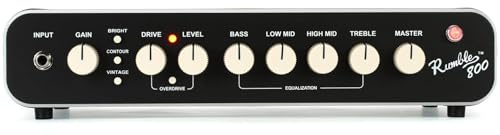
- 800-watt output for live headroom
- Four-band EQ with tone voicing switches
- XLR line out plus aux and headphone outputs
Best For: Bassists who need high output and simple stage connectivity
Warm Tone Pick

- 600 watts RMS into 4 ohms
- TransTube gain boost with warm voicing
- DDT speaker protection and useful EQ controls
Best For: Players who want a warm-leaning gig head with practical tone tools
Compact Gig Pick

- Ultra-compact 4.9-pound design
- 250-watt Class-D output
- Integrated tuner and TonePrint effects
Best For: Bassists who need a lightweight head for smaller gigs or backups
Hybrid Gig Power
Hartke LX5500 500-watt Bass Head

- 500W hybrid bass head
- Tube preamp, Class D output
- XLR DI and FX loop
Best For: Gigging bassists who want strong power and simple stage-ready connections
Pocket Portability
Warwick Gnome Pocket Bass Amplifier Head
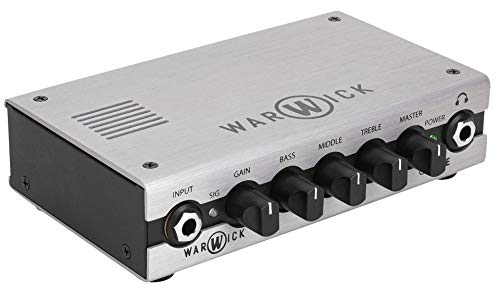
- 200W at 4 ohms
- Only 2.12 lbs
- XLR DI and headphone out
Best For: Bassists who want a tiny, lightweight head for small gigs and easy transport
Compact Control
TC Electronic THRUST BQ250 Portable Bass Head

- 250W portable bass head
- Mosfet preamp with compressor
- Compact steel build
Best For: Bassists wanting a compact stage head with built-in compression and simple controls
Flagship Power and Flexibility
Hartke LH1000 Bass Guitar Amplifier Head

- Dual parallel power modes for flexible live output
- Bridge mode reaches up to 1100W at 4 ohms
- XLR direct out and effects loop for gig routing
Best For: Loud bands, larger venues, and players who want maximum stage power
Portable Gig-Friendly Punch
Laney Digbeth Foundry 200W Bass Head

- 200W output suits medium-sized venues and louder bands
- Four mid presets plus tube-style drive for tone shaping
- Lightweight 4.1kg build is easy to carry
Best For: Bassists who need a portable live head with straightforward controls
Compact Working-Musician Choice
Bulldog 77 Head 100W Bass Amplifier Head

- 100W output for small gigs and studio use
- 5-band EQ and limiter for practical tone control
- 10.58-pound compact build is easy to transport
Best For: Rehearsals, small stages, and bassists who prioritize portability
Editor’s Choice – BOSS Katana-500 Bass Head
If you want a bass amplifier head for live gigs that feels modern and flexible, the BOSS Katana-500 Bass Head is built around a 500-watt Class D power amp and a refined preamp for expressive tone. Its cabinet calibration, dual Amp Feel options, and four-band EQ make it easy to tailor your sound on stage.
Best For: Players who want a compact, feature-rich head with broad tone-shaping tools for gigging.
Pros:
- 500-watt Class D power amp for serious live volume
- Two Amp Feel settings to adapt the core bass sound
- Four-band EQ with low-mid and high-mid controls
- Compressor and drive each offer three selectable types
Cons:
- Feature-heavy design may be more than a minimalist player needs
- No weight or size advantage over every ultra-small micro head
The Katana-500 Bass Head is a strong all-around option if you want flexible tone tools in a compact gigging format. It stands out most for players who like to dial in their sound rather than rely on a bare-bones setup.
High-Power Pick – Fender Rumble 800 HD
The Fender Rumble 800 HD is a bass amplifier head for live gigs when you want lots of headroom in a relatively portable package. It combines an 800-watt output with switchable overdrive, a four-band EQ, and tone voicing switches, plus practical DI and aux/headphone connections.
Best For: Bassists who need high output, simple onboard shaping, and useful stage connectivity.
Pros:
- 800-watt output for strong live-stage headroom
- Four-band EQ with three-button tone voicing
- Switchable overdrive circuit for added grit
- XLR line out with ground lift and stereo aux/headphone options
Cons:
- At 11.3 pounds, it is heavier than some micro heads
- Best value depends on needing the higher-output feature set
If your gigs call for more power and straightforward controls, the Rumble 800 HD is designed to cover a lot of stage situations. Its connectivity and voicing tools make it a practical choice for working players.
Warm Tone Pick – Peavey MiniMAX 600
The Peavey MiniMAX 600 is a bass amplifier head for live gigs if you like a warm, bass-heavy voice with some built-in protection and shaping. It offers 600 watts RMS into 4 ohms, a TransTube gain boost, and a three-band EQ with Punch, Mid-shift, and Bright controls.
Best For: Players who want a punchy, warm-leaning gig head with practical tone tools.
Pros:
- 600 watts RMS into 4 ohms for live performance use
- TransTube gain boost for added drive
- Three-band EQ with Punch, Mid-shift, and Bright controls
- DDT speaker protection adds a safety-focused feature
Cons:
- Three-band EQ is less extensive than four-band alternatives
- Feature set is more focused than some premium gig heads
The MiniMAX is a sensible choice if you want a straightforward head with a warm sound profile and built-in protection. It should appeal most to players who value practical control over a long list of extras.
Compact Gig Pick – TC Electronic BH250
The TC Electronic BH250 is a bass amplifier head for live gigs when portability matters as much as tone control. With 250 watts of Class-D power, an integrated tuner, and a TonePrint knob for signature effects, it gives you a lightweight rig that still covers stage essentials.
Best For: Bassists who need an ultra-compact head for smaller gigs, rehearsals, or backup use.
Pros:
- Ultra-compact and lightweight design at 4.9 pounds
- 250-watt Class-D output for portable gig setups
- Integrated tuner with extended range for 4, 5, and 6-string basses
- TonePrint knob enables signature effect options
Cons:
- Lower output than 500- or 800-watt stage heads
- Best suited to smaller or more moderate-volume applications
The BH250 is a smart pick if you want a grab-and-go head with useful extras built in. It is especially appealing for players who prioritize portability and quick setup over maximum output.
Hybrid Gig Power – Hartke LX5500 500-watt Bass Head
If you need a bass amplifier head for live gigs with enough headroom for louder stages, the Hartke LX5500 is built around a 500-watt hybrid design with a tube preamp and Class D output section. It also keeps the setup practical with a 3-band EQ, XLR direct out, and FX loop for flexible stage and front-of-house use.
Best For: Bass players who want a powerful hybrid head with DI output for live shows and straightforward tone shaping.
Pros:
- 500-watt output is well suited to live-gig volume needs.
- Tube preamp plus Class D output section gives it a hybrid design.
- XLR direct out makes it easy to connect to PA systems or recording consoles.
- FX loop and 3-band EQ add useful stage flexibility.
Cons:
- Heavier than micro heads at 3.6 kg.
- Only a 3-band EQ, so tone shaping is fairly basic.
Overall, this is a strong choice if you want a bass amp head that focuses on live practicality and enough power for gigging setups. It favors simple, usable features over ultra-compact size.
Pocket Portability – Warwick Gnome Pocket Bass Amplifier Head
The Warwick Gnome is a bass amplifier head for live gigs when portability matters as much as tone. With 200 watts at 4 ohms, a 3-band EQ with +/-15 dB cut/boost, and XLR DI plus 1/4-inch headphone output, it is designed to travel light without losing useful stage features.
Best For: Players who need a very small, easy-to-carry bass head with DI output and headphone monitoring.
Pros:
- Extremely light at 2.12 lbs, making it easy to move between gigs.
- 200 watts at 4 ohms gives it solid output for a compact head.
- 3-band EQ with +/-15 dB per band offers practical tone control.
- XLR DI and headphone out make it useful for stage and practice.
Cons:
- Lower wattage than larger gig heads.
- Solid-state design may not appeal if you specifically want a tube or hybrid feel.
For bassists prioritizing portability, this head stands out as a grab-and-go option with the essentials built in. It is a compact solution rather than a high-power brute.
Compact Control – TC Electronic THRUST BQ250 Portable Bass Head
TC Electronic THRUST BQ250 250 Watt Portable Bass Head with Mosfet Preamp and Thrust Compressor
Check Price On AmazonIf you want a bass amplifier head for live gigs that stays compact while still delivering usable stage power, the TC Electronic THRUST BQ250 fits that brief. It offers 250 watts, a mosfet preamp, and the Thrust compressor for a low-frequency focused, compressed sound profile that can help keep bass lines controlled on stage.
Best For: Bass players who want a portable head with built-in compression and a focused live sound.
Pros:
- 250-watt output is suitable for many stage and rehearsal setups.
- Mosfet preamp and Thrust compressor provide built-in tonal shaping.
- Compact steel enclosure keeps the head portable.
- 2-band EQ keeps operation simple and fast.
Cons:
- Only 2 EQ bands, so tone control is more limited.
- No XLR direct out is listed in the supplied details.
This model makes sense if you want a lightweight, no-fuss gig head with compression already on board. It is less feature-rich than some rivals, but the streamlined design may suit players who value simplicity.
Flagship Power and Flexibility – Hartke LH1000 Bass Guitar Amplifier Head
If you need a bass amplifier head for live gigs with serious output and flexible routing, the Hartke LH1000 is built to cover bigger stages. Its dual parallel power sections, tube-style 12AX7 preamp, and balanced XLR direct out make it a practical choice when you want stage volume, tonal shaping, and a dependable feed to the PA.
Best For: Players who need a high-power head for loud bands, larger venues, and dual-output setups.
Pros:
- Dual parallel modes deliver 2 x 225W at 8 ohms, 2 x 320W at 4 ohms, or 2 x 545W at 2 ohms.
- Bridge mode offers up to 1100W at 4 ohms for maximum stage power.
- 12AX7 high-voltage Class-A tube preamp adds classic character.
- Front-panel XLR balanced direct output and effects loop support gig-ready routing.
Cons:
- Two-rackspace metal chassis is not the most compact option.
- More power and features may be more than needed for smaller venues.
Overall, the LH1000 is the most heavy-duty option here, especially if your live rig demands high headroom, flexible output configurations, and straightforward DI connectivity.
Portable Gig-Friendly Punch – Laney Digbeth Foundry 200W Bass Head
The Laney Digbeth Foundry is a practical bass amplifier head for live gigs when you want enough power for medium-sized venues without carrying a heavy rig. Its 200W output, four adjustable mid presets, and tube-style drive switch give you usable tone-shaping tools for working band situations.
Best For: Bassists playing medium venues who want a lightweight head with simple, effective tone control.
Pros:
- 200W output is aimed at medium-sized venues and louder band scenarios.
- Four adjustable mid presets help tailor your sound quickly.
- Tube-style drive switch adds warmth and grit when needed.
- Lightweight 4.1kg design is easy to transport between gigs.
Cons:
- 200W may not be enough for the largest stages or very loud setups.
- Fewer detailed specs are provided than on some higher-featured heads.
For players who value portability and quick tonal shaping, the Digbeth Foundry sits in a very workable live-gig sweet spot.
Compact Working-Musician Choice – Bulldog 77 Head 100W Bass Amplifier Head
The Bulldog 77 Head is a compact bass amplifier head for live gigs where portability matters and the venue size is manageable. With 100 watts of output, a 5-band EQ, and a bypassable transparent limiter, it gives you practical control over tone and dynamics in a smaller, easy-to-move package.
Best For: Players looking for a lightweight bass head for rehearsals, small stages, and portable gigging.
Pros:
- 100W output provides enough headroom for studio recording and live stage use.
- 5-band EQ offers precise tone shaping.
- Bypassable transparent limiter adds compression or grit when desired.
- Compact 10.58-pound design makes gig transport easy.
Cons:
- 100 watts may be limiting for louder bands or larger venues.
- Single output channel may be less flexible than multi-channel designs.
The Bulldog 77 is a sensible pick if you want a classic-voiced, easy-to-carry head that focuses on essentials rather than maximum output.
How We Picked the Best Bass Amplifier Head for Live Gigs
We focused on live-use essentials: power output, portability, onboard tone controls, DI or recording-friendly connectivity, and reputation for dependable performance. For a Bass Amplifier Head for Live Gigs, the best choice is usually the one that fits your cabinet, band volume, and transport needs without sacrificing headroom.
Quick Comparison
Higher-wattage heads generally offer more clean headroom for louder stages, while smaller models make sense for rehearsals, compact clubs, and players who value easy transport. Hybrid and feature-rich heads can give you more EQ flexibility, while simpler designs may appeal to bassists who want a fast, no-nonsense setup.
Key Buying Factors for a Bass Amplifier Head for Live Gigs
Power and Headroom
Match the wattage to your venue size and speaker cab efficiency. More power does not automatically mean better tone, but it does help preserve clarity when the drummer gets loud.
Portability
If you load in and out often, weight and physical size matter. Compact heads are easier to carry, fit in tight pedalboard-style setups, and reduce setup stress.
Tone Shaping and Features
Look for EQ flexibility, built-in compression, voicing switches, mute functions, and DI output options. These features can make a Bass Amplifier Head for Live Gigs more adaptable across venues and PA systems.
Cabinet Compatibility
Check impedance support and make sure the head matches your cab configuration. The right pairing protects your gear and ensures you get the output you expect.
Who Should Buy Which Bass Amplifier Head for Live Gigs?
Players who play small to medium venues may prefer lighter, lower- to mid-wattage heads that are easy to transport and quick to dial in. Bassists playing louder rock, worship, or outdoor gigs should lean toward higher-output models with more clean headroom. If you want maximum flexibility, choose a head with more onboard processing and direct-out options. If simplicity matters most, a compact, straightforward design can be the smartest stage choice.
In the end, the best Bass Amplifier Head for Live Gigs is the one that fits your volume needs, cabinet setup, and working style. Prioritize dependable output, useful EQ, and easy portability, and you’ll end up with a rig that performs confidently night after night.