Choosing the right microphone can make voiceover recordings sound polished, natural, and ready for clients faster. The best options balance clarity, low self-noise, and easy setup without adding harshness.
This roundup focuses on condenser microphones for voiceover that suit home studios, podcast booths, streaming rigs, and professional narration workflows in 2026.
Best 10 Condenser Microphones for Voiceover Picks for 2026
Legendary Vocal Detail
RØDE NT1 Signature Series Studio Condenser Microphone
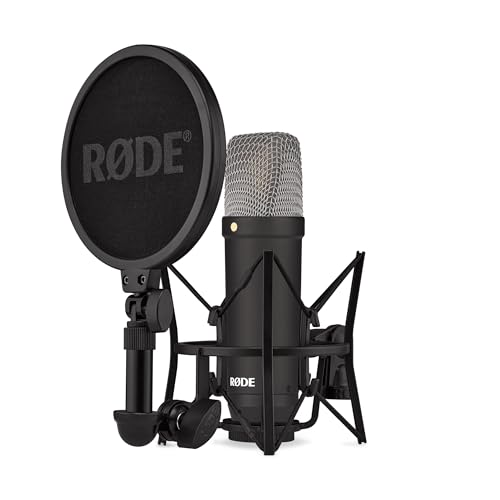
- Very low self-noise design for clean voice takes
- Cardioid pattern helps reduce room pickup
- Includes shock mount, pop filter, and XLR cable
Best For: Voiceover users who want a quiet XLR condenser with a ready-to-record accessory bundle
Classic Project Studio Choice
Audio-Technica AT2020 Pro Cardioid Condenser

- XLR cardioid condenser for voice recording
- Includes pedestal bracket, adapter, and protective bag
- Simple wired setup for basic studio use
Best For: Users who want an affordable, straightforward XLR mic for voice work
Flexible USB/XLR Pick
MAONO A04 Gen2 Condenser Microphone Kit

- USB and XLR connectivity for flexible setups
- Includes boom arm, shock mount, pop filter, and foam
- Software controls available in USB mode
Best For: Creators who want an easy starter kit with both plug-and-play and interface-ready options
Warm Studio Standard
Sennheiser MK 4 Cardioid Condenser Microphone

- 1-inch capsule with warm studio-style sound
- Internally shock-mounted to reduce handling noise
- Low inherent self-noise suits voice recording
Best For: Home and project studio users who want a warm, professional XLR voice mic
Studio Classic
MXL 990 Condenser Microphone for Detailed Voiceover

- Silky high end with tight lows and smooth midrange
- Cardioid pattern reduces side and rear room noise
- Includes shock mount, stand adapter, and carrying case
Best For: Voice actors and home studio users who want a detailed XLR condenser
Home Studio Pick
Audio-Technica AT2020 Cardioid Condenser Mic Bundle

- Clear, natural sound with a low-mass diaphragm
- Cardioid pattern helps reduce unwanted room noise
- Bundle includes XLR cable plus cleaning accessories
Best For: Voiceover artists and streamers building a reliable XLR setup
Pro Control
sE Electronics X1 S Condenser Mic with Pads and Filters
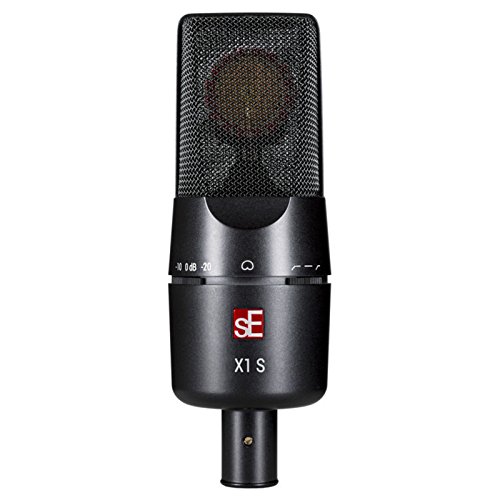
- Hand-crafted capsule tuned in-house
- Includes -10/-20 dB pads and 80/160 Hz low-cut filters
- High SPL handling with low self-noise
Best For: Voice talent and studio users who want more source-level control
Project Studio Value
Audio-Technica AT2020 Cardioid XLR Condenser
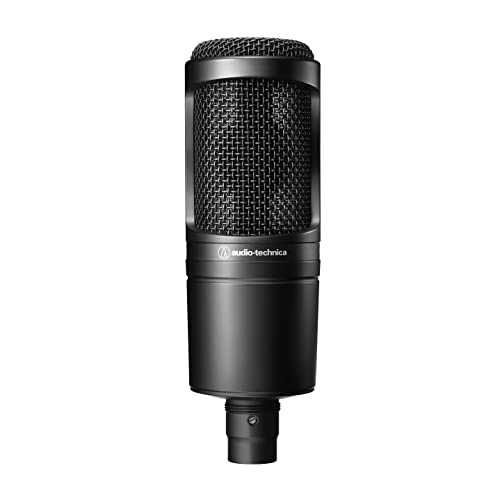
- Cardioid pattern reduces side and rear pickup.
- High SPL handling and wide dynamic range.
- Low-mass diaphragm for extended response.
Best For: Home-studio voiceover and project studio setups
Broadcast Detail Pick
Blue Blackout Spark SL XLR Condenser

- Large-diaphragm cardioid capsule for focused vocals.
- High-pass filter and -20dB pad add versatility.
- Detailed, transparent sound for spoken word.
Best For: Broadcast-style voiceover, podcasting, and streaming
Low-Noise Studio Choice
AKG C104 Large-Diaphragm Cardioid Condenser
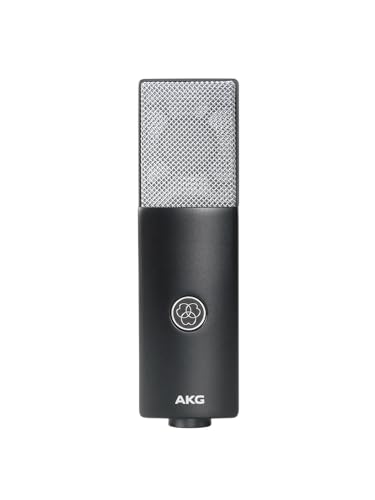
- Large-diaphragm cardioid mic for voice capture.
- Low-noise design with high SPL handling.
- Includes H81 stand mount for setup.
Best For: Clean XLR voiceover, podcasting, and studio recording
Legendary Vocal Detail – RØDE NT1 Signature Series Studio Condenser Microphone
If you’re comparing condenser microphones for voiceover, the RØDE NT1 Signature Series is built around a familiar studio-style sound and a very low-noise design. It comes as a complete vocal setup, so you get the mic, shock mount, pop filter, XLR cable, and dust cover in the box.
Best For: Voice actors and creators who want a quiet, cardioid XLR condenser with included recording accessories.
Pros:
- Legendary NT1 large-diaphragm voicing trusted in studios for years
- Among the lowest self-noise microphones, with 4.5 dBA self noise noted
- Tight cardioid pattern helps focus on the voice and reject the room
- Includes SM6 shock mount with pop filter plus a 6 m XLR cable
Cons:
- XLR-only, so you’ll need an audio interface to use it
- Designed for vocal work, so it may be more than some casual users need
Overall, this is a straightforward pick if your priority is clean vocal capture with minimal setup extras to buy separately. The included accessories make it especially practical for a home voiceover chain.
Classic Project Studio Choice – Audio-Technica AT2020 Pro Cardioid Condenser
The Audio-Technica AT2020 is a straightforward XLR condenser microphone for voiceover and other recording tasks. Its cardioid pickup, wired connection, and included mounting accessories make it a simple option for a basic studio setup.
Best For: Budget-conscious users who want a simple XLR condenser for voice recording.
Pros:
- Cardioid polar pattern helps isolate the voice
- Includes pedestal bracket and threaded adapter for mounting
- Comes with a soft protective bag for storage or transport
- Wired XLR connection fits standard studio setups
Cons:
- No included shock mount or pop filter in the supplied notes
- Requires external power and an interface or similar XLR chain
For creators who need a no-frills condenser, this is an easy mic to place on a stand and start recording. It keeps the focus on the essentials rather than extras.
Flexible USB/XLR Pick – MAONO A04 Gen2 Condenser Microphone Kit
If you want condenser microphones for voiceover with flexible connections, the MAONO A04 Gen2 stands out with both USB and XLR support. It is aimed at plug-and-play recording on a PC or phone, while also working with an audio interface or mixer in XLR mode.
Best For: Voiceover creators who want one mic that can do USB convenience or XLR studio use.
Pros:
- Dual USB/XLR connectivity adds setup flexibility
- Includes a full accessory kit with boom arm, shock mount, pop filter, and foam windscreen
- Cardioid pattern and noise reduction tools help control off-axis sound
- USB mode supports software control with gain and noise reduction adjustments
Cons:
- XLR use requires phantom power and an XLR cable is not included
- USB software features apply only in USB mode
This is a practical all-in-one option if you want to start quickly and still keep an upgrade path for future studio gear. The included stand and filters make it especially convenient for desk-based voiceover work.
Warm Studio Standard – Sennheiser MK 4 Cardioid Condenser Microphone
Sennheiser Pro Audio Sennheiser Professional MK 4 Cardioid Condenser Studio Microphone
Check Price On AmazonFor voiceover work, the Sennheiser MK 4 is a large-diaphragm true condenser aimed at home, project, and professional studio recording. Its cardioid pattern, internally shock-mounted capsule, and low inherent self-noise point it toward clean spoken-word capture.
Best For: Recordists who want a warm-sounding XLR condenser for home or project studio voiceover.
Pros:
- 1-inch large-diaphragm capsule produces a powerful warm sound
- Internally shock-mounted capsule helps minimize structure-borne noise
- Low inherent self-noise is useful for spoken-word recording
- Includes mic clamp, pouch, and instruction manual
Cons:
- Requires 48V phantom power and an XLR setup
- No bundled pop filter or external shock mount is listed in the notes
This is a strong fit when you want a more refined studio mic with a warm tonal character. It stays focused on the essentials and leaves room for you to build the rest of the voiceover chain around it.
Studio Classic – MXL 990 Condenser Microphone for Detailed Voiceover
If you’re comparing condenser microphones for voiceover, the MXL 990 is a straightforward large-diaphragm XLR option that aims for a smooth, detailed vocal sound. Its cardioid pattern helps reduce side and rear room noise, while the included shock mount, stand adapter, and carrying case make it easy to set up and protect.
Best For: Voice actors, podcasters, and home studio users who want a detailed condenser mic with included accessories.
Pros:
- Silky high end with tight lows and smooth midrange
- Cardioid pattern helps reject background noise from the sides and back
- Includes a custom shock mount, mic stand adapter, and carrying case
- Wide 20 Hz to 20 kHz frequency response for voice work and recording
Cons:
- Requires +48V phantom power
- XLR setup means you’ll need a compatible interface or preamp
For voiceover work, the MXL 990 is appealing if you want a polished sound and a ready-to-use accessory bundle. It’s best suited to users already set up for phantom-powered XLR recording.
Home Studio Pick – Audio-Technica AT2020 Cardioid Condenser Mic Bundle
The Audio-Technica AT2020 is a practical choice among condenser microphones for voiceover when you want clear, natural capture in a home studio setup. Its cardioid pattern focuses on sound in front of the mic to help minimize side and rear noise, and the bundle adds a cleaning cloth, mic cleaner, and 10 ft XLR cable.
Best For: Voiceover artists, streamers, and creators who want a reliable cardioid XLR mic bundle.
Pros:
- Clear, natural sound reproduction with a low-mass diaphragm
- Cardioid pattern helps reduce unwanted room noise
- Rugged housing is built for frequent studio use
- Bundle includes a 10 ft XLR cable and cleaning accessories
Cons:
- Requires standard 48V phantom power
- XLR connection means you need an audio interface, mixer, or preamp
If you want a dependable voiceover mic that’s easy to integrate into a pro-style setup, the AT2020 is a sensible option. The bundled accessories also make it a convenient starter pick for a new recording space.
Pro Control – sE Electronics X1 S Condenser Mic with Pads and Filters
For voiceover setups that need more control, the sE Electronics X1 S stands out in the condenser microphones for voiceover category with its switchable pads and low-cut filters. It’s built around a hand-crafted, individually tuned capsule and a cardioid pattern that keeps the capture focused and consistent.
Best For: Voice talent and studio users who want extra control over plosives, rumble, and louder sources.
Pros:
- Hand-crafted capsule is individually tuned in-house
- Switchable -10 dB and -20 dB pads help manage hotter sources
- 80 Hz and 160 Hz low-cut filters reduce rumble and proximity effect
- High SPL handling and low self-noise support detailed recording
Cons:
- Requires XLR gear and standard 48V phantom power
- Feature set may be more than needed for simple voice-only sessions
If you want a mic that gives you more options at the source, the X1 S is the most flexible of this group. Its pads, filters, and strong SPL handling make it useful beyond voiceover alone.
Project Studio Value – Audio-Technica AT2020 Cardioid XLR Condenser
If you want condenser microphones for voiceover that deliver a clear, reliable studio sound without adding unnecessary complexity, the Audio-Technica AT2020 is a straightforward place to start. It uses a cardioid pattern to help reduce side and rear pickup, and its low-mass diaphragm is designed for extended frequency response and strong transient detail.
Best For: Home-studio voiceover work, project studios, and creators who want a dependable XLR condenser with solid versatility.
Pros:
- Cardioid pattern helps isolate the voice by reducing off-axis sound.
- High SPL handling and wide dynamic range add useful versatility.
- Low-mass diaphragm supports extended frequency response and good transient response.
- Classic XLR studio design fits common audio interfaces and recording setups.
Cons:
- Requires phantom power and an XLR recording chain.
- Does not include onboard controls or convenience features.
Overall, the AT2020 is a practical voiceover option if you want a proven studio condenser that focuses on clean pickup and flexible recording use. It is especially appealing for users building a simple home setup around an interface.
Broadcast Detail Pick – Blue Blackout Spark SL XLR Condenser
For condenser microphones for voiceover where you want a more polished broadcast-style presentation, the Blue Blackout Spark SL is built around a large-diaphragm cardioid capsule and detailed, transparent sound. It is aimed at podcasting, streaming, gaming, YouTube videos, Zoom calls, and other spoken-word recording tasks, with XLR integration for interface or mixer-based setups.
Best For: Voiceover creators who want a detailed, natural-sounding XLR mic for streaming, podcasting, and recording.
Pros:
- Large-diaphragm cardioid capsule delivers focused spoken-word pickup.
- Detailed, transparent sound is designed to bring out vocal clarity.
- 100Hz high-pass filter helps reduce rumble from room or desk noise.
- -20dB pad adds flexibility when handling louder sources.
Cons:
- Needs an XLR audio interface or mixer to use.
- Includes fewer convenience features than USB-style alternatives.
As a voiceover mic, the Spark SL stands out for its broadcast lean and practical studio controls. If your setup already includes XLR gear and you want a refined, detailed vocal capture, it is a strong fit.
Low-Noise Studio Choice – AKG C104 Large-Diaphragm Cardioid Condenser
If you are comparing condenser microphones for voiceover and want a simple XLR model with a low-noise, studio-ready profile, the AKG C104 is built for that kind of work. It features a large-diaphragm cardioid design, low noise, and high SPL handling, making it suitable for podcasting, streaming, broadcasting, and voice recording.
Best For: Voiceover, podcasting, and studio recording when you want a clean XLR condenser with low noise.
Pros:
- Large-diaphragm cardioid design is well suited to spoken voice capture.
- Low-noise performance supports cleaner recordings.
- High SPL handling adds flexibility for louder sources.
- Includes an H81 stand mount for a simple setup.
Cons:
- Requires a wired XLR recording setup.
- Does not emphasize extra onboard features or controls.
The C104 is a sensible option for users who value straightforward recording performance over flashy extras. Its eco-conscious design is a bonus, but the main appeal is its clean, practical approach to voice-focused recording.
How We Picked the Best Condenser Microphones for Voiceover
We focused on Condenser Microphones for Voiceover that deliver detailed vocal capture, dependable build quality, and practical features for real-world recording. Priority went to models with good noise performance, consistent cardioid pickup, and strong value across entry-level and pro-tier setups.
We also considered whether each mic makes sense for common voiceover environments, from untreated bedrooms to dedicated booths, plus how easily it pairs with interfaces, preamps, and basic isolation gear.
Quick Comparison
In this group, some models are clearly aimed at beginners who want a simple package, while others are better suited to users who already have an audio interface and want a more refined sound. XLR-only mics usually offer the most flexibility and long-term upgrade value, while combo USB/XLR options are easier for fast plug-and-play use.
Key Buying Factors for Condenser Microphones for Voiceover
Polar Pattern and Room Noise
A cardioid pattern is the standard choice for voiceover because it focuses on the speaker and helps reduce room reflections and background noise. If your room is untreated, this matters as much as the mic itself.
Self-Noise and Sensitivity
Lower self-noise is important for narration, audiobook work, and quiet delivery. A sensitive condenser can capture detail beautifully, but it will also reveal fan noise, computer hum, and room echo if your space is not controlled.
Connection Type
XLR microphones are best if you already use an audio interface and want better upgrade paths. USB/XLR models are worth considering if you want one mic for both simple recording and more advanced studio use.
Accessories and Workflow
Shock mounts, pop filters, and stable stands can improve results more than a small spec difference. For voiceover, a complete setup often matters more than the microphone alone.
Who Should Buy Which Condenser Microphones for Voiceover?
If you are new to voiceover and want the easiest start, look for a bundle or combo mic that minimizes extra purchases. If you already have an interface and care most about clean, controllable narration, choose a dedicated XLR studio mic.
For creators recording podcasts, streaming, or gaming in the same setup, a versatile condenser with solid off-axis rejection can be the best fit. Professional voice actors and content teams should prioritize consistent tone, low noise, and a mic that works well with treated rooms and proper gain staging.
Overall, the best choice depends on your room, your workflow, and how much control you want over the final sound. Matching the mic to your recording environment is the fastest way to get better voiceover results.