Choosing the right DI box can make a big difference in how your acoustic-electric guitar sounds on stage or in the studio. The best options keep your tone clear, control noise, and make it easier to send a consistent signal to a mixer or interface.
In this roundup, we focus on practical, player-friendly picks for different needs, from simple passive boxes to feature-rich preamp DI units.
Best 10 Di Boxes for Acoustic Electric Guitars Picks for 2026
Premium Acoustic DI Preamp
L.R. Baggs Venue DI Acoustic Guitar Preamp and DI
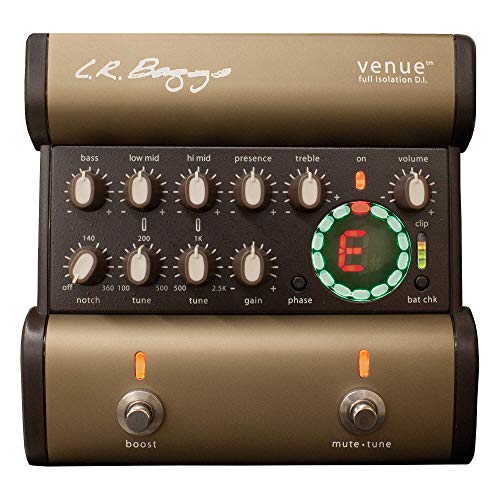
- Adjustable gain for passive and active pickups
- 5-band EQ with tunable low-mid and high-mid bands
- Built-in tuner plus mute and feedback control
Best For: Players who want an all-in-one acoustic preamp/DI
Rugged Passive Stage DI
Radial Pro DI Passive Direct Box

- Passive mono DI with custom transformer
- Rugged stainless steel I-beam construction
- Works with acoustic guitars in live or studio use
Best For: Players who want a durable passive DI for simple conversion
Feature-Rich Acoustic Control DI

- 5-band EQ with tunable notch and midrange bands
- Adjustable gain for passive and active pickups
- XLR and 1/4-inch outputs with phase inversion
Best For: Acoustic players who need detailed EQ control and flexible outputs
Budget Passive Instrument DI
Whirlwind IMP 2 1-Channel Passive Instrument Direct Box
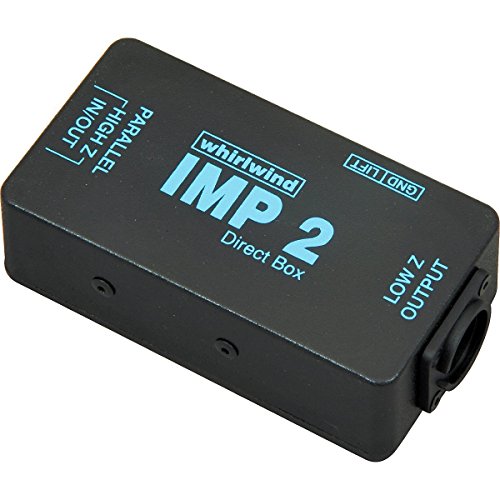
- Converts unbalanced instrument or line to balanced mic level
- Uses Whirlwind TRHL transformer
- Economical, compact, stainless steel build
Best For: Buyers who want an affordable, no-frills passive DI
Compact Acoustic DI Preamp
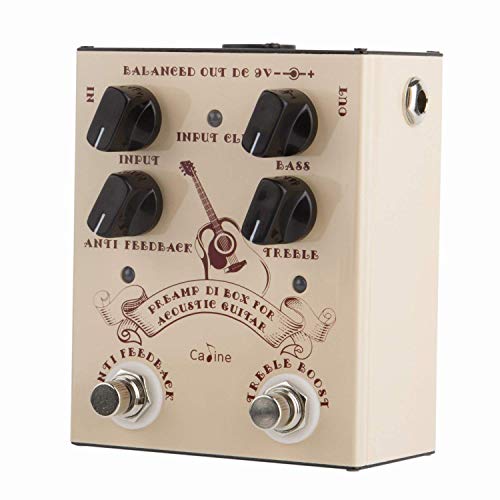
- True-bypass preamp DI design
- Anti-feedback foot switch
- Compact 9V corded format
Best For: Acoustic players needing a small preamp DI with boost and feedback control
Stage-Ready Passive Direct Box
Donner Special-I Passive DI Box

- Passive transformer-based DI
- Ground lift for hum reduction
- Thru output for amp plus PA
Best For: Clean balanced output and hum reduction without onboard tone shaping
Feature-Rich Acoustic DI Pedal
AMUMU GLORIFIER Acoustic Preamp DI
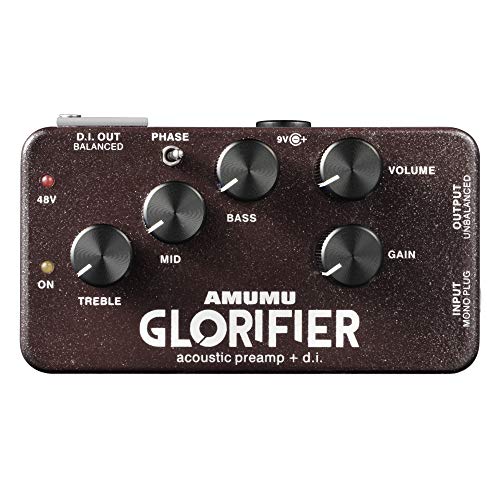
- 3-band EQ with +/-20 dB gain
- Phase switch helps reduce feedback
- Multiple power options, including phantom
Best For: Players wanting tone shaping and flexible powering for acoustic-electric setups
Active Performance DI
Radial StageBug SB-1 1-Channel Active Instrument Direct Box

- 800k-ohm input impedance for instrument sources
- 48V phantom-powered active direct box
- 15dB pad and polarity switch for setup control
Best For: Players needing a clean, active DI for guitar or keyboard
Passive Hum-Control DI
PRORECK DC21 Passive DI Box for Guitar & Bass

- Passive transformer with 50kΩ impedance
- Ground lift and isolation transformer for hum control
- Thru and XLR outputs for stage or studio
Best For: Players wanting a passive DI with hum reduction and dual outputs
Live/Recording Active DI
Hosa DIB-445 SideKick Active Direct Box

- Active direct box for live sound or recording
- Unbalanced 1/4-inch input with balanced XLR out
- Balanced 1/4-inch thru output for routing flexibility
Best For: Players needing a straightforward active DI for live or recording
Premium Acoustic DI Preamp – L.R. Baggs Venue DI Acoustic Guitar Preamp and DI
If you want one of the more full-featured di boxes for acoustic electric guitars, the L.R. Baggs Venue DI is built for players who need active control on stage. It combines gain adjustment, a 5-band EQ with tunable low-mid and high-mid bands, a notch filter for feedback control, and a chromatic tuner in a compact format.
Best For: Players who want an all-in-one acoustic preamp/DI with detailed tone shaping and feedback control.
Pros:
- Adjustable gain works with both passive and active pickups
- 5-band EQ includes tunable low-mid and high-mid controls
- Garret Null notch filter helps manage feedback
- Built-in chromatic tuner with footswitch mute/tune function
Cons:
- More complex than a basic direct box
- Requires 9V battery power
This is a strong choice when you need hands-on control rather than a simple signal split. For acoustic electric guitars, it stands out as a practical stage tool that covers EQ, tuning, and feedback management in one unit.
Rugged Passive Stage DI – Radial Pro DI Passive Direct Box
The Radial Pro DI is a straightforward option for acoustic electric guitars when you want a passive direct box with a rugged build. Its custom transformer and I-beam construction are aimed at dependable performance in live or studio setups with instruments like acoustic guitars, bass, and keyboards.
Best For: Players and engineers who want a durable passive DI for simple, dependable signal conversion.
Pros:
- Passive mono direct box with a custom transformer
- Rugged I-beam construction and stainless steel enclosure
- Suitable for live or studio use with acoustic guitars and other instruments
- Compact, durable design for professional setups
Cons:
- Limited to passive direct-box duties
- No onboard EQ or tuner
If your priority is reliability over extra features, this DI keeps things simple. It is best suited to players who need a solid, low-maintenance way to feed a balanced signal from acoustic electric guitars.
Feature-Rich Acoustic Control DI – LR Baggs Para Acoustic D.I.
The LR Baggs Para Acoustic D.I. is a practical pick for acoustic electric guitars when you want more tone shaping than a basic box can provide. It offers adjustable gain, a 5-band EQ with tunable notch and midrange bands, phase inversion, and both XLR and 1/4-inch outputs for flexible routing.
Best For: Acoustic players who need detailed EQ control and flexible output options.
Pros:
- Adjustable gain supports both passive and active pickups
- 5-band EQ with tunable notch and midrange bands
- Phase inversion helps with sound and feedback control
- XLR and 1/4-inch outputs add flexibility
Cons:
- Runs on 9V battery or 48V phantom power, so power planning matters
- More control than a basic passive DI
This model makes sense if you want an acoustic DI that can actively shape your sound before it hits the mixer. It is especially useful for players who need quick adjustments for different rooms or pickup types.
Budget Passive Instrument DI – Whirlwind IMP 2 1-Channel Passive Instrument Direct Box
The Whirlwind IMP 2 is a simple, economical option among di boxes for acoustic electric guitars when you mainly need reliable signal conversion. It uses an in-line transformer to convert an unbalanced instrument or line signal to a low-impedance balanced mic-level signal, making it a practical utility box for straightforward setups.
Best For: Buyers who want an affordable, no-frills passive DI for basic instrument routing.
Pros:
- Converts unbalanced instrument or line signals to balanced mic level
- Uses Whirlwind’s TRHL transformer
- Economical package with a compact footprint
- Stainless steel construction for durability
Cons:
- No EQ or onboard tone controls
- Designed as a basic passive direct box rather than a feature unit
This is the kind of DI you choose when the job is simply to get a clean balanced signal to the mixer. For acoustic electric guitars, it is a solid budget-minded solution that prioritizes durability and function over extras.
Compact Acoustic DI Preamp – Caline CP-40
If you want a simple DI box for acoustic electric guitars, the Caline CP-40 is built around a true-bypass preamp design with an anti-feedback foot switch and higher boost. Its compact, corded 9V format makes it a straightforward option for players who want basic stage control without a large pedalboard footprint.
Best For: Acoustic players who want a compact preamp DI with feedback control and extra boost.
Pros:
- True bypass design helps keep the signal path clean when the unit is off.
- Anti-feedback foot switch is useful for managing live acoustic-electric guitar volume problems.
- Higher boost and volume control give you extra level adjustment on stage.
- Compact 1.5 x 4.69 x 3.7-inch body is easy to fit into a small rig.
Cons:
- Designed specifically for acoustic guitar use, so it is less versatile than multi-purpose DI boxes.
- Requires 9V corded power rather than battery operation.
- 1/4-inch analog output setup is more basic than XLR-focused stage units.
For acoustic electric guitar players who need a practical preamp-style DI box, the CP-40 focuses on boost and feedback control in a small package. It is a good fit when you want simple hands-on control and don’t need a feature-heavy studio direct box.
Stage-Ready Passive Direct Box – Donner Special-I Passive DI Box
Among DI boxes for acoustic electric guitars, the Donner Special-I is a passive direct box aimed at stage and studio use with impedance matching, transformer isolation, and a ground lift switch. It converts an unbalanced instrument or line signal to a balanced low-impedance XLR output, which is the core job most players need from a reliable DI.
Best For: Players who want a simple passive DI for clean balanced output and hum reduction.
Pros:
- Passive transformer design supports clean impedance and signal matching.
- Ground lift switch and isolation help eliminate hum and buzz from ground loops.
- Thru output lets you send signal to an amp while feeding the PA.
- Multi-purpose layout works with guitars, bass, and keyboards.
Cons:
- No onboard preamp or EQ for shaping acoustic tone.
- Passive design means it depends on the source signal for level and tone.
- More utilitarian than feature-rich acoustic-specific DI pedals.
The Special-I is a practical choice when your main goal is clean conversion to XLR with fewer noise issues. If you already like your acoustic tone and just need a dependable direct box, this one keeps the setup simple.
Feature-Rich Acoustic DI Pedal – AMUMU GLORIFIER Acoustic Preamp DI
The AMUMU GLORIFIER is one of the more flexible DI boxes for acoustic electric guitars, combining a preamp section, 3-band EQ, phase switch, and multiple power options. It is designed for acoustic-electric instruments with piezo, magnetic, under-saddle, and microphone pickups, and it converts an unbalanced 1/4-inch signal to balanced XLR for the mixer, PA, recording interface, or mic preamp.
Best For: Acoustic-electric players who want onboard tone shaping, feedback tools, and flexible power options.
Pros:
- +/-20 dB gain control and 3-band EQ offer detailed tone shaping.
- Phase switch can help reduce feedback and add a fuller, warmer sound.
- Works with several pickup types, including piezo, magnetic, under-saddle, and microphone setups.
- Can be powered by a 9V adapter, 48V phantom power, or a 9V battery.
Cons:
- More complex than a basic DI box if you only need simple balanced output.
- Battery, phantom, or adapter power choices add setup decisions.
- Best fit is acoustic-electric gear, so it is less of a general-purpose direct box.
If you want more control than a standard direct box provides, the GLORIFIER offers a strong mix of preamp features and DI conversion. It is a good match for players who want to shape tone and manage feedback from the pedal itself.
Active Performance DI – Radial StageBug SB-1 1-Channel Active Instrument Direct Box
If you need a DI box for acoustic electric guitars that keeps the signal clean over longer cable runs, the Radial StageBug SB-1 is built for straightforward live and recording use. Its active design, 800k-ohm input impedance, 15dB pad, and 48V phantom power support make it a practical choice when you want a clear, full-bodied sound from guitar or keyboard sources.
Best For: Players who want an active DI for guitar or keyboard with simple controls and a clean signal path.
Pros:
- 800k-ohm input impedance is well suited to high-impedance instrument sources.
- 15dB pad adds flexibility for hotter signals.
- Polarity switch helps with setup adjustments in live or studio rigs.
- Balanced XLR output supports direct connection to mixers and PA systems.
Cons:
- Active design depends on 48V phantom power.
- Single-channel layout keeps it focused on one source at a time.
This is a no-frills active DI that prioritizes clarity and dependable signal handling. For acoustic electric guitars, it makes sense when you want a compact box with useful front-end controls and a clean balanced output.
Passive Hum-Control DI – PRORECK DC21 Passive DI Box for Guitar & Bass
For acoustic electric guitars that need a simple passive hookup, the PRORECK DC21 is aimed at clean impedance matching and noise control. It uses a built-in transformer, ground lift switch, input attenuator, and dual output options to handle live and studio routing without adding extra complexity.
Best For: Guitarists who want a passive DI box with hum reduction and dual-output flexibility.
Pros:
- Passive transformer design focuses on impedance matching and signal conversion.
- Ground lift switch and isolation transformer help reduce hum and buzz.
- Thru/direct output arrangement supports both amp monitoring and mixer feed.
- Compatible with guitars, basses, keyboards, and other audio devices.
Cons:
- Passive design does not offer the powered active-box approach of some alternatives.
- Bulkier than the most minimal direct boxes.
The DC21 is a sensible pick if your priority is clean routing and noise management rather than extra powered features. It fits well in a setup where acoustic electric guitars need a balanced XLR send plus a separate through connection for stage use.
Live/Recording Active DI – Hosa DIB-445 SideKick Active Direct Box
If you are shopping for DI boxes for acoustic electric guitars, the Hosa DIB-445 SideKick is built as a simple active direct box for live sound or recording. It offers an unbalanced 1/4-inch input, balanced 1/4-inch thru output, and balanced XLR output, which makes it easy to send one signal to a destination while keeping another path available.
Best For: Players who want a straightforward active DI for live or recording setups.
Pros:
- Active direct box designed for live sound and recording.
- Balanced XLR output supports direct connection to a mixer or interface.
- Thru output provides routing flexibility for stage monitoring or additional gear.
- Suitable for guitar, bass, keyboards, and more.
Cons:
- No impedance or pad details are listed in the supplied specs.
- Less feature-specific than some DI boxes with dedicated switches.
The SideKick keeps the feature set focused on core DI duties rather than extra controls. That makes it a practical choice when you want a reliable active box for acoustic electric guitars and a clean balanced feed for the front of house or recording chain.
How We Picked the Best Di Boxes for Acoustic Electric Guitars
We focused on Di Boxes for Acoustic Electric Guitars that offer dependable signal matching, low noise, durable build quality, and useful live-performance features. We also considered whether each unit is better suited for passive or active pickups, and whether it adds tone-shaping controls that acoustic players commonly need.
Quick Comparison
Some models here are straightforward direct boxes designed mainly to balance the signal and reduce hum, while others function as acoustic preamp DIs with EQ, notch filtering, or gain control. If you want the cleanest possible signal path, a simple passive or active DI may be enough. If your guitar needs more shaping, a preamp DI can be the better fit.
Key Buying Factors for Di Boxes for Acoustic Electric Guitars
Passive Vs. Active
Passive DI boxes are a strong choice when you want simple operation and dependable isolation, especially with stronger output sources. Active units can better suit lower-output pickups and may provide a more open, responsive feel when powered properly.
Tone Controls and Filtering
For many acoustic players, EQ, notch filtering, phase controls, and ground lift are more valuable than extra features. These tools can help reduce feedback, tame harsh frequencies, and solve common stage issues quickly.
Impedance and Pickup Match
Matching the DI to your guitar’s pickup system matters. Piezo-equipped acoustics often benefit from a high-impedance input or an acoustic-specific preamp, while some magnetic systems can work well with a standard DI.
Build and Connectivity
Look for solid connectors, rugged housings, and clear XLR output labeling. If you gig often, footswitch-friendly layouts and compact enclosures can make setup faster and more reliable.
Who Should Buy Which Di Boxes for Acoustic Electric Guitars?
Players who want the simplest setup should choose a basic passive or active DI. Gigging acoustic artists who need more control over tone and feedback should lean toward an acoustic preamp DI. If you switch between venues, recording, and rehearsal rooms, one of the more feature-rich Di Boxes for Acoustic Electric Guitars will usually give you the most flexibility.
In short, the best choice depends on your pickup, your sound system, and how much control you want at the source. For many players, that means balancing portability, tonal shaping, and stage-ready reliability rather than chasing the most features.