If you need clean signal conversion without spending a fortune, the right DI can make a huge difference. The best di boxes under 200 help reduce noise, balance long cable runs, and keep your live or recording setup dependable.
Below, we focus on practical options for players, engineers, and home studios that want solid performance, useful features, and real value in 2026.
Best 10 Di Boxes Under 200 Picks for 2026
Budget Passive DI
Whirlwind IMP 2 1-Channel Passive Instrument Direct Box
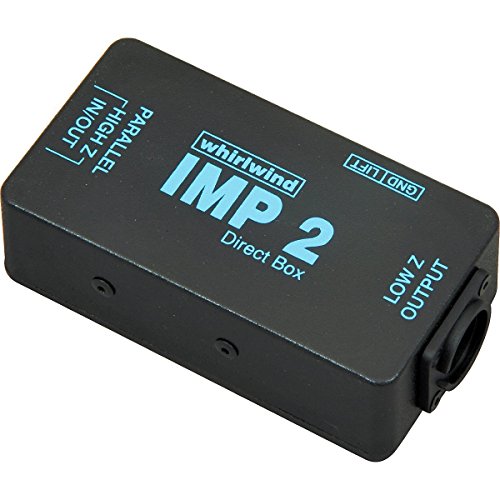
- Passive in-line transformer DI
- Compact and economical footprint
- Riveted TRHL transformer for durability
Best For: simple live or studio instrument hookups
Pedalboard Mini DI

- Compact DI with pedalboard-friendly footprint
- Includes pad, cabinet simulator, and ground lift
- True bypass with 1/4" and XLR outputs
Best For: compact guitar, bass, and keyboard rigs
Rugged Passive DI
Radial Pro DI Passive Direct Box

- Passive mono DI with custom transformer
- Rugged I-beam stainless steel build
- Made for live and studio instrument use
Best For: reliable single-channel instrument routing
Stereo Passive DI
Mackie MDB-2P Passive Stereo DI Box

- Dual 1/4-inch inputs for stereo rigs
- Passive design with no power needed
- Pads and ground lift reduce hum and distortion
Best For: stereo keyboards and DJ controller setups
Budget Hum Eliminator

- Passive design with no battery needed
- Hum cancellation for cleaner audio
- All-steel chassis for durability
Best For: Affordable direct box use with guitars, bass, keyboards, and consumer audio
Feature-Packed Dual DI
ART DualZDirect Passive Dual DI

- Dual-channel passive transformer design
- Attenuation, phase invert, and low-pass filter
- Ground lift fully isolates inputs and outputs
Best For: Dual-source setups that need extra signal control and noise fixes
Dual-Channel Studio DI
Bolanle DB2 Passive XLR DI Box

- Two-channel passive design for stereo or dual inputs
- Ground lift and attenuation help manage noise
- Rust-proof, scratch-resistant build
Best For: Live or studio users wanting a rugged dual-channel direct box
Passive DI with Attenuation

- 1/4" high-impedance input and throughput
- Balanced floating XLR output ignores phantom power
- Lift and GND modes plus variable attenuation
Best For: Players who want a simple passive DI with ground-control options
Steel-Chassis Hum Eliminator DI
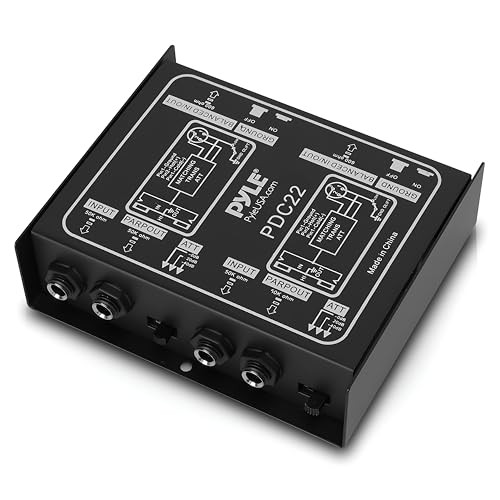
- Passive DI with hum and buzz cancellation
- Handles guitars, bass, keyboards, and stereo sources
- All-steel chassis for durable everyday use
Best For: Users who want a sturdy, multi-purpose passive DI
Balanced Conversion DI for Live/Studio

- Built-in 1/4" impedance transformer
- Bidirectional balanced/unbalanced conversion
- Ground lift plus thru output for live and studio use
Best For: Musicians who want a flexible passive DI for stage and recording
Budget Passive DI – Whirlwind IMP 2 1-Channel Passive Instrument Direct Box
If you want one of the more affordable DI boxes under 200, the Whirlwind IMP 2 keeps things simple: it takes an unbalanced line or instrument signal and converts it to a low-impedance balanced mic-level feed. It’s built around a transformer design and focuses on durability and straightforward performance rather than extra features.
Best For: Players and engineers who want a basic, rugged passive direct box for live or studio use.
Pros:
- Converts unbalanced instrument or line signals to balanced mic level
- Economical option with a compact footprint
- Built for durability with a riveted TRHL transformer and stainless steel construction
Cons:
- Single-channel design only
- Doesn’t include the extra controls found on some competing DI boxes
Overall, the IMP 2 is a practical no-frills choice if your priority is dependable signal conversion in a tough, small package. It’s a solid fit when you want passive DI functionality without paying for more advanced features.
Pedalboard Mini DI – On-Stage DB200 Mini DI Box
The On-Stage DB200 is a compact option for DI boxes under 200 when you need a pedalboard-friendly direct box with more control. It’s designed for guitar, bass, keyboard, and other instrument setups, and it includes a 20 dB pad, cabinet simulator, and ground lift to help shape the signal and reduce noise.
Best For: Guitarists, bassists, and keyboard players who want a compact DI with onboard signal tools.
Pros:
- Compact footprint with hook-and-loop support for pedalboard use
- 20 dB pad, cabinet simulator, and ground lift controls
- True bypass design with 1/4" unbalanced and XLR balanced outputs
Cons:
- Single-channel unit only
- Requires a detachable power supply rather than being fully passive
If you want a mini DI that does more than basic signal conversion, the DB200 stands out for its control set and small size. It’s especially appealing when space is tight and you still want practical features for live rigs.
Rugged Passive DI – Radial Pro DI Passive Direct Box
For buyers comparing DI boxes under 200, the Radial Pro DI is built around a passive mono direct box design with a custom transformer and rugged I-beam construction. It’s aimed at live or studio setups where durability and reliable instrument-to-mixer conversion matter more than extra bells and whistles.
Best For: Acoustic guitars, bass, keyboards, drum machines, and professional stage or studio systems.
Pros:
- Passive mono direct box with a custom transformer
- Rugged I-beam construction in a stainless steel enclosure
- Suited to live or studio use with common instrument and console setups
Cons:
- Mono only, so it won’t cover stereo sources
- More utility-focused than feature-heavy
The Pro DI is a straightforward workhorse for users who value build quality and dependable passive operation. If you need a sturdy single-channel box for everyday instrument routing, it fits that role well.
Stereo Passive DI – Mackie MDB-2P Passive Stereo DI Box
If you need DI boxes under 200 for stereo sources, the Mackie MDB-2P is built for keyboards and DJ rigs with dual 1/4-inch high-impedance inputs. It uses a passive design, so there’s no power requirement, and it adds pads and ground lift controls to help handle hot signals and reduce buzz.
Best For: Stereo keyboards, DJ controllers, and backing-track rigs that need two-channel passive conversion.
Pros:
- Dual high-impedance 1/4-inch inputs for stereo setups
- Passive design needs no power
- 15 dB pads and ground lift help manage distortion and noise
- Roadworthy steel case for everyday use
Cons:
- Not ideal if you only need a simple single-channel DI
- More specialized toward stereo and DJ-style rigs
The MDB-2P is a smart pick when your source is stereo and you want a practical, no-power direct box. It focuses on solving the common problems of hum, noise, and hot signals in a durable package.
Budget Hum Eliminator – Pyle PDC21 Passive DI Box
If you need one of the most straightforward di boxes under 200 for basic stage or recording duties, the Pyle PDC21 keeps things simple: passive operation, hum cancellation, and support for both balanced and unbalanced connections. It’s a practical fit when you want to route guitars, basses, keyboards, or even consumer audio into a PA or mixer without adding extra complexity.
Best For: Guitarists, bass players, keyboard users, and anyone needing an affordable passive DI for clean signal conversion.
Pros:
- Passive design with no battery requirement.
- Helps reduce buzz and hum with ground lift-style noise control.
- Works with guitars, bass, keyboards, and line-level consumer sources.
- All-steel chassis adds durability for regular use.
Cons:
- Single-channel design limits flexibility for stereo or dual-source setups.
- No advanced switching features like phase invert or low-pass filtering.
Overall, the PDC21 is a solid utility box for simple signal balancing and hum reduction. It’s best viewed as a no-frills direct box for players who want dependable basics rather than extra routing controls.
Feature-Packed Dual DI – ART DualZDirect Passive Dual DI
Among di boxes under 200, the ART DualZDirect stands out if you want more control over your signal path. Its fully passive transformer design includes dual channels plus attenuation, phase invert, low-pass filtering, and ground lift, making it a strong choice for cleaner routing in both live and studio setups.
Best For: Players and engineers who want a dual-channel passive DI with extra tone-shaping and troubleshooting controls.
Pros:
- Dual-channel passive design supports two sources at once.
- Switchable attenuation offers 0, -20, and -40 dB options.
- Includes phase invert, low-pass filter, and ground lift switches.
- No battery required.
Cons:
- More feature-rich than a basic DI, which may be unnecessary for simple setups.
- Tabletop form factor may not suit every touring rig preference.
For users who want a flexible passive direct box, the DualZDirect is a very practical pick. Its extra switches make it easier to handle hot signals, noise issues, and polarity problems without needing additional gear.
Dual-Channel Studio DI – Bolanle DB2 Passive XLR DI Box
If you’re comparing di boxes under 200 for stereo or dual-instrument work, the Bolanle DB2 is built around a simple but useful two-channel passive layout. It converts high-impedance sources to low-impedance XLR output, adds ground lift noise reduction, and includes selectable attenuation for handling a range of input levels in studio or live settings.
Best For: Guitarists, bassists, synth players, and engineers who want a durable dual-channel passive DI box.
Pros:
- Dual-channel passive design suits stereo or two-source setups.
- Ground lift helps reduce ground loop hum and interference.
- Three attenuation settings help prevent overload.
- Scratch-resistant, rust-proof construction is built for frequent use.
Cons:
- No advanced extras like phase invert or low-pass filtering.
- Heavier than a basic single-channel DI at 1.41 pounds.
The DB2 is a straightforward choice for users who want balanced output, noise reduction, and a rugged shell in one unit. It makes the most sense when you need a dependable two-channel direct box for regular live or studio work.
Passive DI with Attenuation – Livewire SPDI
If you need one of the more straightforward di boxes under 200 for stage or studio use, the Livewire SPDI covers the essentials well. It offers a 1/4" high-impedance instrument input and throughput, a balanced floating XLR output, and variable attenuation for more input flexibility.
Best For: Guitarists, bassists, and players who want a simple passive DI with attenuation and ground handling options.
Pros:
- Passive design with balanced, floating XLR output
- Ignores +48V phantom power
- Variable attenuation helps match hotter signals
- Lift and GND modes give flexible ground control
Cons:
- No extra features beyond core DI functions
- Single-channel design keeps it basic
This is a practical pick if you want a no-frills direct box that focuses on signal matching, hum control, and reliability. The Livewire SPDI is best suited to players who value simple operation over extra routing options.
Steel-Chassis Hum Eliminator DI – PYLE-PRO PDC22
Among di boxes under 200, the PYLE-PRO PDC22 stands out if you want a passive unit built for clean signal transfer and basic hum reduction. It is designed to connect guitars, bass, keyboards, submixers, effects processors, and even consumer stereo sources to a mixer or PA with balanced or unbalanced XLR routing.
Best For: Multi-purpose users who want a sturdy passive DI for instruments and line-level source hookup.
Pros:
- Passive direct injection box with hum and buzz cancellation
- Works with guitars, bass, keyboards, and outboard processors
- Can also handle consumer stereo and boom box line outputs
- All-steel chassis adds durability
Cons:
- Heavier than some compact DI options
- Product listing notes a basic two-channel design, but it is still a straightforward box
If you need one DI to cover several common sources, the PDC22 is a flexible choice. It leans more toward utility and durability than refinement, which makes it a solid budget-minded workhorse.
Balanced Conversion DI for Live/Studio – PRORECK DC21
If you are comparing di boxes under 200 for live shows or home recording, the PRORECK DC21 offers a feature set centered on clean conversion and noise control. It uses a built-in 1/4" impedance transformer, supports balanced and unbalanced bidirectional conversion, and includes a ground lift switch to help reduce hum and buzz.
Best For: Musicians who need a flexible passive DI for both stage monitoring and studio recording.
Pros:
- Impedance matching is built in for guitars, basses, and more
- Supports 1/4" and balanced/unbalanced XLR routing
- Ground lift and isolation help eliminate hum and buzz
- Thru output supports simultaneous amp and mixer use
Cons:
- Passive design may not suit users who want powered features
- Most of its appeal is in utility rather than added extras
The DC21 is a sensible all-rounder if you want one box to handle live and studio tasks without complexity. Its combination of thru output, grounding control, and bidirectional conversion makes it especially practical for players who switch between rigs.
How We Picked the Best Di Boxes Under 200
We focused on build quality, noise control, channel count, and real-world flexibility. For Di Boxes Under 200, that means looking for dependable transformers or active circuitry, ground-lift control, attenuation pads, and stereo or dual-channel options where they actually help.
We also weighed portability and compatibility. A good DI should work easily with guitars, basses, keyboards, and other line-level sources while fitting into a gig bag or rack without hassle.
Quick Comparison: What Matters Most
Single-channel passive DI boxes are usually the simplest choice for one instrument and are often favored for strong, rugged stage use. Dual-channel and stereo models are better if you need to run keyboards, modelers, or two sources at once. If your source is especially hot, a pad can help prevent clipping. If hum is your biggest issue, a ground lift is essential.
Key Buying Factors for Di Boxes Under 200
Passive Vs. Active
Passive DI boxes are a great fit for many live setups because they are simple, durable, and do not need power. Active DI boxes can be better for low-output pickups or longer signal chains, but passive units often offer excellent value in this price range.
Inputs, Outputs, and Channel Count
Think about how many sources you need to connect now and later. A single DI is enough for one bass or guitar, but stereo and dual DI designs save space if you regularly use keyboards, multi-effects, or two instruments.
Noise Control Features
Ground lift switches, input attenuation, and proper impedance matching are the features that matter most when chasing a quiet signal. These are especially important if you are comparing Di Boxes Under 200 for live sound or venue patching.
Build and Practicality
Metal housings, clearly labeled jacks, and compact footprints all make life easier on stage. A sturdy DI is worth prioritizing because it will likely live on the floor, in a rack, or in a cable bag.
Who Should Buy Which Di Boxes Under 200?
Choose a simple passive mono DI if you mainly play guitar or bass and want a no-fuss solution. Pick a dual or stereo DI if you run keyboards, stereo pedals, or multiple sources and want fewer boxes to carry. If you are mostly fighting hum or long cable runs, prioritize a model with a ground lift and attenuation pad.
In short, the best choice depends on your source, your noise problems, and whether you need one channel or two. A well-chosen DI box can be one of the most cost-effective upgrades in any signal chain.