A digital stage box can simplify recording by moving preamps and I/O closer to the source, reducing cable clutter and making multitrack capture easier to manage.
Below, we’ve rounded up 10 strong options for studios, live rooms, and hybrid rigs that need dependable remote-controlled audio expansion for recording.
Best 10 Digital Stage Box for Recording Picks for 2026
Large-Format Networked I/O
Behringer S32 32-Channel Stage Box

- 32 Midas-designed mic preamps
- AES50 with SuperMAC networking
- 16 XLR outputs plus Ultranet support
Best For: Large recording setups that need lots of inputs and networked monitoring
Compact Console Link
Soundcraft MSB-16i 16-Channel Stagebox

- 16 inputs and 8 outputs
- Remote-controlled I/O for Si Series
- Compact stainless-steel build
Best For: Soundcraft Si Series users needing compact stagebox expansion
AVB Recording Hub
PreSonus NSB 16.8 AVB Stage Box
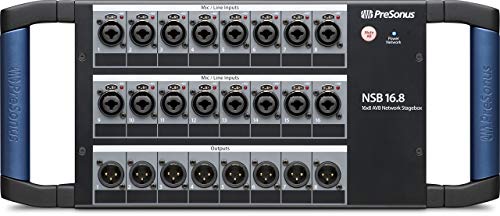
- 16 locking mic/line inputs
- 8 locking XLR outputs
- AVB ports and XMAX preamps
Best For: PreSonus AVB setups needing rugged, networked input expansion
AES50 Snake Option
Behringer S16 16-Channel Digital Stage Box

- 16 Midas-designed mic preamps
- 8 XLR outputs with AES50 networking
- ULTRANET support for P16 monitoring
Best For: Smaller AES50-based recording rigs needing 16 channels
Rack-Ready AVB Option for Larger I/O Counts
NSB32.16 32-in/16-out AVB stage box

- 32 locking combo mic/line inputs
- 16 XLR line outputs and 64x16 AVB
- Remote XMAX preamps with gain compensation
Best For: Large recording rigs that want rackmount AVB expansion
Compact AES50 Stage Box with Midas Preamps
SD16 16-in/8-out AES50 stage box

- 16 MIDAS-designed remote-controllable mic preamps
- 8 XLR outputs plus AES50 networking
- 4-port ULTRANET hub for monitoring
Best For: Compact recording rigs needing remote preamps and monitoring support
Reliable dSNAKE Expander for Allen & Heath Systems
AB168 16-in/8-out dSNAKE stage box
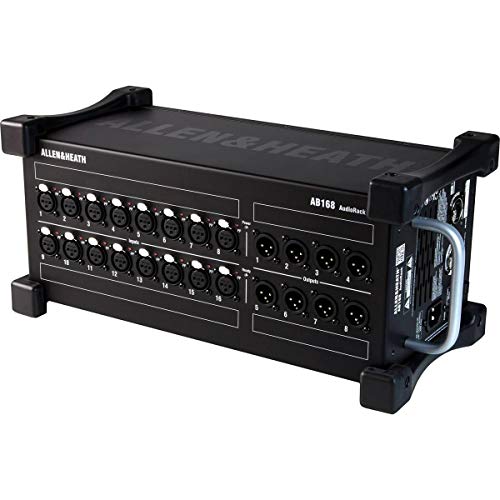
- 16 XLR mic preamps and 8 XLR outputs
- Locking dSNAKE Ethercon connection
- Compatible with GLD and Qu systems
Best For: Allen & Heath recording setups needing simple I/O expansion
Compact AES50 Stage Snake
Behringer SD16 16-Channel Remote Preamp Box

- 16 remote-controllable Midas-designed preamps
- 8 outputs with AES50 networking
- ULTRANET support for personal monitoring
Best For: 16-channel recording and live rigs that need AES50 compatibility
Dante Recording Box
Yamaha Tio1608-D 16x8 Stage Box

- 16 mic preamps with 8 line outputs
- Dante connectivity over Ethernet
- Simple stage-box design for networked rigs
Best For: Dante recording setups that need clean networked I/O
High-Capacity Pro Stage Box
Midas DL32 32-In/16-Out Recorder Box

- 32 Midas PRO mic preamps with phantom power
- 16 balanced outputs plus ADAT
- Dual AES50 ports for cascading expansion
Best For: Large recording setups needing high input count and expansion
Large-Format Networked I/O – Behringer S32 32-Channel Stage Box
If you need a digital stage box for recording with lots of inputs and flexible networked routing, the Behringer S32 is built for larger sessions. Its 32 Midas-designed mic preamps and AES50 connectivity make it a strong fit for tying a live room or stage into a digital console or recording workflow.
Best For: Big recording setups that need 32 mic inputs, networked audio, and personal monitoring support.
Pros:
- 32 fully programmable Midas-designed mic preamps
- 16 analog, servo-balanced XLR outputs for expanded routing
- AES50 ports with SuperMAC networking for low-latency digital connection
- Ultranet support for Behringer P16 personal monitoring systems
Cons:
- Larger and heavier than smaller 16-channel stage boxes
- Best suited to AES50-based systems rather than simple standalone use
For recording projects that demand a high input count and integrated digital networking, the S32 offers a lot of capability in one box. It makes the most sense when your interface or mixer is already built around Behringer’s digital ecosystem.
Compact Console Link – Soundcraft MSB-16i 16-Channel Stagebox
Soundcraft MSB-16i 16-channel Compact Digital Stagebox with Remote Controlled I/O
Check Price On AmazonThe Soundcraft MSB-16i is a practical digital stage box for recording when you want a compact 16-channel I/O unit tied to a compatible console. Its remote-controlled I/O design keeps the setup focused on controlled input and output handling rather than extra onboard features.
Best For: Soundcraft Si Series users who want a compact 16-channel stagebox for recording or live-to-track work.
Pros:
- 16-channel digital stagebox with 8 outputs
- Remote controlled I/O for compatible Soundcraft Si Series consoles
- Compact form factor for easier placement in tight setups
Cons:
- Designed specifically for Soundcraft Si Series integration
- Fewer channels than larger stage boxes in this roundup
If your recording system is already centered on a Soundcraft Si console, the MSB-16i keeps the stage connection straightforward. It is less about universal flexibility and more about clean, compatible expansion.
AVB Recording Hub – PreSonus NSB 16.8 AVB Stage Box
For a digital stage box for recording in an AVB-based PreSonus setup, the NSB 16.8 gives you 16 mic/line inputs and 8 XLR outputs in a rugged enclosure. It is designed to work closely with Series III mixers and UC Surface control, so it fits well in streamlined recording rigs that need networked audio and simple setup.
Best For: PreSonus users who want a rugged 16×8 AVB stage box with remote preamp control.
Pros:
- 16 locking mic/line inputs and 8 locking XLR outputs
- 16 remote-controllable XMAX preamps with gain compensation
- 2 AVB ports with locking XLR Ethernet jacks
- Works with Series III mixers and UC Surface software
Cons:
- Most useful in PreSonus AVB ecosystems
- Only 16 input channels, so it may be small for larger sessions
The NSB 16.8 is a sensible choice when you want stable networked I/O and hands-on control in a recording environment. Its feature set is focused on reliable integration rather than broad cross-platform compatibility.
AES50 Snake Option – Behringer S16 16-Channel Digital Stage Box
The Behringer S16 is a straightforward digital stage box for recording when you want 16 remote-controlled mic inputs and networked outputs in a compact unit. With AES50 connectivity, Midas-designed preamps, and ULTRANET support, it suits recording systems built around Behringer digital hardware.
Best For: Smaller recording rigs that need 16 channels, networked audio, and personal monitoring support.
Pros:
- 16 MIDAS-designed, fully programmable mic preamps
- 8 servo-balanced XLR outputs for flexible routing
- AES50 ports with low-latency SuperMAC networking
- ULTRANET support for P16 personal monitoring systems
Cons:
- Fewer inputs than the larger S32 model
- Best fit for Behringer/AES50-based workflows
If you need a compact digital snake for recording without moving up to a larger stage box, the S16 covers the essentials well. It is especially practical when your setup already uses Behringer networking and monitor distribution.
Rack-Ready AVB Option for Larger I/O Counts – NSB32.16 32-in/16-out AVB stage box
If you need a digital stage box for recording with plenty of inputs and a clean rackmount form factor, the PreSonus NSB32.16 is built for bigger setups. It offers 32 locking combo mic/line inputs, 16 XLR line outputs, and AVB networking for integration with compatible systems, making it a strong fit for sessions that need a lot of channels on tap.
Best For: Recording setups that need high channel count, remote preamp control, and AVB networking in a 3U rack unit.
Pros:
- 32 remote-controllable XMAX preamps for large mic-heavy sessions
- 16 locking XLR line outputs for flexible routing
- 64×16 AVB support with 2 AVB ports and locking XLR Ethernet jacks
- Gain compensation helps multiple mixers control the inputs independently
Cons:
- Requires AVB-compatible gear to take full advantage of the network features
- More channel capacity than many smaller recording rigs need
Overall, the NSB32.16 is the most expansive option here and makes sense when your recording workflow demands a rackmount stage box with serious input count and remote control. It is especially appealing if you are already working in an AVB-based PreSonus environment.
Compact AES50 Stage Box with Midas Preamps – SD16 16-in/8-out AES50 stage box
The Behringer SD16 is a practical digital stage box for recording when you want a compact unit with remote-controlled preamps and straightforward networked I/O. It combines 16 MIDAS-designed mic preamps, 8 XLR outputs, and AES50 networking, plus a ULTRANET hub for personal monitoring distribution.
Best For: Small to mid-size recording systems that need remote preamps, AES50 connectivity, and built-in monitoring distribution.
Pros:
- 16 fully programmable MIDAS-designed mic preamps
- 8 servo-balanced XLR outputs for extra routing options
- AES50 ports with low-jitter, low-latency networking
- 4-port ULTRANET hub supports personal monitoring mixers
Cons:
- Fewer outputs than larger stage boxes in this roundup
- Best suited to AES50-based systems rather than universal use
For recording setups that prioritize compact size and remote control over maximum channel count, the SD16 is a strong value-oriented choice. Its mix of AES50 audio transport and ULTRANET monitoring support makes it especially useful in integrated live-recording workflows.
Reliable dSNAKE Expander for Allen & Heath Systems – AB168 16-in/8-out dSNAKE stage box
If your recording setup is built around Allen & Heath gear, the AB168 is a straightforward digital stage box for recording that extends your I/O with 16 mic preamps and 8 XLR line outs. Its dSNAKE connection with locking Ethercon ports keeps it aligned with compatible GLD and Qu systems while staying simple to deploy.
Best For: Allen & Heath users who want a compatible stage box for expanding recording inputs and outputs.
Pros:
- 16 mic preamps on XLR for recording sources
- 8 XLR line outputs for routing flexibility
- Locking Ethercon dSNAKE connection for secure integration
- Compatible with GLD and Qu systems
Cons:
- Designed for Allen & Heath ecosystems, not universal compatibility
- Fewer channels than higher-capacity stage boxes
The AB168 is a good fit when compatibility matters more than feature overload. For Allen & Heath-based recording rigs, it provides a dependable expansion path with the channel count and locking network connection needed for practical studio or location work.
Compact AES50 Stage Snake – Behringer SD16 16-Channel Remote Preamp Box
If you need a digital stage box for recording that keeps the front end compact while giving you plenty of channels, the Behringer SD16 is built around 16 remote-controllable Midas-designed mic preamps and 8 outputs. Its AES50 networking and ULTRANET support make it a practical choice for setups that need digital snake-style routing and personal monitoring integration.
Best For: Recording rigs and live setups that need 16 remote-controlled inputs, AES50 networking, and straightforward expansion.
Pros:
- 16 remote-controllable Midas-designed mic preamps
- 8 XLR outputs for flexible routing
- AES50 networking with Klark Teknik SuperMac technology
- ULTRANET integration for Powerplay P16 personal monitoring systems
Cons:
- Only 8 outputs, which may limit more complex output-heavy setups
- Depends on AES50-compatible systems for full benefit
The SD16 is a focused stage box rather than a do-everything interface, but that makes it appealing if you want dependable digital I/O and remote preamp control in a streamlined rack-friendly format.
Dante Recording Box – Yamaha Tio1608-D 16×8 Stage Box
The Yamaha Tio1608-D is a digital stage box for recording built around Dante connectivity, 16 microphone preamps, and 8 line outputs. If your workflow already uses Ethernet-based audio networking, this unit offers a clean way to place your inputs at the stage while keeping the recorder or console connection digital.
Best For: Dante-based recording systems that need 16 inputs, 8 outputs, and Ethernet connectivity.
Pros:
- 16 microphone preamplifiers for multi-source recording
- Dante digital connectivity over Ethernet
- 8 line outputs for routing flexibility
- Purpose-built stage box format for networked audio setups
Cons:
- Requires a Dante-compatible workflow to be most useful
- No extra features listed beyond core I/O and networking
For studios and live-recording rigs already centered on Dante, the Tio1608-D keeps the signal path simple and expandable without adding unnecessary complexity.
High-Capacity Pro Stage Box – Midas DL32 32-In/16-Out Recorder Box
When you need a digital stage box for recording with a much larger channel count, the Midas DL32 brings 32 Midas PRO microphone preamplifiers and 16 electronically balanced outputs. Dual AES50 SuperMAC ports, ULTRANET support, and ADAT interfaces make it a strong hub for bigger recording and monitoring systems.
Best For: Larger recording and monitoring setups that need 32 inputs, 16 outputs, and flexible digital networking.
Pros:
- 32 Midas PRO microphone preamplifiers with switchable 48 V phantom power
- 16 electronically balanced low-impedance line outputs
- Dual AES50 SuperMAC ports for cascading additional stage boxes
- ULTRANET and ADAT interfaces for expanded integration
Cons:
- More complex than smaller stage boxes for simple recording needs
- Designed for larger systems, so it may be overkill for small rigs
The DL32 is the most expansion-ready option here, and its higher input count makes it especially useful when a recording setup needs to handle a full band or larger multi-source session.
How We Picked These Digital Stage Box for Recording Options
We focused on models that fit real recording workflows: remote-controlled preamps, solid network transport, flexible analog input/output counts, and broad compatibility with common digital mixer ecosystems. We also favored units that make tracking easier in studio, rehearsal, and live capture environments.
Quick Comparison: What Matters Most
Start by matching channel count to your sessions. A 16-channel box is usually enough for compact bands, podcast studios, and rehearsal recording, while 32-channel units are better for drum-heavy sessions or larger ensembles. Also check whether your setup uses AES50, AVB, or Dante, since the wrong protocol can limit compatibility.
Key Buying Factors for a Digital Stage Box for Recording
Input and Output Count
Choose enough mic inputs for your largest typical session, plus a few extras for room mics, talkback, or future expansion. Outputs matter too if you need monitor feeds, cue mixes, or outboard integration.
Networking and Ecosystem Fit
A Digital Stage Box for Recording should work cleanly with your mixer or interface. AES50 is common in Behringer and Midas systems, AVB appears in PreSonus and some compatible rigs, and Dante is widely used in network audio installations. Pick the protocol your existing gear already supports.
Preamps and Remote Control
Remote gain control is one of the biggest advantages of a digital stage box. It lets you place the box near the performers while adjusting levels from the control surface or software, which speeds up setup and helps keep signal paths consistent.
Monitoring and Expansion Features
Look for built-in headphone or personal monitoring support, ADAT, ULTRANET, or other expansion paths if you expect the rig to grow. These extras can save money and simplify routing later.
Who Should Buy Which Digital Stage Box for Recording?
If you need the most channels for band recording or full drum sessions, a 32-channel model is the safest starting point. If you want a compact, affordable option for smaller sessions, 16-channel units are usually the better value. Engineers building around a specific ecosystem should prioritize protocol match first, then compare I/O, remote-control features, and expansion options.
For most buyers, the best Digital Stage Box for Recording is the one that fits both your current channel needs and the mixer platform you already use. That combination will matter more than any single spec on the box.