The best digital wireless in-ear monitor systems help performers hear vocals, instruments, and cues clearly without relying on floor wedges. The right setup can also reduce stage clutter, improve mobility, and make rehearsals more efficient.
This roundup compares 10 systems across wireless formats, channel capacity, range, latency, stereo support, and included accessories. Whether you need a compact setup for one performer or multiple bodypacks for a full band, these options cover a range of practical monitoring needs.
Best 10 Digital Wireless in Ear Monitor Systems Picks for 2026
Compact 2.4GHz Pick
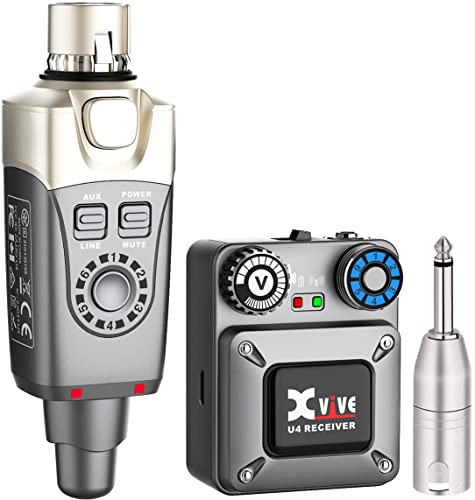
- Less than 5ms latency and six channels
- Up to 90+ feet of stated range
- Rechargeable battery lasts up to five hours
Best For: Solo performers and small live-monitoring setups
Flexible UHF Monitoring

- Mono UHF monitoring with 50 selectable frequencies
- Separate inputs and line outputs
- Up to 164 feet of stated operating range
Best For: Presenters, churches, broadcasters, and live performers
Multi-Performer Value

- Includes four UHF bodypack receivers
- Up to 300 feet of stated range
- Adjustable frequencies and built-in limiter
Best For: Bands and teams monitoring four performers
Professional Low-Latency Choice
Xvive U4 Professional IEM System

- Less than 5ms latency with six channels
- Supports balanced XLR and unbalanced TS input
- Up to five hours of rechargeable battery life
Best For: Bands, studios, and live performers
Best for Multi-Performer UHF Monitoring

- Four independent mono monitor mixes
- 4x25 UHF frequencies with 140–164-foot line-of-sight range
- Rackmount design with four receivers and included earphones
Best For: Bands, worship teams, and multi-performer stages
Best Compact 2.4GHz Stereo Option

- Mono/stereo modes with under-4.5ms mono latency
- One transmitter supports up to four receivers
- 6–8-hour battery life and 100-foot open-area range
Best For: Rehearsals, small stages, and portable monitoring
Best for Tunable Stereo UHF Monitoring
Phenyx Pro PTM-10 Wireless IEM

- Stereo/mono modes with EQ, balance, limiter, and PAD controls
- 89 selectable 900MHz frequencies for multi-system use
- 160-foot stated range with rackmount hardware and carrying case
Best For: Professional stages, studios, lectures, and conferences
Best Beginner Pick

- Under-5ms latency for responsive monitoring
- 40–60-foot open-space range
- More than 8 hours of battery life
Best For: Guitar beginners, practice, and simple studio monitoring
Best for Group Performance

- Supports multiple receivers from one transmitter
- Cue talkback and stereo/mono switching
- XLR, 1/4-inch, and 3.5mm inputs
Best For: Bands, worship teams, and group live performances
Best Low-Latency Choice

- Claimed 1ms latency and 48kHz/24-bit audio
- Seven selectable UHF channels
- 164-foot line-of-sight range
Best For: Stage performers and musicians prioritizing responsive monitoring
Compact 2.4GHz Pick – Xvive U4 Wireless IEM System
The Xvive U4 is a compact option for shoppers comparing digital wireless in ear monitor systems for personal monitoring, rehearsals, and smaller live venues. Its 2.4GHz connection offers less than 5ms latency, six selectable channels, and a stated range of more than 90 feet.
Best For: Solo performers, small bands, and compact live-monitoring setups.
Pros:
- Less than 5ms latency helps keep monitoring responsive.
- Six channels support simultaneous broadcasts.
- Rechargeable transmitter and receiver provide up to five hours of battery life.
- Compact metal design and included 1/4-inch-to-XLR adapter simplify portability.
Cons:
- Its stated range is shorter than the long-range UHF systems in this roundup.
- The package includes one transmitter and one receiver, so additional performers require more receivers.
- It is not water resistant.
The U4 is a straightforward choice when low latency, portability, and quick setup matter more than extended coverage or a larger multi-receiver package.
Flexible UHF Monitoring – Phenyx Pro PTM-11 Mono IEM
The Phenyx Pro PTM-11 is a mono UHF option among digital wireless in ear monitor systems, designed for focused monitoring in live performance, broadcast, studio, and presentation settings. It provides 50 selectable frequencies, separate signal outputs, and a stated operating range of up to 164 feet.
Best For: Churches, presenters, broadcasters, and performers who prefer stable mono monitoring.
Pros:
- Mono operation helps avoid phase-related blurring or distortion.
- Fifty selectable UHF frequencies support flexible setup.
- Separate left/right inputs and line outputs allow signal pass-through to the sound system.
- Metal transmitter, rackmount kit, and carrying case suit portable professional use.
Cons:
- Mono monitoring is less suitable for users who specifically need stereo IEM mixes.
- The package includes one bodypack receiver.
- Performance can be affected by thick walls, glass, and metal obstacles.
Choose the PTM-11 when signal-routing flexibility and mono clarity are priorities. Its UHF design and adjustable frequencies also make it a practical fit for more structured venue setups.
Multi-Performer Value – XTUGA RW2080 4-Bodypack IEM
The XTUGA RW2080 stands out for teams comparing digital wireless in ear monitor systems because it includes four bodypack receivers in one package. Its UHF 902–928MHz design offers delay-free operation, a stated range of up to 300 feet, and adjustable frequencies for multi-system use.
Best For: Bands, ensembles, and production teams needing four performers monitored from one transmitter.
Pros:
- Four bodypack receivers are included for multi-performer monitoring.
- UHF operation is described as delay-free compared with 2.4GHz designs.
- Up to 300 feet of stated wireless coverage supports larger stages.
- Preset adjustable frequencies and limiter circuitry support practical multi-system use.
Cons:
- The larger multi-receiver package is less compact than a single-transmitter/single-receiver kit.
- It uses a UHF frequency range that may require more deliberate system planning than a simple 2.4GHz setup.
- The supplied earphones and bodypacks may add to the amount of gear to manage.
For groups, the RW2080 offers strong package value by supplying four receivers and long stated coverage. It is a sensible choice when several performers need monitoring without buying separate starter systems.
Professional Low-Latency Choice – Xvive U4 Professional IEM System
This Xvive U4 is aimed at buyers seeking digital wireless in ear monitor systems with uncompressed 2.4GHz transmission, low latency, and simple operation. It supports mono balanced XLR or mono unbalanced TS input, six simultaneous channels, and up to five hours of rechargeable battery life.
Best For: Bands, studio users, and live performers wanting a compact professional monitoring link.
Pros:
- Less than 5ms latency supports distraction-free performance.
- Six channels allow simultaneous broadcasts without interference according to the supplied notes.
- 24-bit/48kbps audio, a 20Hz–20kHz frequency response, and up to 107dB signal-to-noise ratio are specified.
- Metal housing, built-in limiter, and simple transmitter/receiver pairing support dependable use.
Cons:
- The system is mono rather than a stereo monitoring solution.
- Battery life is stated at up to five hours, which may require recharging for longer events.
- The package includes one receiver, limiting immediate multi-performer coverage.
The U4 makes sense for performers who value quick setup and responsive monitoring in a compact package. Its balanced or unbalanced input options broaden compatibility with mixers and professional audio devices.
Best for Multi-Performer UHF Monitoring – PTM-33-4B 4-Channel IEM
For bands and worship teams comparing digital wireless in ear monitor systems, the Phenyx Pro PTM-33-4B stands out as a four-channel UHF setup designed for independent monitoring. Its integrated station accepts four left/right inputs and provides loop outputs, helping reduce rack clutter while supporting separate mixes.
Best For: Four-member bands, church teams, stage musicians, and sound engineers needing multiple mono monitor channels.
Pros:
- Provides four standalone mixes with four bodypack receivers.
- Uses 4×25 UHF frequencies and offers a stated 140–164-foot line-of-sight range.
- Includes IR sync, rackmount hardware, earphones, and batteries.
- Supports daisy chaining through loop outputs and uses widely compatible 1/4-inch TS connections.
Cons:
- Provides mono monitoring only.
- Range can be affected by thick walls, glass, and metal obstacles.
- Requires four auxiliary mixer outputs for the full four-channel configuration.
The PTM-33-4B is a practical choice when several performers need separate, low-delay mono mixes from one rack-friendly system. It is less suitable if stereo monitoring is essential.
Best Compact 2.4GHz Stereo Option – LEKATO MS-02 Wireless IEM
The LEKATO MS-02 is a compact alternative for shoppers comparing digital wireless in ear monitor systems for rehearsals, recording, and smaller performances. It supports mono or stereo operation, pairs one transmitter with up to four receivers, and uses a 2.4GHz connection with claimed latency below 4.5 ms in mono mode.
Best For: Small and medium bands, singers, church rehearsals, recording setups, and users who want a portable multi-receiver system.
Pros:
- Offers mono or stereo modes with 24-bit/48kHz sampling and under-4.5ms mono latency.
- One transmitter can support up to four receivers.
- Provides up to 6–8 hours of operation and includes battery and volume indicators.
- Compact clip-on units offer a stated 100-foot open-area range and one-key mute.
Cons:
- Earbuds are not included and must be purchased separately.
- Its 100-foot range is specified for open areas.
- 2.4GHz operation may be less appropriate for heavily congested wireless environments.
Choose the MS-02 when portability, flexible mono/stereo monitoring, and simple one-to-many pairing matter most. Budget separately for compatible earbuds to complete the setup.
Best for Tunable Stereo UHF Monitoring – Phenyx Pro PTM-10 Wireless IEM
The Phenyx Pro PTM-10 is a strong pick for buyers seeking digital wireless in ear monitor systems with stereo control and tunable UHF operation. Its 900MHz system provides 89 selectable frequencies, stereo/mono switching, and practical controls for EQ, balance, limiting, and overload protection.
Best For: Stage performers, studio users, lecturers, conference speakers, and multi-system installations requiring stereo or mono monitoring.
Pros:
- Supports both stereo and mono monitoring for different performance needs.
- Offers 89 selectable 900MHz frequencies and supports up to five systems simultaneously.
- Provides up to 160 feet of stated coverage and includes EQ, balance, limiter, PAD, and lock functions.
- Includes XLR and 6.3mm inputs, rack hardware, carrying case, receiver, and earbuds.
Cons:
- Includes only one bodypack receiver.
- Its feature-rich rackmount design may be more equipment than a basic rehearsal setup requires.
- Wireless coverage can vary with the environment and obstructions.
The PTM-10 is well suited to users who want more control than a simple wireless monitor provides. Its selectable UHF frequencies and stereo features make it especially useful for professional stage, studio, speech, and exhibit applications.
Best Beginner Pick – JW-07 Wireless IEM System
The JOYO JW-07 is a practical entry point for shoppers comparing digital wireless in ear monitor systems for guitar practice, recording, and basic live monitoring. Its 2.4GHz connection, under-5ms latency, automatic pairing, and 48kHz/16-bit audio target players who want straightforward setup and responsive feedback.
Best For: Guitar beginners, home practice, and simple studio monitoring.
Pros:
- Under-5ms latency supports responsive, real-time monitoring.
- Frequency hopping helps reduce interference from other wireless devices.
- Offers 40–60 feet of range in open space and more than 8 hours of battery life.
- Provides 12 channel banks across four groups for flexible setup options.
Cons:
- One transmitter cannot connect to multiple receivers.
- Its 48kHz/16-bit specification is less detailed than some higher-end systems.
- Best suited to compatible guitar and basic monitoring applications rather than complex multi-user setups.
The JW-07 makes the most sense when ease of use, low delay, and long battery life matter more than advanced group monitoring. It is a focused, beginner-friendly option for individual practice and recording.
Best for Group Performance – WX520 5.8GHz IEM System
The SWIFF AUDIO WX520 stands out among digital wireless in ear monitor systems for bands and teams that need shared monitoring. Its 5.8GHz transmission, four selectable channels, stereo/mono switching, and one-to-more receiver support provide useful flexibility for rehearsals, live shows, and worship settings.
Best For: Bands, worship teams, and group performances requiring multiple receivers.
Pros:
- One transmitter can support multiple receivers on the same channel.
- Includes stereo/mono switching and a cue talkback function with an external dynamic microphone.
- Offers XLR, 1/4-inch, and 3.5mm connectivity with AUX/LINE switching.
- 5.8GHz transmission is designed for strong anti-interference performance.
Cons:
- The receiver provides up to 5 hours of use, which may require recharging during longer sessions.
- The transmitter charging case extends total working time to approximately 10 hours, rather than providing unlimited operation.
- It has four selectable channels, fewer than some systems designed for larger channel plans.
Choose the WX520 if communication and shared monitoring are central to your setup. The cue mic, broad input selection, and multi-receiver capability make it more team-oriented than a basic one-user wireless monitor.
Best Low-Latency Choice – POGOLAB MWB-1 UHF IEM
The POGOLAB MWB-1 is a strong option for performers prioritizing speed and detailed audio in digital wireless in ear monitor systems. Its UHF connection, claimed 1ms latency, 48kHz/24-bit audio, seven selectable channels, and 164-foot line-of-sight range are geared toward stage, band, and live-performance use.
Best For: Stage performers, touring musicians, bands, and users who prioritize ultra-low latency.
Pros:
- Claimed 1ms transmission delay supports highly responsive monitoring.
- 48kHz/24-bit audio, more than 106dB dynamic range, and distortion under 0.5% target clear sound.
- Seven selectable UHF channels help manage crowded wireless environments.
- Includes balanced XLR and AUX/LINE input options, USB-C charging, and a belt-clipped receiver.
Cons:
- Battery life is up to 5 hours for both the transmitter and receiver.
- The 164-foot range is specified for clear line-of-sight conditions.
- The supplied notes list no noise control for the system.
The MWB-1 is the performance-focused choice of this group, particularly when latency and connection range are priorities. Its seven channels and professional-style input options add flexibility, while the relatively short battery rating should be planned around for longer events.
How We Picked the Best Digital Wireless in Ear Monitor Systems
We focused on the specifications that matter most during rehearsals, performances, worship services, and studio work. Each system was assessed for wireless band, transmission range, latency, mono or stereo operation, receiver capacity, controls, connectivity, and portability. We also considered whether a model is better suited to one performer, several performers, or a more permanent rack-based installation.
Wireless claims can vary with venue layout, interference, antenna placement, and local regulations. Treat stated range as a best-case figure and confirm that the operating band is appropriate for your location.
Quick Comparison
| Best For | What to Prioritize | Recommended System Type |
|---|---|---|
| Solo performers | Simple pairing, low latency, compact receiver | 2.4GHz or 5.8GHz single-transmitter systems |
| Small bands | Multiple bodypacks and independent channels | Multi-channel UHF systems |
| Stereo monitoring | Stereo transmission and compatible outputs | Dedicated stereo 2.4GHz, 5.8GHz, or UHF systems |
| Professional stages | Reliable frequency coordination and rack mounting | Selectable-frequency UHF systems |
| Fast setup | Automatic pairing and rechargeable hardware | Plug-and-play digital systems |
Key Buying Factors for Digital Wireless In-Ear Monitor Systems
Wireless Band and Interference
UHF systems often provide selectable frequencies and greater coordination flexibility, which is useful on busy stages. 2.4GHz and 5.8GHz systems are usually easier to deploy, but they share spectrum with other wireless devices. For crowded venues, frequency selection and interference resistance deserve special attention.
Mono Versus Stereo
Mono monitoring is sufficient for many vocalists, presenters, and basic band mixes. Stereo can provide better instrument placement and a more natural listening experience, but it requires compatible signal routing and may cost more. Check whether the transmitter accepts the connections used by your mixer or interface.
Latency, Range, and Reliability
Low latency helps performers stay synchronized with live sound. Look for clear latency specifications rather than assuming every digital system performs identically. Also check line-of-sight range, antenna design, battery life, and whether the receiver remains stable when the performer moves around the stage.
Inputs, Outputs, and Expandability
Confirm the transmitter’s XLR, quarter-inch, AUX, or line-level inputs before buying. If several people need the same mix, verify how many bodypacks are included and whether additional receivers can be added. Rack-mount hardware is valuable for permanent installations and organized stage wiring.
Who Should Buy Which Digital Wireless in Ear Monitor Systems?
Solo musicians and presenters should favor compact systems with straightforward pairing, dependable battery life, and minimal setup. Small bands and worship teams should prioritize multiple bodypacks, selectable channels, and enough range for the entire stage. Performers who need detailed mixes should choose a stereo-capable system and confirm that the mixer can provide a stereo feed. Touring acts and production teams will benefit most from selectable UHF frequencies, sturdy hardware, rack-mount options, and clear channel coordination. Finally, rehearsal-focused buyers can often save money with a simple 2.4GHz system if the room has limited wireless congestion.