Recording djembe is all about getting a clean attack, controlled overtones, and tuning you can trust from take to take. The right drum can make tracking easier and save time in the studio.
This roundup of the best djembes for recording in 2026 focuses on models that balance projection, tonal range, and dependable build quality for home studios, live rooms, and ensemble sessions.
Best 10 Djembes for Recording Picks for 2026
Hand-Carved Mahogany Pick

- Pre-tuned with warm goat skin tone
- Hand-carved mahogany shell
- Balanced for beginners and gig use
Best For: Players who want a traditional djembe with a warm, wide tone range
Earth-Toned Studio Classic

- 14-inch size for a fuller voice
- Durable Acousticon body
- Simple, no-frills build
Best For: Players who want a durable larger djembe for practice and studio basics
Compact Rope-Tuned Choice
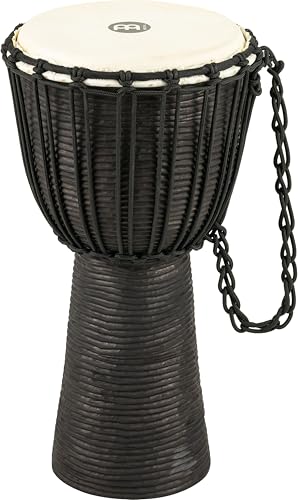
- Compact 10-inch size
- Warm goat skin head and mahogany shell
- Pre-tuned rope construction
Best For: Players who want a smaller traditional djembe for easy recording setups
Studio-Ready Mechanically Tuned Pick
Freestyle Key-Tuned Djembe 12"

- 6-lug tuning with included wrench
- Synthetic head and shell for stability
- Built for recording and weather resistance
Best For: Recording and performance with fast, repeatable tuning
Handmade Full-Size Choice
Meinl 12" x 24" Mahogany Djembe

- Deep bass and bright edge slaps
- Pre-tuned with Mali Weave rope tuning
- Hand-carved mahogany shell with goat skin head
Best For: Recording-ready players who want a full-size, traditional djembe
Compact Handcrafted Pick
7x15 Rope-Tuned Goat Skin Djembe

- Warm, resonant sound with goat skin head
- Adjustable rope tuning for pitch control
- Hand-carved compact 7x15 build
Best For: Beginners and collectors wanting a small traditional djembe
Smaller Studio-Friendly Option
Meinl 10" x 20" Mahogany Djembe

- Deep bass and bright edge slaps
- Lighter 9 lb build for easier handling
- Pre-tuned mahogany and goat skin construction
Best For: Studio players who want a lighter djembe for recording
Traditional Mahogany Djembe
Meinl 12-Inch Rope-Tuned with Bag

- Hand carved mahogany shell with brown finish
- Goat skin head delivers warm, dynamic tone
- Bag included for protection and transport
Best For: recording players who want a classic wood djembe sound
All-Weather Studio Djembe
Meinl Alpine Series 12-Inch Synthetic

- Synthetic shell and head resist weather and wear
- Easy tuning with included wrench
- Lightweight at about 8 lbs
Best For: lightweight, low-maintenance recording and outdoor use
Carved Mahogany Performance Djembe
Terre Percussion 20-Inch Handmade

- Handmade mahogany shell with alpine cord wrapping
- Goat skin head gives resonant, dynamic sound
- Rubber leg protection adds durability
Best For: players who want a handcrafted, full-sized djembe for recording
Hand-Carved Mahogany Pick – Meinl 12" Rope Tuned Djembe
If you want djembes for recording that deliver a warm, balanced acoustic tone, this Meinl 12-inch model is a strong all-around option. It ships pre-tuned, uses a natural goat skin head, and offers the kind of deep bass and bright slap response that translates well in a mic’d setup.
Best For: Players who want a handmade, gig-ready djembe with a wide tone range for practice, performances, and studio use.
Pros:
- Hand-carved certified mahogany shell gives it a rich, natural look and deep sound.
- Natural goat skin head adds warm tone and clear attack.
- Comes pre-tuned with high-strength nylon rope tuning.
- Beginner-friendly but still suitable for jam sessions and acoustic shows.
Cons:
- At about 15 lbs, it is less portable than lighter synthetic options.
- Natural skin and wood construction can vary in appearance from drum to drum.
This is a practical choice if you value organic tone and a traditional build over ultra-light convenience. For recording, its balanced frequency range and responsive head make it a dependable acoustic djembe.
Earth-Toned Studio Classic – Remo Mondo Djembe 14"
For djembes for recording, this 14-inch Remo Mondo offers a straightforward route to a fuller low end and a sturdy stage-ready feel. Its Acousticon body and wood exterior are built for consistent use, making it a sensible option when you want an instrument that can handle regular sessions.
Best For: Players looking for a larger djembe with a durable build for practice, live playing, and basic studio work.
Pros:
- 14-inch size can provide a fuller, roomier drum voice.
- Acousticon body is designed for durability.
- Earth finish gives it a simple, understated look.
- Made in the United States.
Cons:
- Supplied notes do not list tuning hardware or accessories.
- No detailed tone profile is provided in the product notes.
This model is best approached as a solid, no-frills option when you want a bigger djembe shell and a durable construction. If your recording setup needs a dependable hand drum without extra features, it fits that role well.
Compact Rope-Tuned Choice – Meinl 10" Headliner Djembe
If you need djembes for recording in a smaller footprint, this 10-inch Meinl is a practical pick with a warm, responsive sound. It comes pre-tuned with a natural goat skin head and mahogany shell, giving you the classic attack and tonal range many acoustic sessions call for.
Best For: Players who want a smaller, hand-carved djembe with traditional tone and easy setup.
Pros:
- 10-inch size is more compact and about 9 lbs, which helps portability.
- Hand-carved mahogany shell supports a traditional acoustic character.
- Natural goat skin head offers warm tone and clear attack.
- Ships pre-tuned with Mali Weave rope tuning.
Cons:
- Smaller size may not deliver as much low-end body as a 12-inch or 14-inch drum.
- Included components are listed as not included in the supplied notes.
This is the better fit when you want traditional materials but don’t need a larger shell. For recording, the compact size and balanced tone make it easy to place in tighter setups.
Studio-Ready Mechanically Tuned Pick – Freestyle Key-Tuned Djembe 12"
For djembes for recording where consistency matters, this mechanically tuned 12-inch Freestyle model is the most studio-focused option here. The DuPont composite head, synthetic shell, and 6-lug tuning system are designed to keep pitch stable while still delivering distinct highs, mids, and lows.
Best For: Recording, live performance, and players who want fast tuning changes with low maintenance.
Pros:
- 6 heavy-duty tuning lugs and included wrench make precise pitch adjustment simple.
- Studio-grade sound profile is built for crisp highs, warm mids, and deep lows.
- Weatherproof materials resist humidity-related warping and cracking.
- Lightweight design with carry handle improves portability.
Cons:
- Synthetic construction may not appeal to players who prefer a fully traditional wood-and-skin feel.
- Sound character is more engineered and less organic than natural-head models.
This is the strongest pick if your priority is repeatable tuning and recording-friendly reliability. It trades some traditional materials for control, stability, and easy care.
Handmade Full-Size Choice – Meinl 12" x 24" Mahogany Djembe
If you want djembes for recording that give you a broad, musical tone right away, this Meinl 12″ x 24″ model is built for quick results. Its deep center bass and bright edge slaps make it easy to capture a full range of hand drum textures, while the pre-tuned rope setup helps it arrive ready to play.
Best For: Players who want a handmade, gig-ready djembe with a wide tone range for recording, drum circles, and acoustic performances.
Pros:
- Hand-carved from a single piece of certified mahogany for a solid, resonant shell.
- Natural goat skin head delivers warm tone with clear attack.
- Ships pre-tuned with Mali Weave rope tuning, so it sounds good out of the box.
- Balanced size and weight make it suitable for all skill levels and many settings.
Cons:
- At about 15 lbs, it is heavier than smaller options.
- Natural skin and handcrafted materials can vary in appearance.
Overall, this is a strong all-purpose djembe if you want a traditional look, dependable tuning, and a tone profile that can work well when recording acoustic percussion.
Compact Handcrafted Pick – 7×15 Rope-Tuned Goat Skin Djembe
For djembes for recording when you want a smaller, warmer voice, this handcrafted 7×15 drum is a practical option. The goat skin head and rope tuning system give it a traditional feel, and the compact size makes it easy to place in a setup or keep on hand for quick percussion parts.
Best For: Beginners, collectors, and players who want a compact handmade djembe with a warm, resonant sound.
Pros:
- Handcrafted with a mahogany-colored finish and hand-carved construction.
- Genuine goat skin head supports traditional tones.
- Adjustable rope tuning lets you fine-tune pitch.
- Compact 7×15 size can be easier to manage in small spaces.
Cons:
- Handmade size may vary slightly from drum to drum.
- Included warranty is limited to 90 days.
This is a straightforward, traditional-style djembe for players who value handmade character and a warm, resonant voice over larger volume or more uniform manufacturing.
Smaller Studio-Friendly Option – Meinl 10" x 20" Mahogany Djembe
If you need djembes for recording and want something a little smaller than a full-size hand drum, this Meinl 10″ x 20″ model is a strong fit. It still offers the same deep center bass and bright edge slaps as the larger version, but in a lighter package that can be easier to handle in the studio.
Best For: Recording setups, practice, and players who want a lighter djembe with a wide tone range.
Pros:
- Hand-carved mahogany shell made from a single certified piece.
- Natural goat skin head gives warm tone and clear attack.
- Ships pre-tuned with Mali Weave rope tuning for quick setup.
- Weighs about 9 lbs, making it easier to move and position.
Cons:
- Smaller than the 12″ version, so it may feel less full-bodied to some players.
- Natural materials can show texture and color variation.
For recording, this model makes sense if you want Meinl’s traditional construction and tone in a more manageable size that still covers both bass and slap sounds well.
Traditional Mahogany Djembe – Meinl 12-Inch Rope-Tuned with Bag
Meinl Percussion ADJ2-L+BAG African Style Rope Tuned 12-Inch Wood Djembe with Bag, Brown
Check Price On AmazonIf you’re comparing djembes for recording, this Meinl model is a strong traditional option with a warm goat skin head and a solid mahogany shell. It’s built to deliver a wide dynamic range, from deep bass to sharp slaps, which helps capture expressive performances in the studio.
Best For: Players who want a classic wood djembe tone with a carrying bag for studio sessions and live use.
Pros:
- Hand carved mahogany shell with a wave motif and brown finish.
- Goat skin head with traditional Mali-Weave tuning for rich, warm tone.
- Can produce deep bass tones and high-pitched slaps for varied recording parts.
- Bag included for easier transport and protection.
Cons:
- At 15.5 pounds, it is heavier than synthetic options.
- Traditional rope tuning is less quick than wrench-based systems.
Overall, this is a good fit if you want an authentic acoustic djembe sound and don’t mind the extra weight. It’s also a practical choice for musicians who split time between recording and live gigs.
All-Weather Studio Djembe – Meinl Alpine Series 12-Inch Synthetic
For djembes for recording that also need to handle rough conditions, this synthetic Meinl Alpine Series model stands out for easy tuning and low maintenance. Its all-weather shell and head stay stable in changing conditions, which is useful if you want consistent sound before tracking or moving between outdoor and indoor sessions.
Best For: Players who need a lightweight, easy-tuning djembe for reliable studio prep and outdoor use.
Pros:
- 100% synthetic shell and head resist weather changes, dents, scratches, and moisture.
- Tunes in seconds and includes a tuning wrench for quick adjustments.
- Lightweight design at about 8 lbs makes it easy to carry.
- Produces thumping bass and crisp slap tones that carry across distance.
Cons:
- Synthetic build will not give the same traditional wood-and-skin feel as natural materials.
- Sound is tuned toward convenience and durability rather than a fully organic acoustic character.
This is the most practical pick if consistency and portability matter more than a traditional hand-carved look. It’s especially appealing when you need a ready-to-play drum that holds up across different environments.
Carved Mahogany Performance Djembe – Terre Percussion 20-Inch Handmade
If you want a larger acoustic option among djembes for recording, this Terre Percussion model offers a resonant, dynamic sound with a carved mahogany body and natural goat skin head. The 20-inch height and 10-inch head give it a substantial presence, while the rubber surface protection at the leg adds durability for transport and playing.
Best For: Players looking for a handcrafted djembe with a resonant tone and a bigger traditional build.
Pros:
- Handmade carved mahogany construction with alpine cord wrapping.
- Goat skin head produces resonant and dynamic sound.
- Rubber surface protection helps safeguard the drum during use and transport.
- Large 20-inch tall body with a 10-inch head for a substantial feel.
Cons:
- At 8 pounds and 20 inches tall, it is less compact than smaller drums.
- No carrying bag or tuning accessories are included in the supplied details.
This is a solid choice if you want a handmade traditional drum with a full-bodied presence. It suits players who value craftsmanship and a resonant sound profile more than portability.
How We Picked These Djembes for Recording
For recording use, we looked for drums that offer consistent tuning, strong tonal separation between bass and slap notes, and materials that hold up well under repeated setup and transport. We also favored models with sizes and construction styles that make mic placement and tone control more predictable.
Because Djembes for Recording are often used in different spaces, we considered how each drum might behave in a treated studio, a project room, or a live tracking setup. Build quality, head type, shell material, and tuning system all matter more than looks alone.
Quick Comparison: What Matters Most
In general, larger heads deliver more low-end body, while smaller heads can feel quicker and more focused in dense mixes. Rope-tuned drums often reward players who want a traditional feel and organic response, while mechanically tuned models can be faster to adjust between sessions.
Synthetic heads tend to be more stable across changing humidity, which can be useful for repeated recording dates. Natural goat skin can sound especially rich and expressive, but it may need more care and environmental control.
Key Buying Factors for Djembes for Recording
Tuning Stability
If you record often, choose a drum that stays in tune well under heat, humidity, and heavy playing. Stable tuning reduces retakes and helps keep the drum consistent across overdubs.
Shell and Head Materials
Wood shells can add warmth and complexity, while synthetic shells may offer durability and predictable resonance. Goat skin usually gives a traditional, detailed voice, while synthetic heads can provide easier maintenance.
Size and Pitch Range
Smaller djembes can sit more cleanly in a mix, while larger models often provide fuller bass. Think about whether the drum needs to support a groove, cut through an arrangement, or provide a broader tonal palette.
Microphone-Friendly Tone
The best Djembes for Recording produce distinct slap, tone, and bass sounds without excessive ring or muddy sustain. A balanced voice is easier to capture with a single mic or a simple two-mic setup.
Who Should Buy Which Djembes for Recording?
Choose a larger, fuller-sounding drum if you want maximum low-end and a commanding ensemble presence. Pick a smaller or more focused model if you need articulation and easier placement in dense productions. If you value fast setup, a mechanically tuned option may be the most practical choice. If you prefer a traditional feel and classic tone, a rope-tuned wood djembe is often the better fit.
For players building a recording setup from scratch, the safest choice is usually a drum with dependable construction, clear note separation, and tuning that matches your workflow. That combination will make tracking smoother and help your performances translate well on playback.