The best drum machines for electronic music make it easier to build grooves, sketch arrangements, and add dependable rhythm parts to a live setup. The right choice depends on whether you prioritize sampling, hands-on sequencing, portability, or guitar-friendly pedal controls.
Our selection covers compact beat makers, tabletop drum pads, classic-style machines, MIDI controllers, and drum-machine pedals. Use the guide below to narrow the options by workflow, sound design needs, connectivity, and performance style.
Best 10 Drum Machines for Electronic Music Picks for 2026
Portable Beatmaker
teenage engineering EP-133 K.O. II
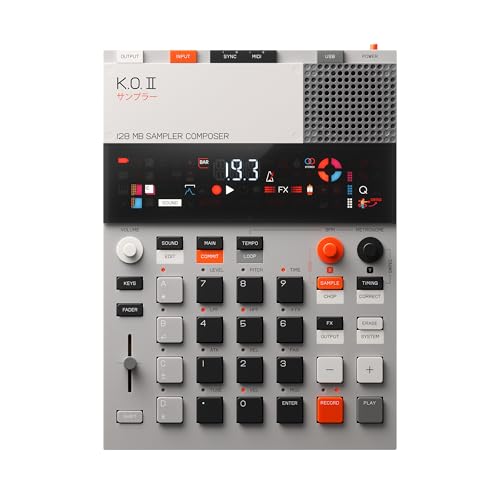
- 128MB sampler with built-in microphone
- Pattern sequencer with extensive effects
- Battery or USB-C powered for travel
Best For: Portable sampling, beatmaking, and live electronic performance
Sample Expansion Pad

- Four velocity-sensitive performance pads
- SD card sample expansion
- MIDI output for software and sound modules
Best For: Adding sample triggers to an electronic drum or percussion setup
Classic Analog Rhythm Box

- 15 classic-style analog drum sounds
- 34 rhythm presets for fast ideas
- 16-step sequencer for hands-on programming
Best For: Simple analog drum sequencing in the studio or on stage
Touch Pad Groovebox

- 16 touch-sensitive finger pads
- 48 drum kits and 100 preset patterns
- USB-C or battery powered with foot pedal
Best For: Portable preset-based beatmaking and finger-pad performance
Flexible Pad Control

- 16 pads with three assignable banks
- Faders, knobs, MIDI, and USB-C control
- Requires DAW software to make sound
Best For: Computer-based producers and performers
Looper-Pedal Workflow

- 30 patterns with app editing and sharing
- Up to 11 minutes of loop storage
- Combines drums, looping, and tuner
Best For: Live performers and hands-free looping
Portable Tabletop Drums

- Eight touch-sensitive pads with pedals
- 600 sounds plus recording and preset kits
- Works standalone or as a USB MIDI controller
Best For: Beginners and portable drum practice
Best Live Rhythm Pedal
FLAMMA FF02 Drum Machine Guitar Pedal

- 121 grooves across 11 genres
- 66 customizable rhythm slots
- Tap tempo, fills, and stereo I/O
Best For: Guitarists and performers needing hands-free rhythm control
Best Compact Beat Maker
Stylophone Beat Compact Stylus Drum Machine

- Four drum kits and four bass sounds
- Records layers and multiple patterns
- Battery powered with speaker and headphone output
Best For: Portable beat making and casual electronic music creation
Best Preset-Focused Pedal

- 121 grooves in 11 musical styles
- Seven slots across 11 song banks
- Tap tempo, fills, stereo I/O, and editor software
Best For: Guitarists and bassists needing organized live rhythm presets
Portable Beatmaker – teenage engineering EP-133 K.O. II
The teenage engineering EP-133 K.O. II is a highly portable choice for electronic musicians who want sampling, beatmaking, and sequencing in one compact unit. Its built-in microphone, 128MB memory, pattern-based sequencer, effects, and battery operation make it particularly flexible for creating drum parts away from a computer.
Best For: Portable sampling, beat creation, live performance, and producers who want an all-in-one electronic music sketchpad.
Pros:
- Built-in microphone, 128MB memory, and 999 sample slots support extensive sampling workflows.
- Four groups of 99 patterns and a four-track sequencer make it easy to build variations.
- Includes master and punch-in effects, MIDI and sync connections, a speaker, and line output.
- Runs on four AAA batteries or USB-C for flexible mobile use.
Cons:
- Its compact plastic construction may not suit users seeking a full-size, rugged studio instrument.
- It is a sampler and sequencer rather than a dedicated multi-voice drum machine with extensive physical controls.
The K.O. II stands out when portability and fast idea capture matter most. Its combination of sampling, effects, pattern arranging, and updated song-mode features gives it more room to grow than a basic beat pad.
Sample Expansion Pad – Alesis Sample Pad 4
The Alesis Sample Pad 4 is a practical addition to an electronic drum or percussion setup. With four velocity-sensitive pads, built-in sounds, SD card expansion, and MIDI output, it works well for triggering samples and adding responsive performance control to drum machines for electronic music.
Best For: Expanding an existing drum rig with sample triggering, percussion sounds, and MIDI control.
Pros:
- Four velocity-sensitive pads provide expressive hands-on triggering.
- SD/SDHC card support lets you add your own sound samples.
- Includes 25 built-in percussion and electronic drum sounds across eight kits.
- MIDI output allows control of sound modules and music software.
Cons:
- Only four onboard pads limit the number of sounds available under your hands at once.
- It is primarily a sample pad and controller, not a complete pattern-based drum machine.
The Sample Pad 4 makes the most sense for musicians who already have a setup and need additional sample triggers. Its SD card slot and MIDI output give it useful flexibility without requiring a larger pad controller.
Classic Analog Rhythm Box – Behringer RD-78
The Behringer RD-78 is a straightforward analog drum machine for producers who want classic-style drum sounds and an accessible sequencing workflow. Its 15 drum sounds, 34 rhythm presets, and 16-step sequencer provide a focused foundation for studio production and live electronic music performance.
Best For: Producers seeking classic analog drum sounds, quick pattern programming, and a simple live-performance instrument.
Pros:
- Provides 15 analog drum sounds for a range of electronic production styles.
- Includes 34 rhythm presets for quickly starting ideas or supporting live sets.
- The 16-step sequencer offers an intuitive way to program beats.
- Compact alloy-steel construction is designed for studio and performance use.
Cons:
- The 16-step sequencer is less expansive than longer-form song arrangement systems.
- Its sound set is focused on drum synthesis rather than sampling or melodic parts.
The RD-78 is a good fit for buyers who value immediacy over feature density. It keeps the workflow centered on classic drum sounds, preset rhythms, and hands-on step sequencing.
Touch Pad Groovebox – Medeli MR101S
The Medeli MR101S is a portable drum machine built around hands-on finger-pad performance. Its 16 touch-sensitive pads, 48 drum kits, and 100 preset patterns offer plenty of ready-to-use rhythm material, while USB-C or battery power supports flexible use for electronic music practice and performance.
Best For: Mobile beatmaking, finger-pad performance, and players who want many preset kits and patterns.
Pros:
- Sixteen touch-sensitive finger pads provide a broad playing surface.
- Forty-eight drum kits and 100 preset patterns offer substantial built-in variety.
- Includes a foot pedal for hands-free flexibility.
- Can run from USB-C or batteries for portable operation.
Cons:
- The supplied notes do not specify sampling, custom sound import, or MIDI features.
- Its emphasis on presets may be less suitable for producers seeking deep sound-design control.
The MR101S is appealing when immediate playability and portability are priorities. Its generous pad count, preset library, foot pedal, and dual power options make it a convenient rhythm-focused instrument for practice and performance.
Flexible Pad Control – Donner STARRYPAD
For producers seeking drum machines for electronic music, the Donner STARRYPAD is a versatile USB MIDI pad controller rather than a standalone sound source. Its 16 backlit pads, three pad banks, velocity curves, faders, knobs, and DAW integration make it suited to triggering drums, samples, and effects in a computer-based setup.
Best For: Home producers and performers who want hands-on pad control with customizable lighting and extra MIDI controls.
Pros:
- Offers 16 velocity-sensitive pads with three banks for up to 48 assignable pad positions.
- Adds two faders, two knobs, three buttons, and Shift-layer controls.
- Includes USB-C connectivity, MIDI in/out, Melodics courses, and Cubase LE software.
- Works with Mac, Windows, Android, and iOS, with an appropriate Apple adapter for some mobile devices.
Cons:
- Requires DAW software to produce sound and does not operate as a standalone drum machine.
- The editor changes pad settings but does not record or arrange music.
The STARRYPAD is a strong choice when tactile triggering and DAW control matter more than built-in sounds. Buyers wanting an all-in-one unit should look elsewhere, but computer-based electronic music makers get substantial control in a compact controller.
Looper-Pedal Workflow – M-VAVE Circle Drum Machine
The M-VAVE Circle combines a drum machine, looper, tuner, and mixed mode in a foot-controlled format. For electronic musicians comparing drum machines for electronic music, it provides 30 preset patterns, app-based pattern editing, and loop recording for building layered parts without relying solely on a computer.
Best For: Guitarists, live performers, and songwriters who want drum patterns and hands-free looping in one pedal.
Pros:
- Provides tuner, drum machine, looper, and drum-machine-plus-loop modes.
- Includes 30 preset drum patterns with app customization, saving, and sharing.
- Offers four loop storage locations and up to 11 minutes of total recording time.
- Separate drum and loop volume controls, a display, and an all-metal shell support live use.
Cons:
- Individual loop storage is limited to five minutes.
- Pattern editing and sharing depend on the companion app.
- Its pedal-based design is less suited to pad-style finger drumming.
This pedal is practical for performers who want to combine preset rhythms with layered loops. It is more of a live looping companion than a full production workstation, but the mixed mode and app-editable patterns add useful flexibility.
Portable Tabletop Drums – Pyle PTED01 Digital Drum Kit
The Pyle PTED01 is a portable tabletop electronic drum kit with touch-sensitive pads, pedals, built-in sounds, and recording controls. Among drum machines for electronic music, it stands out as a more drum-kit-oriented option that can also connect to a Mac or PC as a MIDI controller.
Best For: Beginners, casual players, and producers who want a portable drum surface with standalone playback and computer connectivity.
Pros:
- Provides eight touch-sensitive pads and pedals in a compact tabletop format.
- Includes 600 sounds, preset drum kits and songs, and the ability to record performances.
- Supports USB MIDI connection to Mac and PC music software.
- Offers headphone and USB outputs plus MIDI/AUX inputs for flexible connections.
Cons:
- Its tabletop layout is larger and heavier than a compact pad controller.
- Battery operation requires six C batteries when not using the included AC adapter.
- The supplied notes do not specify the exact included components beyond the main product details.
The PTED01 makes sense for players who want to practice or perform without a computer while retaining MIDI functionality for production. It is less focused on advanced sequencing than dedicated electronic-music hardware, but its built-in sounds and portable power options broaden its use.
Best Live Rhythm Pedal – FLAMMA FF02 Drum Machine Guitar Pedal
The FLAMMA FF02 is a practical choice among drum machines for electronic music when you want foot-controlled rhythms for guitar, bass, or a live setup. It combines 121 grooves across 11 genres with tap tempo, fills, stereo I/O, and 66 customizable storage slots.
Best For: Guitarists, bassists, and performers who need hands-free rhythm control in rehearsals, live sets, or studio sessions.
Pros:
- Offers 121 drum grooves across 11 music genres.
- Stores customizable rhythms in 66 slots for quick access.
- Includes tap tempo, real-time fills, dual footswitches, and stereo connections.
Cons:
- Its pedal-oriented design may be less suitable for users seeking deep pattern sequencing.
- Requires a 9V power source and draws 200mA.
The FF02 stands out for immediate performance control rather than elaborate programming. Its clear display, footswitch layout, and stereo connectivity make it a flexible rhythm companion for instrument-focused setups.
Best Compact Beat Maker – Stylophone Beat Compact Stylus Drum Machine
The Stylophone Beat is a small, battery-powered option among drum machines for electronic music, offering four drum kits, four bass sounds, layered recording, and pattern storage. Its built-in speaker and headphone compatibility make it convenient for portable beat making.
Best For: Portable production, casual beat making, and users who want a compact rhythm machine with a stylus interface.
Pros:
- Combines four drum kits with four bass sounds.
- Supports multiple layers, pattern recording, and sound muting.
- Includes a click track, tempo lock, built-in speaker, and wired headphone connection.
Cons:
- Three AA batteries are required and are not included.
- Its compact feature set may be limiting for advanced sequencing workflows.
Choose the Stylophone Beat when portability and approachable beat creation matter more than extensive sound design. Its small plastic body and battery operation make it easy to use away from a larger studio setup.
Best Preset-Focused Pedal – MOOER DRUMMER X2 Guitar Pedal
The MOOER DRUMMER X2 is designed for musicians comparing drum machines for electronic music who want broad groove coverage in a pedal format. It provides 121 grooves in 11 styles, seven rhythm slots per customizable song bank, tap tempo, fills, stereo I/O, and editor software.
Best For: Guitar and bass players who want quick preset access, live groove changes, and expanded control through an external footswitch.
Pros:
- Provides 121 built-in grooves across 11 musical styles.
- Offers 11 customizable song banks with seven rhythm slots each.
- Includes tap tempo, fill triggering, stereo I/O, and editor software for preset management.
Cons:
- The pedal requires a 9V DC, 300mA power supply.
- Its specialized controls and editor may be more than casual users need.
The DRUMMER X2 is a strong fit for performance-oriented setups that benefit from organized presets and footswitch control. Its editor software adds flexibility, while the dedicated knobs keep core rhythm adjustments accessible.
How We Picked These Drum Machines for Electronic Music
We focused on the features that matter most when creating or performing electronic music: usable drum sounds, sequencing flexibility, hands-on controls, portability, connectivity, and practical live-performance features. The list includes both standalone instruments and specialized tools, so different musicians can find a suitable workflow rather than a single “best” format.
We also considered how each device fits into a broader setup. Samplers and sequencers suit producers who want arrangement control, while pad units and pedals can be faster for triggering patterns, practicing, or adding rhythm to guitar and bass performances.
Quick Comparison
| Best For | Look For |
|---|---|
| Sampling and beat production | Sampler memory, effects, sequencing, and microphone or audio-input options |
| Classic drum-machine workflows | Dedicated sounds, step sequencing, pattern presets, and tactile controls |
| Live guitar or bass rigs | Pedal-style operation, tap tempo, stereo I/O, and pattern fills |
| Portable practice and sketching | Battery operation, built-in sounds, speakers, and headphone output |
| Pad-based performance | Responsive pads, assignable controls, MIDI or USB connectivity, and software support |
Key Buying Factors for Drum Machines for Electronic Music
Sound Design and Editing
Decide whether you want fixed drum kits or the ability to import and manipulate samples. A sampler provides more creative range, while a dedicated analog or digital drum machine can be quicker when you want immediate, consistent sounds.
Sequencing and Pattern Control
Check the number of steps, pattern storage, chaining options, swing controls, fills, and tempo functions. Step sequencing is useful for precise programming; pads and tap-tempo controls are often better for spontaneous performance.
Connectivity
USB and MIDI make it easier to integrate a drum machine with a computer, keyboard, or hardware sequencer. Audio outputs, headphone support, and stereo connections matter for recording and live setups. Guitarists should also confirm pedal placement, bypass behavior, and output compatibility.
Portability and Power
Compact battery-powered units are convenient for travel and quick ideas, but larger tabletop machines may offer better controls and visibility. Consider whether you need a built-in speaker, rechargeable power, or reliable mains operation.
Who Should Buy Which Drum Machines for Electronic Music?
Choose a sampler-based machine if you want to record, reshape, and sequence your own sounds. Choose a classic-style standalone drum machine if you prefer dedicated drum voices and a focused production workflow. Choose a pad controller or tabletop kit if finger drumming and physical performance are central to your process.
Choose a drum-machine pedal if you need rhythms alongside guitar or bass without adding a tabletop instrument. Pedal formats are especially practical for rehearsals, solo performances, and looping setups. Choose a compact portable unit if the priority is practicing, traveling, or quickly building ideas away from a full studio.