The best drum machines make it easier to build beats, practice rhythm programming, and add reliable patterns to live performances. The right choice depends on your preferred sound, workflow, portability, and need for sequencing or hands-on control.
This roundup compares 10 standout drum machines, including classic-inspired analog units, flexible digital performers, compact beat makers, and affordable starter options.
Best 10 Drum Machines Picks for 2026
Heritage Powerhouse

- Circuit-modeled TR-808, 606, 909, 707, and 727 sounds
- Imports mono or stereo samples via SD card
- 128 kits with customizable effects
Best For: Hybrid production and live performance
Portable Pattern Builder

- Six-part DSP percussion synthesis
- 16-step sequencer with Active Step and Slice
- Built-in speaker and compact 0.37 kg design
Best For: Portable beat making and experimental rhythms
Analog Impact Specialist

- Separate accent control for each drum
- Song mode chains patterns into arrangements
- Color shaping on nearly every instrument
Best For: Hands-on analog performance and sequencing
Compact TR Companion
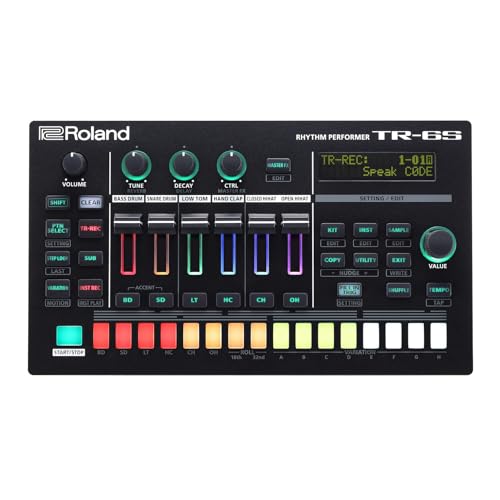
- Six tracks with classic Roland circuit models
- Battery-powered and supports custom samples
- Advanced sequencer plus USB audio/MIDI
Best For: Portable Roland-based production
Classic Workhorse
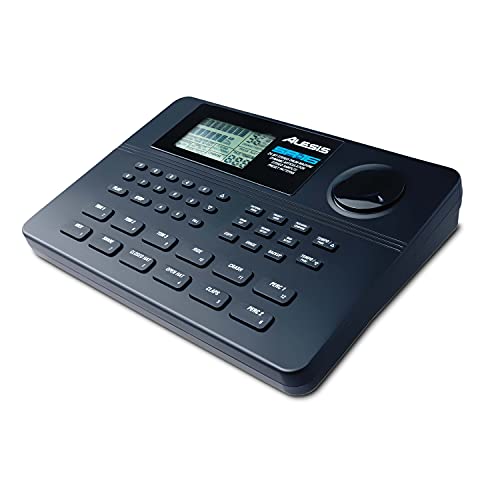
- 233 sounds with 50 preset and 50 user kits
- Velocity-sensitive pads with Dynamic Articulation
- MIDI, stereo outputs, effects, and step editing
Best For: Songwriters, live performers, and studio producers
Portable Analog Flavor

- Electribe-style 16-step sequencer
- Analog-digital sounds with PCM clap and crash
- Built-in speaker, MIDI, and Volca SYNC connectivity
Best For: Portable beat making and beginner-friendly sequencing
Hybrid Sampling Option
Behringer LM Hybrid Drum Machine
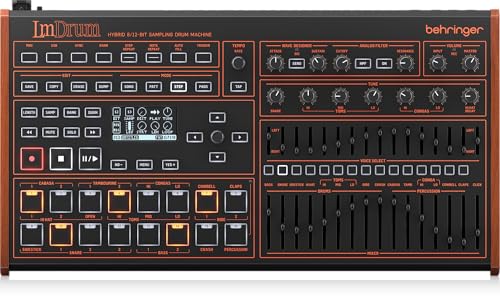
- Hybrid sampling drum-machine design
- Larger 18.86-inch-wide chassis
- Glossy black finish with substantial build
Best For: Buyers seeking a dedicated hybrid sampling drum machine
Pocket Beat Explorer

- Pocket-sized synthesized and sampled drums
- 16 punch-in effects and pattern chains
- Built-in speaker and stereo line out
Best For: Portable beat-making and travel
Stylus Rhythm Maker

- Four drum kits and four bass sounds
- Records layers and multiple patterns
- Click track, tempo lock, and speaker
Best For: Accessible beat-making and rhythm practice
Analog Groove Builder

- True analog circuitry for classic sound
- 64-step sequencer and distortion effects
- Seven independent analog outputs
Best For: Studio production and external processing
Heritage Powerhouse – Roland TR-8S
The Roland TR-8S is a versatile choice for drum machines buyers who want iconic sounds alongside modern sampling and sound-design tools. It combines circuit-modeled TR-808, 606, 909, 707, and 727 sounds with sample import, customizable effects, and performance-ready kit storage.
Best For: Producers and performers who want classic Roland drum sounds with extensive hybrid kit and effects options.
Pros:
- Includes detailed circuit models of several sought-after TR drum machines.
- Supports mono and stereo sample import through an SD card.
- Offers flexible effects, editable drum parameters, and 128 kits.
- Settings for instrument and master effects are saved with each kit.
Cons:
- The plastic body may feel less rugged than a metal-bodied alternative.
- Its extensive sound-design features may be more than beginners need.
The TR-8S stands out when authenticity and flexibility matter equally. It is particularly well suited to users who want to move from classic rhythm-machine tones into customized sample-based production.
Portable Pattern Builder – Korg Volca Drum
Korg Volca Drum Digital Percussion Synthesizer w/ 16-step Sequencer and Active Step
Check Price On AmazonThe Korg Volca Drum is a compact digital percussion synthesizer for drum machines shoppers who value portability and hands-on pattern variation. Its six-part DSP engine, 16-step sequencer, built-in speaker, and performance functions make it practical for quick studio ideas or mobile beat making.
Best For: Beginners, mobile producers, and performers seeking an affordable, compact drum machine with creative sequencing tools.
Pros:
- Compact design includes a built-in speaker for on-the-go use.
- Waveguide resonator adds rich resonance to synthesized percussion.
- Active Step, Slice, and randomize functions encourage evolving patterns.
- Accent and choke functions provide useful performance control.
Cons:
- The 16-step sequencer is less extensive than the sequencing systems on larger units.
- Its compact format may offer less physical control than full-size drum machines.
The Volca Drum is a strong pick for accessible, experimental rhythm creation. Its compact size and pattern-randomizing features make it easy to turn simple sequences into more intricate grooves.
Analog Impact Specialist – Arturia DrumBrute Impact
The Arturia DrumBrute Impact is an analog drum machine for buyers who want direct instrument control and performance-focused sequencing. Its supplied features include separate accents for each drum, Song mode for chaining patterns, and optional Color sound shaping across nearly all instruments.
Best For: Hands-on producers and performers who prefer analog drum sounds with pattern chaining and per-drum accent control.
Pros:
- Provides a separate accent control for each drum.
- Song mode allows patterns to be chained into longer arrangements.
- Color sound shaping is available on all instruments except cowbell.
- Metal construction offers a substantial 2.4 kg format.
Cons:
- Color sound shaping is not available for the cowbell.
- The supplied notes provide fewer sequencing and sound details than some competing models.
The DrumBrute Impact is best considered when tactile control and performance dynamics are priorities. Its per-drum accents and Song mode give it a straightforward workflow for building and chaining live-ready patterns.
Compact TR Companion – Roland TR-6S
The Roland TR-6S is a compact drum machine for producers who want authentic TR sounds and advanced sequencing in a battery-powered format. It offers six tracks, circuit models of classic Roland machines, user sample support, an FM sound engine, and USB audio/MIDI interface functionality.
Best For: Mobile producers and performers who need classic Roland rhythms, modern sound options, and a compact workflow.
Pros:
- Includes detailed models of the TR-808, TR-909, TR-606, TR-707, and more.
- Battery-powered design supports portable music creation.
- Advanced sequencer includes sub-steps, flam, step-loop, and motion recording.
- Works as a USB audio/MIDI interface and supports custom samples.
Cons:
- Six tracks provide a more compact setup than the TR-8S.
- The plastic body may be less substantial than a metal-bodied unit.
The TR-6S is a practical middle ground between portability and deep rhythm programming. Choose it when you want recognizable Roland sounds and modern sequencing without carrying a larger drum machine.
Classic Workhorse – Alesis SR-16
The Alesis SR-16 is a practical choice for drum machines buyers who want a proven standalone unit for songwriting, live performance, or studio production. It combines 233 assignable sounds, 50 preset and 50 user kits, velocity-sensitive pads, MIDI connectivity, and built-in effects in a compact design.
Best For: Songwriters, live performers, and producers who need broad MIDI connectivity and hands-on pad control.
Pros:
- Includes 233 professional sounds and 100 total drum-kit slots.
- Velocity-sensitive pads use Dynamic Articulation for expressive playing.
- Offers MIDI support, stereo outputs, footswitch connections, sound stacking, and step editing.
- Built-in reverb and ambience add production-ready processing.
Cons:
- Its plastic body may feel less substantial than heavier hardware.
- It does not emphasize the compact portability of newer battery-powered drum machines.
The SR-16 stands out as a feature-rich, established option for users who value flexible connections and a large sound library over minimalist controls.
Portable Analog Flavor – Korg Volca Beats
Korg Volca Beats Analog Rythem Machine w/Electribe-style 16-step Sequencer and Real Analog Sounds
Check Price On AmazonThe Korg Volca Beats is a compact drum machine for quick pattern creation and portable beat making. Its Electribe-style 16-step sequencer, real analog sounds, PCM clap and crash sounds, built-in speaker, and optional battery operation make it approachable for both beginners and experienced users.
Best For: Mobile producers and beginners who want hands-on sequencing, classic rhythm-machine tones, and simple controls.
Pros:
- Compact design includes a built-in speaker for portable use.
- 16-step sequencing provides intuitive pattern programming.
- Real analog sounds are supplemented by PCM sounds for clap and crash duties.
- Includes MIDI In, SYNC In and Out, eight memory patches, and a stutter effect.
Cons:
- The unit has only eight memory patches.
- Its streamlined parameter set may offer less detailed sound shaping than larger drum machines.
The Volca Beats favors immediacy and portability, making it a strong fit for sketching grooves, syncing with other Volca instruments, or performing without a full studio setup.
Hybrid Sampling Option – Behringer LM Hybrid Drum Machine
The Behringer LM is a straightforward drum machine option for shoppers specifically seeking hybrid sampling. The supplied information identifies it as a hybrid sampling drum machine with a glossy black finish and a larger chassis than the compact Volca-style format.
Best For: Buyers looking for a dedicated hybrid sampling drum machine and a larger desktop form factor.
Pros:
- Uses a hybrid sampling drum-machine design.
- Its larger 18.86-inch-wide chassis may suit a more substantial desktop setup.
- Glossy black finish provides a distinctive appearance.
Cons:
- The supplied product information does not specify sounds, sequencing features, or connectivity.
- At approximately 3,240 g, it is less lightweight than the listed compact alternatives.
The LM may appeal to shoppers prioritizing hybrid sampling and physical presence, but its limited published specifications make it harder to compare on workflow and sound-design features.
Pocket Beat Explorer – PO-12 Rhythm
The teenage engineering PO-12 is a highly portable choice for anyone seeking drum machines that fit easily into a pocket. It combines synthesized and sampled drum sounds with sequencing, pattern chains, and punch-in effects in a battery-powered design.
Best For: Portable beat-making, travel, and compact setups that need stereo headphone or line-out connectivity.
Pros:
- Pocket-sized design with synthesized and sampled drum sounds.
- Includes 16 punch-in effects and 16 pattern chains.
- Built-in speaker plus 3.5 mm stereo line output.
- Battery powered with a folding stand, clock, and alarm functions.
Cons:
- Its compact plastic construction and tiny format may not suit users wanting a full-sized interface.
- Requires two AAA batteries.
The PO-12 stands out when portability and creative sequencing matter more than extensive physical controls. It is a practical pocket-sized drum machine for sketching rhythms anywhere.
Stylus Rhythm Maker – Stylophone Beat
The Stylophone Beat is a compact option among drum machines, pairing four drum kits with four bass sounds in a stylus-controlled format. It supports layered recording, multiple patterns, muting, and tempo-focused practice with a click track and tempo lock.
Best For: Beginners and casual creators who want a small rhythm machine with pattern recording and a built-in speaker.
Pros:
- Offers four drum kits and four bass sounds.
- Can record multiple layers and patterns while muting sounds.
- Includes a click track and tempo lock for staying in time.
- Supports wired headphones and has a speaker with volume control.
Cons:
- Only includes four drum kits and four bass sounds.
- Three AA batteries are required and not included.
- Headphone connectivity is for wired headphones.
With its stylus interface and straightforward feature set, the Stylophone Beat is aimed at accessible beat creation rather than expansive sound design. Its pattern and layering functions make it useful for quick rhythm ideas.
Analog Groove Builder – Behringer RD-6
The Behringer RD-6-BK is a more traditional desktop choice among drum machines, using true analog circuitry for its drum sounds. It provides nine drum sounds, a 64-step sequencer, accent capability, distortion effects, and seven independent analog outputs for external processing or multitrack recording.
Best For: Producers who want classic analog drum character, hands-on sequencing, and separate outputs for recording or processing.
Pros:
- Uses true analog circuitry and matched transistors for classic sound performance.
- Provides nine drum sounds with mix parameters and global accent.
- Includes a 64-step sequencer and distortion effects.
- Seven independent analog outputs support external processing or multitrack recording.
Cons:
- At 17.25 inches wide and 2.8 pounds, it is less portable than compact alternatives.
- Its feature set is focused on drum sounds rather than a broad multi-instrument palette.
The RD-6-BK is the strongest fit here for users prioritizing analog-style character and routing flexibility. Its independent outputs make it especially practical in a studio or recording setup.
How We Picked the Best Drum Machines
We focused on the features that most affect everyday use: sound quality, sequencing flexibility, hands-on controls, connectivity, portability, and overall value. The selection includes analog, digital, hybrid, sample-based, and ultra-compact options so different types of beat makers can find a suitable fit.
We also considered whether each machine is better suited to live performance, studio production, learning, sketching ideas, or adding rhythm to another instrument setup. A strong drum machine should offer an enjoyable workflow, dependable timing, and enough control to create variation rather than simply replaying fixed loops.
Quick Comparison
| Best For | What to Prioritize |
|---|---|
| Live performance | Fast pattern changes, reliable sequencing, performance effects, and sturdy controls |
| Studio production | Sound shaping, pattern memory, MIDI, audio connectivity, and detailed sequencing |
| Portable beat making | Battery operation, compact size, built-in speaker, and quick pattern creation |
| Beginners | Clear controls, accessible sounds, simple sequencing, and a manageable price |
| Classic drum tones | Analog synthesis or modeled sounds inspired by iconic rhythm machines |
Key Buying Factors for Drum Machines
Sound Engine
Analog machines typically deliver punchy, characterful tones with direct parameter control. Digital and sample-based models can provide a broader range of sounds, presets, and modern processing. Hybrid designs can be useful when you want classic voices alongside deeper editing.
Sequencer and Pattern Workflow
Check the number of steps, pattern storage, chaining options, and real-time recording features. Parameter locks, motion recording, probability, accents, and pattern variation can make repetitive grooves feel much more dynamic.
Connectivity and Integration
MIDI is important if you plan to control other instruments or sync with a DAW. Audio outputs, USB, sync connections, and separate voice outputs may also matter for recording and live mixing. Confirm the connections you need before buying, especially on compact units.
Size, Power, and Controls
Small machines are convenient for travel and quick sketches, while larger units generally provide more controls and better visibility. Consider whether you prefer batteries, USB power, or a standard adapter, and make sure the interface suits your performance style.
Who Should Buy Which Drum Machines?
Choose a full-featured digital performer if you need varied sounds, extensive sequencing, and flexible live control. An analog drum machine is a better match for hands-on programming and focused, punchy voices. Compact grooveboxes suit musicians who want portable pattern creation without a large setup.
Beginners should favor straightforward controls and useful presets over excessive depth. Experienced producers may benefit more from advanced sequencing, sound editing, pattern variation, and reliable MIDI integration. If you mainly need dependable accompaniment, a standalone unit with simple programming and broad pattern storage can be the most practical choice.
Before purchasing, decide whether you value authentic classic tones, experimental sound design, portability, or live performance control most. Matching the workflow to how you actually make music is usually more important than choosing the machine with the longest feature list.